
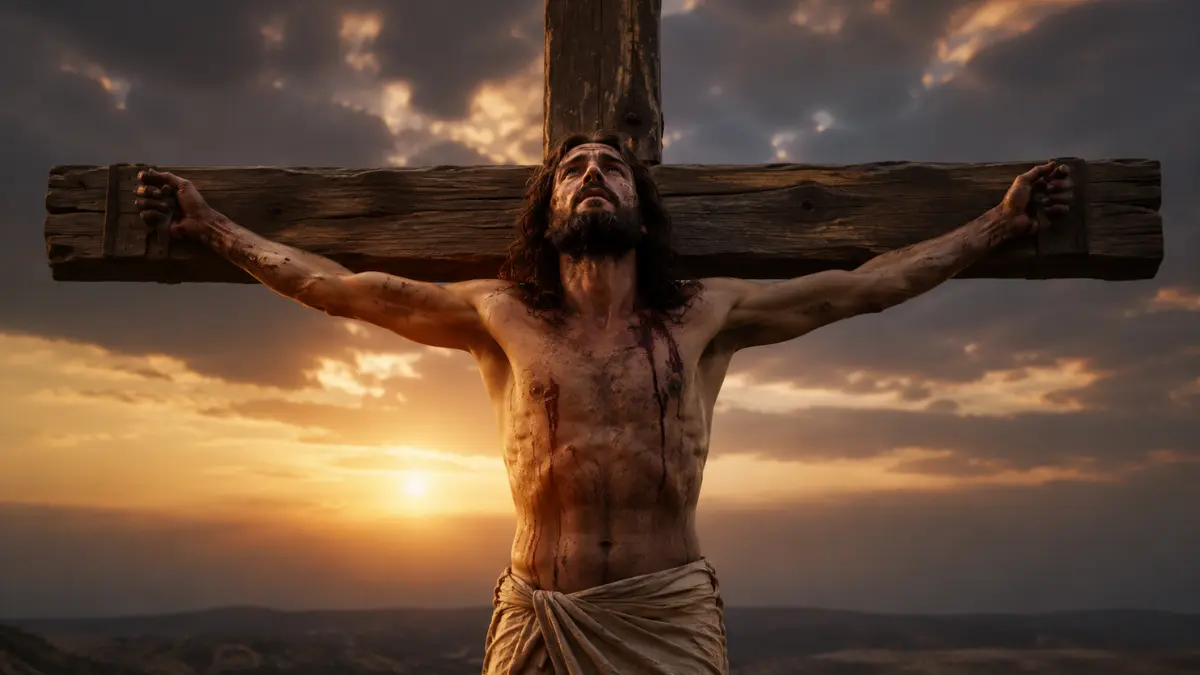

The meaning of “Father, into Your hands I commit My spirit” in Luke 23:46 is that Jesus deliberately entrusted His life to the Father at the moment of death. His words echoed Psalm 31:5, expressed complete trust and showed that His death was a willing surrender rather than an uncontrolled defeat.
Luke records this as Jesus’ final statement from the cross. After darkness covered the land and the temple curtain was torn, Jesus called out with a loud voice:
“Father, into Your hands I commit My spirit.”
After saying this, He breathed His last.
Jesus continued to address God as Father and trusted Him completely at the moment of death. His words reveal confidence, surrender, and the assurance that His life remained in the Father’s hands.
What Happened in Luke 23:44–46?
Luke says darkness covered the land from about noon until three in the afternoon. The sun’s light failed, and the curtain of the temple was torn in two.
Jesus then called out with a loud voice and committed His spirit to the Father. After speaking, He died.
These events show that Jesus’ death carried deep spiritual significance. The darkness marked the seriousness of the crucifixion, while the torn curtain became an important sign connected with His death.
Luke emphasizes that Jesus spoke with a loud voice. His final statement was deliberate and conscious rather than accidental. He clearly addressed the Father and entrusted Himself to Him.
Jesus truly died, but His death did not occur outside God’s sovereign purpose.
What Does “Into Your Hands I Commit My Spirit” Mean?
Jesus meant that He was placing His life and spirit into the Father’s care.
In Scripture, God’s hands often represent His authority, power, protection, and control. By saying, “Into Your hands,” Jesus declared that the Father remained sovereign even as His earthly life ended.
To commit something means to entrust it to someone reliable. Jesus placed Himself in the care of the One He trusted completely.
This was not merely resignation.
Resignation accepts defeat because nothing more can be done. Jesus’ statement expressed faithful surrender. He had completed the mission given to Him and willingly placed the outcome in the Father’s hands.
His enemies had condemned and crucified Him, but they did not possess ultimate authority over His life. Jesus faced death while trusting the Father’s purpose and faithfulness.
Why Did Jesus Call God “Father”?
Jesus began His final statement with the word “Father.”
This detail reveals continued trust and relationship. Jesus did not speak as though He were entering an unknown future without hope. He addressed the One whose character and faithfulness He knew.
Luke’s crucifixion account begins and ends Jesus’ recorded words from the cross with an address to the Father.
Earlier, Jesus prayed:
“Father, forgive them, for they do not know what they are doing.”
That prayer is explained further in what Jesus meant by “Father, forgive them”.
Later, Jesus ended His suffering by saying:
“Father, into Your hands I commit My spirit.”
Jesus prayed for His enemies and then entrusted Himself to the Father. Suffering did not prevent Him from continuing to pray.
The use of “Father” also shows that His final words were personal. Jesus did not merely state a theological principle. He directly placed Himself into the Father’s care.
What Did Jesus Mean by “My Spirit”?
When Jesus said, “My spirit,” He referred to His own life or human spirit, not the Holy Spirit.
The phrase should not be interpreted as though Jesus were returning the Holy Spirit to the Father. He was speaking about Himself as His physical life ended.
Luke records that Jesus truly died. After committing His spirit to the Father, He breathed His last.
The statement therefore joins two important truths. Jesus experienced a real human death, and He entrusted Himself confidently to the Father.
He did not speak as though death placed Him beyond God’s care. Even at the point of death, He remained secure in the Father’s hands.
Why Did Jesus Echo Psalm 31:5?
Jesus’ words closely echo Psalm 31:5:
“Into Your hand I commit my spirit.”
Psalm 31 is a prayer of trust spoken during distress, fear, and opposition. The writer seeks refuge in God while facing enemies and uncertainty.
The psalm does not pretend that suffering is easy. It speaks honestly about danger and grief while continuing to trust God’s faithfulness.
By using this language, Jesus expressed the same pattern of confidence in the Father during intense suffering.
The connection does not require Psalm 31:5 to be treated as a direct prediction that only referred to the crucifixion. Jesus drew on the words of Scripture because they perfectly expressed His trust at that moment.
His final prayer shows how deeply Scripture shaped His words and thoughts. Even while suffering, Jesus used biblical language to entrust Himself to God.
Did Jesus Willingly Give Up His Life?
Luke 23:46 supports the truth that Jesus willingly gave up His life.
This does not remove the responsibility of those who betrayed, condemned, and crucified Him. Judas acted deliberately, religious leaders pursued His death, and Roman authorities carried out the execution.
Their actions were unjust.
At the same time, Jesus had willingly accepted the mission that led to the cross. He had previously taught that He laid down His life voluntarily.
His final statement reflects that willing surrender. Luke emphasizes that Jesus called out with a loud voice before He died. He consciously entrusted His spirit to the Father.
The cross was not an unexpected interruption of His mission. His death formed part of the work He came to accomplish.
Jesus’ enemies acted against Him, but they did not overturn God’s purpose.
Is Luke 23:46 Different From “It Is Finished”?
Luke 23:46 and John 19:30 preserve different emphases from Jesus’ final moments on the cross.
John records Jesus saying:
“It is finished.”
That declaration focuses on the completion of His earthly work and sacrificial mission. Its meaning is examined more fully in what Jesus meant when He said “It is finished”.
Luke records:
“Father, into Your hands I commit My spirit.”
Luke emphasizes Jesus’ trust in the Father and His willing surrender at death.
The two statements do not contradict each other. The Gospel writers often preserve different details from the same events according to the truths they emphasize.
John presents completion. Luke presents trust and surrender.
Jesus completed the work given to Him and entrusted Himself to the Father.
How Does Luke 23:46 Relate to “Why Have You Forsaken Me?”
Matthew and Mark record Jesus crying:
“My God, My God, why have You forsaken Me?”
Luke records His final act of entrusting His spirit to the Father.
The first saying expresses genuine anguish and echoes Psalm 22. Luke 23:46 shows that Jesus’ suffering did not end His trust in the Father.
The Gospel accounts do not require readers to choose between anguish and faith. Jesus expressed the depth of His suffering while continuing to pray and place Himself in the Father’s hands.
This distinction also matters for Christians.
Faith does not require a person to deny pain, grief, fear, or confusion. Biblical trust can exist alongside honest suffering.
Jesus did not pretend that the cross was painless. He expressed anguish truthfully and still entrusted Himself to the Father.
Why Does Luke Mention the Torn Temple Curtain?
Luke records that the temple curtain was torn in two near the time of Jesus’ death.
The Gospel does not pause to give a detailed explanation of the event, but Christian interpretation commonly connects it with the restricted access represented by the temple sanctuary.
Hebrews 9 and 10 later use sanctuary and veil imagery to explain the access believers receive through Christ.
The torn curtain can therefore be understood as a sign that Jesus’ death changed how people approach God. Access to God would no longer depend on the former temple system in the same way.
The meaning of this event is explored further in what the torn veil meant after Jesus died.
Luke places the torn curtain beside Jesus’ death because the crucifixion accomplished more than the end of His suffering. His death opened the way for reconciliation with God.
What Does Luke 23:46 Teach Christians About Trust?
Luke 23:46 teaches that trust in God can remain firm even during suffering and uncertainty.
Jesus did not trust the Father only when crowds welcomed Him or miracles occurred. He trusted the Father while facing rejection, pain, and death.
His example shows that biblical trust does not depend on comfortable circumstances.
Christians may face illness, loss, unanswered prayer, fear, or situations they cannot control. This verse does not promise that believers will avoid suffering.
It shows where they can place themselves during it.
God’s hands represent authority, care, and security. Believers can entrust their fears, futures, and unanswered questions to Him.
Trust does not mean becoming passive or careless. A believer should still act wisely, pray honestly, and obey faithfully. Trust means recognizing that final control belongs to God.
Christians can also use the words of Luke 23:46 as a prayer of surrender.
A believer might pray:
“Father, my life is in Your hands. Help me trust You with what I cannot control.”
The words are not a magical formula. Their value comes from genuine confidence in the God to whom they are spoken.
Did Stephen Pray Something Similar?
Stephen used similar words when he was being killed for his faith.
Acts 7:59 records him praying:
“Lord Jesus, receive my spirit.”
Stephen’s prayer reflects the trust seen in Jesus’ final words. He faced death while believing that his life remained secure in the Lord’s care.
There is also an important distinction.
Jesus committed His spirit to the Father. Stephen asked Jesus to receive his spirit. His prayer reveals the early Christian belief that Jesus had authority to receive and preserve those who trusted Him.
Stephen did not face death without fear because he possessed personal strength. His confidence rested in the Lord.
The connection between Jesus and Stephen shows how Christ’s example shaped the faith of His followers.
What Is the Main Meaning of Luke 23:46?
The main meaning of Luke 23:46 is that Jesus willingly entrusted His spirit to the Father at the moment of death.
His words echoed Psalm 31:5 and expressed complete confidence in God’s faithfulness. They also showed that Jesus’ death was a conscious surrender rather than an uncontrolled defeat.
Luke 23:46 reveals that:
- Jesus truly experienced human death.
- He continued to address God as Father.
- He willingly entrusted Himself to God.
- His suffering did not destroy His trust.
- His death formed part of His redemptive mission.
- He remained secure in the Father’s hands.
The darkness covered the land, but Jesus continued to trust.
His enemies believed they had ended His mission, but He had completed the work given to Him.
“Father, into Your hands I commit My spirit” was not a cry of hopelessness. It was the final prayer of the Son placing Himself confidently into the Father’s care.
