
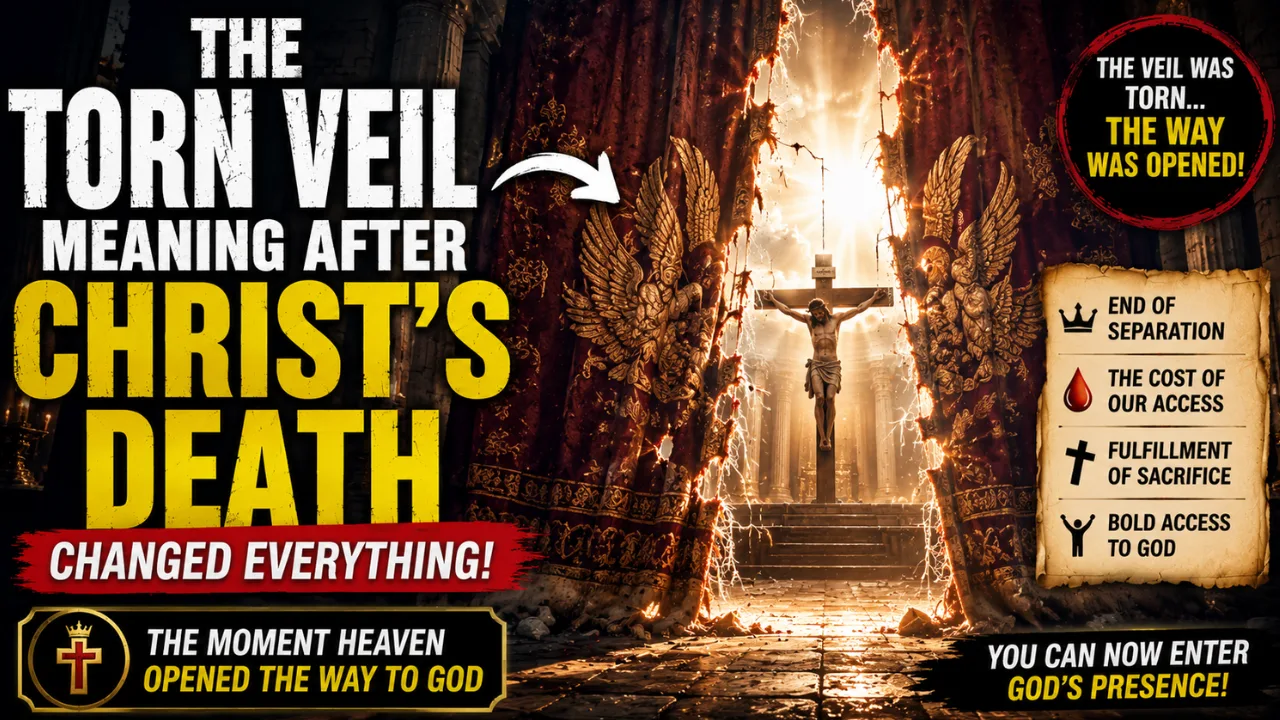

When Jesus Christ died on the cross, the Gospels record a shocking event inside the temple: the veil was torn in two from top to bottom. At first glance, the detail may appear brief or symbolic only, yet the tearing of the veil was one of the most profound moments in biblical history. It was not simply a dramatic sign accompanying the crucifixion. It represented the end of separation, the opening of access to God, the fullfillment of sacrifice and the beginning of a new covenant established through Christ’s death.
The veil in the temple was not a thin decorative curtain. It was a massive barrier standing between humanity and the holiest place in Israel’s worship system. Behind the veil was the Most Holy Place, the symbolic dwelling place of God’s presence. Only the high priest could enter there and only once a year on the Day of Atonement with sacrificial blood for the sins of the people. The veil constantly proclaimed a terrifying truth: sinful humanity could not casually enter the presence of a holy God, especially within [the Old Testament system of priesthood, sacrifice and restricted access to God’s presence — Why the Holy of Holies Was Separated Behind the Veil].
Then Christ died and the veil tore open.
The timing was not accidental. Heaven itself was announcing that something fundamental had changed forever.
What the Temple Veil Represented
The temple veil represented separation between God and humanity because of sin. Its existence was a visible reminder that access to God’s immediate presence was restricted under the old covenant system. The holiness of God could not be approached lightly and the veil stood as a boundary guarding the Most Holy Place.
This imagery stretched back even further than the temple itself. After humanity’s fall in Genesis, cherubim guarded the way back into Eden, symbolizing broken fellowship between God and mankind. The tabernacle and later the temple carried similar themes of guarded access. Priests ministered in stages of increasing holiness but the innermost presence remained restricted behind the veil.
The veil therefore symbolized several interconnected realities:
- the holiness of God
- the seriousness of sin
- humanity’s separation from divine presence
- the limitations of the old covenant sacrificial system
- restricted access under priestly mediation
Every worshiper standing outside the veil understood that full access had not yet been opened.
Veil Was Massive and Sacred
Historical descriptions suggest the temple veil was enormous, thick and richly woven. It was not something that could be casually torn by human effort. The Gospels specifically state that the veil was torn “from top to bottom,” emphasizing divine action rather than human interference.
That direction matters deeply. Humanity did not tear its own way into God’s presence. God Himself opened the way.
The veil also carried sacred imagery embroidered into it, including cherubim imagery connected to holiness and guarded divine presence. It functioned almost like a theological barrier woven into the architecture of worship itself. Every sacrifice, priestly ritual and Day of Atonement ceremony operated around the reality that the veil still stood.
As long as the veil remained intact, the worship system testified that the final solution to sin had not yet arrived.
Why the Veil Tore at the Moment of Christ’s Death
The tearing of the veil occurred precisely when Christ died because His death fulfilled what the sacrificial system had only foreshadowed. For centuries animals had been offered repeatedly under the old covenant, yet those sacrifices could never permanently remove sin. They pointed toward a greater sacrifice still to come.
When Jesus cried out and gave up His spirit, the true atoning sacrifice had been offered.
The veil tearing at that exact moment declared that the barrier between God and humanity had been breached through the death of Christ. Access to God no longer depended upon repeated animal sacrifices, earthly priesthood alone or restricted entry into the Most Holy Place. The final sacrifice had been made, fullfilling [how Old Testament sacrifices pointed toward the once-for-all atonement accomplished through Jesus Christ — Why Animal Sacrifices Could Never Fully Remove Sin].
The cross therefore did not merely provide moral inspiration. It accomplished reconciliation.
“From Top to Bottom” and Divine Initiative
The phrase “from top to bottom” carries enormous theological meaning. The tear began from above, signifying that God Himself initiated the opening. Salvation is not humanity climbing upward into God’s presence through self-effort. It is God opening the way downward through grace.
This detail protects the Gospel from becoming a story of human achievement. The veil was not slowly removed through moral progress, religious striving or philosophical enlightenment. It was torn decisively through divine action connected to Christ’s sacrifice.
The initiative belonged to God from beginning to end.
This is one reason the torn veil remains such a powerful image of grace. Humanity did not earn entrance into the Holy of Holies. Access was opened through the death of the Son.
Torn Veil and the End of the Old Covenant System
The torn veil also symbolized a covenantal transition. The old covenant sacrificial system had functioned as a temporary arrangement pointing toward Christ. Priests, altars, sacrifices, blood offerings, incense and the Day of Atonement all anticipated a greater fullfillment.
When the veil tore, it signalled that the old system had reached its fullfillment in Christ.
This does not mean the Old Testament became meaningless. Rather, its symbols reached completion. The sacrificial system had been prophetic preparation for the coming Messiah.
The Book of Hebrews later explains this with extraordinary depth. Christ becomes both the perfect High Priest and the perfect sacrifice simultaneously. Unlike earthly priests who repeatedly entered with animal blood, Christ entered once through His own sacrifice, opening lasting access to God.
The torn veil therefore marks one of the clearest transition points between shadow and fullfillment in all of Scripture.
Veil and Direct Access to God
One of the deepest meanings of the torn veil is direct access to God through Christ. Under the old covenant, access to the Most Holy Place was highly restricted. Under the new covenant, believers are invited to approach God with confidence through Christ’s mediation.
This does not eliminate reverence or holiness. God remains holy. What changes is the basis of access. The believer approaches not through personal righteousness or ritual performance but through the finished work of Christ.
The tearing of the veil means the barrier of sin has been addressed through atonement. Reconciliation becomes possible because Christ bore judgment, curse and separation on behalf of humanity, fulfilling [how Christ’s atoning death opened direct access to God under the new covenant — Why Believers Can Approach God Through Jesus Alone].
The image is deeply relational. The torn veil is not merely about religious permission. It is about restored fellowship between God and His people.
Torn Veil and the Body of Christ
The New Testament also connects the veil symbolically to Christ’s own body. Hebrews describes believers entering the holy place through the “veil, that is to say, his flesh.” This imagery reveals that Christ Himself became the means through which access to God was opened.
His body was broken so the barrier could be removed.
This connection intensifies the meaning of the crucifixion. The torn veil was not an isolated temple phenomenon disconnected from the cross. The torn flesh of Christ and the torn veil belong together symbolically. Through His suffering and death, the separation caused by sin was overcome.
The cross therefore becomes both sacrifice and doorway.
Why the Torn Veil Was So Shocking
For first-century Jewish worshipers, the tearing of the temple veil would have been staggering. The veil represented sacred boundaries established over centuries of covenant worship. Its sudden tearing would communicate that something catastrophic and transformative had occurred.
The event challenged the entire structure of restricted temple access. If the veil was torn open by divine action, then the old barriers surrounding the Most Holy Place had fundamentally changed.
The symbolism would become even more powerful after the resurrection and the spread of the Gospel. Access to God was no longer confined to one earthly temple location. Through Christ, believers themselves became described as the temple of the Holy Spirit.
The centre of worship was shifting from sacred geography toward union with Christ Himself.
Torn Veil and the Cost of Access
The veil tearing open does not mean access to God became cheap. The open way was purchased through suffering, blood and sacrifice. Grace is free to believers but it was not free in cost.
The torn veil therefore holds together both mercy and severity:
- mercy because access is opened
- severity because that access required the death of Christ
Modern spirituality often wants intimacy with God without confronting the cost of atonement. The torn veil refuses shallow ideas about reconciliation. The barrier was not ignored; it was dealt with through sacrifice.
This is why the image remains emotionally powerful. The open way into God’s presence was created through crucifixion.
The Veil, Fear and Confidence
Before Christ’s sacrifice, the Most Holy Place carried fear and restriction. Under the new covenant, believers are invited to approach God boldly through Christ. This confidence is not arrogance. It rests entirely upon His mediation.
The torn veil transforms the believer’s relationship to God’s presence. Access no longer depends on standing outside hoping acceptance may someday be granted. Through Christ, reconciliation becomes reality, fulfilling [how the new covenant replaced fear-driven distance from God with confident access through Christ’s mediation — Why Believers Can Approach God With Boldness in Hebrews].
Yet the image also preserves awe. The veil tore because holiness encountered sacrifice. The open way should produce gratitude, reverence, humility and worship rather than casual indifference.
Torn Veil and the New Creation
The tearing of the veil also signals the beginning of a larger restoration story running through Scripture. Humanity was separated from God after Eden but through Christ the way back into fellowship begins reopening. The torn veil becomes an image of restored communion anticipating the final dwelling of God with His people.
In Revelation, the story reaches completion when God dwells openly with redeemed humanity without temple barriers, separation or curse. The torn veil therefore points beyond individual forgiveness alone toward the ultimate restoration of creation itself.
The barrier begins tearing at the cross because reconciliation has begun moving toward its final completion.
Deeper Meaning of the Torn Veil
The torn veil after Christ’s death means that the barrier between sinful humanity and the holy presence of God was opened through the sacrifice of Jesus Christ. The veil represented separation, restricted access and the unfinished nature of the old covenant sacrificial system. When Christ died, the veil tore from top to bottom because the final atoning sacrifice had been made.
The torn veil declares that access to God now comes through Christ rather than through repeated sacrifices, earthly priesthood or temple barriers. Yet the image also reveals the immense cost of that access. The way into God’s presence was not opened cheaply. It was opened through the broken body and shed blood of the Son.
The veil that stood closed for generations suddenly ripped apart at the exact moment Christ died and in that tearing heaven announced that the way back into the presence of God had finally been opened.
Frequently Asked Questions
Why did the temple veil tear when Jesus died?
The veil tore at the moment of Christ’s death because His sacrifice fulfilled the old covenant sacrificial system. The tearing showed that the barrier caused by sin had been addressed through His atonement.
What was the purpose of the temple veil?
The temple veil separated the Holy Place from the Most Holy Place in the temple. It symbolized God’s holiness and the restricted access humanity had to His direct presence because of sin.
Why is “from top to bottom” important?
The veil tearing from top to bottom emphasizes divine action. It shows that God Himself opened the way into His presence rather than humanity creating access through human effort.
Who could go behind the veil before Christ?
Only the high priest could enter behind the veil and only once a year on the Day of Atonement with sacrificial blood for the sins of the people.
What does Hebrews say about the veil?
The Book of Hebrews connects the veil with Christ’s body and explains that believers enter God’s presence through His sacrifice. Hebrews teaches that Jesus opened a “new and living way.”
