
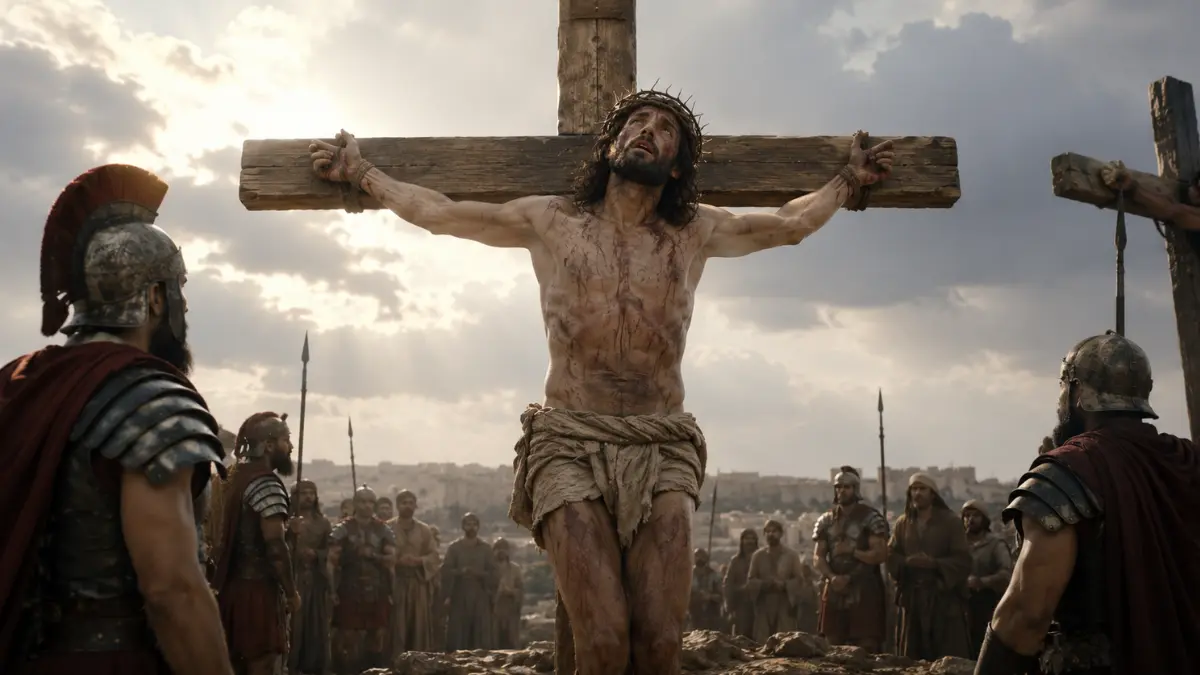

When Jesus prayed, “Father, forgive them, for they do not know what they are doing,” He asked the Father to show mercy toward those involved in His crucifixion. Their ignorance did not make them innocent. It showed that they did not fully understand the identity of the One they were rejecting or the seriousness of their actions.
Luke 23:34 reveals the compassion of Jesus, His obedience to His own teaching about loving enemies and His willingness to intercede for guilty people. The prayer does not remove accountability or make repentance unnecessary. It shows that Jesus answered cruelty with mercy rather than personal revenge.
What Was Happening in Luke 23:34?
Jesus spoke this prayer during the crucifixion. Roman soldiers had taken Him to the place called the Skull, where they crucified Him between two criminals.
Religious leaders had pressed for His execution and Pilate authorized it despite finding no adequate basis for a death sentence. Soldiers then carried out the sentence, guarded the site and divided Jesus’ clothing.
Luke places Jesus’ prayer beside the moment when the soldiers cast lots for His clothing. While people treated Him as powerless, Jesus continued to act with compassion and spiritual authority.
He did not ask the Father to bring immediate revenge. By addressing God as Father, Jesus continued to pray with trust while interceding for those harming Him.
Who Did Jesus Mean by “Them”?
In the immediate context, “them” most naturally points to those carrying out the crucifixion. Roman soldiers crucified Jesus and divided His clothing.
The prayer may also be understood more broadly in relation to others involved in His rejection and condemnation, but Luke does not list every person Jesus intended to include. Religious leaders, political authorities and members of the crowd did not all possess the same level of knowledge or responsibility.
The soldiers may have understood less about Jesus’ identity than leaders who had heard His teaching and examined His claims. Pilate recognized that the evidence did not justify a death sentence, yet he still approved the execution.
Jesus’ prayer does not erase these differences. It shows that mercy remained possible even for people involved in a grave injustice.
What Did “They Do Not Know What They Are Doing” Mean?
The people involved knew that they were participating in an execution. They could see the physical suffering and understood the immediate actions they were taking.
What they did not fully understand was the identity and significance of the One they were rejecting. They did not recognize the full truth about Jesus as the Messiah and Son of God.
Acts 3:17 later describes the people and their rulers as acting in ignorance while still calling them to repentance. Their limited understanding did not make the crucifixion right, but it helps explain why Jesus prayed for mercy rather than immediate judgment.
They knew what they were doing at one level, but they did not grasp its full spiritual meaning.
Did Ignorance Remove Their Guilt?
Ignorance did not make the people involved innocent. If no real wrong had occurred, there would have been no need for Jesus to ask the Father to forgive them.
The soldiers still carried out an unjust execution. Religious leaders still pressed for Jesus’ death, and Pilate still approved it despite his doubts about the case.
Biblical ignorance can affect the degree of a person’s awareness without turning wrongdoing into righteousness. People can cause real harm while failing to understand the full consequences or spiritual meaning of their actions.
Jesus’ prayer holds two truths together. The people were responsible, yet mercy remained possible. He did not deny their guilt, but He also did not ask that guilt become the final word over them.
Did Jesus’ Prayer Guarantee Every Person’s Forgiveness?
Luke records Jesus interceding for those involved, but the passage does not describe the final response or spiritual condition of every individual.
The prayer reveals Christ’s desire for mercy. It does not give readers enough information to declare that every participant received forgiveness regardless of repentance or continued resistance.
The book of Acts later presents forgiveness in the name of Jesus alongside a call to repentance. People in Jerusalem heard the message, faced the truth about Jesus and received an opportunity to respond.
Some believed, while others resisted. Jesus’ prayer therefore should not be turned into a claim that personal response no longer mattered.
The safest conclusion is that Jesus prayed for mercy toward guilty people and opened no door for personal vengeance. Luke does not tell readers the final outcome for each person present.
How Did Jesus Practice His Teaching About Enemies?
Earlier in His ministry, Jesus taught His followers to love their enemies and pray for those who mistreated them. Luke 23:34 shows Him practicing what He taught.
He did not ask others to follow a path He refused to walk. While suffering at the hands of His enemies, He prayed for them.
This did not mean that Jesus approved of injustice. Throughout His ministry, He confronted hypocrisy, exploitation and unbelief. Love for enemies never required Him to call evil good.
His prayer demonstrates the heart of biblical forgiveness. Forgiveness begins by refusing personal revenge and placing judgment in God’s hands, even when the wrong remains serious.
Does Jesus’ Prayer Remove Accountability or Repentance?
Jesus’ prayer does not teach that forgiveness eliminates accountability. The apostles later spoke honestly about the rejection and crucifixion of Jesus. They did not hide the wrong in order to make mercy easier.
Biblical forgiveness can exist alongside truth, lawful consequences and necessary boundaries. A person can release personal vengeance without pretending that betrayal, abuse or injustice never happened.
Forgiveness and reconciliation are not always the same. Reconciliation normally requires truth, repentance and a willingness to rebuild trust. Forgiveness should never be used to pressure an injured person into returning to an unsafe situation.
The wider New Testament also continues calling people to repentance. Repentance does not earn forgiveness as a human achievement. It describes a real turning in which a person recognizes wrongdoing and turns toward God.
Jesus’ prayer made room for mercy, but it did not remove the need for people to respond to truth. Readers carrying serious emotional wounds may also explore what the Bible says about forgiveness when the hurt runs deep.
Was Jesus’ Prayer Answered?
Luke and Acts do not identify the final response of every person involved in the crucifixion. Scripture therefore does not allow readers to match each later convert with a specific soldier, leader or spectator at the cross.
However, Acts shows that the message of repentance and forgiveness was proclaimed in Jerusalem. Many people responded, and some priests later became obedient to the faith.
These events are consistent with the mercy expressed in Jesus’ prayer, but they do not prove that every person present at the crucifixion received forgiveness.
Jesus did not seek immediate destruction for His enemies. The message of mercy continued to reach the city where He had been condemned.
How Does Luke 23:34 Fit the Other Sayings From the Cross?
Luke 23:34 belongs within the wider picture of Jesus’ final words. Each saying reveals a different aspect of His suffering and mission.
Jesus prayed for His enemies, promised the repentant criminal, “Today you will be with me in paradise,” expressed real physical need when He said, “I thirst,” and later declared, “It is finished.”
The prayer for forgiveness reveals the mercy behind the cross. Jesus did not die only as a victim of injustice. He continued to act according to the saving purpose that had shaped His ministry.
Even in suffering, He remained focused on others. His prayer shows that mercy was not an idea He taught from a distance. He lived it at the moment when forgiveness was most costly.
Why Do Some Bibles Include a Footnote on Luke 23:34?
Some significant early manuscripts do not contain the sentence, “Father, forgive them, for they do not know what they are doing,” while other ancient manuscripts include it.
This is why several modern translations retain the words but add a footnote, while others place them in brackets. The manuscript evidence is genuinely divided.
The prayer strongly fits Luke’s themes of prayer, mercy and ignorance, but that thematic fit does not by itself settle whether the sentence appeared in the earliest form of the Gospel.
The variation should be acknowledged honestly. It does not mean that translators are hiding or carelessly changing the Bible. Footnotes allow readers to see where important manuscript differences exist.
What Luke 23:34 Teaches Believers
Luke 23:34 teaches that mercy does not require denying the seriousness of sin. Jesus knew He was suffering unjustly, yet He prayed for those involved.
The verse also teaches believers to resist personal revenge. Christians may name wrongdoing, seek protection and pursue justice without allowing hatred to control their response.
Praying for enemies does not mean approving their actions. It asks God to bring truth, repentance and mercy into a situation shaped by sin.
Most importantly, the verse reveals the character of Christ. While people mocked, rejected and crucified Him, Jesus continued to intercede for guilty people.

2 thoughts on “Father, Forgive Them Meaning in Luke 23:34”