
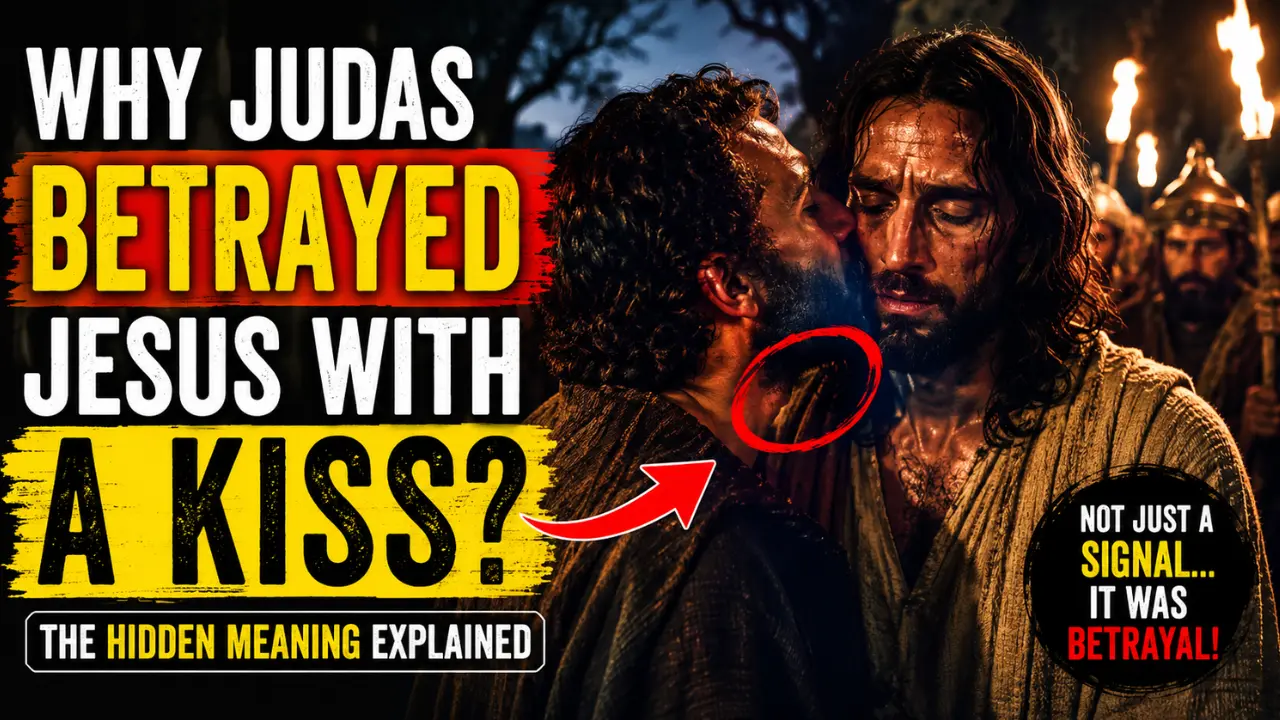

Among the details surrounding Jesus’ arrest, the kiss of Judas remains one of the most memorable because of its deep contradiction. Judas did not identify Jesus with a shouted accusation or a distant signal. He came close, addressed Him as Rabbi and kissed Him.
In ancient culture, a kiss could express greeting, honour, affection, loyalty and relational closeness. It was a common gesture among family members, friends, disciples and respected teachers. Because of these associations, a kiss normally communicated trust and goodwill rather than hostility.
In Gethsemane, that same gesture became the means by which Jesus was handed over to His enemies. The act was not only practical. It was symbolic. Judas chose a sign ordinarily associated with friendship to identify the very person he intended to betray.
The Gospel writers preserve the kiss because the method of betrayal matters. Judas used a sign of friendship to conceal treachery. The outward gesture suggested respect but the inward reality was betrayal.
Also Read: Meaning of Satan Entering Judas in the Bible
The Kiss in the Gospel Accounts
Matthew 26:48–49 records that Judas had arranged a sign with the arresting crowd:
“The one I will kiss is the man; seize him.”
Judas then approached Jesus, said, “Greetings, Rabbi,” and kissed Him.
Mark 14:44–45 gives the same pattern. Judas gives the signal, approaches Jesus, calls Him Rabbi and kisses Him. The repetition across multiple Gospel accounts emphasizes that the kiss was a deliberate part of the betrayal plan rather than a minor detail remembered in passing.
“Judas, would you betray the Son of Man with a kiss?”
This question draws attention to the profound irony of the moment. Jesus does not merely acknowledge the betrayal; He highlights the manner in which it is being carried out. The very gesture commonly associated with loyalty and affection has become the instrument of treachery.
Together, these accounts show that the kiss was not an accidental detail. It was the chosen sign of identification and Jesus Himself drew attention to its meaning.
The kiss also reveals that Judas’ betrayal was personal as well as deliberate. He did not identify Jesus from a distance. He approached Him directly, spoke to Him and used a gesture of closeness to mark Him for arrest. The action therefore carried a symbolic weight far beyond its practical purpose.
What a Kiss Meant in Ancient Culture
In the ancient Mediterranean world, a kiss was not limited to romance. It could be used among family members, friends, respected teachers and close companions. It often communicated peace, affection, loyalty or honour. Greetings and farewells could include a kiss and the gesture frequently served as a visible expression of relationship and mutual respect.
This cultural background is essential. Judas chose a gesture that normally belonged to trust. A kiss was something one might expect from a friend or disciple, not from someone leading an arresting party. Because Jesus was surrounded by His disciples and it was night-time, the agreed-upon sign also provided a simple way for the arresting group to identify Him with certainty.
That is what makes the scene so severe. Judas did not betray Jesus with open hostility. He betrayed Him through a gesture that outwardly looked like reverence.
The contrast between appearance and reality is at the heart of the episode. Everything about the gesture suggested friendship and respect, yet its true purpose was to deliver Jesus into the hands of His enemies. The sign concealed betrayal beneath the appearance of devotion.
Also Read: Why the Sanhedrin Refused the Returned Silver
Why Judas Used a Kiss
At a practical level, Judas needed to identify Jesus clearly. The arrest happened at night, in a garden, among a group of disciples. The authorities needed a reliable signal. Although Jesus was well known to many people, those carrying out the arrest wanted to ensure that the correct person was seized quickly and without confusion.
A kiss allowed Judas to approach Jesus naturally without creating confusion. It marked Jesus clearly for those who came to seize Him. The gesture was simple, unmistakable and could be carried out without drawing attention until the moment of identification.
But the Gospels present more than practical identification. Judas’ kiss carried moral and theological weight because it disguised betrayal beneath the appearance of loyalty. The sign worked precisely because it looked like affection.
Why Judas Calling Jesus “Rabbi” Matters
Matthew and Mark both record Judas addressing Jesus as “Rabbi.” This detail adds weight to the betrayal. Judas uses the language of a disciple while performing the act of a betrayer.
The title “Rabbi” acknowledged Jesus as teacher. It was respectful language. Yet in Judas’ mouth, the word becomes hollow because his action contradicts it.
This is part of the tragedy of the scene. Judas does not come as an obvious enemy. He comes wearing the language and gesture of discipleship while already aligned with Jesus’ opponents.
Also Read: Real Reason Judas Betrayed Jesus for 30 Pieces of Silver
Jesus’ Question in Luke 22:48
Luke’s account gives the most direct theological interpretation of the kiss. Jesus asks:
“Judas, would you betray the Son of Man with a kiss?”
Jesus does not merely expose the betrayal. He exposes the contradiction in the method. A kiss should have expressed loyalty but Judas used it to deliver Jesus into hostile hands.
The question is not asked because Jesus lacks knowledge. It reveals the moral meaning of the act. Judas’ betrayal is made more serious by the fact that it uses a symbol of relationship and respect.
Jesus names the contradiction directly: betrayal with a kiss.
Also Read: Understand the 30 Pieces of Silver
The Theology of the Betrayal Kiss
The Gethsemane kiss shows how outward signs can be severed from inward truth. Judas performs an action associated with honour while his heart and intention are opposed to Jesus.
This theme appears throughout Scripture. Religious language, gestures and appearances can become empty when separated from faithfulness. Judas’ kiss becomes a visible example of that danger.
The act is theologically powerful because it turns a sign of friendship into an instrument of rejection. It shows that betrayal is not only the act of handing someone over. It can also involve misusing the signs of love, loyalty and respect to hide the opposite reality.
Also Read: 3 Reasons Judas Sought Political Revolution
Betrayal From Within the Circle
The kiss is also significant because it comes from one of the Twelve. Judas was not a stranger who identified Jesus from a distance. He had walked with Him, eaten with Him, heard Him teach and belonged outwardly to His disciples.
This makes the betrayal relational, not merely procedural. The arresting party needed Judas because he had access. His closeness made the betrayal possible.
The kiss therefore symbolizes betrayal from within trusted nearness. It is not only that Jesus was handed over. He was handed over by one who approached Him as a disciple.
Why the Gospels Preserve the Kiss
The Gospel writers could have said simply that Judas identified Jesus. Instead, they preserve the kiss because the gesture reveals the nature of the betrayal.
A pointed finger would have identified Jesus. A verbal signal would have done the same. But a kiss showed something deeper: the betrayal came clothed in friendship.
That is why the detail remained unforgettable. The kiss communicated the spiritual and relational corruption of the moment. It revealed the difference between external appearance and inward allegiance.
Theology of the Gethsemane Kiss
The Gethsemane kiss matters because it transformed a gesture of honour, friendship and loyalty into a sign of betrayal. In ancient culture, a kiss often communicated closeness and respect. Judas used that same gesture to identify Jesus to the arresting authorities. What would normally have signalled affection became the means by which Jesus was handed over to His enemies.
Jesus’ question in Luke 22:48 exposes the contradiction: “Would you betray the Son of Man with a kiss?” The issue was not only that Judas betrayed Jesus but that he did it through a sign that should have represented loyalty. Jesus’ words draw attention to the moral irony of the act and force readers to consider the gap between Judas’ outward behaviour and his true intentions.
The kiss remains one of the most powerful images in the Passion narratives because it shows betrayal hidden beneath the appearance of discipleship. It is the moment where outward reverence and inward disloyalty stand face to face in Gethsemane.
Frequently Asked Questions
What did a kiss symbolize in ancient culture?
A kiss commonly symbolized friendship, respect, loyalty, affection, greeting and relational closeness.
Why is Judas’ kiss considered so shocking?
Because Judas used a gesture normally associated with loyalty and friendship to facilitate Jesus’ arrest.
Could Judas have identified Jesus another way?
Yes. Judas could have used other signals, which is one reason the Gospels emphasize the significance of the kiss itself.
