
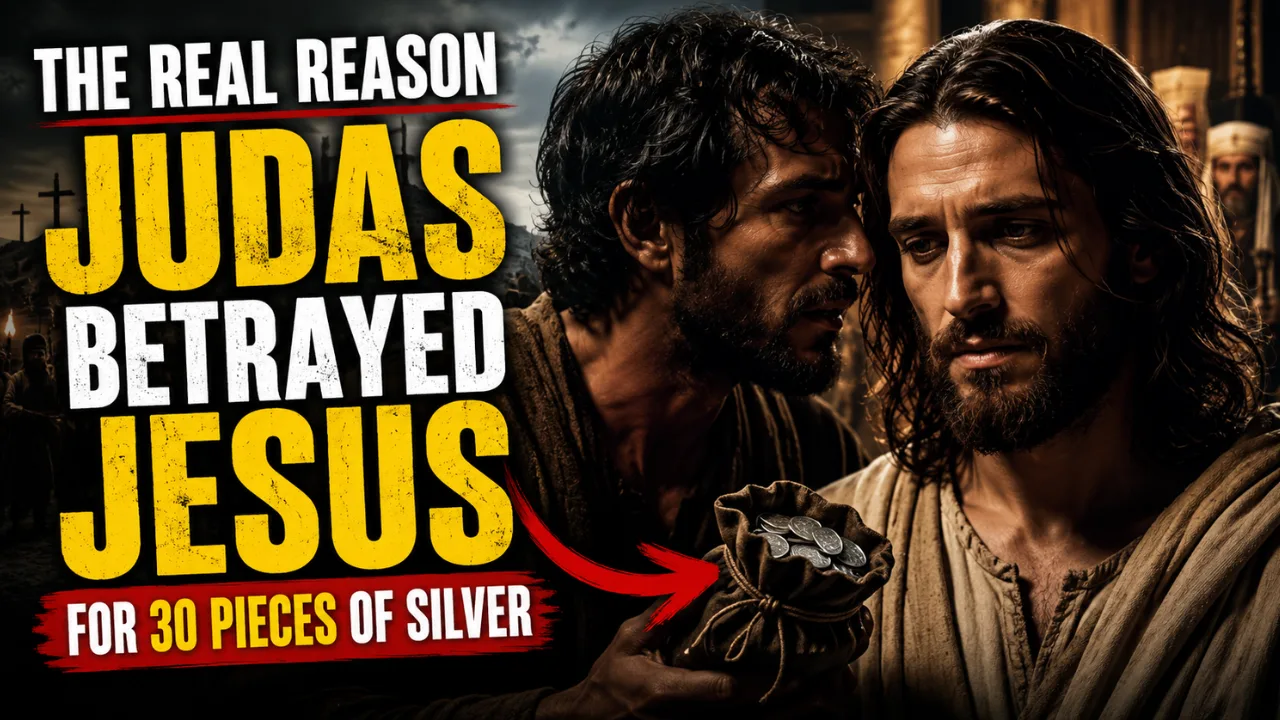

Judas betrayed Jesus for 30 pieces of silver because his heart had become ruled by greed, unbelief and spiritual darkness. The money mattered but it was not the whole reason. Judas had walked with Jesus, heard His teaching, seen His miracles and still chose to hand Him over to the chief priests.
The 30 pieces of silver reveal how cheaply Judas valued Jesus but the betrayal began before the payment. Scripture shows Judas as a disciple whose hidden greed, hardened heart and openness to evil led him to betray the innocent Christ.
Judas Went to the Chief Priests by His Own Choice
Matthew records:
“Then one of the twelve, called Judas Iscariot, went unto the chief priests, And said unto them, What will ye give me and I will deliver him unto you?”
— Matthew 26:14–15
Judas did not merely respond to an opportunity placed before him. He went to the chief priests and offered to deliver Jesus into their hands. The wording shows initiative and intent. He actively sought out those who opposed Jesus and negotiated a price for the betrayal.
The words “one of the twelve” make the betrayal especially grievous. Judas was not a distant enemy or an outsider hostile to Christ from the beginning. He had walked with Jesus, heard His teaching, seen His miracles and shared daily fellowship with the disciples. He witnessed moments many people longed to see, yet continual exposure to truth did not produce genuine faith in his heart.
His nearness to Christ did not mean his heart belonged to Christ. Judas serves as a serious warning that outward association with spiritual things is not the same as true repentance and devotion to God.
Also Read: Price of a Slave: Understand the 30 Pieces of Silver
Why the Thirty Pieces of Silver Matter
Matthew says the priests agreed to give Judas thirty pieces of silver. That amount carries Old Testament weight.
Exodus 21:32 says:
“If the ox shall push a manservant or a maidservant; he shall give unto their master thirty shekels of silver.”
In Mosaic law, thirty shekels of silver was the compensation required when a servant was killed by an ox. Matthew’s mention of the amount shows the humiliation of Christ. The Son of God was valued with a sum associated with the loss of a servant.
This fits the larger biblical picture of Jesus’ humiliation. Philippians 2:7 says Christ “took upon him the form of a servant.” The One who came in servant humility was rejected and priced in a way that reflected deep contempt.
The Prophetic Echo in Zechariah
The thirty pieces of silver also echo Zechariah 11:12–13:
“So they weighed for my price thirty pieces of silver. And the Lord said unto me, Cast it unto the potter: a goodly price that I was prised at of them.”
In the Old Testament, thirty pieces of silver was the price associated with a slave (Exodus 21:32), making the amount especially striking. Zechariah speaks of a rejected shepherd valued at thirty pieces of silver, revealing contempt and rejection toward the shepherd God had appointed. The money is then connected to the potter, a detail later mirrored in the events surrounding Judas.
Matthew later records that Judas returned the silver to the temple and that the priests used it to buy the potter’s field. The parallels are difficult to ignore. What appeared to be a simple financial transaction became part of the larger fullfillment of Scripture surrounding Christ’s rejection and death.
Matthew 27:9–10 names Jeremiah while using language closely associated with Zechariah 11:12–13. The interpretive details are debated and scholars have offered several explanations for why Jeremiah is mentioned alongside wording strongly connected to Zechariah. However, the central point remains clear: the betrayal, the silver and the potter’s field stood within the prophetic witness of Scripture and unfolded according to God’s sovereign plan.
Greed Had Already Taken Root in Judas
John gives a direct description of Judas’ character:
“This he said, not that he cared for the poor; but because he was a thief and had the bag, and bare what was put therein.”
— John 12:6
Judas had charge of the money bag and he stole from it. His betrayal was not the beginning of his corruption. It was the fruit of sin already tolerated in secret.
The thirty pieces of silver exposed what had been growing beneath the surface. Judas had followed Jesus outwardly while allowing greed to remain inwardly unjudged.
Judas’ Unbelief Went Deeper Than Money
Greed explains part of Judas’ betrayal but Scripture points deeper. In John 6:70, Jesus said:
“Have not I chosen you twelve and one of you is a devil?”
John identifies Judas as the one Jesus meant. Judas belonged outwardly to the company of the apostles but his heart stood in opposition to Christ.
This is one of the great warnings in Judas’ life. A person can be near sacred things and still remain unchanged. Judas heard the words of Christ, witnessed the works of Christ, and lived among the people of Christ, yet he did not truly belong to Christ.
Also Read: 3 Reasons Judas Sought Political Revolution
Satan Worked Through Judas’ Rebellion
Luke 22:3 says:
“Then entered Satan into Judas surnamed Iscariot, being of the number of the twelve.”
John 13:27 also says:
“And after the sop Satan entered into him.”
The Gospels present Judas’ betrayal as more than human treachery alone. Satan worked through Judas’ rebellion. Yet this does not make Judas innocent. He was not a passive victim without responsibility. Satan entered a heart already hardened by sin.
Scripture holds both realities together: Judas sinned willingly and Satan acted wickedly through him.
Jesus Knew the Betrayal Before It Happened
Jesus was never surprised by Judas. At the Last Supper, He said:
“Verily I say unto you, that one of you shall betray me.”
— Matthew 26:21
He also said:
“The Son of man goeth as it is written of him: but woe unto that man by whom the Son of man is betrayed!”
— Matthew 26:24
This verse gives one of the clearest biblical balances in the whole account. The Son of Man went as it was written. The betrayer was still guilty.
God’s plan did not excuse Judas’ sin and Judas’ sin did not overthrow God’s plan.
Judas Felt Remorse
After Jesus was condemned, Judas returned the silver and confessed:
“I have sinned in that I have betrayed the innocent blood.”
— Matthew 27:4
Judas knew he had sinned. He knew Jesus was innocent. His remorse was real but Matthew presents his sorrow as moving toward despair rather than restoration.
Peter also sinned grievously when he denied Jesus, yet Peter was restored. Judas regretted his betrayal but he did not return to Christ for mercy. His story shows the terrible difference between sorrow crushed by guilt and repentance that turns back to God.
Biblical Reason Judas Betrayed Jesus
Judas betrayed Jesus for thirty pieces of silver because greed had corrupted him, unbelief had hardened him and Satan worked through his rebellion. The Gospels present his betrayal as the result of a sinful heart that continually resisted the truth despite living in close fellowship with Christ. Yet above all of this, Scripture shows the sovereign hand of God moving Christ toward the cross according to His redemptive plan.
The silver reveals how shamefully Jesus was valued. The betrayal reveals how deeply human sin rejects the Lord, even when confronted with His truth, mercy and power. Judas exchanged the Son of God for a small payment, illustrating the blindness and corruption of the sinful heart.
But the cross reveals something greater still: even through the treachery of Judas, Jesus gave His life willingly as a ransom for many. What sinful men intended for evil, God used to accomplish salvation. The betrayal did not defeat Christ’s mission. It became part of the very path by which redemption was accomplished through His death and resurrection.
What Judas’ Betrayal Teaches About Hidden Sin
Hidden Sin Can Grow Behind a Religious Image: Judas warns us that a person can stay close to holy things outwardly while the heart is moving farther from God inwardly. He walked with Jesus, heard His teaching, saw His miracles and still allowed greed, hypocrisy, unbelief and secret compromise to grow in him. His betrayal did not appear suddenly; it was the fruit of a heart that had been left unrepented for a long time.
The Danger of Secret Compromise: Hidden sin becomes dangerous because it often learns how to hide behind religious language. Judas could sound concerned, practical or even spiritual but his heart was divided. This is why the story is not only about betrayal; it is a warning about what happens when sin is protected instead of confessed.
- Nearness to Jesus’ people is not the same as surrender to Jesus.
- Hidden greed can dress itself in religious language.
- Small compromises can prepare the heart for larger betrayal.
- Regret is not the same as repentance.
- Christ’s worth must never be traded for temporary gain.
The Serious Lesson: Judas teaches that sin must be brought into the light before it hardens the heart. A person may fool others for a time but hidden sin always shapes the soul. The answer is not religious appearance but honest repentance, surrender, and seeing Christ as more valuable than anything sin promises.

5 thoughts on “Why Judas Betrayed Jesus for 30 Pieces of Silver”