
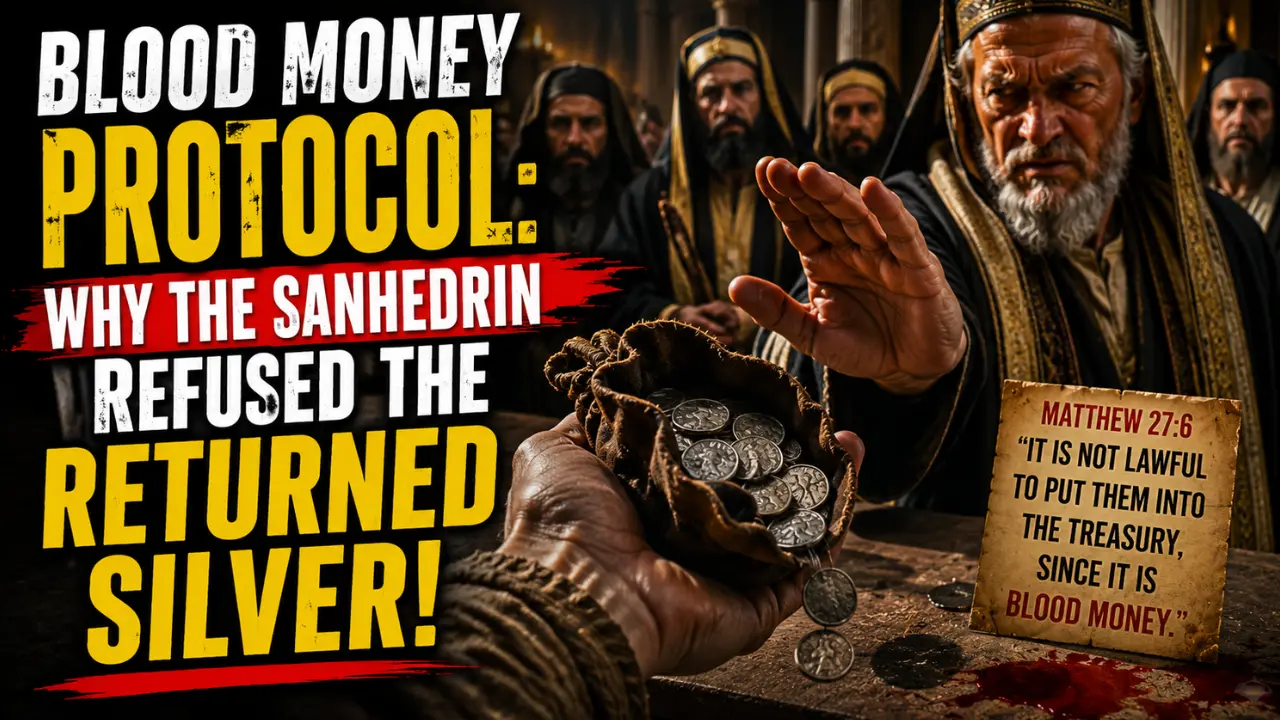

Few details in Matthew 27 are as striking as what happened after Judas returned the thirty pieces of silver. The same religious leaders who had agreed to pay Judas for betraying Jesus suddenly treated the returned money as unfit for the temple treasury.
Judas came back with the silver after Jesus had been condemned and confessed:
“I have sinned by betraying innocent blood.”
His words are significant because they amount to an acknowledgment that Jesus had been betrayed unjustly. Yet the confession had no effect on the leaders who had already determined their course of action.
The chief priests did not comfort him, question the injustice or reconsider their actions. They answered coldly:
“What is that to us? See to it yourself.”
Then Judas threw the silver into the temple and left. At that point, the chief priests had to decide what to do with the money. Their decision reveals one of the deepest ironies in the Passion narrative.
They refused to place it into the treasury because it was “blood money.” In other words, they recognized a ceremonial problem with the silver while remaining committed to the actions that had produced it. The money was considered tainted because it had been used in connection with the betrayal and death of an innocent man, yet the leaders showed no comparable concern about their own role in those events.
Also Read: Real Reason Judas Betrayed Jesus for 30 Pieces of Silver
Judas Returned the Thirty Pieces of Silver
The returned silver was the same payment Judas had received for handing Jesus over. In Matthew 26, Judas asked the chief priests what they would give him if he delivered Jesus to them and they counted out thirty pieces of silver.
After Jesus was condemned, Judas saw the result of his betrayal and was seized with remorse. He returned the money and openly admitted that Jesus was innocent.
That confession matters. Judas did not merely regret that events had gone badly. He named the moral reality of what he had done: innocent blood had been betrayed.
The chief priests refused responsibility. Their answer pushed the burden back onto Judas, even though they had arranged the payment and accepted his offer. The silver was now in their hands again but the guilt attached to it could not be dismissed as easily as Judas himself.
What “Blood Money” Meant
In Matthew 27, “blood money” refers to money connected with the shedding of innocent blood. The silver had been used to purchase betrayal. It had helped deliver Jesus into the hands of those who wanted Him condemned.
The money itself was ordinary silver but its use had marked it with guilt. It was not rejected because silver was unclean as a material. It was rejected because of what the silver had been used to accomplish. The issue was moral rather than monetary. The coins had become associated with an act that led to the condemnation of an innocent person.
This is why Judas’ confession is so important. He says, “I have sinned by betraying innocent blood,” and the priests later call the returned coins “blood money.” Even though they refuse to accept Judas’ moral accusation, their own words admit that the money is tied to blood.
They may not repent, but they still recognize that the silver cannot be treated like normal temple funds. Matthew highlights this irony to show the contrast between outward concern for ritual and the deeper issue of justice. The leaders are careful about the proper handling of the money, yet they fail to address the guilt attached to the events from which it came.
Also Read: 3 Reasons Judas Sought Political Revolution
Why the Sanhedrin Refused the Silver
Matthew 27:6 gives their reasoning:
“It is not lawful to put them into the treasury, since it is blood money.”
The temple treasury was connected to sacred use. Money placed there belonged to worship, offerings and religious purposes. The priests judged that money used to secure a death could not be placed among holy funds. In their view, the silver was no longer suitable for inclusion in the temple treasury because of its association with the betrayal and condemnation of an innocent man.
Their concern was legal and ritual. They wanted to avoid placing defiled money into the treasury. The decision reflects the importance Jewish leaders placed on maintaining ceremonial and legal standards in matters connected with the temple.
But the problem is obvious. They were concerned about where the money could be placed after the betrayal, while ignoring their own role in arranging the betrayal itself. The same leaders who declared the silver unfit for sacred use were the ones who had originally paid it to Judas.
This is the tension at the centre of the passage. The priests were careful about the temple treasury but careless about innocent blood. They guarded the appearance of sacred order while refusing to face the moral disorder of what they had done.
Irony Behind Their Decision
The irony is sharp. The leaders had no difficulty using the money to pay Judas but once the same money returned, they called it blood money.
They were willing to fund betrayal but unwilling to deposit betrayal money into the treasury.
This does not make their concern meaningless. In their own reasoning, the treasury had to be protected from money associated with blood. But Matthew presents the moment in a way that exposes their inconsistency.
They cared about the purity of temple funds while rejecting the innocence of Jesus. They treated the coins as contaminated while refusing to admit the guilt of the transaction that contaminated them.
Judas said he had betrayed innocent blood. The priests answered, “What is that to us?” Yet their refusal of the silver showed that the issue was very much before them.
Also Read: Understand the 30 Pieces of Silver
Why Temple Treasury Purity Mattered
The priests’ refusal makes more sense when we remember that the temple treasury was not an ordinary storage place for money. It was connected to religious offerings and sacred use. Money placed there was associated with worship before God.
For that reason, the chief priests did not want blood money entering the treasury. They believed such money was unfit for sacred use.
This does not excuse them. It actually heightens the irony. They understood that holy things should not be polluted, yet they failed to recognize the deeper pollution of injustice, manipulation and the condemnation of an innocent man.
Their concern for treasury purity was technically serious, but morally incomplete. Matthew shows religious leaders who can identify improper money but not repent over innocent blood.
Purchase of the Potter’s Field
Since the silver could not be placed into the treasury, the chief priests decided to use it another way. They bought the potter’s field as a burial place for foreigners.
This detail matters because the money did not simply disappear. It became attached to a public location. The field purchased with betrayal money became known as the Field of Blood.
The name preserved the memory of what had happened. The silver that Judas could not keep and the priests would not deposit became the price of a burial ground.
That outcome is deeply fitting within Matthew’s narrative. Money used to betray innocent blood becomes connected to death and burial. The priests tried to manage the problem legally but the name of the field continued to testify to the nature of the money.
Why the Field Was for Foreigners
Matthew says the potter’s field was purchased as a burial place for strangers or foreigners. This was a practical solution but it also adds another layer to the story.
The money was not returned to ordinary sacred use. It was used for a burial field outside the normal centre of temple worship and community honour. The rejected silver became tied to outsiders, death and the memory of blood.
This does not mean the burial field itself was evil. The point is that the money was redirected away from the treasury because it carried the stain of its purpose. The priests could not make it clean by ignoring its history.
How the Potter’s Field Connected to Prophecy
Matthew connects these events to Scripture, especially the prophetic pattern involving thirty pieces of silver, the house of the Lord and the potter. Zechariah 11 speaks of thirty pieces of silver as a contemptuous valuation and mentions throwing the money to the potter in the house of the Lord.
Matthew sees the returned silver and the purchase of the potter’s field as part of that fullfillment pattern.
This connection is important but it should not distract from the main issue in Matthew 27. The prophecy deepens the meaning of the event. The chief priests’ refusal of the silver, the temple setting, the potter’s field and the blood money all come together to show that even the handling of Judas’ payment was drawn into Scripture’s witness about Jesus’ rejection.
What the Refused Silver Reveals
The refused silver reveals the moral contradiction of the religious leaders. They could identify blood money but they would not acknowledge their guilt in creating it. They could protect the treasury but they would not protect the innocent. They could debate lawful use of the coins but they dismissed Judas’ confession of innocent blood.
Matthew’s account is not merely about financial procedure. It is about spiritual blindness. The leaders were careful in one area and corrupt in another. They observed a boundary around temple funds while crossing a far greater boundary in their treatment of Jesus.
The returned silver therefore becomes a witness against them. It exposes the emptiness of ritual concern when justice, truth and repentance are missing.
Blood Money Protocol
The Sanhedrin refused the returned silver because they regarded it as blood money connected to the shedding of innocent blood. According to Matthew 27:6, they believed it was unlawful to place such money into the temple treasury.
Instead, they used it to buy the potter’s field, which became known as the Field of Blood. Their decision reveals the irony of the Passion narrative: the leaders who had paid for betrayal became careful about the purity of the money after the betrayal was complete.
The refused silver shows that the coins could not be separated from the innocent blood they helped betray. The priests tried to manage the money but Matthew presents the silver as a lasting testimony to guilt, hypocrisy and the rejection of Christ.
Frequently Asked Questions
Why did the Sanhedrin refuse the returned silver?
The chief priests considered it blood money and said it was not lawful to place it into the temple treasury.
What does blood money mean in Matthew 27?
Blood money refers to money connected to the betrayal and condemnation of innocent blood.
Why was the silver considered blood money?
The silver had been paid to Judas in exchange for betraying Jesus, making it associated with His condemnation.
What happened to the returned silver?
The chief priests used it to purchase a potter’s field for burying foreigners.
Why was the field called the Field of Blood?
The field became associated with the blood money used to purchase it and the events surrounding Jesus’ betrayal.

2 thoughts on “Blood Money Protocol: Why the Sanhedrin Refused the Returned Silver”