
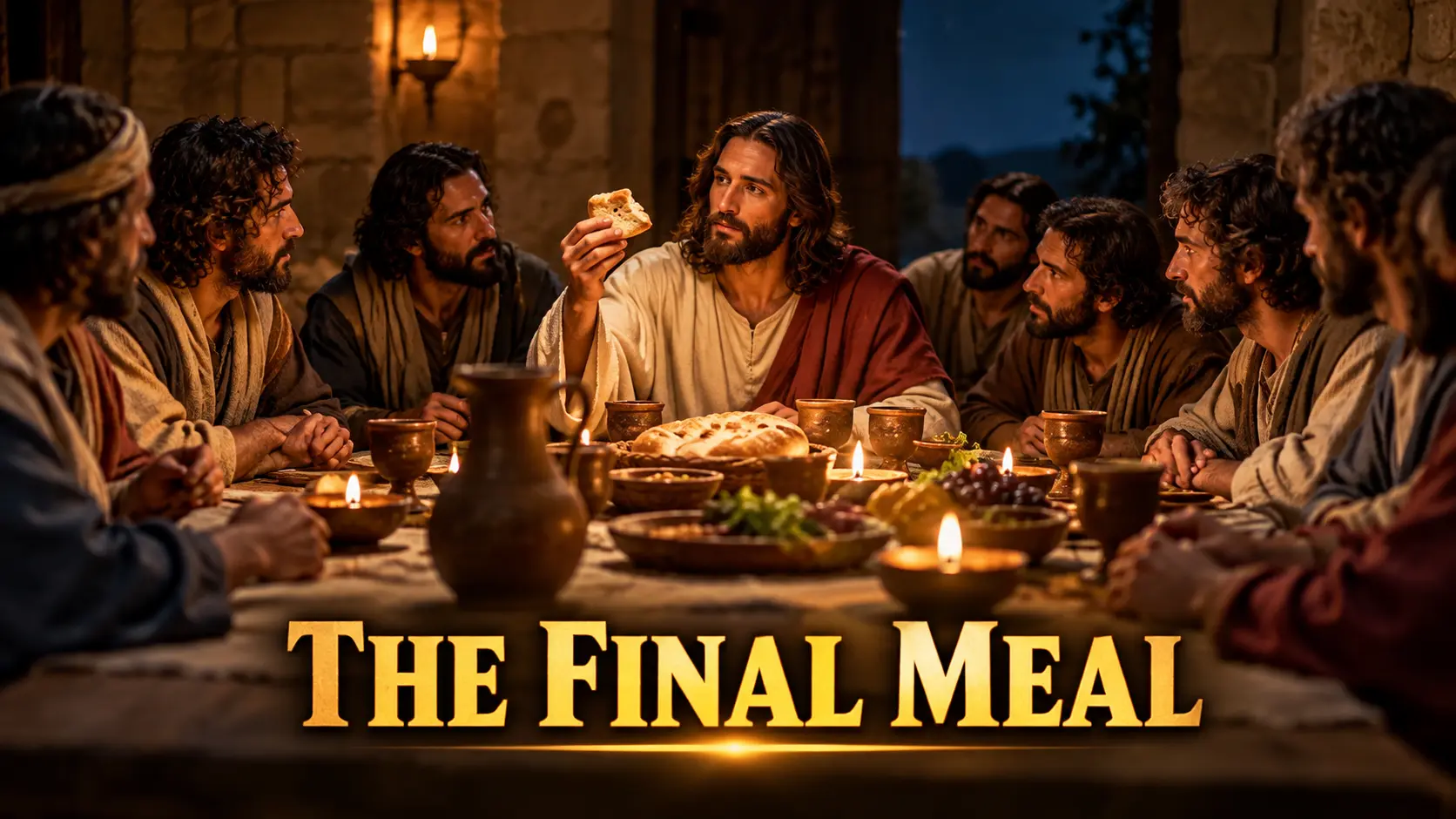

The Last Supper was the final meal Jesus shared with His twelve apostles before His arrest and crucifixion. During that evening, He spoke about His approaching death, revealed that one of His disciples would betray Him and used bread and wine to explain the meaning of His sacrifice. What happened around that table would become central to Christian worship and the understanding of Communion.
The meal also revealed something deeply personal about Jesus and His relationship with His followers. He washed their feet, taught them to love one another, and prepared them for events they could not yet fully understand. To appreciate why Christians continue to remember the Last Supper, we need to examine what the Gospels actually record and how those events connect with the Lord’s Supper celebrated today.
What Was the Last Supper in the Bible?
The Last Supper was the final meal Jesus shared with His apostles in Jerusalem before He was arrested and crucified. Matthew 26:17–30, Mark 14:12–26 and Luke 22:7–38 record the gathering, while John 13–17 provides an extended account of Jesus’ actions and teaching during His final evening with the disciples.
The Gospels describe more than an ordinary meal between a teacher and His followers. Jesus knew that His arrest was approaching, yet He used the occasion to explain His mission and prepare the disciples for what would happen next. His words gave them a way to understand the crucifixion as part of God’s saving purposes rather than simply the unexpected death of their teacher.
For Christians, the Last Supper holds particular significance because Jesus connected His body and blood with the bread and cup shared at the table. Those actions became the biblical foundation of Communion, also known as the Lord’s Supper or the Eucharist.
Where Did the Last Supper Take Place?
According to Mark 14:12–16 and Luke 22:7–13, Jesus instructed His disciples to prepare a place in Jerusalem for their meal. Luke identifies Peter and John as the disciples sent to make the arrangements, while Mark describes how they were directed to a large furnished upper room.
The Gospels do not identify the owner of the house or provide an address that would allow its precise location to be established today. A traditional site in Jerusalem is associated with the Last Supper but its identification depends on later Christian tradition rather than conclusive evidence from the biblical accounts.
What matters within the Gospel narratives is that Jesus made deliberate preparations for the gathering. He wanted to share this important occasion with His closest followers before the suffering He knew was approaching.
The Passover Setting Behind the Last Supper
The Last Supper took place during the Passover season, giving the gathering a special meaning for Jesus and His Jewish disciples. Passover commemorated God’s deliverance of the Israelites from slavery in Egypt, as described in Exodus 12. The observance connected generations of Jewish families with the memory of liberation, God’s protection and their covenant relationship with Him.
The original Passover account describes the sacrifice of a lamb, the marking of Israelite doorposts with its blood and the meal eaten before the departure from Egypt. These details belonged to the larger story of God’s deliverance of His people. When Jesus spoke about His approaching death during the Passover period, the themes of sacrifice, deliverance and covenant provided an important background to His words.
Was the Last Supper Actually a Passover Meal?
Matthew, Mark, and Luke present Jesus’ final gathering as a Passover meal. The disciples are instructed to prepare the Passover and Luke 22:15 records Jesus expressing His desire to eat it with them before His suffering.
John’s Gospel, however, contains chronological details that have led to disagreement about the precise timing of the meal. In John 18:28, for example, the Jewish authorities avoid entering the Roman governor’s headquarters so that they can eat the Passover, which raises questions about how the festival chronology should be understood.
Biblical scholars have proposed different explanations, including the broader use of the word Passover for festival observances and possible differences in calendar practices. Although the precise chronology remains debated, all four Gospels place Jesus’ final days in the Passover setting.
It is also worth distinguishing the first-century meal from the modern Jewish Passover Seder. Some familiar Seder customs developed through later Jewish tradition, so they should not automatically be inserted into the Gospel accounts. Readers interested in this historical question can explore our detailed explanation of whether the Last Supper was a Passover meal.
What Happened During the Last Supper?
The Gospel writers record several important events from Jesus’ final evening with His disciples. Some details appear in multiple Gospels, while others are preserved in only one account. Reading the accounts together provides a fuller understanding of the occasion, although the exact chronological order of every conversation is not always certain.
The gathering included ordinary features of a shared meal, such as eating bread, drinking from cups and reclining at the table. Yet Jesus also spoke about betrayal, explained His approaching death and gave instructions that would influence the worship and conduct of His followers for generations.
Jesus Announced That Someone Would Betray Him
One of the most troubling moments occurred when Jesus announced that someone eating with Him would betray Him. Matthew 26:21–22 describes how the disciples became sorrowful and began asking whether they might be the person He meant.
The announcement was especially painful because the betrayer was not a stranger. Judas Iscariot belonged to the Twelve, had travelled with Jesus, and had witnessed much of His ministry. The betrayal would come from within the group that had shared daily life and fellowship with Him.
John 13:26–30 describes Jesus identifying Judas through a piece of bread dipped into a dish. After receiving it, Judas left the gathering, and John adds the detail that it was night. The account emphasizes the seriousness of betrayal occurring during an evening when Jesus was speaking about love, service and His approaching sacrifice.
Jesus Took Bread and Shared It With His Disciples
Matthew 26:26 records Jesus taking bread, blessing it, breaking it and giving it to His disciples. He identified the bread with His body, giving a familiar part of the meal a particular significance connected with His approaching death.
Luke 22:19 includes Jesus’ instruction to remember Him through this action. The disciples were being given a way to recall His self-giving sacrifice, although they would understand its full significance more clearly after the crucifixion and resurrection.
Jesus Shared the Cup and Spoke About His Blood
Jesus also took the cup and connected it with His blood. Matthew 26:28 associates His blood with the covenant and the forgiveness of sins, while Luke 22:20 speaks of the new covenant in His blood.
These words connected His approaching death with biblical ideas of sacrifice and covenant. Instead of leaving the disciples to interpret the crucifixion without guidance, Jesus used the meal to explain why His death mattered.
The bread and cup became enduring elements of Christian worship, although different churches understand their sacramental meaning differently. Their biblical background is examined more fully in our article about the meaning of bread and wine at the Last Supper.
What Did Jesus Mean by the New Covenant?
When Jesus spoke about the new covenant, He used language that had a long history in Scripture. A covenant describes a binding relationship involving commitments and promises and the Old Testament repeatedly presents God establishing covenant relationships with His people.
In Exodus 24, Moses confirmed the covenant between God and Israel using sacrificial blood. Centuries later, Jeremiah 31:31–34 announced a coming new covenant in which God’s law would be written upon the hearts of His people and their sins would be forgiven.
The connection between these passages helps explain why Jesus spoke about His blood at the Last Supper. He was not merely predicting that He would die; He was relating His death to God’s promises concerning forgiveness and a renewed covenant relationship.
The New Testament develops this understanding further, particularly in Hebrews 8–10. Christian theology understands Jesus’ sacrifice as central to the establishment of the new covenant, with His death providing the foundation for forgiveness and reconciliation with God.
For the disciples, these words would have been difficult to understand fully before the crucifixion. They expected God’s kingdom and had followed Jesus as their Messiah but the events ahead would challenge their understanding of how His mission would be fulfilled.
The Last Supper therefore stands at an important point between promise and fulfillment in the Christian reading of Scripture. Jesus connected the covenant promises of the Old Testament with the death He was about to experience.
Why Jesus Washed His Disciples’ Feet
John 13:1–17 records one of the most memorable actions of Jesus’ final evening. During the meal, He rose from the table, took a towel, poured water into a basin and began washing the disciples’ feet.
In the ancient world, washing feet was a practical necessity because people commonly travelled on dusty roads wearing sandals. Offering water to guests was associated with hospitality, while the actual work of washing another person’s feet could be regarded as a humble form of service.
The surprising part of the account is that Jesus, whom the disciples recognized as their Teacher and Lord, willingly performed this task Himself. His actions challenged their expectations about authority and greatness.
Why Peter Objected to Having His Feet Washed
Peter initially resisted when Jesus approached him. He found it difficult to accept that his Lord would perform a task normally associated with someone in a position of service.
Jesus explained that Peter did not yet understand what He was doing, but that its meaning would become clearer. When Peter continued to object, Jesus emphasized the importance of accepting what He was offering, leading Peter to respond with a willingness to be washed more completely.
The exchange reveals how deeply the disciples needed to rethink their understanding of leadership. Jesus was demonstrating that spiritual authority did not place a person above humble acts of service.
The Lesson Jesus Wanted His Disciples to Understand
After washing their feet, Jesus explained that He had given them an example to follow. If He, their Lord and Teacher, had washed their feet, they should also be willing to serve one another.
This lesson was not simply about performing a household task. It challenged the belief that importance should be demonstrated through privilege, position or the ability to command others.
Christian traditions differ in how they practice foot washing today. Some churches observe it as a religious ordinance or ceremony, while others emphasize the wider command to live with humility and serve one another.
In either case, the meaning of the event extends beyond the upper room. Jesus demonstrated that love and leadership should be expressed through actions that place the needs of others ahead of personal status.
The New Commandment Jesus Gave at the Last Supper
John 13:34–35 records Jesus instructing His disciples to love one another as He had loved them. He also explained that such love would make their identity as His followers recognizable to others.
The command to love one’s neighbour was already present in the Old Testament, particularly in Leviticus 19:18. What made Jesus’ instruction distinctive was the example He provided through His own life and the standard of love He placed before His followers.
He had just demonstrated humility through foot washing and was preparing to face arrest and suffering. His teaching about love therefore came at a moment when His own conduct was giving that command a powerful meaning.
For Christians, this connects the Last Supper with everyday relationships rather than limiting its significance to church worship. Remembering Jesus should influence the willingness to serve, forgive, care for others and remain faithful when relationships become difficult.
The command also adds depth to the meaning of Communion. A community that remembers Christ’s self-giving sacrifice is called to reflect His love in the way its members treat one another.
Judas’ Betrayal and Peter’s Denial
The Last Supper also revealed that those closest to Jesus were capable of serious failure. Judas was preparing to betray Him, while Peter confidently declared loyalty that he would later struggle to maintain.
Judas had already arranged to hand Jesus over to the authorities, as Matthew 26:14–16 explains. His betrayal was deliberate and the Gospel accounts connect his actions with the events that led to Jesus’ arrest.
Peter’s situation was different. He insisted that he would remain faithful, yet Jesus warned that he would deny knowing Him three times. Mark 14:30 includes the detail that this would occur before the rooster had crowed twice.
After Jesus’ arrest, Peter did deny knowing Him, as the Gospel accounts record. His failure exposed the difference between sincerely intending to remain loyal and having the courage to act on that intention under severe pressure.
The later restoration of Peter, particularly in John 21, shows that his denial did not become the final chapter of his relationship with Jesus. Judas’ betrayal and Peter’s denial are therefore not interchangeable stories, even though both reveal the vulnerability and failures of people who had lived close to Jesus.
Did Judas Receive Communion Before He Left?
The Bible does not settle with complete certainty whether Judas participated when Jesus gave the bread and cup their special meaning. Matthew and Mark record the betrayal announcement before the institution of the Lord’s Supper, while Luke presents the betrayal reference after the bread and cup.
John records Judas leaving the gathering but does not narrate the institution of Communion in the same way as the Synoptic Gospels. For that reason, combining the accounts into one certain sequence is difficult.
Some interpreters conclude that Judas left before Jesus instituted Communion, while others believe he may have remained long enough to participate. Our separate article, Was Judas at the First Communion?, examines the evidence and explains why the question remains debated.
What Happened Immediately After the Last Supper?
Matthew 26:30 and Mark 14:26 report that Jesus and His disciples sang a hymn before going to the Mount of Olives. Neither Gospel identifies the hymn, although many interpreters associate it with the Hallel Psalms traditionally connected with Passover worship.
The precise song remains unknown, and it would be misleading to identify one particular Psalm as certain. Our article about the hymn Jesus and His disciples sang examines the biblical record and the historical reasons behind that interpretation.
After leaving the meal, Jesus went with His disciples toward the place where He would pray before His arrest. Matthew and Mark identify Gethsemane as the setting of this prayer, while John describes Jesus entering a garden across the Kidron Valley.
In Gethsemane, Jesus experienced deep distress as He faced His approaching suffering. He prayed to the Father and expressed His willingness to submit to God’s will, even as the disciples struggled to remain awake.
The movement from the Last Supper to Gethsemane is important because it places Jesus’ words about sacrifice alongside the personal suffering He was about to endure. What He had explained through the bread and cup was no longer a distant prediction; the events leading to His death were beginning to unfold.
How the Last Supper Became Christian Communion
The Last Supper was a particular historical gathering, but the sharing of bread and the cup became an enduring practice within the Christian church. The foundation for this observance appears in Jesus’ instructions during the meal and in the teaching of the apostle Paul.
In 1 Corinthians 11:23–26, Paul recalls Jesus taking bread and the cup on the night He was betrayed. He repeats Jesus’ instruction to remember Him and explains that believers proclaim the Lord’s death when they participate in the meal.
This passage connects Communion with both remembrance and expectation. Christians look back to Jesus’ death while also expressing the hope associated with His promised return.
Is Communion the Same as the Last Supper?
The Last Supper and Communion are closely connected but they are not identical events. The Last Supper refers to Jesus’ historical meal with His apostles, while Communion is the continuing Christian practice rooted in His words and actions during that meal.
The historical gathering included events that are not normally repeated whenever Christians receive Communion. The betrayal announcement, Peter’s warning, and the extended teaching recorded in John’s Gospel belonged to the particular circumstances of Jesus’ final evening.
Communion concentrates especially on the bread and cup and their relationship to Jesus’ death. Its form and frequency vary among Christian traditions, but the biblical connection to the Last Supper remains central.
Why Do Christians Call It the Lord’s Supper or the Eucharist?
The expression Lord’s Supper appears in 1 Corinthians 11:20 and emphasizes the meal’s relationship to Jesus. It is particularly common in Protestant discussions of the biblical practice.
The word Eucharist comes from a Greek term associated with thanksgiving, reflecting Jesus’ act of giving thanks over the bread and cup. It is especially familiar in Catholic, Orthodox, Anglican and other liturgical traditions.
The word Communion emphasizes participation and fellowship, ideas that are especially clear in 1 Corinthians 10:16–17. Although these terms overlap, churches may prefer different expressions because of their theological traditions.
Do All Churches Understand Communion in the Same Way?
Christian churches do not all agree about what happens when believers receive the bread and cup. The Catholic Church teaches the real presence of Christ through transubstantiation, while Eastern Orthodox Christianity also affirms His real presence, using its own theological language and sacramental tradition.
Lutheran Christians affirm Christ’s real presence in the Lord’s Supper and Reformed traditions generally emphasize spiritual participation in Christ. Many Baptist and other evangelical churches place particular emphasis on remembrance and obedience, although beliefs also vary within Protestant communities.
These differences are significant and should not be treated as merely different names for exactly the same understanding. Nevertheless, the traditions share a historical connection to Jesus’ final meal and the New Testament accounts of His words concerning the bread and cup.
Why Paul Warned Christians About Taking Communion Unworthily
Paul’s discussion of Communion in 1 Corinthians 11 includes a strong correction directed at the church in Corinth. Some believers were treating their gatherings selfishly, with divisions between those who had plenty to eat and those who were left hungry.
This behaviour contradicted the shared fellowship that the Lord’s Supper was meant to express. Paul challenged the congregation because their treatment of one another failed to reflect the significance of Christ’s sacrifice.
In 1 Corinthians 11:27–29, Paul warns against receiving the bread and cup in an unworthy manner. His concern involves the seriousness of the observance and the way believers approach it, rather than suggesting that Christians must achieve moral perfection before participating.
The surrounding passage also shows why Communion can not be separated from the relationships within a Christian congregation. Paul was addressing a community whose actions humiliated fellow believers while supposedly gathering to remember Christ.
The warning encourages sincere examination and a proper recognition of the meal’s significance. A fuller discussion is available in our article about unworthy Communion in 1 Corinthians 11.
Why the Last Supper Still Matters to Christians Today
The Last Supper remains important because it connects the final days of Jesus’ earthly ministry with the continuing worship and identity of the church. The bread and cup direct Christians toward His death, while His other actions reveal the kind of relationships He wanted His followers to build.
The evening also offers a striking picture of human weakness. Judas was preparing to betray Jesus, Peter was about to deny Him and the other disciples would soon face fear and confusion. Yet Jesus continued teaching, serving, and preparing them for what lay ahead.
For Christians, this makes the Last Supper more than a religious scene remembered through paintings or annual Holy Week services. It draws attention to the meaning of Christ’s sacrifice while challenging believers to consider whether their own conduct reflects the humility and love He demonstrated.
Remembering Jesus Should Influence Everyday Life
One practical lesson of the Last Supper is that religious remembrance should be connected with conduct. Jesus did not simply instruct His disciples to preserve His words; He washed their feet and gave them an example of service.
That teaching remains relevant in families, friendships, churches, and communities. A person may understand the biblical events accurately while still struggling to practice humility, patience or forgiveness toward others.
The Last Supper encourages Christians to recognize that faith involves both remembering what Jesus did and taking His teachings seriously in everyday relationships.
The Meal Points Beyond Jesus’ Death
Although the Last Supper occurred shortly before the crucifixion, its message was not limited to suffering and loss. In Matthew 26:29, Jesus spoke of a future occasion when He would drink of the fruit of the vine in His Father’s kingdom.
Paul also connects the Lord’s Supper with the expectation of Christ’s return in 1 Corinthians 11:26. The observance therefore looks backward to the cross while also expressing Christian hope concerning the future.
This combination of remembrance and expectation helps explain why the meal became so important to Christian worship. It recalls the sacrifice of Jesus without treating His death as the end of the Gospel story.
Frequently Asked Questions
Why did Jesus have the Last Supper?
Jesus shared the Last Supper with His apostles during the Passover period, shortly before His arrest. During the meal, He explained the significance of His approaching death and gave His disciples instructions they would continue to remember. The occasion also allowed Him to prepare His closest followers for the suffering and uncertainty they were about to experience.
What is the difference between the Last Supper and Communion?
The Last Supper was the historical meal Jesus shared with His apostles before His crucifixion. Communion is the continuing Christian practice rooted in His words and actions involving the bread and cup. Churches observe Communion differently but the practice remains connected to Jesus’ sacrifice and His instruction to remember Him.
Where in the Bible is the Last Supper described?
The Last Supper is described in Matthew 26:17–30, Mark 14:12–26 and Luke 22:7–38. John 13–17 also records important events and teachings from Jesus’ final evening with His disciples, including the washing of their feet. Paul later discusses the Lord’s Supper and its meaning for Christians in 1 Corinthians 11:23–26.
What do the bread and wine mean at the Last Supper?
Jesus connected the bread with His body and the cup with His blood, which He associated with the covenant and His approaching death. These elements became central to Christian Communion and the remembrance of His sacrifice. Different Christian traditions explain their sacramental meaning in different ways but the connection to Jesus’ death remains foundational.

9 thoughts on “The Last Supper and Communion Explained”