
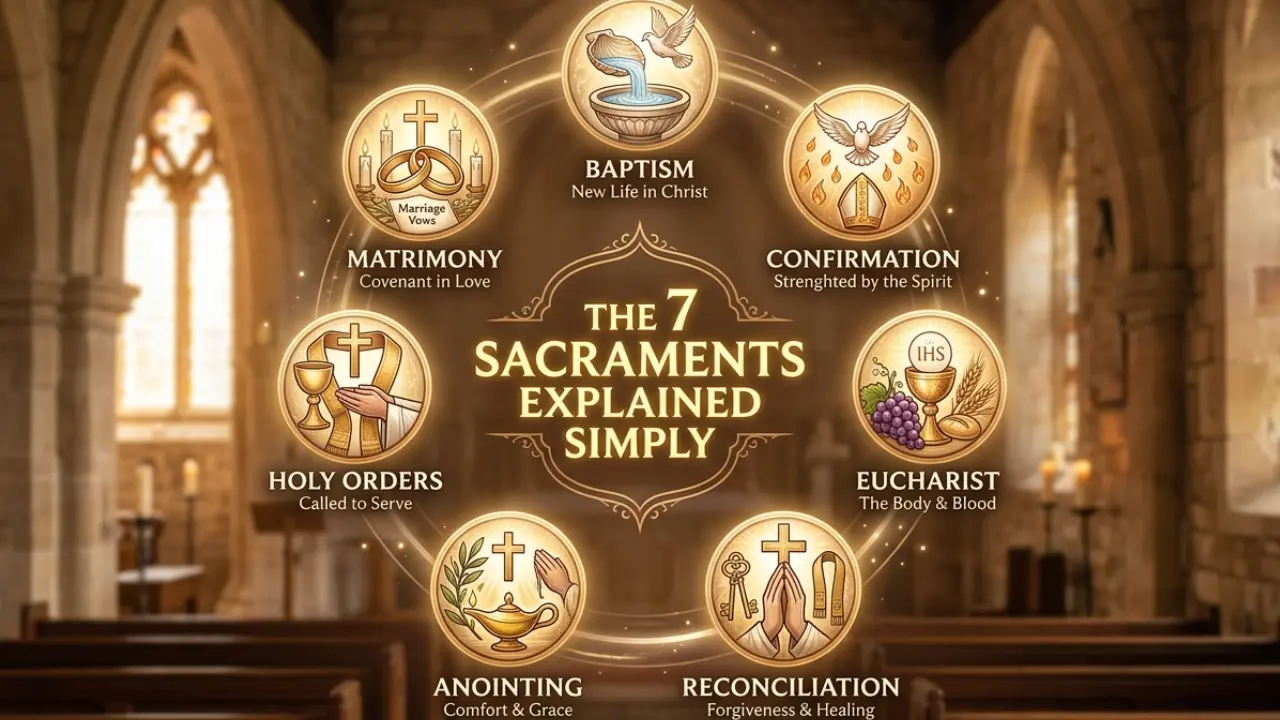

Faith is often something we carry inside. We believe, we pray and we trust, yet it can sometimes feel distant or unseen. God, in His wisdom chose not to leave faith only in the unseen. He gave visible ways to experience His grace.
A sacrament is a simple and sacred way God reaches into everyday life. Through ordinary things like water, bread, wine, oil and spoken promises, He makes His presence known. These moments help believers not only believe, but also experience.
Jesus gave these sacraments to guide His people through life. They are not empty rituals, but meaningful encounters. Each one speaks clearly about God’s love and draws the believer closer to Him.
1. Baptism
Baptism is where the Christian journey begins. It marks a clear step into a new life with Christ and shows a person’s desire to follow Him. It is both a beginning and a declaration.
Water carries deep meaning in this moment. It represents cleansing and renewal, pointing to the truth that a new life has begun. Scripture connects baptism with being made new, leaving behind what was old.
This sacrament is more than a ceremony. It is a turning point that sets the direction for a life with God. It reminds the believer that they now belong to Him.
2. Eucharist (Communion)
The Eucharist brings believers back to a sacred moment with Jesus. At the Last Supper, He used bread and wine to reveal something deeper about His sacrifice. That meaning continues each time Communion is shared.
This sacrament is not only about remembering. It is a way of receiving spiritual nourishment and staying connected to Christ. It quietly strengthens the heart and renews faith.
Returning to Communion again and again keeps the relationship with Christ alive. It is a steady reminder that He remains present and faithful.
3. Confirmation
Confirmation is a step where faith becomes personal and grounded. It moves from something received to something truly owned. It marks a deeper commitment to walk with God.
The Holy Spirit works within the believer, bringing strength, clarity and courage. This is not always visible, but it is real and lasting. It helps the believer stand firm even in difficulty.
Through this sacrament, faith grows stronger and more mature. It becomes something that shapes daily life with purpose and conviction.
4. Reconciliation (Confession)
Sin creates distance between the believer and God. Reconciliation offers a way to return, not with fear, but with honesty and hope. It begins by facing what is true.
In confession, sin is brought into the light. God responds with mercy, as seen in 1 John 1:9 and the story of the prodigal son in Luke 15. Forgiveness is not earned, but freely given.
This sacrament restores peace within the heart. It brings healing and renews the relationship with God. It reminds the believer that grace is always available.
5. Anointing of the Sick
There are times when the body grows weak and the heart feels heavy. Illness can bring fear and uncertainty. In these moments, God draws especially near.
Through prayer and anointing with oil, the sick are placed in God’s care. Scripture teaches that believers are to pray over the sick and trust in God’s presence. There is comfort in knowing He is present.
This sacrament brings strength, even when healing looks different than expected. It offers peace and reminds the believer that no suffering is faced alone.
6. Marriage
Marriage is a sacred covenant between husband and wife. It is not built only on emotion, but on commitment, faithfulness and shared purpose. It is a promise made before God.
This love is shaped over time through patience and sacrifice. Scripture compares this faithful love to Christ’s love for His Church. It reflects something deep and lasting.
Marriage becomes a living example of covenant love. It is meant to endure through every season, showing faithfulness even in difficulty.
7. Holy Orders
Holy Orders is a calling to serve God and His people in a special way. It is not about position or honour, but about responsibility and dedication. It is a life given for others.
Those who are called lead, teach and care for the Church. They guide believers and help them grow in faith. Their work is quiet, steady and important.
Through this sacrament, the Church is strengthened. It ensures that believers are supported and led with wisdom and care.
One Grace, Many Moments
Each sacrament meets a different moment in life. Some mark beginnings, others bring strength, healing or direction. Together, they form a complete path of faith.
Though they are different, they all carry the same purpose. God gives His grace through these visible signs. Faith becomes something real and lived.
These are not burdens to carry, but gifts to receive. Through simple acts, God works deeply in the life of every believer.

1 thought on “The 7 Sacraments Explained Simply and Clearly”