
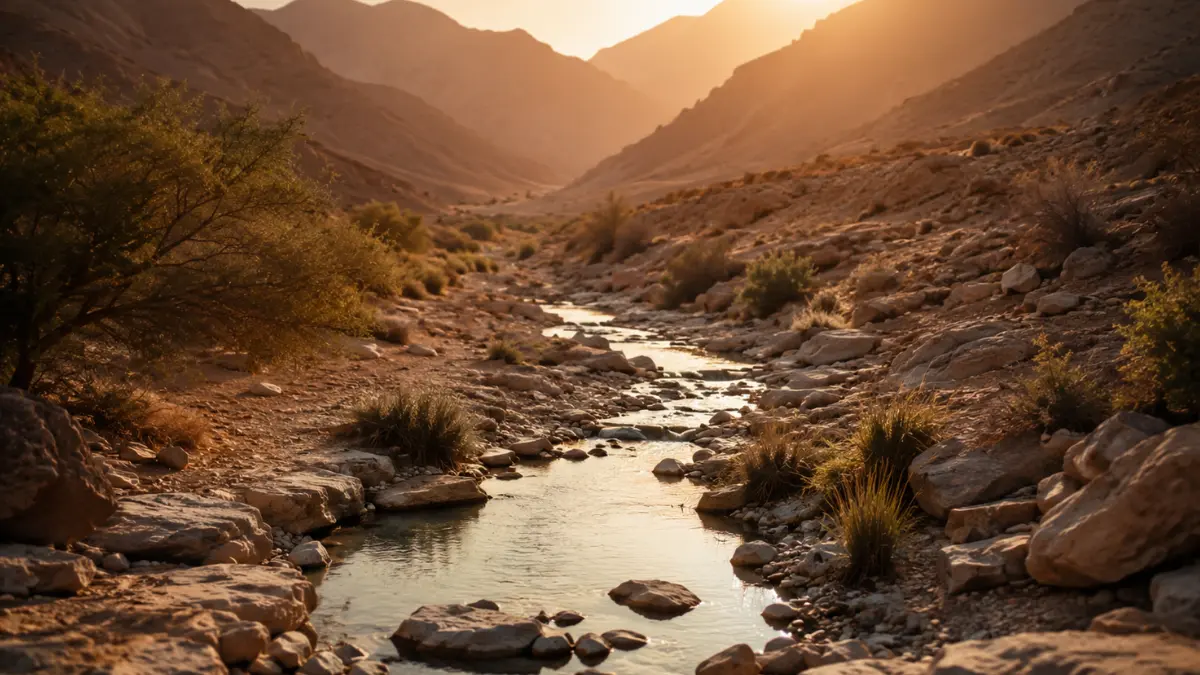

The Valley of Baca in Psalm 84:6 represents a difficult, dry or sorrowful part of the journey toward God’s presence. It may refer to an actual place that ancient worshippers knew, but Scripture does not provide enough information to identify its location with certainty. The name also carries associations with weeping and dryness, which allows the valley to function as a powerful picture of hardship.
Psalm 84 does not describe the Valley of Baca as the pilgrims’ destination. They pass through it while traveling toward Zion. They draw their strength from God, find or create places of refreshment along the way, and continue until they appear before Him. The passage therefore teaches perseverance, dependence on God and hope during painful seasons.
Psalm 84:5–7 says:
“Blessed is the man whose strength is in thee; in whose heart are the ways of them. Who passing through the valley of Baca make it a well; the rain also filleth the pools. They go from strength to strength, every one of them in Zion appeareth before God.”
Also Read: Why Does Proverbs Refer to Wisdom as “She”?
What Does “Baca” Mean in the Bible?
The precise meaning of “Baca” remains uncertain. Bible translations and commentators commonly connect it with one of two ideas.
Some understand Baca as a word related to weeping. This connection produces translations and descriptions such as the “Valley of Weeping” or “Valley of Tears.” Under this interpretation, the name describes a place associated with grief, difficulty, or lament.
Others connect the word with balsam trees. These trees grow in dry areas and produce drops of resin that can resemble tears. This association still supports the picture of a dry and demanding landscape.
Both explanations point toward a similar setting: a valley where travellers would face discomfort, exhaustion, and limited water. The psalm uses that setting to show how people who trust God continue their journey through difficult terrain.
Readers should avoid presenting either word origin as completely certain. The passage gives enough information to understand the spiritual picture, but it does not answer every historical or geographical question.
Was the Valley of Baca a Real Place?
The Valley of Baca may have referred to a real location on a pilgrimage route toward Jerusalem. Ancient worshippers often travelled through demanding terrain when they went to worship at the sanctuary. A dry valley would have created a natural obstacle during that journey.
However, no confirmed biblical map identifies a specific valley as the Valley of Baca. Psalm 84 provides the only direct biblical reference to this name. Scripture does not describe its boundaries, nearby towns or exact location.
Several possibilities therefore remain open:
- It may have been a real valley that the original audience recognized.
- It may have carried a descriptive name because of its dryness or balsam trees.
- The psalmist may have used the name poetically to represent sorrow and difficulty.
- The passage may combine a familiar physical setting with a deeper spiritual meaning.
The article does not need to choose one possibility and reject every other one. Biblical poetry often begins with a concrete image and uses it to communicate a wider truth. Even if the Valley of Baca referred to a literal location, the psalm clearly uses the journey to teach something about faith, strength, and longing for God.
Also Read: Zacchaeus’ Fourfold Repayment in Luke 19 Explained
Valley Makes Sense Within the Message of Psalm 84
Psalm 84 expresses a deep longing for the place where God’s people gathered to worship. Its title associates the psalm with the sons of Korah, a Levitical family connected with temple worship and sacred music.
The writer does not merely admire the temple as an impressive building. He longs for the living God. He envies the birds that build nests near the altar because they can remain close to the place of worship.
The psalm then turns toward those who travel to Zion:
“Blessed is the man whose strength is in thee; in whose heart are the ways of them.”
The journey begins inside the heart. The travellers know where they want to go, and their desire for God shapes the direction of their lives. Their circumstances may exhaust them, but they do not depend entirely on their own physical or emotional strength.
The Valley of Baca appears within this pilgrimage. It stands between the worshippers and the place they long to reach. The valley tests them, but it does not change their destination.
“Whose Strength Is in You”
Psalm 84:5 identifies the source of the pilgrims’ endurance before it mentions the valley. Their strength comes from God.
This order matters. The psalm does not describe naturally fearless people who overcome hardship through determination alone. It describes people who know their weakness and depend on God as they travel.
Faith does not always remove the difficult road. Instead, God often supplies the strength required to continue walking through it.
A Christian may enter a Valley of Baca through grief, financial pressure, disappointment, illness, family conflict, loneliness, or prolonged uncertainty. These experiences can weaken the body and trouble the mind. Psalm 84 does not ask believers to pretend that such valleys feel pleasant.
It directs them toward the source of strength they need within the valley.
Also Read: Meet Zacchaeus: Short, Dishonest Tax Collector Who Found Christ
“Whose Heart Is Set on Pilgrimage”
Several modern translations describe the worshippers as people whose hearts remain set on pilgrimage or on the highways to Zion.
Their physical feet travel toward Jerusalem, but their hearts already point toward God. They have settled the direction of their journey even though they have not reached the destination.
This does not mean they understand everything that happens along the road. They may feel tired, confused, or discouraged. Yet they continue to orient their lives toward God.
A heart set on pilgrimage does not require constant emotional confidence. It requires a continuing desire to seek God, obey Him, and remain near Him.
Someone can weep and still move toward God. Someone can ask difficult questions and still trust Him. Someone can feel weak while continuing to follow the path of faith.
“Passing Through the Valley of Baca”
The phrase “passing through” carries an important part of the verse’s message. The travellers enter the valley, but the valley does not become their final home.
This does not promise that every painful season will end quickly. Some forms of suffering last much longer than people expect. Some losses permanently change earthly life. Christians should therefore avoid using this verse to give careless assurances about when a person’s hardship will end.
The verse instead places hardship within a larger journey. The valley cannot define the whole pilgrimage because Zion remains ahead.
Believers may not know how long a season will last, but they can know that suffering does not hold the final authority over their relationship with God or their eternal future.
“They Make It a Well”
The King James Version says that the pilgrims “make it a well.” Other translations describe them as making the valley a place of springs.
The image shows a remarkable change. A dry place becomes associated with water, refreshment, and renewed strength.
The line may describe travellers digging wells or discovering springs along the route. It may also work poetically, showing how faithful pilgrims experience God’s provision in a place that first appeared empty.
The next phrase adds another source of water: rain fills or covers the pools. The travellers continue faithfully, while God supplies what human effort alone cannot provide.
The passage therefore brings perseverance and divine provision together. The pilgrims walk, prepare, and continue. God sends the rain.
Christians should not turn this image into a promise that every hardship will produce material prosperity. The refreshment may come through spiritual endurance, biblical wisdom, a supportive church, an answered prayer, renewed hope, practical help, or a deeper awareness of God’s presence.
The valley may remain difficult even while God provides enough strength for the next part of the journey.
Also Read: 7 Important Facts About the Amalekites in the Bible
“They Go From Strength to Strength”
Psalm 84:7 says that the travellers go “from strength to strength” until they appear before God in Zion.
This phrase does not describe uninterrupted success. The pilgrims still travel through a dry valley. Their strength comes in stages because the journey requires continuing dependence on God.
They receive enough strength to reach the next part of the road. Then God sustains them again.
This pattern appears throughout Christian life. Believers often want all the courage, clarity, and provision they will need for the entire future. God frequently gives strength for the responsibility directly in front of them.
Going from strength to strength can involve prayer after discouragement, obedience after uncertainty, worship after grief, or renewed faith after exhaustion. The person still feels the weight of the journey, but God does not abandon that person within it.
What the Valley of Baca Does Not Mean
Psalm 84:6 does not teach that faithful people will avoid suffering. The pilgrims enter the valley even though their hearts remain directed toward God.
It does not promise that Christians can transform every painful circumstance through positive thinking. God provides the strength and rain in the passage.
It does not guarantee wealth, promotion, healing, or an immediate change of circumstances. The verse focuses on reaching God’s presence, not obtaining every desired earthly outcome.
It also does not require people to remain in preventable danger. A person may need to seek protection, medical care, pastoral support, legal help, or another form of practical assistance. Trusting God and taking wise action can work together.
The psalm teaches faithful movement through hardship. It does not glorify unnecessary suffering.
How Christians Can Apply Psalm 84:6
Christians can first name their valley honestly. The psalm does not hide the dry landscape or replace sorrow with religious language. Honest prayer allows believers to bring exhaustion, disappointment, and grief before God.
They can also keep their hearts directed toward Him. A difficult season can consume attention until the problem becomes the person’s only point of reference. Scripture, prayer, worship, and Christian fellowship help believers remember the destination of their faith.
Christians can look for the provision God has already placed along the road. A spring may appear through a timely conversation, a biblical promise, a practical opportunity, or strength that arrives when personal resources seem exhausted.
They can also create refreshment for those who travel behind them. Someone who has walked through grief may learn how to comfort another grieving person. Someone who has endured uncertainty may offer patient companionship rather than simple answers. This application does not make suffering good in itself, but it recognizes that God can use faithful people to serve others within difficult places.
Most importantly, Christians can measure progress by continued faithfulness rather than constant comfort. The pilgrims succeed because they continue toward God.
How the Valley of Baca Points Christians Toward Christ
Psalm 84 centres on the longing to enter God’s presence. Christians understand that Jesus Christ provides access to God that no earthly journey or temple pilgrimage could permanently secure.
Through Christ, believers approach God with confidence, receive mercy, and carry the hope of living in His presence forever. Their earthly valleys remain real, but those valleys no longer lead toward an uncertain destination.
The Christian journey moves toward the God who has already come near through His Son.
This hope does not remove present sorrow. It gives sorrow a boundary. The Valley of Baca lies along the road, but it does not stand at the end of it.
Frequently Asked Questions
Where was the Valley of Baca located?
Scripture does not provide enough geographical information to identify its exact location. It may have been a real place on a pilgrimage route, a descriptive name, a poetic image, or a combination of these possibilities.
Does Baca definitely mean weeping?
Many interpreters connect Baca with weeping, while others associate it with balsam trees found in dry regions. The precise origin remains uncertain, but both interpretations fit the passage’s picture of a difficult valley.
What does “from strength to strength” mean?
It means that God continues to sustain the worshippers throughout their journey. They receive renewed strength as they move closer to Zion rather than depending on one supply of personal strength for the entire road.
