
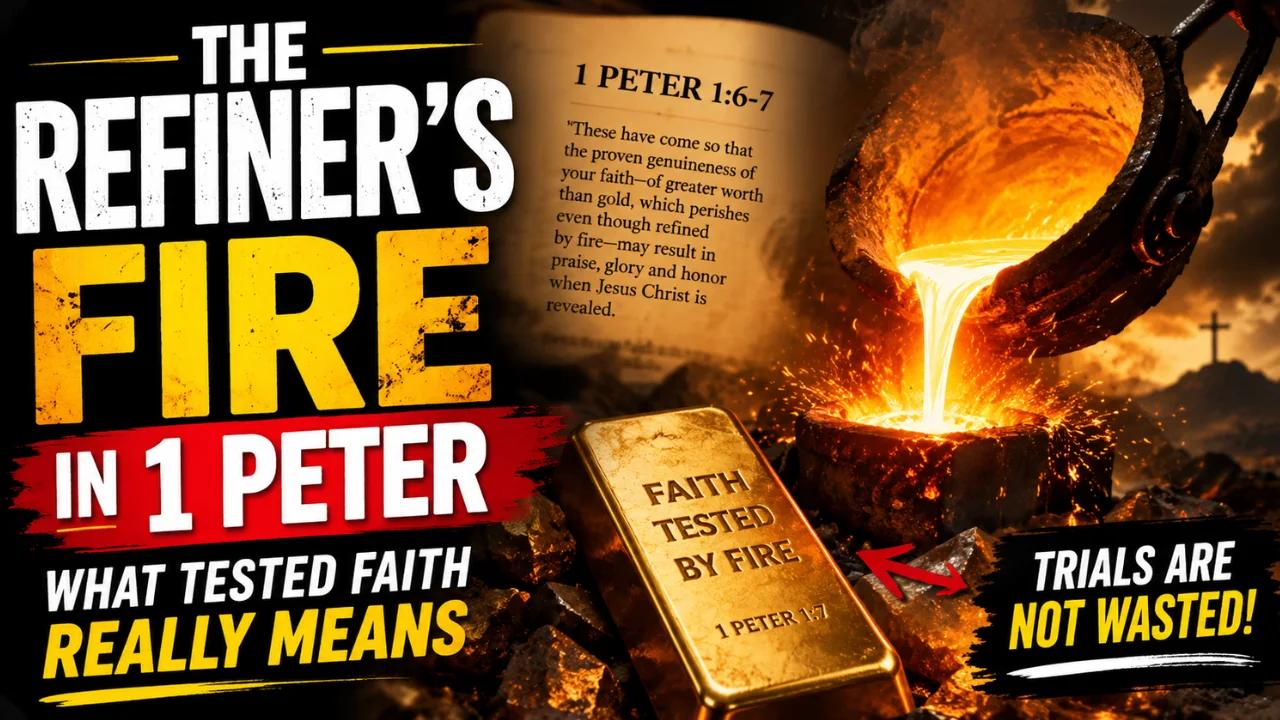

Some seasons do more than hurt; they reveal. They expose what comfort concealed, what routine protected and what the heart truly trusts when security begins to shake. Peter’s teaching on tested faith is powerful because he does not treat suffering as spiritual accident, meaningless pain or divine neglect. He presents it as refining work under God’s authority.
In 1 Peter 1:6–7, Peter says trials test the genuineness of faith, which is more precious than gold, though tested by fire. Ancient readers understood this image clearly. Raw gold carried hidden impurities and intense heat exposed and removed them. Peter applies that same truth to believers: pressure reveals what ordinary life often hides. This imagery closely connects with [the biblical symbolism of refining fire — What Does Fire Symbolize Spiritually in the Bible?].
Trials are not empty interruptions in the Christian journey. They expose the heart before God, prove the sincerity of faith and deepen endurance. Faith that survives testing shows a strength comfort cannot produce. Peter reframes suffering not as abandonment but as the place where God purifies what is precious and prepares His people for glory.
Background of 1 Peter
The believers addressed in 1 Peter were scattered across Asia Minor and faced rising hostility because of their loyalty to Jesus Christ. Their faith separated them from surrounding customs, values and worship practices. Christianity was not socially convenient. It brought ridicule, suspicion, rejection and persecution.
Some believers lost status because they refused pagan customs. Others suffered economically because trade and community life were often tied to idolatry. Many endured slander and threats because they no longer conformed to the culture around them. Peter wrote to Christians who understood hardship as a daily reality pressing against their homes, reputations and futures. This context helps explain [why suffering and persecution are major themes in 1 Peter — The Message of Suffering in 1 Peter].
Peter’s words carry weight because he knew pressure personally. He had denied Jesus out of fear, then experienced Christ’s restoring grace after the resurrection. The disciple who once trembled before opposition later became bold enough to suffer for the gospel. When Peter wrote about refined faith, he spoke as a man who had been tested and restored.
Why Peter Compared Faith to Gold
Gold Symbolized Earthly Value
Gold represented wealth, beauty, permanence and security. Yet Peter declares genuine faith more valuable than refined gold. Gold may endure earthly heat for a time but it still perishes. Wealth fades, kingdoms fall, achievements disappear and earthly treasure cannot pass into eternity.
Peter wanted afflicted believers to see that what God was forming in them had greater value than anything the world admired. Their endurance under pressure was not wasted. Heaven regarded their purified faith as treasure with eternal significance. This perspective closely connects with [the eternal value of faith over earthly possessions — Treasures in Heaven vs Earthly Wealth].
Testing Reveals Authenticity
Refining did not simply improve gold; it proved whether the gold was genuine. Heat separated impurity from value. Peter applies this directly to faith. Trials reveal whether trust in God rests on temporary blessings or on Christ Himself.
Comfort can hide pride, self-reliance, shallow devotion and divided loyalty. Pressure brings these things to the surface. A person may seem patient until suffering lingers or confident until circumstances collapse. Testing reveals what the heart truly depends upon.
The Biblical Pattern of Refining
Malachi Shows God as the Purifier
The image of refining did not begin with Peter. Malachi 3:2–3 describes the Lord as a refiner’s fire and purifier of silver. God is not shown as a careless destroyer but as a holy purifier who removes corruption from His people.
This background strengthens Peter’s message. God does not abandon His people to random suffering. He oversees the refining process with wisdom. Exposure is not rejection. God reveals impurity because He intends to purify worship, deepen obedience and restore spiritual integrity.
Zechariah Connects Refining With Covenant Faithfulness
Zechariah 13:9 speaks of God bringing a remnant through fire, refining them like silver and testing them like gold. The result is restored relationship: they call on His name and He answers them as His people.
This matters because biblical refining is not mere moral improvement. It is covenant purification. God uses testing to draw His people into deeper communion with Himself. For Peter’s audience, suffering was not proof they were forgotten. It could become the very place where their identity as God’s people was confirmed.
What Tested Faith Means in 1 Peter
Refining Purifies Rather Than Destroys
The purpose of refining is purification, not destruction. A refiner does not heat gold to ruin it but to remove what weakens its purity. Likewise, God does not waste suffering. The process may feel severe but His purpose remains redemptive. This refining imagery reflects [how God uses hardship for spiritual purification — The Spiritual Purpose of Refining Fire].
Peter’s theology of suffering is tied to sanctification. Trials expose false securities that compete with Christ. Pride weakens, self-sufficiency is uncovered, idols surface and earthly attachments lose power. Through testing, believers learn to rest more fully in God rather than in comfort, reputation, success or control.
Testing Produces Endurance
Peter’s concern is not mere survival. He points to transformation through endurance. James 1:2–4 teaches that tested faith produces steadfastness, leading to maturity. Romans 5:3–5 says suffering produces endurance, character and hope through the love of God poured into believers by the Holy Spirit.
The New Testament presents tested faith as trust strengthened under God’s hand. Hardship strips away superficial religion. Easy faith may collapse under pressure but genuine devotion deepens. Difficulty does not automatically mean spiritual failure; often, it reveals God’s active work in the soul, highlighting [why God allows believers to experience seasons of testing — The Purpose of Trials in the Christian Life].
Peter’s Fiery Trial Warning in 1 Peter 4
Believers Should Not Be Shocked by Trials
Peter returns to this theme in 1 Peter 4:12–13, warning believers not to be surprised by the fiery trial that comes to test them. Suffering is not a strange exception in Christian life. Peter teaches believers not to treat opposition as though God has lost control. This warning closely connects with [the biblical purpose behind fiery trials and testing — What Are Fiery Trials in the Bible?].
This confronts a common weakness in modern faith. Many assume obedience should always produce ease, protection and visible favour. Peter says faithfulness to Christ can bring hostility. Painful trials may become part of the believer’s participation in Christ’s sufferings.
Suffering With Christ Points to Glory
Peter tells believers to rejoice insofar as they share Christ’s sufferings, so they may rejoice when His glory is revealed. This is not shallow optimism. It is theology rooted in union with Christ.
Christians do not endure trials because pain is good in itself. They endure because Christ is worthy, resurrection is certain and glory will reveal what suffering could not destroy. Peter’s vision is not survival alone but participation in the life of the crucified and risen Lord.
Emotional Reality of Tested Faith
Peter Does Not Deny Grief
Peter openly acknowledges that believers experience grief through various trials. Biblical faith does not demand emotional denial. The Christian life does not erase sorrow and faithful servants of God often endured heartbreak, fear, loneliness and exhaustion.
David wept, Elijah despaired, Jeremiah lamented, Paul was afflicted and Jesus Himself wept and agonized in Gethsemane. Tested faith is not the absence of pain. It is trust that continues bringing pain before God. Spiritual maturity is not emotional numbness but persevering dependence.
Divine Silence Can Refine Faith
Some trials feel most painful when God seems silent. Prayers appear unanswered, relief delays and clarity does not come. Peter directs believers beyond immediate outcomes toward the revelation of Jesus Christ.
Faith refined in silence becomes deeper than faith dependent on visible results. It learns to trust God’s character when His work is not yet clear. In such seasons, believers discover that God’s presence is not measured only by emotion, speed or visible change.
Christ Is the Pattern of Tested Faith
Peter’s teaching cannot be separated from Jesus Christ. Jesus endured rejection, betrayal, humiliation, injustice, agony and death. Yet suffering did not have the final word because resurrection followed the cross.
This is the foundation of Christian hope. Scripture never presents suffering as the believer’s final destination. Trials are tied to future glory, restoration and redemption. Christ entered human pain fully, so believers do not suffer under a distant God.
Peter saw Christ suffer unjustly while entrusting Himself to the Father. That witness shaped his entire understanding of endurance. Refined faith becomes clearest when believers follow the Savior who suffered before them and overcame through resurrection power, highlighting [following Christ’s example through suffering and endurance — What It Means to Follow Jesus Through Trials].
How Refining Shapes Christian Character
Humility Grows Through Weakness
Trials expose the illusion of self-sufficiency. People desire control, strength and predictability, but suffering reveals human limits. Through weakness, believers learn their daily need for grace.
This humility often produces compassion, patience, gentleness and discernment. God’s refining work does not merely correct outward behaviour; it reshapes the soul’s posture before Him and others.
Compassion Deepens Through Pain
Personal suffering often makes believers more tender toward others. Those who have endured grief, rejection, weakness or uncertainty can comfort others with sincerity.
God uses affliction to soften harshness and deepen empathy. Refined believers often become instruments of encouragement because they understand pain from within. This truth closely connects with [comforting others through experiences of suffering — How God Uses Pain to Help Others].
Earthly Attachments Lose Power
Suffering exposes the fragility of worldly security. Comfort can disappear, wealth can vanish, approval can shift and success can fade. Testing forces believers to see what cannot truly sustain them.
Peter continually points Christians toward eternal inheritance. Refining reorders priorities away from fading pleasures and toward imperishable realities. The believer still lives responsibly in the world but the heart becomes governed by a greater hope.
Misunderstandings About the Refiner’s Fire
Trials Are Not Always Punishment
A dangerous misunderstanding assumes every hardship is God’s punishment for specific sin. Scripture teaches divine discipline but Peter’s focus is tested faith and purification, not condemnation.
Job suffered while upright, Joseph suffered through betrayal and Paul suffered while faithfully serving Christ. Suffering does not automatically mean divine anger. Sometimes testing reveals God’s refining work rather than His displeasure.
Refinement Is Gradual
Spiritual growth rarely happens instantly. Gold is purified through repeated exposure to heat and believers mature through repeated surrender, prayer, repentance, dependence and perseverance.
A Christian may wrestle emotionally while still being transformed inwardly. Peter calls believers to endurance, not instant perfection. God forms lasting holiness through deep work, not hurried change.
Strong Faith Still Feels Weakness
Mature faith does not eliminate fear, grief, exhaustion or struggle. Biblical faithfulness often exists alongside weakness. The strength of refined faith is not emotional perfection but continued reliance on God.
Peter’s own life proves this. He knew fear, failure, restoration and courage. Tested faith is not faith without trembling. It is faith that clings to Christ even while trembling remains.
Eternal Hope Hidden in the Refiner’s Work
Peter frames suffering through Christ’s return and revealed glory. Present affliction is limited but what God produces through it carries eternal weight. Refined faith becomes evidence of His transforming work in redeemed people.
The refiner does not abandon what is precious to uncontrolled destruction. He governs the heat and preserves what has value. Peter gives afflicted believers this assurance: God remains present in the testing and the flames are not proof of abandonment.
Tested faith emerges purified, strengthened, humbled and anchored more deeply in Christ. Through divine refinement, believers discover the depth of God’s sustaining grace, the worth of imperishable hope and the enduring value of faith that remains until the revelation of Jesus Christ.
Frequently Asked Questions
Why does Peter compare faith to gold?
Peter compares faith to gold because gold was considered one of the most valuable and enduring substances in the ancient world. However, even gold eventually perishes. Genuine faith, by contrast, has eternal significance. The comparison shows that spiritual endurance and trust in Christ are more valuable than earthly wealth or temporary security.
Does the refiner’s fire mean God is punishing believers?
Not necessarily. While Scripture teaches that God disciplines His people, the refiner’s fire in 1 Peter primarily points to purification and spiritual growth rather than punishment. Trials can expose pride, strengthen faith and mature believers spiritually without being acts of condemnation.
What is the main lesson of tested faith in 1 Peter?
The central lesson is that genuine faith becomes stronger and more authentic through testing. Peter teaches that suffering is not meaningless because God uses trials to refine believers, deepen their trust in Christ and prepare them for eternal glory.
Why should Christians not fear trials according to Peter?
Peter teaches that trials are temporary and purposeful. Believers should not fear suffering because God remains present during testing and uses hardship to produce endurance, maturity and hope. Trials do not mean God has abandoned His people; they often reveal His refining work within them.
