

Among all the passages in Scripture associated with comfort, protection, security and divine shelter, Psalm 91 stands as one of the most powerful and deeply loved chapters in the entire Bible. Generations of believers have turned to its words during fear, uncertainty, spiritual warfare, sickness, danger, persecution, grief and seasons of emotional exhaustion. The Psalm speaks about refuge, shadow, deliverance, angels, protection from hidden danger and confidence in God’s presence during threatening circumstances.
Yet one phrase in particular has captured the attention of believers throughout centuries:
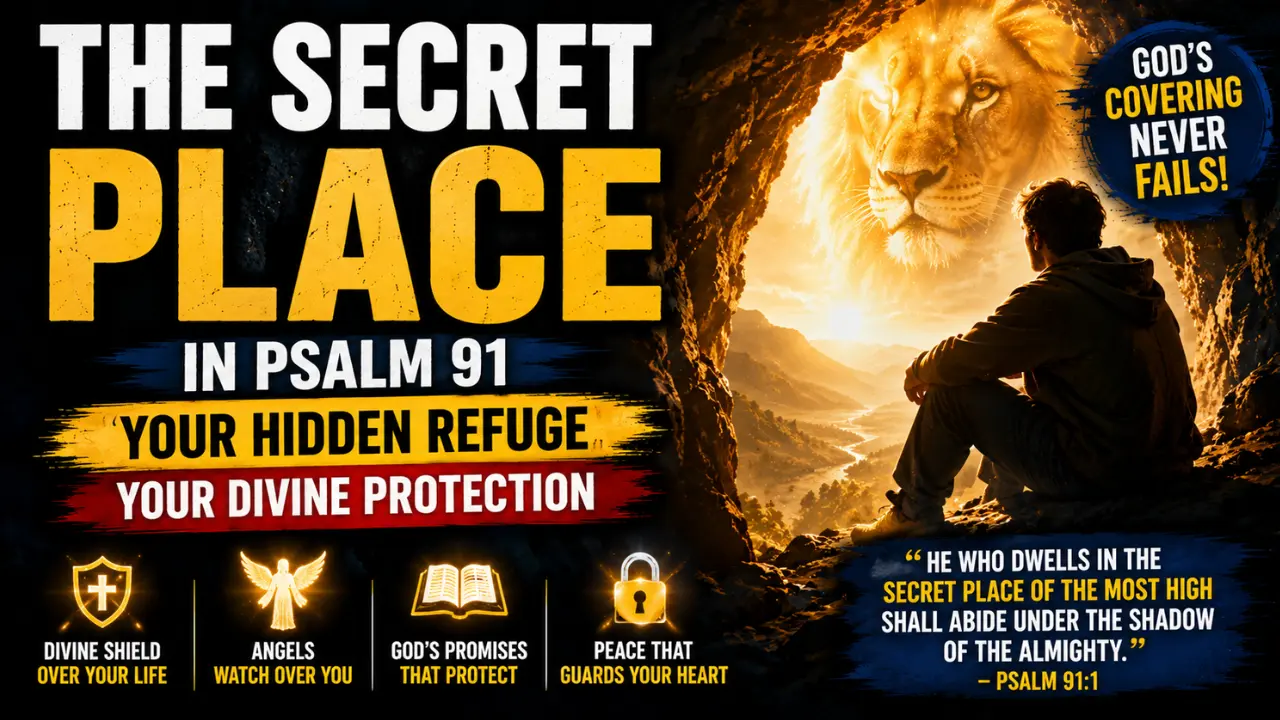
“He who dwells in the secret place of the Most High shall abide under the shadow of the Almighty.”
The imagery immediately feels mysterious, intimate, comforting and spiritually profound. What exactly is the “secret place”? Why is it connected to divine protection? Is it a physical location, a spiritual condition, a symbol of intimacy with God or something even deeper?
Psalm 91 uses poetic and symbolic language to reveal profound truths about relationship with God, spiritual trust, divine covering, covenant security and the nearness of God during seasons of danger and uncertainty. The “secret place” is not merely a hidden room or symbolic phrase added for poetic beauty. It represents one of the Bible’s deepest pictures of intimate fellowship, spiritual dwelling, continual dependence upon God, and life lived beneath His authority and presence. This imagery closely connects with [what it means to dwell in God’s presence — Abiding in the Presence of God According to Scripture].
Throughout Scripture, God repeatedly revealed Himself as refuge, fortress, shelter, covering, hiding place, strong tower and protector for His people. Psalm 91 gathers these themes together into one of the most emotionally powerful portraits of divine protection found anywhere in the Bible, reinforcing [the biblical picture of God as refuge and shelter — God Our Refuge and Fortress Meaning].
The Psalm does not promise a life free from difficulty, warfare or danger. Instead, it reveals the security, peace and confidence available through remaining close to God even while threats exist around us. The “secret place” ultimately becomes symbolic of spiritual intimacy where fear loses authority because trust in God’s presence becomes greater than visible circumstances.
Psalm 91 Opens With the Language of Dwelling and Abiding
The opening verse of Psalm 91 immediately establishes the central theme of the chapter through two deeply important words: “dwells” and “abides.” These words reveal that the Psalm is not describing a temporary spiritual visit or occasional religious experience. Instead, the imagery points toward continual relationship, ongoing closeness and sustained fellowship with God.
The secret place is connected to where a person spiritually lives and remains. This language closely reflects [the biblical meaning of abiding in God’s presence — What Does It Mean to Abide in God?].
This distinction matters because many people approach God only during moments of crisis while maintaining distance from Him during ordinary life. Psalm 91 describes something deeper than emergency spirituality. It portrays a life consistently positioned near the presence of God.
The Secret Place Represents Intimacy Rather Than Distance
Throughout Scripture, closeness to God is repeatedly connected with protection, wisdom, spiritual strength, peace and guidance. The secret place symbolizes intimacy rather than separation. It represents hidden fellowship with God beyond outward religious performance.
The Hebrew imagery carries the idea of a concealed shelter, hidden refuge, or protected dwelling place where someone remains secure beneath divine covering. This imagery naturally connects with [God as a spiritual refuge and hiding place — The Meaning of God as Our Hiding Place].
This hiddenness is spiritually significant because intimacy with God often develops away from public attention, religious display and external recognition. Some of the deepest spiritual encounters in Scripture occurred in deserts, caves, mountains, wildernesses, prisons, lonely places and private moments of prayer.
God Often Meets People in Hidden Places
Moses encountered God in the wilderness near the burning bush. Elijah heard God’s voice within a cave after seasons of exhaustion and fear. David learned dependence upon God while hiding in wilderness strongholds. Jesus Himself repeatedly withdrew into solitary places for prayer and communion with the Father.
The pattern appears consistently throughout Scripture. Hidden places frequently became places of transformation, intimacy, spiritual strengthening and divine encounter.
The “secret place” therefore points toward relational closeness with God cultivated beyond surface-level spirituality, reinforcing [developing a deeper personal relationship with God — Intimacy With God in the Bible].
Intimacy With God Creates Spiritual Security
One of the deepest truths within Psalm 91 is that protection flows from relationship rather than mere ritual. The Psalm does not portray God as a distant force reluctantly offering occasional assistance. Instead, it presents Him as a refuge experienced through nearness and continual trust.
The closer the relationship, the deeper the confidence becomes. Spiritual security grows not merely from knowing information about God but from dwelling continually within awareness of His presence and faithfulness.
The Secret Place Symbolizes Life Beneath God’s Covering
Psalm 91 repeatedly uses imagery connected to shelter, shadow, refuge, fortress, wings and covering. These symbols work together to portray divine protection surrounding those who remain near to God.
The “secret place” therefore represents spiritual positioning beneath God’s authority, care and protection. This imagery closely connects with [living under God’s spiritual covering — What It Means to Live Under God’s Protection].
The Shadow of the Almighty Reveals Nearness
The Psalm declares that those dwelling in the secret place “shall abide under the shadow of the Almighty.” Shadows only remain close to the object casting them. This imagery communicates nearness rather than distance.
To live under God’s shadow symbolically means to remain close to His presence continually.
Throughout Scripture, shadows often symbolized protection, shelter, covering and relief from overwhelming heat or danger. In desert environments especially, shade could mean survival itself. The image would have carried immediate emotional significance for ancient readers familiar with harsh wilderness conditions.
God’s Presence Provides Shelter During Difficult Seasons
Psalm 91 does not deny the existence of danger. In fact, the Psalm openly describes threats including pestilence, terror, arrows, destruction, darkness and warfare. Yet despite these realities, the person dwelling near God remains spiritually secure.
The emphasis of the Psalm is not the absence of trouble but the presence of God within trouble.
This distinction matters deeply because many believers misunderstand divine protection as meaning a completely pain-free or conflict-free life. Scripture consistently reveals that faithful people still encounter hardship, persecution, spiritual warfare, uncertainty, and suffering. The difference is that God remains present within those circumstances, highlighting [the peace available through God’s presence during trials — Peace in the Midst of Storms According to the Bible].
Divine Protection Includes Spiritual Peace
One of the greatest forms of protection described in Psalm 91 is not merely physical preservation but inward peace and confidence. Fear loses controlling power when trust in God’s presence becomes stronger than surrounding circumstances.
The secret place therefore represents not only external covering but internal spiritual stability rooted in intimacy with God.
Psalm 91 Reveals God as Refuge and Fortress
The Psalm repeatedly describes God using military and defensive imagery. He is called refuge, fortress, shield, buckler and protector. These images would have carried enormous emotional significance in ancient cultures constantly threatened by warfare, invasion, violence, and instability.
God’s Protection Is Both Personal and Powerful
A fortress represents strength, stability, defence and security against attack. Refuge symbolizes safety during danger. Together, these images portray God as both compassionate protector and mighty defender.
The Psalm intentionally combines intimacy with strength. God is not merely emotionally comforting but also powerful enough to provide true security.
This balance becomes important because biblical faith is not based upon vague optimism or emotional reassurance alone. Psalm 91 roots confidence in the character and authority of God Himself.
Fear Loses Power in God’s Presence
The Psalm repeatedly mentions dangers that normally produce fear: terror by night, arrows by day, pestilence, destruction, warfare and hidden threats. Yet the recurring message remains consistent: the person dwelling near God does not need to live controlled by fear.
This does not mean danger ceases to exist. Rather, fear loses ultimate authority because trust in God becomes greater than visible threats.
The “secret place” therefore becomes symbolic of spiritual confidence rooted in divine presence rather than external circumstances.
Spiritual Security Differs From Worldly Security
Human beings naturally seek security through wealth, power, control, systems, relationships or predictability. Yet all earthly forms of security remain limited and temporary.
Psalm 91 points toward deeper security found through relationship with God. The secret place represents dependence upon eternal refuge rather than fragile earthly certainty.
The Secret Place Is Connected to Trust
One of the strongest themes throughout Psalm 91 is trust. The Psalm repeatedly emphasizes confidence, reliance and faith in God’s protection and faithfulness.
The secret place cannot be separated from trust because intimacy with God requires dependence upon Him.
Trust Means Remaining Near God Even During Uncertainty
Anyone can speak confidently about faith during comfortable seasons. Psalm 91 becomes especially powerful because it describes trust within dangerous, uncertain, and threatening circumstances.
The person dwelling in the secret place remains close to God even when visible circumstances appear frightening.
This reveals one of the Psalm’s deepest spiritual lessons: intimacy with God is not meant only for peaceful moments but especially for seasons where fear attempts to dominate the heart, reinforcing [finding spiritual peace during fearful situations — How God Gives Peace During Anxiety].
Trust Requires Continual Dependence
The language of dwelling and abiding suggests ongoing dependence rather than occasional contact. Trust is not portrayed as a single emotional decision but as a continual posture of remaining near God.
This consistency matters because fear often pushes people away from trust toward anxiety, self-reliance, panic or despair.
The secret place symbolizes choosing dependence upon God repeatedly even when circumstances remain uncertain.
God’s Faithfulness Sustains Those Who Remain Close
Psalm 91 repeatedly emphasizes God’s faithfulness as the foundation for confidence. The believer’s security ultimately rests not upon personal strength but upon God’s character.
The secret place therefore becomes a place where trust grows because God’s faithfulness becomes increasingly known through relationship and experience.
The Psalm Uses Bird Imagery to Describe Tender Protection
One of the most beautiful images in Psalm 91 describes God covering His people with His feathers and sheltering them beneath His wings.
This imagery introduces tenderness into the Psalm’s themes of strength and protection and reveals [the biblical symbolism of being sheltered under God’s wings — What Does It Mean to Be Under God’s Wings?].
God’s Protection Is Not Cold or Distant
The image of protective wings reflects nurture, closeness, warmth and compassionate care. Just as birds protect vulnerable young beneath their wings, the Psalm portrays God as drawing people near during danger and fear.
The symbolism communicates emotional and relational safety in addition to strength.
Throughout Scripture, wings frequently symbolize divine covering, refuge and covenant protection. Ruth sought refuge beneath God’s wings. Jesus later lamented over Jerusalem using similar imagery, longing to gather people together like a hen gathering her chicks.
Divine Protection Includes Compassionate Nearness
Psalm 91 does not portray God merely as a distant ruler issuing protection from afar. The imagery remains deeply relational and personal.
The secret place therefore becomes not only a fortress but also a place of nearness, tenderness and comfort.
God’s Presence Brings Rest to Fearful Hearts
Many people carry hidden anxiety, exhaustion, spiritual weariness, and emotional fear beneath outward appearances. The imagery of sheltering wings speaks directly to the human longing for safety, rest, and reassurance.
The secret place becomes a refuge where the soul finds peace beneath the nearness of God’s presence, reinforcing [how God gives rest to weary hearts — Rest for the Soul According to the Bible].
Angels Appear as Part of God’s Protective Care
Psalm 91 also describes angels receiving charge concerning those who dwell near God. This section has fascinated believers throughout centuries because it reveals unseen spiritual protection surrounding God’s people.
The Psalm Reveals Invisible Spiritual Reality
Scripture consistently teaches that physical reality is not the only reality. Spiritual forces, divine activity and heavenly beings operate beyond ordinary human sight.
Psalm 91 briefly lifts the veil to reveal that God’s protection sometimes includes unseen spiritual assistance through angels.
This reinforces the Psalm’s larger message that believers are never as alone or vulnerable as circumstances may appear outwardly.
Divine Protection Extends Beyond Human Awareness
Many dangers remain unseen until after they pass. The Psalm emphasizes that God’s awareness and care extend beyond human limitation.
The secret place therefore symbolizes resting within divine care even when full understanding remains absent.
God Guards What People Cannot Fully Control
One of humanity’s greatest struggles involves fear regarding things beyond personal control. Psalm 91 repeatedly answers that fear by directing attention toward God’s sovereignty, nearness, and protective care.
The believer’s confidence rests not in controlling every circumstance but in trusting the God who remains sovereign over all circumstances.
The Deeper Spiritual Meaning of the Secret Place
The “secret place” in Psalm 91 ultimately symbolizes intimate relationship, continual trust, spiritual dwelling and life lived beneath the covering presence of God.
The imagery represents:
- Intimacy with God
- Spiritual refuge and shelter
- Divine protection and covering
- Continual trust and dependence
- Peace during fearful seasons
- Hidden fellowship with God
- Nearness to divine presence
- Spiritual security beyond circumstances
- Rest beneath God’s authority and care
- Confidence rooted in God’s faithfulness
Perhaps the most powerful truth within Psalm 91 is that divine protection begins not merely with escaping danger but with remaining close to God Himself.
The secret place is ultimately relational before it is protective. It is the place where fear loses control because trust grows deeper than visible circumstances. It is where intimacy with God produces peace that external threats cannot fully destroy.
Psalm 91 continues speaking powerfully because every generation faces uncertainty, danger, fear, instability and hidden spiritual battles. Yet the Psalm reminds believers that there remains a place of refuge beneath the presence of God where the soul can dwell securely even while storms continue around it.
