

Avoiding conflict is biblical only when it protects peace, humility and self-control. It becomes unhealthy when it hides fear, ignores truth, excuses sin or allows damage to continue.
This is where many believers get confused. Scripture calls us to seek peace, forgive quickly, answer gently, and avoid foolish arguments. But the same Bible also shows prophets confronting kings, Jesus correcting religious leaders, Paul rebuking false teaching, and faithful friends speaking hard truth in love.
So the real question is not, “Should Christians avoid every conflict?” The better question is, “When is avoiding conflict wisdom, and when is it fear wearing spiritual language?”
Is Avoiding Conflict Biblical?
Avoiding conflict can be biblical when the issue is small, pride is rising, or the argument will only create more damage. Proverbs repeatedly warns against being quick to quarrel. A wise person does not enter every fight, answer every insult, or react to every provocation.
There are moments when silence is strength. There are moments when walking away is obedience. There are moments when not replying proves that the Holy Spirit is governing your tongue.
Psalm 34:14 tells believers to seek peace and pursue it. That means peace is not passive weakness. It is something a faithful person actively chooses, protects, and practices.
But biblical peace is not the same as pretending nothing is wrong. Peace is not built by burying truth. It is built by bringing the heart under God’s wisdom.
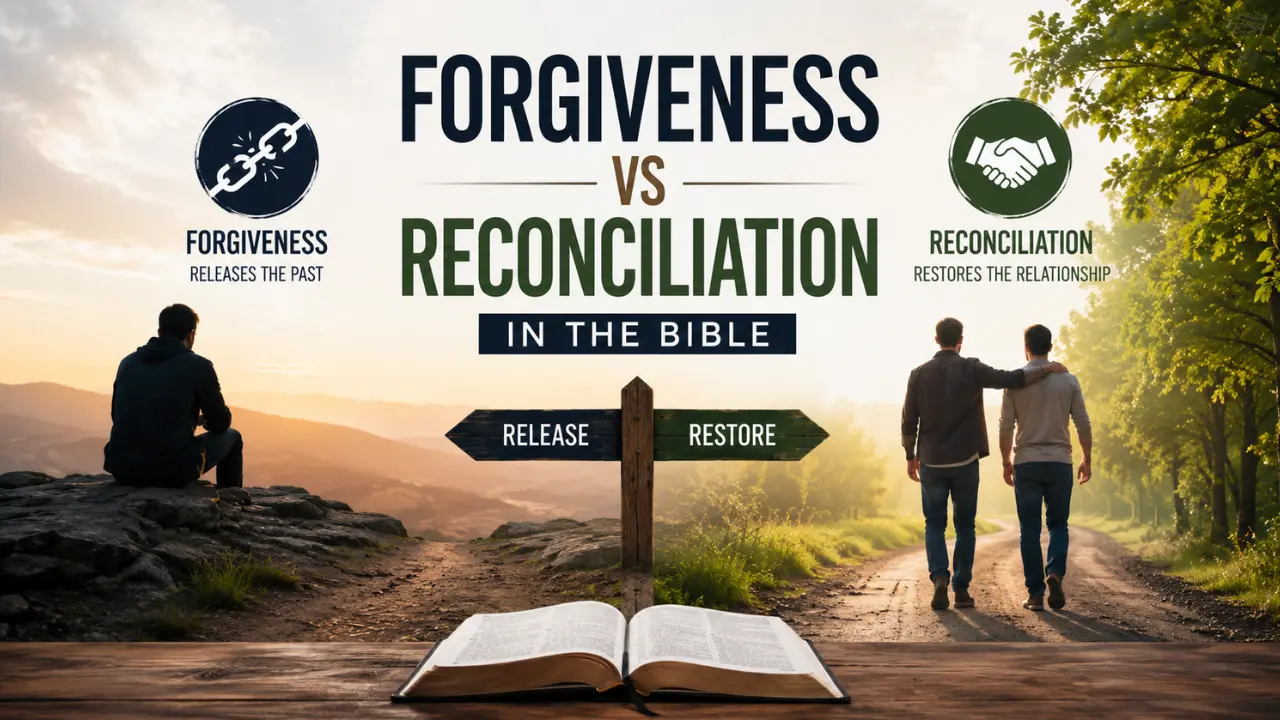
Many believers confuse forgiveness with restored relationship, but the difference between forgiveness and reconciliation in the Bible shows why forgiving someone does not always mean trust returns immediately.
When avoidance can be wise
Avoidance can be godly when the goal is to stop foolishness from growing. Not every disagreement deserves your time, energy, or emotional investment.
A believer may wisely step away when:
- the discussion is becoming proud, harsh, or useless
- the other person only wants to provoke, not understand
- the issue is small enough to overlook in love
- silence would protect unity better than more words
- emotions are too high for a careful conversation
This kind of avoidance is not cowardice. It is spiritual discipline.
The Bible never asks believers to be controlled by every opinion, accusation, or emotional storm around them. Sometimes peace begins when a person refuses to feed an unnecessary fire.
When Does Peace Become Fear?
Peace becomes fear when a believer avoids a needed conversation because they are afraid of rejection, anger, embarrassment, or consequences. The outside may look calm, but the inside is ruled by anxiety.
This is one of the most dangerous forms of false peace. It feels spiritual because there is no visible conflict. But underneath, truth is being delayed, bitterness is growing, and the problem is quietly becoming stronger.
A Christian can say, “I am just keeping peace,” when the deeper truth is, “I am afraid to speak honestly.”
That difference matters.
Fear-based avoidance has a different fruit
Wisdom brings peace to the heart. Fear-based avoidance usually brings heaviness, confusion, resentment, and hidden frustration.
You may be avoiding conflict from fear if:
- you keep replaying the issue but never address it
- you call it forgiveness, but bitterness keeps growing
- you stay silent only because you fear someone’s reaction
- you ignore repeated sin to avoid discomfort
- you protect someone’s image more than you protect truth
- you feel guilty for having honest concerns
This does not mean every concern must become a confrontation. But it does mean believers should examine what is really leading them: the wisdom of God or the fear of man.
Jesus Was Not Conflict-Avoidant
Many people imagine biblical peace as constant softness. But Jesus shows something deeper. He was perfectly peaceful, yet He never bowed to falsehood.
Jesus did not start unnecessary fights. He did not speak from insecurity. He did not argue to win attention. But when truth was being twisted, people were being harmed, or hypocrisy was hiding behind religion, He spoke clearly.
That is important for every believer to understand.
Jesus was gentle with the broken, patient with the confused, and compassionate toward sinners. But He also confronted pride, exposed hypocrisy, corrected His disciples, and challenged religious leaders who used God’s name while missing God’s heart.
His peace was not weakness. His peace came from perfect obedience to the Father.
difference between godly confrontation and fleshly argument
Not every confrontation is biblical. Some people use “truth” as an excuse to be harsh, proud, or controlling. That is not Christlike.
Godly confrontation is different because it is shaped by love, humility, patience, and a desire for restoration.
A fleshly argument says, “I need to prove I am right.”
Godly confrontation says, “This matters enough to speak with care.”
A fleshly argument attacks the person.
Godly confrontation addresses the issue.
A fleshly argument wants victory.
Godly confrontation wants truth, healing, and obedience.
This is why Christians should not confuse courage with aggression. The Bible does not call believers to become argumentative people. It calls them to become truthful people who know how to speak with grace.
Forgiveness becomes harder when you keep holding the full emotional weight alone, which is why 5 Signs You Need to Cast Your Burden on the Lord can guide readers toward deeper surrender.
The Bible Does Not Bless Fake Peace
One reason this topic matters is because fake peace can look holy for a season. People smile. Nobody raises their voice. The issue is buried. Everyone acts normal.
But fake peace always has a cost.
In families, fake peace can protect unhealthy patterns. In churches, fake peace can allow spiritual damage to continue. In friendships, fake peace can turn honest love into surface-level politeness. In the heart, fake peace can become silent resentment.
The Bible values unity, but biblical unity is never built on lies. Real unity must be connected to truth, repentance, humility, and love.
This is why Ephesians 4 connects truth and love together. Speaking the truth without love becomes harsh. Love without truth becomes weak sentiment. Biblical maturity holds both.
Some Conflicts Should Be Overlooked
A balanced Christian view must say this clearly: some conflicts should be overlooked.
Not every irritation is a spiritual battle. Not every disagreement is a sign of rebellion. Not every wrong comment needs correction. Love covers many small offenses because mature believers do not treat every wound as a courtroom case.
Sometimes the holiest response is to let the matter pass.
This is especially true when the issue is minor, accidental, or already covered by grace. A believer who confronts everything may think they are defending truth, but they may actually be feeding pride.
Ask this before speaking
Before addressing a conflict, it helps to ask:
- Is this issue truly serious, or am I personally offended?
- Will speaking help restore something, or only release frustration?
- Have I prayed enough to speak with humility?
- Am I seeking healing, or am I seeking control?
- Is this a pattern, or a one-time weakness?
These questions do not silence truth. They purify the motive behind truth.
Some Conflicts Should Not Be Ignored
While some issues should be overlooked, others should not be ignored. Scripture does not teach believers to stay passive when sin, deception, abuse, manipulation, or spiritual harm continues.
Love does not mean allowing damage to repeat without correction. Forgiveness does not mean removing all boundaries. Peace does not mean letting someone continue in destructive behavior while everyone pretends it is normal.
There are moments when silence becomes agreement. There are moments when patience becomes passivity. There are moments when “I do not want drama” becomes an excuse for avoiding obedience.
This is where believers need discernment.
Conflict may need to be addressed when there is a pattern
One mistake can often be covered with grace. A repeated pattern may need honest attention.
If someone repeatedly lies, manipulates, mocks, controls, disrespects, or harms others, silence may no longer be peace. It may become permission.
The Bible gives many examples of faithful correction because God cares about truth and restoration. Nathan confronted David. Paul corrected Peter. Jesus corrected His disciples. These moments were not comfortable, but they were necessary.
Godly love is not afraid of necessary truth.
How to Speak the Truth Without Becoming Harsh
Many believers avoid conflict because they have only seen two options: silence or explosion. But the Bible offers a better way.
A Christian does not have to choose between being passive and being cruel. There is a holy middle path where truth is spoken with humility, timing, and self-control.
The goal is not to “win” the conversation. The goal is to honor God in the conversation.
Start with your own heart
Before addressing someone else, examine yourself. Ask God to remove pride, revenge, exaggeration, and selfish anger.
This matters because even a true concern can be delivered in a sinful way. A person can be right about the issue and wrong in spirit.
Jesus taught believers to pay attention to their own hearts before correcting others. That does not mean we never correct. It means correction must begin with humility.
Use words that restore, not words that crush
A gentle answer can still be honest. A calm voice can still carry conviction. A loving sentence can still draw a clear boundary.
Instead of saying, “You always do this,” a wiser approach may be, “This has happened more than once, and I need to be honest about how it is affecting me.”
Instead of saying, “You are the problem,” a better approach may be, “I want us to deal with this in a way that honors God.”
The words may be firm, but the spirit should not be cruel.
What If the Other Person Refuses Peace?
Romans 12:18 gives one of the most realistic teachings on peace: as far as it depends on you, live peaceably with all. That verse is comforting because it admits something many believers forget.
Peace does not depend only on you.
You can speak gently and still be misunderstood. You can apologize and still be rejected. You can pursue reconciliation and still face pride from the other side.
The Bible does not place the full burden of every relationship on one faithful person. You are responsible for your obedience, your tone, your honesty, your humility, and your forgiveness. You are not responsible for controlling another person’s heart.
This truth protects believers from false guilt.
Peace may require boundaries
Sometimes peace requires distance, not because you hate someone, but because the relationship has become unsafe, manipulative, or spiritually harmful.
Boundaries are not always bitterness. Sometimes they are wisdom. Even Jesus did not entrust Himself to everyone. He loved perfectly, but He was not naïve about the human heart.
A boundary says, “I will not repay evil with evil, but I will also not pretend this pattern is harmless.”
That kind of boundary can be both loving and biblical.
Danger of Being Known as “Easy to Deal With”
Some Christians take pride in being easy to deal with. They never complain. They never correct. They never say no. They never express hurt. People call them peaceful, but deep inside they may be exhausted.
This is a quiet danger because it can look like humility.
A believer can become more concerned with being liked than being faithful. They may avoid every difficult conversation because they do not want to disappoint anyone. Over time, this can create emotional tiredness, hidden resentment, and weak boundaries.
The Bible does not call Christians to be people-pleasers. It calls them to be servants of God.
Being gentle is good. Being controlled by the fear of people is not.
Biblical Peace Has Courage Inside It
True peace is not fragile. It does not disappear the moment truth is spoken. Biblical peace is strong enough to handle honesty, repentance, correction, and uncomfortable conversations.
This is why peacemaking is different from peacekeeping.
Peacekeeping often says, “Do not talk about it.”
Peacemaking says, “Let us deal with this in a way that honors God.”
Peacekeeping protects the surface.
Peacemaking seeks healing underneath.
Peacekeeping avoids discomfort.
Peacemaking pursues righteousness.
Jesus blessed peacemakers, not people who only keep everything quiet. A peacemaker may sometimes stay silent, but they may also speak when silence would allow harm to grow.
A Simple Biblical Test Before Avoiding Conflict
Before you decide to avoid a conflict, ask yourself three honest questions.
1. Am I avoiding this because of wisdom or fear?
Wisdom feels steady, even when the situation is difficult. Fear feels trapped, anxious, and controlled by someone else’s reaction.
If the Holy Spirit is leading you to stay quiet, there will usually be a sense of restraint and trust. If fear is leading you, there will often be dread, resentment, and pressure to hide.
2. Will silence protect peace or protect a problem?
Some silence protects unity. Other silence protects dysfunction.
If staying quiet helps a small offense die, it may be wise. If staying quiet allows repeated sin, manipulation, or harm to continue, it may not be biblical peace.
3. Can I speak with love or do I need to pray first?
Timing matters. Even a needed conversation can become damaging if it is rushed in anger.
Sometimes the next step is not immediate confrontation. Sometimes the next step is prayer, counsel, self-examination, and waiting until your words can be both truthful and controlled.
Biblical Way Forward
The Bible does not command believers to chase conflict. It also does not command them to fear it. The way of Christ is wiser than both extremes.
Avoid foolish arguments. Overlook small offenses. Refuse unnecessary drama. Speak gently. Forgive sincerely. Pursue peace with humility.
But when truth is being buried, when sin is being excused, when someone is being harmed, or when fear is controlling your silence, ask God for courage.
Christian maturity is not proven by winning arguments. It is proven by knowing when to be quiet, when to speak, and how to do both with a heart submitted to God.
Avoiding conflict can be biblical. But avoiding truth is not.
The peace God wants for His people is not fake calm built on fear. It is honest peace shaped by love, courage, humility, and obedience.
Frequently Asked Questions
How can Christians confront someone without being harsh?
Christians can confront someone gently by praying first, checking their motives, using honest but careful words, avoiding blame-filled language, and seeking restoration instead of victory. Truth should never become an excuse for cruelty.
Can setting boundaries be biblical?
Yes, boundaries can be biblical when they protect wisdom, peace, emotional safety, and obedience to God. A boundary does not have to come from bitterness. It can come from love, clarity, and the need to stop repeated harm.
What is the difference between peacemaking and peacekeeping?
Peacekeeping often tries to keep everything quiet, even when something serious remains unresolved. Peacemaking seeks real healing through truth, humility, repentance, forgiveness, and wise action.
