
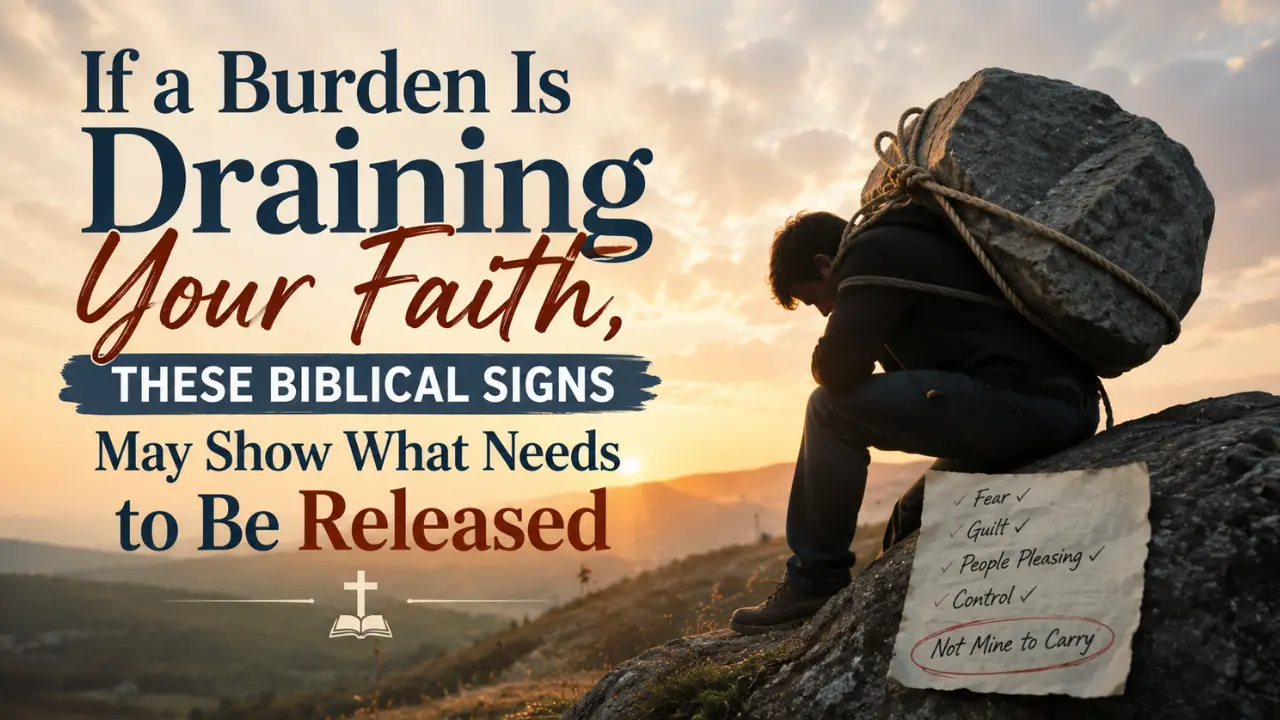

Many believers quietly carry burdens God never asked them to carry. They carry guilt for other people’s choices, pressure to fix every problem, fear of disappointing everyone, and spiritual anxiety that feels responsible but is actually draining their faith.
The Bible does not teach careless living, but it also does not teach believers to live crushed under false responsibility. God calls His people to love, serve, pray, forgive, and obey, but He never commands them to take His place in someone else’s life.
Psalm 55:22 says, “Cast thy burden upon the Lord, and he shall sustain thee.” That verse does not mean every problem disappears instantly. It means the believer must learn the holy difference between faithful responsibility and emotional weight that belongs in God’s hands.
Why Do Believers Carry Burdens God Never Gave Them?
Many Christians carry unnecessary burdens because they mistake heaviness for holiness. They assume that if something feels painful, urgent, or emotionally intense, then it must be their personal assignment.
That is not always true. A burden can come from love, but it can also come from fear. A burden can come from compassion, but it can also come from control. A burden can come from conviction, but it can also come from guilt that God did not place on the heart.
Some burdens come from fear of people
A believer may keep saying yes because they do not want to look selfish. They may overextend themselves because they fear being misunderstood, criticized, or rejected.
This kind of burden often wears the clothing of kindness, but underneath it is the fear of man. When approval becomes the reason for service, the heart slowly becomes tired, resentful, and spiritually distracted.
Some burdens come from trying to control outcomes
There is a deep pain in watching someone make destructive choices. A parent, spouse, friend, pastor, or loved one may want to rescue someone from every consequence.
Love can warn, pray, guide, and support, but love cannot become God. When a believer believes they must force the outcome, they begin carrying a burden that belongs to the Lord.
Some burdens come from unresolved guilt
Sometimes people carry responsibility for things they already confessed, repented of, and placed before God. They keep replaying old failures as if constant self-punishment can prove spiritual sincerity.
Repentance is necessary, but endless self-condemnation is not repentance. When God forgives, He does not ask His children to keep living as if His mercy is weaker than their past.
When emotional pain feels too heavy to explain, Psalm 34:18 offers deep comfort for a broken heart by reminding believers that God is not distant from their suffering.
Difference Between a God-Given Burden and a False Burden
Not every heavy feeling is a divine assignment. A God-given burden draws the believer closer to obedience, prayer, wisdom, and dependence on the Lord. A false burden usually creates panic, exhaustion, confusion, resentment, and a hidden belief that everything depends on human effort.
A God-given burden leads to faithful action
When God places a burden on the heart, He also gives a path of obedience. That path may not be easy, but it is usually clear enough for the next faithful step.
A believer may feel called to pray, speak truth, forgive, serve, give, wait, confront gently, or create healthy boundaries. God does not always reveal the whole road, but He does not trap His people in constant spiritual confusion.
A false burden demands control
A false burden says, “If I do not fix this, everything will fall apart.” It convinces the believer that peace can only come when people change, circumstances obey, or every uncertain detail becomes settled.
That kind of weight does not produce trust. It produces spiritual exhaustion because the believer is trying to carry responsibility without God’s authority.
A God-given burden has grace attached to it
God may ask His people to carry difficult assignments, but He does not abandon them inside the assignment. His grace strengthens obedience, steadies the heart, and teaches endurance.
False burdens are different. They drain without direction, pressure without peace, and accuse without producing fruit. They make a believer feel responsible for everything but spiritually renewed by nothing.
Sign 1: You Feel Responsible for Someone Else’s Obedience
One of the clearest signs of a false burden is feeling responsible for another person’s obedience to God. You can encourage someone, pray for them, warn them, teach them, and love them, but you cannot repent on their behalf.
Even Jesus allowed people to walk away. He spoke truth with perfect love, yet He did not force every heart to surrender. That should humble every believer who thinks love means controlling another person’s response.
What belongs to you
Your part is faithfulness. You can speak with grace, act with integrity, pray with sincerity, and refuse to repay evil with evil.
You can also examine your own motives and make sure your concern is not becoming manipulation. Faithfulness is your responsibility, but another person’s surrender belongs between them and God.
What belongs to God
Only God can convict the heart, change desires, expose hidden sin, heal wounds, and bring someone to repentance. When a believer tries to take over that role, they become spiritually exhausted because they are carrying a work only God has power to complete.
Releasing someone to God does not mean you stop caring. It means you stop pretending your pressure can do what only grace can do.
Sign 2: The Burden Makes You Fearful Instead of Faithful
A God-given concern may feel serious, but it does not need to rule the heart with panic. When a burden constantly produces fear, anxiety, and spiritual chaos, it needs to be examined carefully.
God can speak urgently without making His child feel abandoned. He can correct firmly without destroying the soul. He can call someone to act without making them believe the entire future depends on one human decision.
Fear says everything depends on you
Fear creates a false emergency inside the heart. It says, “You must solve this now, or God will not move.”
This is not the voice of biblical trust. Faith acts when God gives an instruction, but faith also rests when God has not given permission to control the whole outcome.
Faith says obedience belongs to me, results belong to God
The believer’s responsibility is not to manufacture results. The believer’s responsibility is to obey God with a clean heart and trust Him with what cannot be controlled.
This is why prayer matters. Prayer is not a weak replacement for action; prayer is the place where the believer admits that God is Lord over the outcome.
Sign 3: You Keep Saying Yes While Your Soul Is Becoming Bitter
Service is part of Christian life, but bitterness can reveal that a person is carrying more than God assigned. Sometimes believers say yes with their mouth while their heart becomes tired, resentful, and spiritually dry.
That does not always mean the work is wrong. It may mean the motive, boundary, or season needs to be examined before the heart becomes hardened.
Biblical service is not the same as people-pleasing
Jesus served people deeply, but He did not obey every demand placed on Him. He withdrew to pray. He refused false pressure. He stayed faithful to the Father’s will even when others misunderstood Him.
This matters because some believers confuse availability with obedience. Being available to God does not mean being controlled by every request, expectation, or emotional demand from people.
A healthy no can protect a faithful yes
Saying no is not always selfish. Sometimes it protects the assignment God actually gave you.
A believer may need to say no to constant distraction so they can say yes to prayer, family, rest, integrity, wise work, or the specific calling God has placed before them. Boundaries are not a rejection of love when they help preserve obedience.
Sign 4: You Are Carrying Shame After God Has Already Called You to Repent and Rise
Shame often feels spiritual because it keeps reminding a person of sin. But shame does not always lead to holiness. Many times, it keeps the believer stuck in a cycle of self-punishment instead of real transformation.
Conviction says, “Come back to God.” Shame says, “You are too dirty to come back.” That difference matters because one leads to repentance, while the other leads to hiding.
Repentance moves forward
True repentance does not defend sin, excuse sin, or treat sin lightly. It agrees with God, turns from what is wrong, and receives mercy with humility.
After repentance, the believer must learn to walk forward. Remaining emotionally chained to forgiven sin does not honor God more than trusting His mercy.
Shame keeps rebuilding what grace has already broken
When a believer keeps rehearsing old failure as their identity, they are allowing shame to rebuild the prison that grace opened. This does not produce deeper holiness; it produces spiritual weakness and distance from God.
Godly sorrow can bring a person back to the Lord, but ongoing condemnation can keep them from receiving the very grace they need to grow.
Sign 5: You Think Rest Means You Are Being Irresponsible
Some believers feel guilty whenever they rest. They believe constant heaviness proves they care, and if they feel peace, they assume they are becoming careless.
This mindset can sound spiritual, but it often reveals a broken view of God. The Lord is not honored by a heart that refuses rest because it secretly believes worry is a form of faithfulness.
Rest is not denial
Rest does not mean pretending problems are not real. Rest means admitting that God remains Lord even while the problem is unfinished.
A believer can rest and still care. They can sleep and still pray. They can pause and still remain faithful. God does not need His children to destroy themselves in order to prove love.
God sustains what He assigns
Psalm 55:22 says the Lord will sustain the one who casts the burden on Him. That means the believer is not only invited to hand the burden over but also to trust God for strength after surrender.
If God truly assigned something, He can sustain obedience. If the burden is destroying the soul without producing wisdom, peace, or fruit, it may be time to ask whether the weight came from God or from fear.
How to Release a Burden Without Becoming Careless
Releasing a burden does not mean becoming passive, cold, or irresponsible. It means placing the right weight in the right hands.
A believer does not release responsibility by ignoring duty. They release false responsibility by obeying God in their part and refusing to carry what belongs to Him.
Name the burden honestly
Many people cannot release a burden because they have never named it clearly. They only feel tired, anxious, pressured, or guilty.
A helpful prayer can begin with honesty: “Lord, I am carrying fear about this person. I am carrying guilt about this decision. I am carrying pressure to fix what I cannot control.” Naming the burden helps the heart see what needs to be surrendered.
Separate obedience from outcome
This is one of the most important steps. Ask, “What has God actually asked me to do?”
The answer may be to pray, apologize, forgive, speak truth, seek counsel, create a boundary, stop interfering, serve quietly, or wait. Once the obedient step is clear, the believer must refuse to turn God’s role into their own burden.
Pray without taking the burden back
Many believers surrender a burden in prayer and then immediately pick it back up through worry. Prayer becomes a moment of relief rather than a real transfer of trust.
This does not mean the burden never returns to the mind. It means that whenever it returns, the believer brings it back to God again instead of building a life around anxiety.
Accept that love has limits
Human love is real, but it is limited. Only God has perfect wisdom, perfect timing, perfect power, and perfect knowledge of the heart.
Accepting this limit is not weakness. It is humility. The believer becomes more spiritually stable when they stop trying to be savior, judge, rescuer, and provider for everyone around them.
What Happens When You Give the Burden Back to God?
When a believer gives the burden back to God, the situation may not change immediately. The person may not repent that day. The conflict may not resolve overnight. The unanswered question may still remain.
But something important changes inside the believer. The heart stops treating anxiety as a duty. The soul begins to breathe again under the care of God.
Peace becomes possible before the problem is solved
Biblical peace is not based on everything becoming easy. It is based on God remaining faithful while life is still complicated.
This is why releasing the burden matters. The believer learns that peace does not have to wait until every person changes, every answer arrives, and every fear disappears.
Wisdom becomes clearer
Heavy anxiety often clouds judgment. It makes people react quickly, speak harshly, assume wrongly, or try to control what needs prayer and patience.
When the burden is placed before God, the believer can begin to see more clearly. Wisdom grows in the space where panic no longer controls every decision.
Love becomes healthier
False burdens often turn love into pressure. A person may think they are helping, but their help becomes controlling, resentful, or spiritually exhausting.
When God carries the weight, love becomes cleaner. The believer can care without controlling, serve without bitterness, warn without pride, and pray without pretending to be the answer.
A Simple Prayer for Releasing a Burden to God
Lord, I bring this burden before You with honesty. I confess that I have carried more than You asked me to carry, and I have sometimes confused worry with faithfulness.
Teach me the difference between my responsibility and Your authority. Show me what obedience looks like in this situation, and help me release the outcome into Your hands.
Give me courage to act where You are calling me to act. Give me humility to stop controlling what belongs to You. Give me peace that is rooted not in perfect circumstances, but in Your faithful care.
Amen.
The Biblical Way to Carry Less Without Caring Less
The goal is not to become emotionally cold or spiritually passive. The goal is to become rightly surrendered.
God does call His people to carry certain responsibilities with faithfulness, love, courage, and patience. But He also commands them to cast their burdens upon Him because no human soul was designed to carry the weight of God’s throne.
When a believer releases a false burden, they are not abandoning love. They are returning to trust. They are saying, “Lord, I will obey You with what is mine, but I will not carry what only You can hold.”
That is not weakness. That is wisdom shaped by faith.

1 thought on “5 Signs You Need to Cast Your Burden on the Lord”