
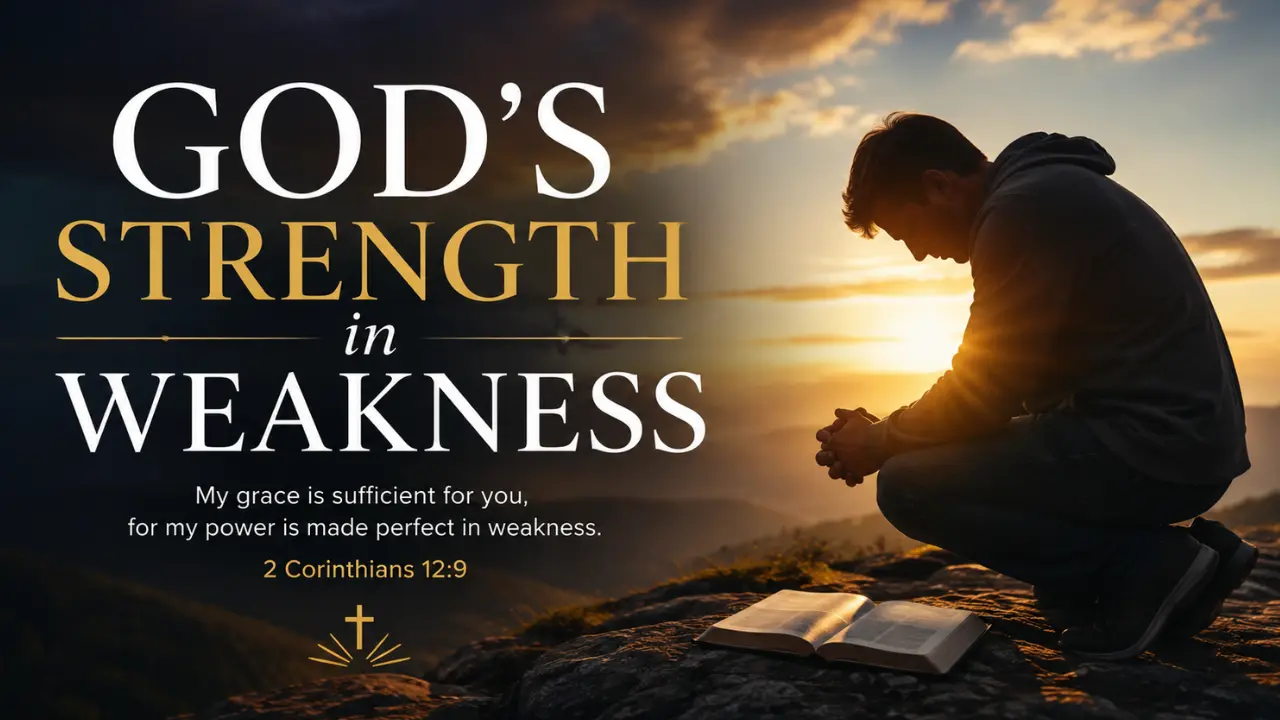

The Bible does not actually say, “God will never give you more than you can handle.” It teaches something deeper: God can allow you to face more than you can carry alone, so you learn to depend on His strength instead of trusting your own limit.
That sentence may sound comforting at first, but it can also confuse people who feel crushed, exhausted, or spiritually weak. When someone walks through grief, betrayal, sickness, pressure, temptation, or unanswered prayer, they may think, “If God never gives me more than I can handle, why do I feel like I cannot handle this?”
The problem does not come from the desire to comfort people. The problem comes from using a phrase that sounds biblical but does not fully match Scripture.
The Bible gives a better comfort. It does not tell suffering believers to pretend they have enough strength. It points them to a God who gives strength when their own strength fails.
Does the Bible Say God Will Never Give You More Than You Can Handle?
No, the Bible never says those exact words. Many Christians connect the phrase to 1 Corinthians 10:13, but that verse speaks about temptation, not every kind of suffering, sorrow, pressure, or life burden.
Paul writes that God will not allow His people to face a temptation without also giving them a way to endure it. That matters because temptation tries to pull people into sin. God does not abandon His people when they face that battle.
But many people stretch that verse too far. They take a promise about temptation and apply it to every painful experience in life. That creates confusion because the Bible also shows godly people reaching moments where they feel overwhelmed beyond their own strength.
Paul himself said in 2 Corinthians 1:8 that he and his companions felt burdened beyond their strength. He did not hide that weakness. He admitted it because he wanted believers to understand something important: some burdens teach us not to rely on ourselves, but on God.
That changes the entire meaning.
God does not always keep life within your personal emotional capacity. Sometimes He meets you when your capacity runs out.
Many believers confuse forgiveness with restored relationship, but the difference between forgiveness and reconciliation in the Bible shows why forgiving someone does not always mean trust returns immediately.
Why This Popular Phrase Can Hurt Struggling Christians
The phrase “God will never give you more than you can handle” can sound encouraging, but it can place quiet pressure on hurting people.
A grieving person may hear it and think, “Then I must be failing because I cannot handle this.”
A tired believer may hear it and think, “Maybe my faith is too weak because I feel broken.”
A person fighting anxiety, loss, or spiritual dryness may hear it and think, “If God gave this to me because I can handle it, why do I feel like I am falling apart?”
That is not the comfort Scripture gives.
The Bible does not shame human weakness. It tells the truth about it. David cried out in the Psalms. Elijah felt so exhausted that he wanted his life to end. Job sat in grief and asked painful questions. Paul carried pressure that felt too heavy for his own strength.
Scripture never treats honest weakness as fake faith. It shows that weakness can become the place where a person learns deeper dependence on God.
The Verse People Often Mean: 1 Corinthians 10:13
1 Corinthians 10:13 says God remains faithful when believers face temptation. He does not allow temptation to become a trap with no way of endurance. He provides a way through it.
That verse gives strong hope, but it has a specific focus.
| Common Saying | Biblical Meaning |
|---|---|
| God will never give you more than you can handle | This exact phrase does not appear in Scripture |
| God will not abandon you in temptation | This matches 1 Corinthians 10:13 |
| God may allow burdens beyond your strength | This matches Paul’s testimony in 2 Corinthians 1:8–9 |
| God gives grace in weakness | This matches 2 Corinthians 12:9 |
The difference matters.
Temptation says, “Sin is your only way out.”
God says, “No, I will give you a way to endure.”
Suffering says, “You do not have enough strength.”
God says, “You are right, but I will be your strength.”
Those two truths work together, but they do not mean the same thing.
Paul Faced More Than He Could Handle Alone
Paul did not present himself as a man who could handle everything. He openly admitted that some pressure felt beyond his strength.
That honesty gives deep comfort to believers today.
Paul did not say, “I discovered I was stronger than I thought.” He said the pressure taught him not to rely on himself, but on God who raises the dead. That sentence shifts the focus from human ability to divine power.
Many people want faith to mean, “I can handle anything.”
The Bible shows a better kind of faith: “I cannot handle this alone, but God can hold me through it.”
That kind of faith does not deny pain. It does not fake strength. It does not turn suffering into a motivational slogan. It places the believer’s weakness under the care of a faithful God.
God’s Strength Does Not Always Remove the Burden Immediately
Many believers struggle because they expect God’s strength to feel like instant relief. Sometimes God gives peace quickly. Sometimes He gives wisdom, help, endurance, and enough grace for the next step.
Paul asked the Lord to remove his thorn in the flesh, but God answered with grace. The Lord told him, “My grace is sufficient for you, for My strength is made perfect in weakness.”
That means weakness does not block God’s power. Weakness can reveal it.
This does not mean Christians should enjoy suffering or call pain good by itself. The Bible never asks people to pretend wounds do not hurt. Instead, it shows that God can meet His people inside the pain and sustain them in ways they could not produce by themselves.
God’s strength may come through prayer. It may come through Scripture. It may come through wise counsel, rest, correction, provision, or the quiet endurance to continue one more day.
Sometimes the miracle does not look like the burden disappearing. Sometimes it looks like God keeping your faith alive while the burden remains.
Proverbs gives strong warnings about strife, pride and harsh words, which connects closely with what Scripture says about avoiding arguments.
Why God Allows Moments Beyond Human Strength
This question deserves care because people often answer it too quickly. Not every burden comes from the same source. Some pain comes from human sin. Some comes from spiritual testing. Some comes from living in a broken world. Some comes from foolish decisions. Some remains mysterious to us.
Still, Scripture shows several reasons God can use overwhelming seasons without becoming cruel or careless.
God Teaches Dependence
Self-reliance can look strong, but it can quietly move the heart away from God. Overwhelming seasons expose the limits of human control. They remind believers that life does not rest on personal strength alone.
God Deepens Prayer
Many people pray differently when they reach the end of themselves. Their prayers become less polished and more honest. They stop trying to impress God and start crying out to Him.
God Exposes False Foundations
Some people build identity on success, approval, money, relationships, ministry, health, or control. A heavy season can reveal what they trusted more than God.
God Builds Compassion
People who have walked through deep pressure often become more gentle with others. They stop giving shallow answers because they know what pain feels like.
God Displays Grace
When a believer keeps trusting God in weakness, that endurance does not glorify human willpower. It points to the grace of God.
Psalms Give Better Language for Overwhelmed Believers
The Psalms never force hurting people to sound strong. They give believers words for fear, grief, confusion, waiting, repentance, and hope.
David often brought raw emotion before God. He asked why God seemed far away. He cried for rescue. He admitted fear. He also reminded his own soul to hope in God.
That matters because many Christians think spiritual maturity means hiding distress. The Psalms show the opposite. Mature faith brings distress to God instead of running from Him.
Psalm 46:1 calls God a refuge and strength, a very present help in trouble. That does not mean trouble never comes. It means God meets His people inside trouble.
Psalm 55:22 tells believers to cast their burden on the Lord. That command only makes sense because people really do carry burdens too heavy for themselves.
God does not tell you to pretend the burden feels light. He tells you where to place it.
A More Biblical Way to Say the Popular Phrase
Instead of saying, “God will never give you more than you can handle,” Christians can say something more faithful to Scripture:
God may allow more than you can handle alone, but He will never abandon you when you depend on Him.
That sentence gives stronger comfort because it does not deny reality. It makes room for tears, weakness, exhaustion, and dependence.
It also keeps the focus where the Bible places it. The hope of the believer does not rest in personal capacity. It rests in God’s faithfulness.
Here are a few better ways to express the truth:
- God will not abandon you in what you face.
- God gives grace when your strength runs out.
- God can carry what you cannot carry alone.
- God provides a way to endure temptation.
- God’s power meets believers in weakness.
These statements comfort people without creating guilt for feeling overwhelmed.
What Should You Do When Life Feels Too Heavy?
When life feels too heavy, do not start by condemning yourself for feeling weak. Start by turning toward God with honesty.
Tell God the Truth
You do not need to make your prayer sound strong. Tell Him what hurts. Tell Him what feels confusing. Tell Him where you feel tired, afraid, or angry. The Psalms give you permission to pray honestly while still holding on to faith.
Separate Temptation From Burden
If you face temptation, ask God for the way of escape and endurance that 1 Corinthians 10:13 promises. Do not call sin your only option.
If you face a heavy burden, ask God for strength, help, wisdom, and support. Do not assume you must carry everything alone.
Stop Measuring Faith by Emotional Strength
Strong faith does not always feel strong. Sometimes faith looks like refusing to let go of God while tears continue. Sometimes faith looks like praying again after silence. Sometimes faith looks like asking for help instead of pretending you are fine.
Receive Help Without Shame
God often strengthens people through other people. A pastor, counselor, trusted friend, doctor, family member, or mature believer may become part of God’s provision. Asking for help does not prove weak faith. It often shows wisdom.
Hold on to Grace for Today
Jesus taught His people not to carry tomorrow before tomorrow arrives. When life feels too heavy, ask for grace for today. Then ask again tomorrow. God does not demand that you carry the entire future in one moment.
The Deeper Truth Christians Should Remember
The Bible gives believers a better message than the popular phrase.
- It does not say you will always feel capable.
- It does not say every burden will match your emotional strength.
- It does not say faithful people never feel overwhelmed.
It says God remains faithful. It says His grace proves sufficient. It says His strength meets weakness. It says He gives a way through temptation. It says He receives honest cries. It says He carries the burden you cannot carry alone.
So when someone says, “God will never give you more than you can handle,” remember the deeper biblical truth:
God may allow you to face more than you can handle by yourself, but He never calls you to handle it without Him.
