
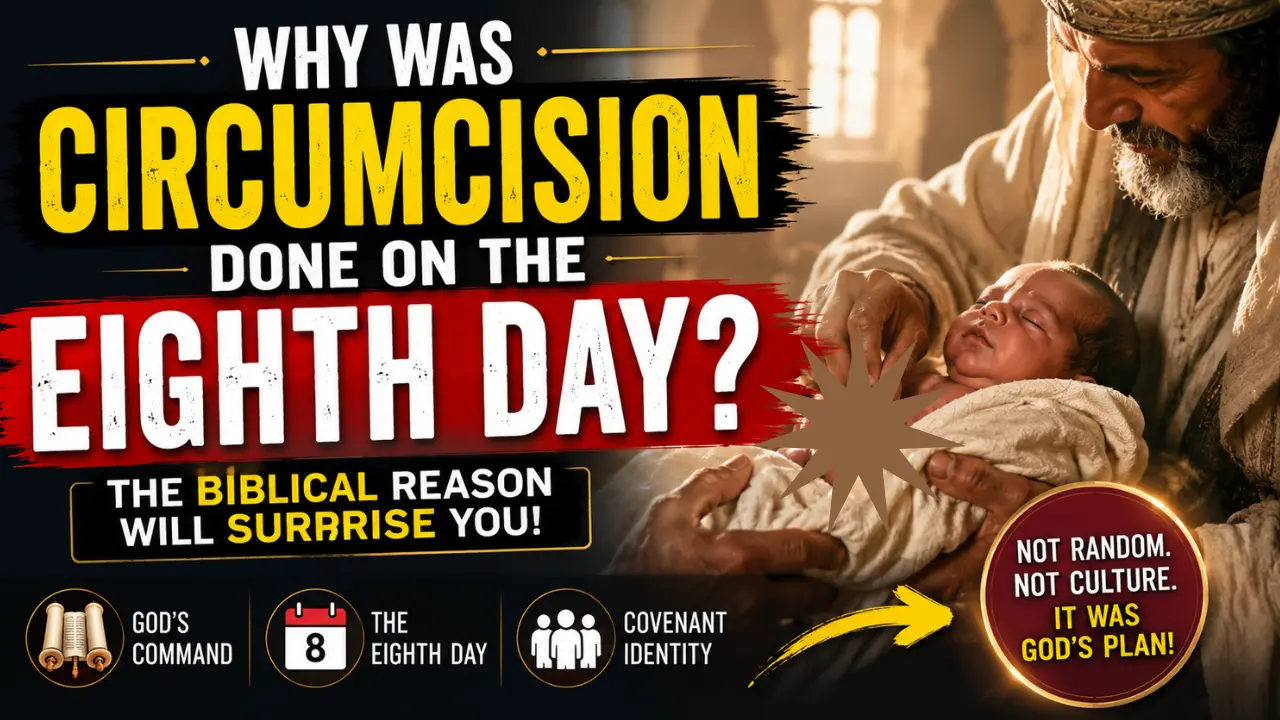

God commanded circumcision to be done on the eighth day because the timing itself belonged to the covenant sign. It was not left to family preference, cultural habit or convenience. The eighth day was part of the command God gave to Abraham and later repeated in Israel’s law.
In Genesis 17, God told Abraham that every male child among his descendants was to be circumcised when he was eight days old. Later, in Leviticus 12, the same timing appears again: on the eighth day, the flesh of the child’s foreskin was to be circumcised.
This means the eighth day was not a small detail. It was part of how Israel received the child into the visible sign of the covenant.
The Eighth Day Came From God’s Command
The first reason circumcision was done on the eighth day is the simplest and most important: God commanded it.
Abraham did not invent the timing. Israel did not later choose the day because it seemed meaningful. The instruction came from God Himself when He established circumcision as the covenant sign for Abraham’s household.
This matters because biblical circumcision was not merely a family ceremony. It was an act of obedience to God’s revealed word. The eighth day showed that the covenant sign belonged to God’s order, not human adjustment.
A father in Israel did not decide when the child seemed ready. The family obeyed the appointed time because the child belonged to a people whose identity was shaped by divine command.
Also Read: Why Did God Want Men Circumcised?
The Child Was Marked Before He Could Prove Anything
The eighth-day timing placed the sign at the very beginning of life. The child had not yet spoken, believed, worked, fought, learned the law or made personal achievements. He received the sign before he could offer anything back.
That detail is deeply important. Circumcision showed that covenant identity began with God’s promise, not the child’s performance.
The male child was not circumcised because he had already proven himself faithful. He was circumcised because he was born into the covenant community that God had established through Abraham.
This does not mean every circumcised person automatically had a faithful heart. Scripture later makes clear that outward circumcision without inward obedience was not enough. But at the level of covenant sign, the eighth day showed that God’s promise came before human maturity.
The Timing Connected Birth, Family and Covenant
Circumcision on the eighth day tied the newborn child to Abraham’s family line. It said that this child was not simply born into an ordinary household. He was born into a people marked by God’s promise.
The father’s obedience was part of the picture. The child could not circumcise himself. The household had to act. The family had to recognize that this child belonged under the covenant sign God had given.
This made circumcision both personal and communal. It involved the child’s body, the father’s responsibility, the family’s obedience and the people’s covenant identity.
The eighth day placed the ceremony close enough to birth to show belonging from the beginning, but not so immediate that it was detached from the rhythm of family recognition and ordered obedience.
Also Read: What Do Circumcised and Uncircumcised Mean in the Bible?
The Eighth Day Followed the First Seven Days of Life
In biblical thought, seven often marks a completed cycle. The creation week itself moves through seven days. Israel’s calendar, Sabbath rhythm and ceremonial life often carried patterns connected to seven.
The eighth day then comes after the first full seven-day cycle of the child’s life. It is the day after that first completed week.
We should not overstate this as though the Bible gives only one symbolic explanation for the eighth day. Scripture does not say, “This is the reason it must be the eighth day.” But the pattern is still meaningful within the world of the Bible.
The child passed through the first seven days of life and then on the eighth day received the covenant sign. The timing placed circumcision at the threshold of a new beginning after the first completed cycle of life.
Leviticus Places the Eighth Day Inside Birth Purity Laws
Leviticus 12 gives another important setting. After a woman gave birth to a male child, the text says she was ceremonially unclean for seven days. Then, on the eighth day, the child was circumcised.
This does not mean childbirth was morally sinful. In the law, ceremonial uncleanness often related to blood, bodily conditions and access to sacred space. It was part of Israel’s ritual system, not a statement that the mother or child had done evil.
The eighth day came after those first seven days. The child’s circumcision happened within a larger pattern of birth, cleansing, household order and covenant obedience.
So the timing was not floating by itself. It belonged to Israel’s sacred rhythm around birth and covenant life.
It Was Early, But Not Careless
Circumcision was done when the child was still very young, but the timing was not careless. God did not command it at some vague future point. He gave a fixed day.
This created a balance. The sign came early enough to show that the child belonged to the covenant people from the beginning. Yet it was not performed at the exact moment of birth. The family waited through the first week and then obeyed on the appointed day.
That waiting period gave shape to the act. Circumcision was not treated as a rushed bodily procedure. It was a commanded covenant act performed at a specific time under God’s authority.
The eighth day taught Israel that even the earliest moments of family life were to be ordered by God’s word.
Also Read: Why Do Christians No Longer Circumcise?
The Eighth Day Was Also Connected With Naming
In the New Testament, we see circumcision and naming connected. John the Baptist was circumcised on the eighth day, and that was also when his name became a public matter. Jesus was also circumcised on the eighth day and given the name announced before His birth.
This shows that, in Jewish practice, the eighth day could become a moment of public identity. The child was not only physically marked with the covenant sign. He was also recognized by name within the covenant community.
This connection gives the eighth day a powerful human dimension. A child was born, received into family life, named and marked according to God’s covenant instruction.
The ceremony said, in effect, this child has a name, a people, a household and a covenant history.
Jesus Entered Israel Through the Same Appointed Timing
Luke records that Jesus was circumcised on the eighth day. This is not a throwaway detail. It shows that Jesus truly entered the life of Israel under the law.
He did not stand outside the covenant story as a distant observer. He was born into it. He received the sign given to Abraham’s descendants. He was named on the appointed day. His earliest days were shaped by obedience to the law of God.
This is important for understanding the incarnation. Jesus came not only as a human being in a general sense but as a Jewish male born into the covenant people of Israel.
His eighth-day circumcision shows His real participation in the story that began with Abraham and continued through Israel.
Also Read: Uncircumcised Lips Meaning in the Bible
The Bible’s Main Emphasis Is Theological
Many people ask whether circumcision was done on the eighth day for medical reasons. Some modern discussions point to physical factors in newborn development and suggest that the eighth day may have had practical benefits.
That may be an interesting discussion but it should not become the main biblical explanation. The Bible itself presents the eighth day as a matter of divine command and covenant order.
The central reason was not that Israel discovered an ideal medical schedule. The central reason was that God commanded Abraham’s descendants to keep the covenant sign on that day.
A medical observation may be secondary but the biblical meaning is covenantal. The eighth day belonged to obedience, identity, birth, family and God’s promise.
The Day Reminded Israel That Their Bodies Belonged to God
Circumcision on the eighth day showed that even the body was not outside God’s claim. Israel’s covenant faith was not merely private thought or verbal belief. It touched time, family, flesh, birth, food, worship, rest and daily life.
A male child entered the covenant sign before he understood the meaning of it. As he grew, the mark reminded him that his life was not self-created. He belonged to a people formed by God’s promise.
This is one reason outward signs in Scripture are serious. They teach through the body and through repeated practice. They make invisible truths visible.
For Israel, circumcision said that the covenant was not an abstract idea. It was carried in generations, households and embodied obedience.
The Eighth Day Did Not Replace the Need for the Heart
Even though the eighth day was commanded, Scripture never lets the physical sign become the whole story. Later, Moses and the prophets speak of the need for the heart to be circumcised.
That means a child could receive the covenant sign on the eighth day and still grow up needing inward faithfulness to God. The outward mark identified him with the covenant people but it did not automatically produce obedience in his heart.
This is where the Bible protects the meaning from becoming empty ritual. God gave the sign but He also called for love, reverence, humility and obedience.
The eighth-day command was real and important but it was never meant to excuse a hard heart.
Also Read: Why the Bible Talks About Circumcision So Much
Christians Should Read the Eighth Day Through Christ
For Christians, the eighth-day circumcision command is part of the old covenant story that leads to Christ. The New Testament does not require Gentile believers to receive physical circumcision in order to belong to God’s people.
Instead, the New Testament points to inward transformation through Christ and the Spirit. What the old sign marked outwardly, God now fullfills inwardly in those who belong to Christ by faith.
Still, the eighth-day command remains meaningful. It teaches that God is precise in His covenant dealings. It shows that God’s promises reach into family life. It reminds readers that belonging to God is not a casual idea.
The old covenant sign has reached its fullfillment but the lesson of God’s covenant faithfulness remains.
A Careful Answer
Circumcision was done on the eighth day because God appointed that day as part of the covenant sign given to Abraham and repeated in Israel’s law. The timing showed that the child belonged to the covenant people from the beginning of life, before personal achievement or maturity.
The eighth day also followed the child’s first seven days of life, connected with Israel’s birth purity laws and became associated with naming and public identity. It placed the newborn male within the household, the covenant community and the promise God had made to Abraham.
The deeper point is that God’s covenant sign was not random. It was ordered, embodied, generational and tied to His promise. The eighth day taught Israel that even the beginning of life belonged under the word and covenant of God.
