
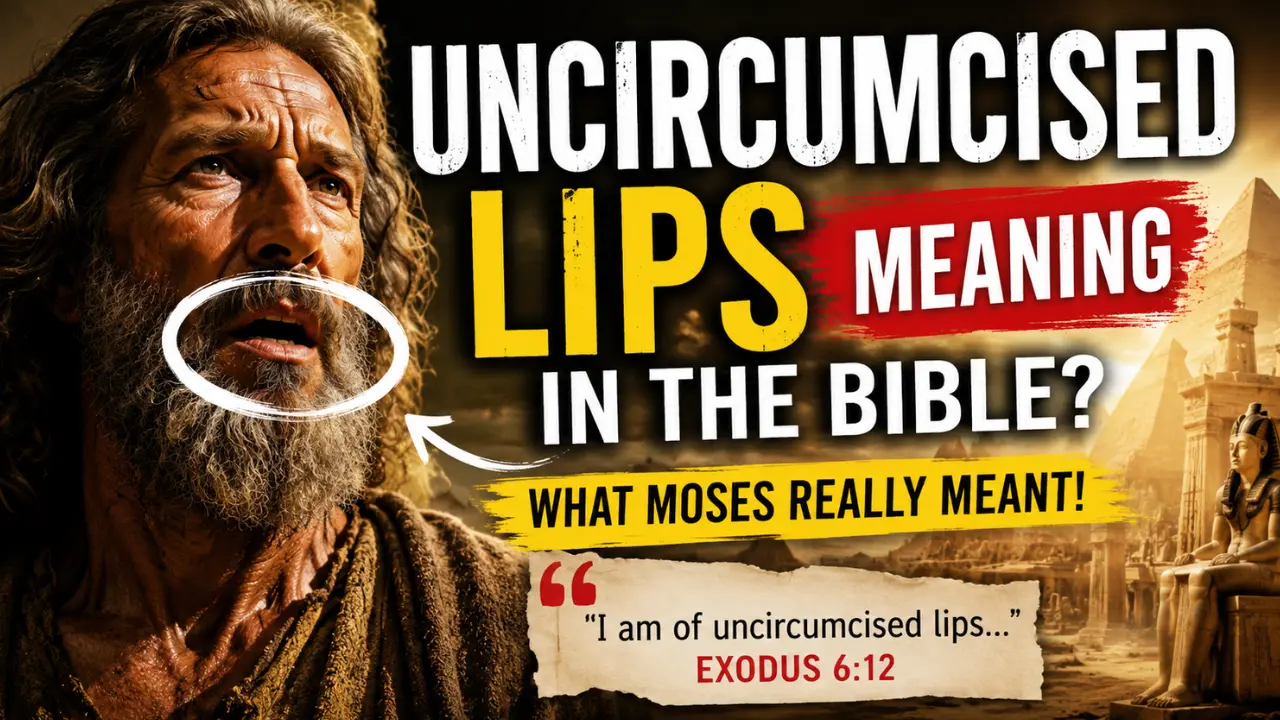

The phrase “uncircumcised lips” appears in Exodus when Moses describes his struggle to speak effectively. In Exodus 6:12, Moses says:
“Behold, the people of Israel have not listened to me. How then shall Pharaoh listen to me, for I am of uncircumcised lips?”
Moses is not speaking literally. He is using a figurative expression to describe his sense of weakness, inadequacy and unfitness as a speaker. In context, “uncircumcised lips” means lips that Moses believes are unable, unprepared, impure or unsuitable for the task God has given him.
The expression also reflects a broader biblical use of the word “uncircumcised” as a symbol for something resistant, unclean or not fully dedicated to God. Elsewhere in Scripture, people are described as having “uncircumcised hearts” or “uncircumcised ears,” meaning they are spiritually closed or unresponsive. Moses applies similar language to his lips, emphasizing his fear that his speech is inadequate for confronting Pharaoh.
The phrase reveals Moses’ inner burden. He has been called to speak before Pharaoh, confront Egypt’s power and lead Israel out of slavery, yet he feels deeply insufficient for the mission. His earlier objections in Exodus also show this insecurity, as he repeatedly questions his ability to speak well and persuade others.
At the same time, the passage highlights an important theme in Exodus: God works through human weakness. Moses focuses on his limitations but God continues to use him as the central spokesman and leader of Israel’s deliverance.
Also Read: What Do Circumcised and Uncircumcised Mean in the Bible?
The Setting in Exodus
The statement comes during a discouraging moment in Moses’ calling. God had sent him to Pharaoh with the command to let Israel go but Pharaoh resisted. Instead of immediate deliverance, Israel’s labour became harder and the people became bitter toward Moses.
Moses then faced rejection from both sides. Pharaoh refused him and Israel struggled to listen because of their suffering. This is why Moses asks how Pharaoh will listen if even the people of Israel have not listened.
His words come from pressure, disappointment, and fear of failure. “Uncircumcised lips” expresses Moses’ belief that his speech is not capable of carrying the weight of God’s message.
Why Moses Used the Word “Uncircumcised”
In the Old Testament, circumcision was a sign of covenant identity and being set apart before God. Because of that, the word “uncircumcised” could also be used figuratively for something resistant, unprepared, unresponsive or unfit.
Moses applies that language to his lips. He is saying that his speech feels inadequate for holy service. He does not trust his own ability to speak with power before Pharaoh.
This is not mainly about sinful speech in the immediate context. It is about Moses feeling that his mouth is not fit for the mission. He sees his speaking weakness as a serious limitation.
Moses’ Ongoing Fear About Speaking
This was not the first time Moses raised concern about his speech. Earlier, in Exodus 4, he told God that he was not eloquent and was slow of speech and tongue. Moses repeatedly focused on what he lacked.
His concern was understandable from a human perspective. Pharaoh represented imperial power. Moses was being sent with a message that would challenge Egypt directly. He knew the task was beyond ordinary speech or persuasion.
“Uncircumcised lips” therefore gives language to a deeper fear: Moses believed his weakness would prevent obedience from bearing fruit.
What the Phrase Does Not Mean
“Uncircumcised lips” should not be interpreted as a physical condition. It also should not be reduced only to impure or sinful speech. The immediate context points more strongly to inability, inadequacy and perceived unfitness.
Moses is not boasting in rebellion. He is confessing weakness. He feels unable to speak in a way that will be received by Pharaoh or Israel.
The phrase matters because it shows how deeply Moses understood his own limitation. He was not confident in himself, his eloquence or his natural authority.
God’s Call Was Greater Than Moses’ Ability
The story does not end with Moses’ weakness. God continues to send him. This is important because Exodus does not present Moses’ success as the result of natural eloquence. The power of the mission comes from God’s word, God’s authority and God’s action.
Moses feels that his lips are unfit but God’s command remains effective. Pharaoh will not be overcome by Moses’ speaking skill. Egypt will be confronted by the Lord Himself.
This gives the phrase its deeper meaning in the story. Moses’ weakness does not cancel God’s calling. His inadequacy becomes the setting where God’s power and authority are displayed.
“Uncircumcised” as Figurative Language in the Bible
The Bible uses “uncircumcised” figuratively in several ways. An uncircumcised heart represents stubbornness or resistance toward God. Uncircumcised ears represent unwillingness to hear God’s word. In Moses’ case, uncircumcised lips represent speech that feels unready, ineffective or unfit for divine assignment.
These examples show that the word can describe more than physical circumcision. It can refer to a deeper condition of unpreparedness, resistance or inability in relation to God’s purposes.
In Exodus 6, the focus remains on Moses’ lips because his calling required speech. He had to speak to Israel, confront Pharaoh and declare the Lord’s word. His fear centred exactly where his mission required obedience.
What “Uncircumcised Lips” Means in the Bible
“Uncircumcised lips” in the Bible means lips that Moses considered inadequate, unprepared and unfit for speaking God’s message before Pharaoh. The phrase appears in Exodus during Moses’ struggle with his calling and his fear that neither Israel nor Pharaoh would listen to him.
The expression uses covenant language figuratively to describe Moses’ weakness in speech. Yet the larger story shows that God’s authority was not limited by Moses’ insecurity. Moses may have felt his lips were unfit but God’s word remained powerful enough to confront Pharaoh and deliver Israel.
Frequently Asked Questions
Where does “uncircumcised lips” appear in the Bible?
The phrase appears in Exodus 6 when Moses speaks to God about his weakness in speaking.
Did Moses literally mean his lips were circumcised?
No. The phrase is figurative and describes Moses’ feelings of weakness and unfitness for speaking.
Why did Moses say he had uncircumcised lips?
Moses doubted his ability to speak effectively before Pharaoh and lead Israel successfully.
What does “uncircumcised” symbolize in the Bible?
Figuratively, it can symbolize something unprepared, resistant, unfit or not properly responsive.
Does “uncircumcised lips” mean sinful speech?
In Exodus, the main focus is Moses’ inadequacy and weakness as a speaker rather than sinful speech.

2 thoughts on “Uncircumcised Lips Meaning in the Bible”