
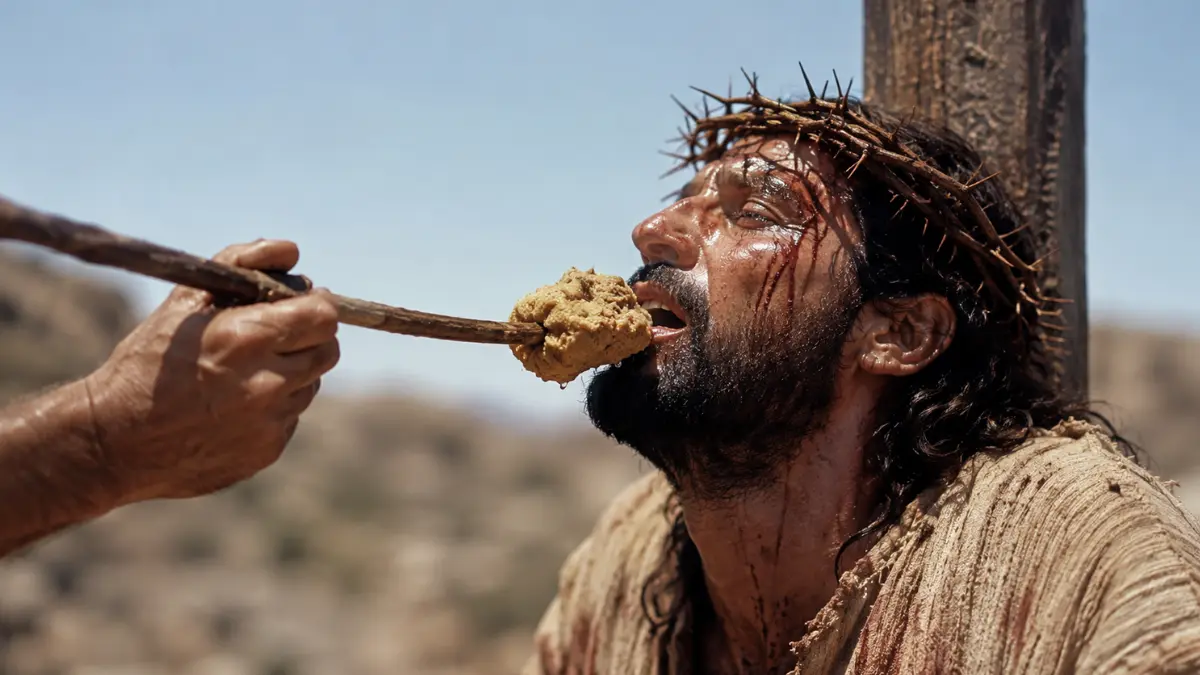

Jesus said, “I thirst,” on the cross because He was experiencing genuine physical suffering and because His words brought Scripture to fulfillment. John 19:28 places this statement near the end of the crucifixion, immediately before Jesus received sour wine and declared, “It is finished.”
This short statement reveals the true humanity of Jesus, the severity of His suffering and His deliberate obedience to the Father. Even during His final moments, Jesus remained aware of what Scripture had described and of the work He had come to complete.
What Happened in John 19:28?
John explains that Jesus knew the events connected with His suffering were reaching their appointed completion. He then said, “I thirst,” so that Scripture would be fulfilled.
A jar of sour wine stood nearby. Someone soaked a sponge in the wine, placed it on a hyssop branch and lifted it to Jesus’ mouth. After receiving the sour wine, Jesus said, “It is finished,” bowed His head and gave up His spirit.
The sequence is simple but meaningful:
- Jesus recognized that His suffering was reaching its appointed end.
- He said, “I thirst.”
- He received sour wine.
- He declared, “It is finished.”
- He gave up His spirit.
John does not present these words as an uncontrolled cry of defeat. He shows Jesus moving deliberately through the final moments of the crucifixion.
Jesus Experienced Real Physical Thirst
Jesus said, “I thirst,” because crucifixion caused severe physical suffering. Before reaching the cross, He had endured arrest, interrogation, beating, scourging and the pressure of the crown of thorns.
After the scourging and the journey to Golgotha, Jesus spent hours suffering on the cross. His body had lost blood and fluid, and the strain of crucifixion made breathing and speaking increasingly difficult.
Thirst would have become one of the most painful parts of that suffering. His mouth and throat would have grown dry, and even a few words would have required effort.
This physical explanation does not weaken the spiritual importance of the verse. It confirms that Jesus truly entered human suffering. He did not merely appear to have a human body. He experienced pain, weakness, exhaustion and thirst as a real man.
The words “I thirst” show that the Son of God accepted the full physical cost of the cross.
Which Scripture Did “I Thirst” Fulfill?
John says Jesus spoke so that Scripture would be fulfilled, but he does not identify one Old Testament passage by name.
Psalm 69:21 provides the clearest connection:
“They gave me also gall for my meat; and in my thirst they gave me vinegar to drink.”
Psalm 69 describes a righteous sufferer who faces rejection, shame and hostility. The detail about receiving sour wine during thirst closely matches what happened at the cross.
Psalm 22:15 may also provide related imagery:
“My strength is dried up like a potsherd; and my tongue cleaveth to my jaws.”
Psalm 22 portrays physical weakness, public ridicule and suffering. Several events during the crucifixion resemble its imagery, including the soldiers casting lots for Jesus’ clothing.
Psalm 69:21 remains the clearest connection with the sour wine. Psalm 22:15 offers related imagery of severe dryness, but John does not explicitly name either passage.
The safest conclusion is that John wanted readers to see the crucifixion as part of the scriptural pattern of the suffering righteous One.
Why Did the Soldiers Give Jesus Sour Wine?
John says a jar of sour wine stood near the cross. After Jesus said, “I thirst,” someone soaked a sponge in the wine and lifted it to His mouth.
Sour wine was not the same as expensive table wine. It was a common acidic drink used by ordinary people and soldiers. In the crucifixion scene, it also became part of the scriptural detail John wanted readers to notice.
The Gospels mention more than one offer of drink during the crucifixion. Earlier, Jesus refused wine mixed with myrrh. Many interpreters understand that mixture as an attempt to dull the pain, although Mark does not directly explain its purpose.
Near the end of the crucifixion, John records a separate offering of sour wine. Jesus received it and then declared, “It is finished.”
John does not identify the motive behind the offering. Luke records soldiers mocking Jesus while offering sour wine during the crucifixion, while John focuses on fulfilled Scripture and the sequence leading to Jesus’ final declaration.
The safest conclusion is that the sour wine answered Jesus’ expressed thirst and completed the detail John wanted readers to notice. The passage does not require readers to label the final act as entirely compassionate or entirely cruel.
Why Does John Mention the Hyssop Branch?
John says someone lifted the sponge on hyssop. Hyssop also appears in the Passover account, where the Israelites used it to apply the lamb’s blood, and in Old Testament passages about ceremonial cleansing.
Some Christians therefore see an echo of Passover in John’s detail. Jesus died during the Passover season, and John presents Him as the Lamb who gives His life for others.
However, John does not directly explain the symbolism of the hyssop branch. Readers should treat the Passover connection as a careful possibility rather than a certain interpretation.
The main point remains clear: Jesus received the sour wine, Scripture reached fulfillment and the crucifixion moved toward its appointed completion.
“I Thirst” Reveals the Humanity of Jesus
The Gospel of John presents Jesus as the eternal Word who became flesh. He is fully divine, yet He also entered human life completely.
Jesus experienced hunger after fasting, tiredness after travelling, sorrow at the death of Lazarus and anguish before the cross. His thirst continues that clear picture of genuine humanity.
On the cross, His suffering was not symbolic. His body endured real trauma. His thirst, pain and weakness were genuine.
This matters because Jesus saves humanity as the incarnate Son of God. He entered the condition of those He came to redeem. He suffered in a human body, remained obedient through suffering and offered Himself as a real sacrifice.
Believers therefore do not pray to a distant Savior who remained untouched by suffering. They come to One who understands physical weakness, rejection and pain through personal experience.
The statement “I thirst” reminds Christians that Jesus knows what bodily suffering feels like.
Did “I Thirst” Have a Spiritual Meaning?
Some interpretations describe Jesus’ words as a spiritual thirst for souls, fellowship with the Father or the salvation of humanity. These ideas may reflect wider Christian truths, but John 19:28 primarily describes real physical thirst and the fulfillment of Scripture.
The passage does not say that Jesus was asking people to satisfy a symbolic spiritual desire. John connects His statement directly with the sour wine and with Scripture reaching fulfillment.
A responsible explanation should begin with the plain meaning:
- Jesus experienced genuine thirst.
- His statement led to the offering of sour wine.
- The event fulfilled Scripture.
- He remained aware of His mission during His final moments.
Believers may reflect on Christ’s love for humanity when reading the verse, but that reflection should not replace the direct meaning of the text.
The strongest interpretation keeps physical suffering and scriptural fulfillment at the center.
Connection Between “I Thirst” and “It Is Finished”
John places “I thirst” directly before “It is finished.” The two statements belong together, but they communicate different truths.
“I thirst” reveals Jesus’ physical suffering and connects the crucifixion with Scripture. “It is finished” announces that the work connected with His sacrificial death had reached completion.
Jesus had obeyed the Father, revealed God’s character and offered Himself as the sacrifice humanity needed. His final declaration did not mean that every future event, including the resurrection and ascension, had already happened. It meant that the work He was completing through His death had reached its appointed goal.
Jesus did not say, “I am finished.” He said, “It is finished.” His life did not end in failure. His saving work reached completion.
The statement about thirst therefore does not show defeat. It shows that Jesus remained fully conscious and obedient through the final details of the cross.
What “I Thirst” Teaches Believers
Jesus’ words teach believers that salvation came at a real cost. The cross involved more than a theological idea. Jesus endured physical pain, public shame and rejection.
The verse also shows that God’s promises remain trustworthy. The crucifixion included details that matched the scriptural pattern of the suffering Messiah. The sour wine, the division of His garments and the darkness during the crucifixion all pointed beyond a random execution.
“I thirst” also comforts believers who suffer physically. Jesus understands bodily pain. He knows exhaustion, weakness and thirst through personal experience.
This does not mean every hardship will disappear immediately. It means no believer suffers before a Savior who cannot understand.
Most importantly, the verse points to the completeness of Christ’s obedience. Jesus endured the cross until the work connected with His sacrificial death reached its appointed end.

1 thought on ““I Thirst” Meaning: Why Jesus Said It on the Cross”