
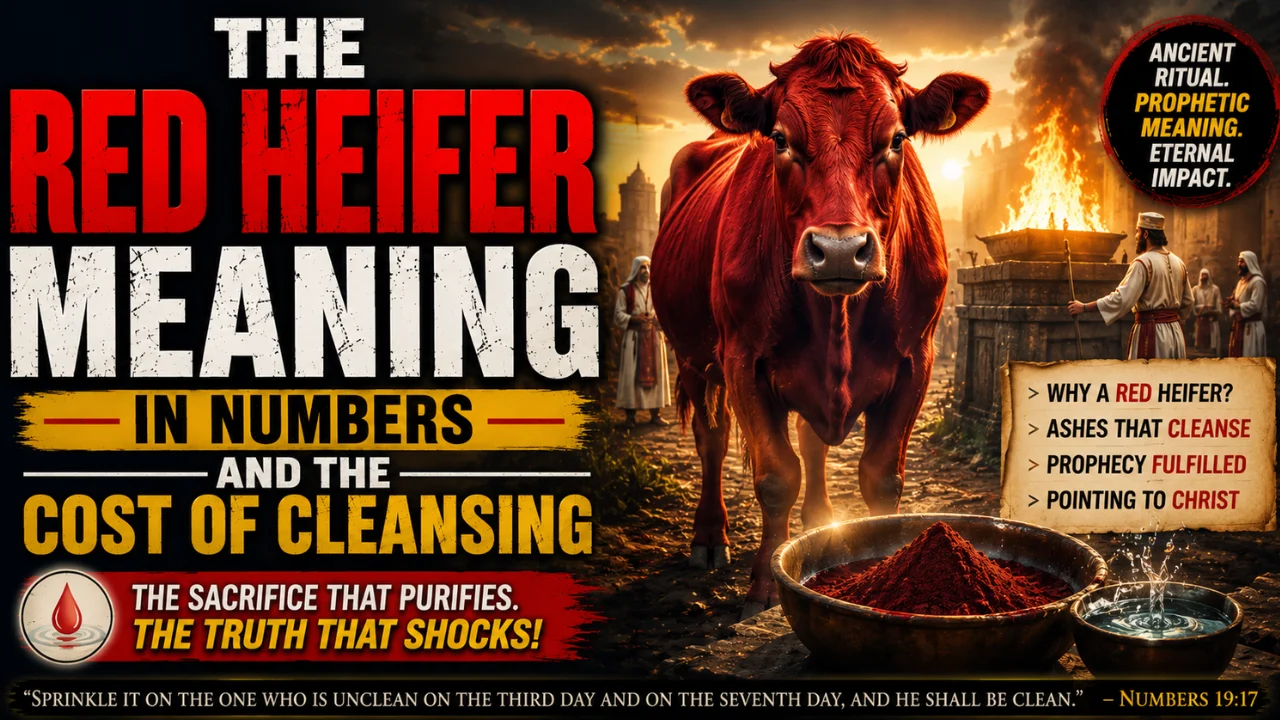

Among all the rituals in the Old Testament, few feel as mysterious, unsettling and symbolically rich as the sacrifice of the red heifer in Numbers 19. The chapter describes a flawless red cow taken outside the camp, slaughtered before the priest, completely burned with cedar wood, hyssop and scarlet and then reduced to ashes that would later be mixed with water for purification. At first reading, the ritual seems unusual and distant from modern understanding. Yet beneath the strange details lies one of the deepest biblical pictures of cleansing, impurity, death, sacrifice and the costly nature of restoration before God.
The red heifer ritual was given to Israel because death created ceremonial uncleanness among the people. Anyone who touched a dead body became unclean and could not simply ignore that condition. Cleansing required sacrifice, water, ashes, waiting and priestly mediation. Numbers 19 therefore reveals a profound spiritual truth woven throughout Scripture: impurity cannot cleanse itself and restoration before a holy God always carries a cost, especially within [the wider Old Testament system of holiness, impurity and ceremonial cleansing laws — Why Ritual Purity Was Essential in Ancient Israel].
The red heifer becomes more than an ancient ceremonial law. It becomes a prophetic image of purification through sacrifice, the seriousness of defilement and ultimately the cleansing work fulfilled through Jesus Christ.
Why the Red Heifer Was Unique
The heifer in Numbers 19 had to meet precise requirements. It had to be completely red, without blemish and never placed under a yoke. These details were not random ceremonial preferences. They emphasized purity, wholeness and separation for a sacred purpose.
The demand for a spotless animal reflected a central biblical principle: what is offered before God cannot be corrupted, damaged or polluted. Sacrifice required purity because impurity could not remove impurity. The animal symbolically carried the burden of cleansing precisely because it was free from defect itself.
The requirement that the heifer never bear a yoke also carries symbolic depth. The animal was set apart entirely for this act of purification. It had not been used for ordinary labour or common work. In biblical symbolism, this separation highlighted consecration and uniqueness.
Even the colour red has generated deep reflection throughout Jewish and Christian interpretation. Red naturally evokes blood, sacrifice, sin, judgment and purification simultaneously. Isaiah later declares, “Though your sins be as scarlet, they shall be as white as snow,” linking crimson imagery with cleansing and forgiveness. The red heifer therefore stood as a vivid visual reminder that purification from defilement would involve blood, death and costly sacrifice.
Why the Ritual Focused on Death
The entire context of Numbers 19 revolves around death contamination. Anyone who touched a corpse, entered a tent where someone died or even came near human death became ceremonially unclean for seven days. Modern readers sometimes struggle with this because the laws feel severe, yet the symbolism is deeply theological.
In Scripture, death is never treated as natural in the fullest sense. Death is connected to the entrance of sin into the world. It represents corruption, separation, decay and the tragic consequences of humanity’s fall. Ceremonial uncleanness around death reminded Israel constantly that human beings lived in a world fractured by sin and mortality.
The red heifer ritual taught that impurity spreads. Contact with death affected the worshiper whether intentional or not. Cleansing was therefore necessary not because God delighted in burdensome rituals but because holiness and corruption could not casually coexist. This connects closely with [why death and uncleanness were treated as spiritual defilement under the Old Testament covenant — The Biblical Relationship Between Sin, Mortality, and Ritual Impurity].
This principle still carries spiritual force today. Sin and spiritual corruption are often treated lightly in modern culture, yet Numbers 19 reveals that impurity before God is serious. The chapter confronts the illusion that brokenness, sin and death leave the soul untouched.
Why the Heifer Was Taken Outside the Camp
One of the most striking details in the ritual is that the red heifer was sacrificed outside the camp rather than at the central altar like many other offerings. This location matters enormously.
The camp represented the ordered dwelling place of God among His people. To move outside the camp symbolized separation, uncleanness, exclusion and the realm associated with impurity and death. The sacrifice occurred in the place where contamination belonged.
This image becomes deeply prophetic in light of the New Testament. Jesus Christ was crucified outside the city, bearing reproach, suffering and rejection in the place associated with curse and uncleanness. The connection is so strong that the Book of Hebrews directly links Christ’s suffering outside the gate with the imagery of the red heifer ritual.
The movement outside the camp reveals a difficult but beautiful spiritual truth: cleansing required entering the place of defilement. Purification did not happen from a safe distance. The sacrifice had to confront impurity directly.
Burning of the Heifer and Total Sacrifice
Unlike many sacrifices where only portions were burned, the red heifer was completely consumed. Its hide, flesh, blood and even refuse were burned entirely. Cedar wood, hyssop and scarlet material were cast into the fire during the process.
This total burning symbolized complete consumption under the demands of purification. Nothing remained untouched. The sacrifice was absolute.
The additional elements also carried symbolic meaning:
- cedar often represented durability and strength
- hyssop became associated with cleansing and purification
- scarlet reflected blood, sin, sacrifice and covenant imagery
Together, these details created a ritual saturated with themes of purification through costly destruction.
The ashes that remained afterward became essential for cleansing others. This paradox is one of the deepest images in the chapter: what was reduced through fire became the means of purification for the unclean.
Ashes Mixed With Living Water
After the sacrifice, the ashes of the red heifer were stored and later mixed with “running” or living water. This water of purification was then sprinkled upon those defiled by death.
The imagery here is extraordinarily rich. Ashes represented the completed sacrifice. Water represented cleansing, renewal and life. Together they formed a purification ritual combining death and life, judgment and mercy, sacrifice and restoration.
The use of living water matters especially because stagnant water was not sufficient. The water had to be flowing, fresh, alive. Throughout Scripture, living water becomes a powerful symbol of spiritual renewal and divine life, especially within [the broader biblical symbolism of living water as spiritual cleansing and divine renewal — Why Living Water Represents Life and Purification in Scripture].
The ritual therefore pointed beyond ceremonial washing toward deeper spiritual realities. Cleansing required both sacrificial death and life-giving purification.
Why Even the Priests Became Unclean
One of the most fascinating aspects of Numbers 19 is that the people involved in preparing the purification ritual themselves became temporarily unclean afterward. The priest who oversaw the sacrifice, the person who burned the heifer and the one who gathered the ashes all had to wash and remain unclean until evening.
This detail reveals the paradoxical seriousness of cleansing rituals. Those who dealt with impurity became touched by its effects while ministering purification to others.
The symbolism anticipates something profound fulfilled in Christ. The One who brought cleansing to sinners willingly entered the realm of suffering, reproach, uncleanness and death on behalf of others. The cleansing of the guilty carried real cost to the innocent.
Numbers 19 therefore refuses shallow ideas about purification. Cleansing is not sentimental. It is costly, sacrificial and bound to suffering.
Red Heifer and the Cost of Cleansing
The deepest message of the red heifer ritual is that cleansing before God is never cheap. The chapter repeatedly emphasizes death, blood, fire, ashes, waiting, washing and sacrifice because purification required something significant to occur outside the sinner themselves.
Modern spirituality often seeks healing, forgiveness and restoration without confronting the seriousness of impurity. Numbers 19 challenges that instinct. Defilement carried consequences. Cleansing demanded provision from God through sacrifice.
The red heifer therefore becomes a picture of substitutionary purification. The clean becomes associated with uncleanness so the defiled may become clean again.
This principle reaches its fullfillment in the Gospel. Christ bears sin, suffering, shame, curse and death so that sinners may be cleansed and restored before God.
Hebrews and the Fulfillment of the Red Heifer
The New Testament directly references the red heifer in the Book of Hebrews. The writer argues that if the ashes of a heifer could ceremonially purify the flesh under the old covenant, how much more could the blood of Christ cleanse the conscience itself.
This comparison is essential because it shows both continuity and fullfillment. The red heifer ritual provided ceremonial cleansing within Israel’s covenant system but Christ accomplishes deeper cleansing reaching into the conscience, heart and inner person.
- The old ritual pointed toward a greater purification still to come.
- The ashes purified externally.
- Christ purifies inwardly.
- The heifer addressed ceremonial defilement from death.
- Christ addresses the deeper problem of sin and separation from God itself.
Red Heifer and Spiritual Defilement Today
Although Christians are not under Old Testament ceremonial laws in the same covenantal sense, the spiritual principles in Numbers 19 remain deeply relevant. The chapter reminds believers that impurity is real, death is serious and cleansing requires divine provision rather than self-made spirituality.
Modern culture often minimizes moral corruption, spiritual compromise and the effects of sin. Numbers 19 moves in the opposite direction. It teaches that human beings are not naturally clean before a holy God. Purification must come through what God Himself provides.
The chapter also exposes the illusion that spiritual cleansing can happen casually or cheaply. True restoration involves sacrifice, repentance, humility and grace purchased at great cost.
Why the Red Heifer Still Fascinates Believers
The red heifer continues capturing attention because it feels mysterious, prophetic and deeply symbolic. Its unusual details create an atmosphere of sacred tension unlike almost any other ritual in the Old Testament.
Yet the power of the ritual ultimately lies not in mystery alone but in what it reveals about God’s holiness and mercy together. The chapter does not merely emphasize contamination. It also provides cleansing. God does not expose impurity without also making provision for restoration.
That balance matters profoundly. Holiness without mercy would leave humanity condemned. Mercy without holiness would trivialize corruption and sin. The red heifer ritual holds both truths together.
Deeper Meaning of the Red Heifer
The red heifer meaning in Numbers ultimately points toward the costliness of purification before a holy God. The ritual reveals that death contaminates, impurity spreads and cleansing requires sacrifice beyond human ability. The spotless heifer, the blood, the fire, the ashes, the living water and the movement outside the camp all form a prophetic picture of purification through costly substitution.
For Christians, the imagery reaches its deepest fullfillment in Christ, who suffered outside the gate, bore uncleanness without personal corruption and provided cleansing far greater than ceremonial washing alone. The red heifer therefore stands not merely as an ancient ritual preserved in biblical law but as a profound witness to the truth that restoration before God always comes through sacrifice and that true cleansing costs far more than human beings could ever provide for themselves.
Frequently Asked Questions
Why did the red heifer have to be red?
The colour red is often associated in Scripture with blood, sacrifice, sin and purification. The red heifer visually symbolized the connection between cleansing and sacrificial death.
Why was the red heifer sacrificed outside the camp?
The heifer was sacrificed outside the camp because it dealt with impurity and death, which were associated with uncleanness. This imagery later points prophetically to Jesus Christ suffering outside the city.
What did the ashes of the red heifer symbolize?
The ashes represented the completed sacrifice used for purification. When mixed with living water, they became part of the cleansing ritual for those made ceremonially unclean by contact with death.
What is the meaning of living water in Numbers 19?
Living water referred to fresh, flowing water used in the purification process. Biblically, living water often symbolizes spiritual cleansing, renewal and divine life.
How does the red heifer point to Jesus Christ?
Christians see the red heifer as a prophetic picture of Jesus because He was sinless, suffered outside the gate and provided cleansing through sacrifice. The Book of Hebrews directly connects Christ’s cleansing work with the imagery of the red heifer.
