
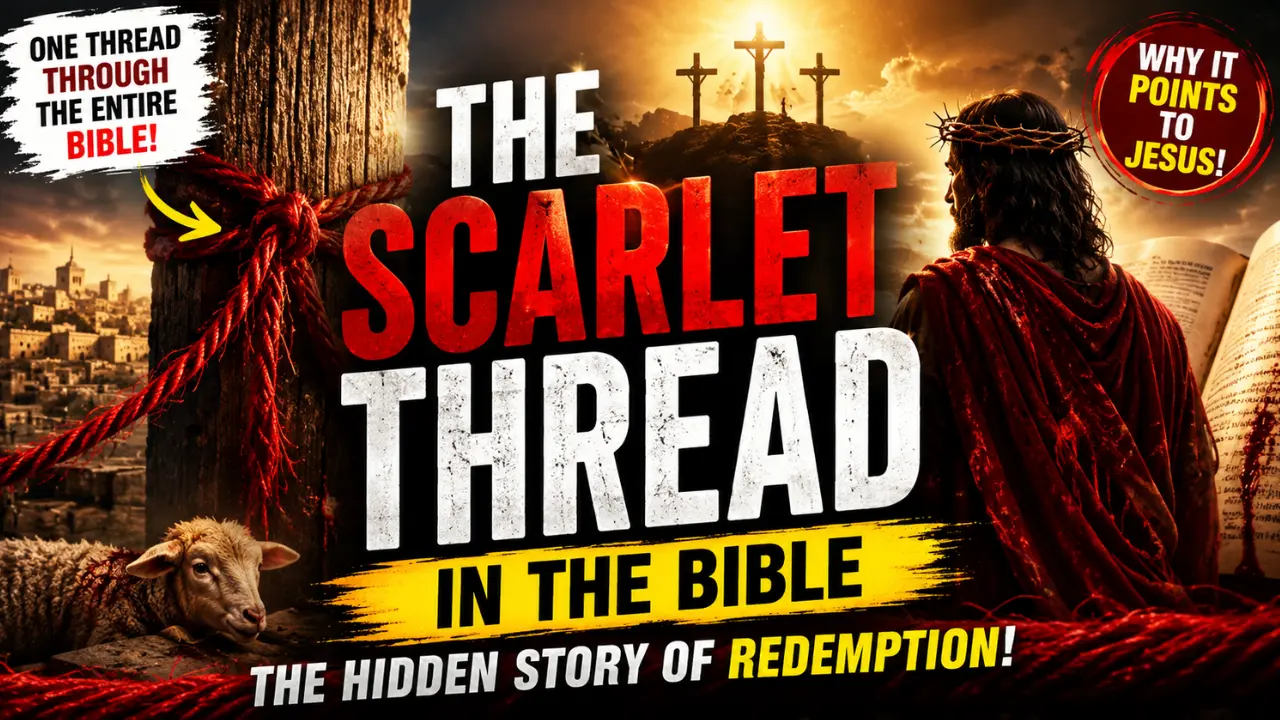

The image of a scarlet thread running through Scripture has fascinated Bible readers for generations. From the earliest pages of the Old Testament to the sacrifice of Jesus Christ in the New Testament, the colour scarlet repeatedly appears in moments connected to redemption, covenant, sacrifice, mercy and salvation. Many Christians describe this recurring theme as “[the scarlet thread of redemption — What Does Redemption Mean in the Bible?],” a symbolic picture of God’s rescue plan woven throughout the entire Bible.
The scarlet thread is not simply a poetic Christian phrase. It represents one of the deepest theological patterns in Scripture. Every appearance of blood sacrifice, every covenant marked by redemption and every act of divine mercy points toward the ultimate sacrifice of Jesus Christ on the cross. Understanding this theme reveals how the Bible is not a collection of disconnected stories but one unified message centred on salvation, grace and God’s faithful pursuit of fallen humanity.
What the Scarlet Thread Means
The scarlet thread symbolizes redemption through blood sacrifice. Throughout Scripture, scarlet is associated with atonement, cleansing, covenant and deliverance. The thread itself becomes a powerful image of continuity, connecting humanity’s fall in Genesis to Christ’s victory in Revelation.
In biblical times, scarlet dye was costly and visually striking. Because of its deep red color, it naturally became connected with blood, sacrifice, and purification rituals. God used this imagery repeatedly to teach spiritual truths about sin, holiness, judgment, and salvation.
The phrase “scarlet thread” is often used by Bible teachers to describe the continuous story of redemption that runs through every major event in Scripture. It is the unfolding revelation that humanity can only be saved through the shedding of innocent blood, and that God Himself provides [the sacrifice needed for salvation — Why Did Jesus Have to Die for Our Sins?].
First Scarlet Thread in Eden
The scarlet thread begins immediately after humanity’s fall in Genesis. When Adam and Eve sinned, they attempted to cover themselves with fig leaves but their efforts could not remove guilt or shame. God then clothed them with garments made from animal skins.
This moment is deeply significant because it implies the death of an innocent animal to cover human sin. Blood was shed so that shame could be covered. Here, the foundation of [substitutionary sacrifice — What Is Substitutionary Atonement in the Bible?] appears for the first time, showing that human effort cannot solve the problem of sin.
The pattern established in Eden becomes central throughout the Bible:
- Sin brings death
- Innocent blood is required
- Covering comes through sacrifice
- God Himself provides the remedy
This event foreshadows the future sacrifice of Christ, who would permanently cover sin through His own blood and provide a righteousness humanity could never produce on its own.
Abel’s Sacrifice Pleased God
The story of Cain and Abel strengthens the scarlet thread theme. Abel offered a blood sacrifice from the firstborn of his flock, while Cain presented the fruit of the ground. God accepted Abel’s offering but rejected Cain’s.
The difference was not merely about generosity. Hebrews later explains that Abel offered his sacrifice by faith. Blood sacrifice had already become connected with approaching God, and Abel’s offering reflected trust in God’s revealed way of worship.
Abel’s offering points forward to Christ in several ways:
- Innocent blood was shed
- The sacrifice was offered in faith
- Righteousness was associated with the offering
- Blood testified before God
The scarlet thread continues to develop as God reveals that [reconciliation requires sacrifice — What Does Reconciliation Mean in the Bible?] and that acceptable worship begins with faith rather than human self-reliance.
Passover Lamb and Redemption
One of the clearest Old Testament pictures of the scarlet thread appears during the Passover in Exodus. God instructed Israel to sacrifice a spotless lamb and place its blood on the doorposts of their homes. When judgment came upon Egypt, the houses marked by blood were spared.
This event became one of the most powerful prophetic symbols in Scripture. It was not only a moment of national deliverance for Israel but also a picture of salvation through substitution.
The Passover lamb foreshadowed Jesus Christ:
- The lamb had to be without blemish
- Its blood protected from judgment
- Deliverance came through sacrifice
- Redemption led to freedom from bondage
The scarlet blood on the doorposts became a visible sign of salvation. This imagery later reaches fullfillment in Christ, whom the New Testament calls [the Lamb of God — What Does Lamb of God Mean in the Bible?], the One whose blood delivers believers from judgment and spiritual bondage.
Scarlet Cord of Rahab
One of the most direct references to a scarlet thread appears in the story of Rahab in the Book of Joshua. Rahab hid the Israelite spies in Jericho and was instructed to place a scarlet cord in her window so that she and her household would be spared during the city’s destruction.
This scarlet cord carries enormous symbolic meaning. It becomes a small but powerful sign of faith, mercy, protection and identification with God’s people.
A Sign of Mercy
Rahab was a Gentile and a prostitute, yet God extended mercy to her because of faith. The scarlet cord became the visible evidence that she trusted God’s promise of rescue, even while judgment was coming upon the city around her.
Protection Through Identification
Just as the blood on the Passover doorposts identified protected households, Rahab’s scarlet cord marked her home for salvation. The symbolism is unmistakable: redemption comes through God’s appointed sign, not through status, background or personal worthiness.
A Foreshadowing of Christ
Rahab later became part of the genealogy of Jesus Christ. Her story demonstrates that [God’s redemption extends to outsiders — Why Is Rahab in the Genealogy of Jesus?], sinners and the broken. The scarlet cord points forward to the blood of Christ that rescues all who believe, no matter their past.
Scarlet in the Tabernacle and Temple
Scarlet thread and scarlet fabric also appeared in Israel’s worship system. God commanded scarlet yarn to be used in the tabernacle curtains, priestly garments and purification rituals.
These details were not random decorations. Biblical colours often carried theological meaning and the repeated use of scarlet kept sacrifice, cleansing and covenant before the eyes of God’s people.
Scarlet in the tabernacle represented:
- Sacrifice
- Atonement
- Cleansing
- Covenant relationship
- Access to God through blood
The worship system constantly reminded Israel that approaching a holy God required purification through sacrifice. Scarlet fabric, priestly service and altar rituals all worked together to point beyond themselves to [a greater and final redemption — What Was the Purpose of the Tabernacle in the Bible?].
Scarlet Sin and God’s Cleansing
The prophet Isaiah used scarlet imagery in one of the Bible’s most famous verses about forgiveness:
“Though your sins are like scarlet, they shall be as white as snow.”
Scarlet here symbolizes the stain of sin. The image is powerful because scarlet dye was notoriously difficult to remove. God was declaring that even the deepest guilt could be completely cleansed through His mercy.
This verse reveals an important dimension of the scarlet thread. Scarlet does not only symbolize sacrificial blood. It also represents [the seriousness of sin — What Does Sin Mean in the Bible?] that requires redemption, exposing how deeply human guilt stains the soul.
The same colour that pictures guilt also points toward cleansing through God’s provision. What humanity cannot wash away, God promises to make clean.
Scarlet Robe Placed on Jesus
Before the crucifixion, Roman soldiers mocked Jesus by placing a scarlet robe on Him. Though intended as ridicule, the moment carried profound spiritual symbolism.
Jesus stood wearing scarlet as He prepared to become the sacrifice for humanity’s sin. The colour that had long been associated with guilt, blood, sacrifice and kingship was placed on the true King just before He went to the cross.
The mockery unknowingly revealed divine truth:
- Christ carried humanity’s guilt
- The King became the sacrificial Lamb
- Innocent blood would soon be shed
- Redemption was about to be completed
The scarlet robe becomes another thread connecting Old Testament sacrifice to the cross. What soldiers meant for shame, God used as [a picture of redemption — What Is the Meaning of the Cross in Christianity?].
Cross Fulfilled the Scarlet Thread
Every previous image of scarlet and blood sacrifice ultimately points to Jesus Christ. The cross is the climax of the scarlet thread running through Scripture.
At Calvary:
- The true Passover Lamb was sacrificed
- Innocent blood was shed for sinners
- Judgment was satisfied
- Redemption was purchased
- Mercy became available to all nations
The sacrifices of the Old Testament could only temporarily cover sin. Christ’s sacrifice accomplished eternal redemption, fully satisfying what every earlier sacrifice could only anticipate.
The scarlet thread that began in Eden reaches its fullfillment at the cross, where God’s justice and mercy meet perfectly. In Jesus, the meaning behind every sacrifice, covenant sign and promise becomes clear.
Why the Scarlet Thread Still Matter
The scarlet thread is not merely a theological symbol for Bible scholars. It carries deeply personal meaning for every believer, because it explains both the seriousness of sin and the greatness of God’s saving grace.
It Reveals the Unity of Scripture
The Bible was written across centuries by many authors, yet one message consistently appears: God is redeeming humanity through Jesus Christ. The scarlet thread demonstrates the supernatural unity of Scripture and helps readers see how separate stories fit into one larger plan.
It Shows the Seriousness of Sin
Scarlet imagery reminds readers that sin is not minor or harmless. Redemption required sacrifice because sin separates humanity from a holy God. The repeated picture of blood teaches that forgiveness is costly.
It Magnifies God’s Mercy
The scarlet thread also reveals extraordinary grace. Again and again, God provides rescue for undeserving people. From Adam and Eve to Rahab to the thief on the cross, redemption is offered through faith, not human merit.
It Centers Everything on Jesus
Every major biblical theme ultimately points toward Christ. The scarlet thread helps readers see Jesus not only in the New Testament, but throughout the entire Bible narrative, as the promised Redeemer toward whom all Scripture moves.
Scarlet Thread From Genesis to Revelation
When Christians speak about the scarlet thread of redemption, they are describing the unfolding story of salvation woven through every page of Scripture. It begins with sacrifice in Eden, continues through covenants and prophecy, appears in the tabernacle and Passover, shines through Rahab’s scarlet cord and reaches fullfillment in the blood of Jesus Christ.
This theme transforms the way believers read the Bible. Stories that once seemed isolated suddenly become connected parts of one divine plan. The scarlet thread reveals a God who relentlessly pursues redemption, preparing throughout history for the moment when Christ would offer Himself for the sins of the world.
Through this scarlet thread, the Bible tells one continuous story: humanity’s need, God’s provision and [the redeeming blood of Jesus Christ — What Does the Blood of Jesus Mean in the Bible?] that changes everything.
Frequently Asked Questions
Why is the scarlet thread important?
The scarlet thread is important because it reveals how the entire Bible is connected through the message of redemption. It shows that Jesus Christ is central to Scripture and fullfills Old Testament prophecies and sacrifices.
Where does the scarlet thread first appear in the Bible?
Many Bible teachers believe the scarlet thread begins in Genesis when God clothed Adam and Eve with animal skins after their sin, symbolizing sacrifice and covering through shed blood.
What does Rahab’s scarlet cord symbolize?
Rahab’s scarlet cord symbolizes salvation, protection, faith and redemption. Just as the Passover blood protected Israel, the scarlet cord marked Rahab’s house for deliverance.
How does the Passover relate to the scarlet thread?
The Passover lamb’s blood placed on the doorposts in Exodus is one of the clearest pictures of the scarlet thread because it points prophetically to Jesus as the Lamb of God.
Why did Isaiah compare sins to scarlet?
Isaiah used scarlet to describe the deep stain of sin, emphasizing humanity’s need for divine cleansing and forgiveness through God’s mercy.

1 thought on “Scarlet Thread Meaning in the Bible Explained”