
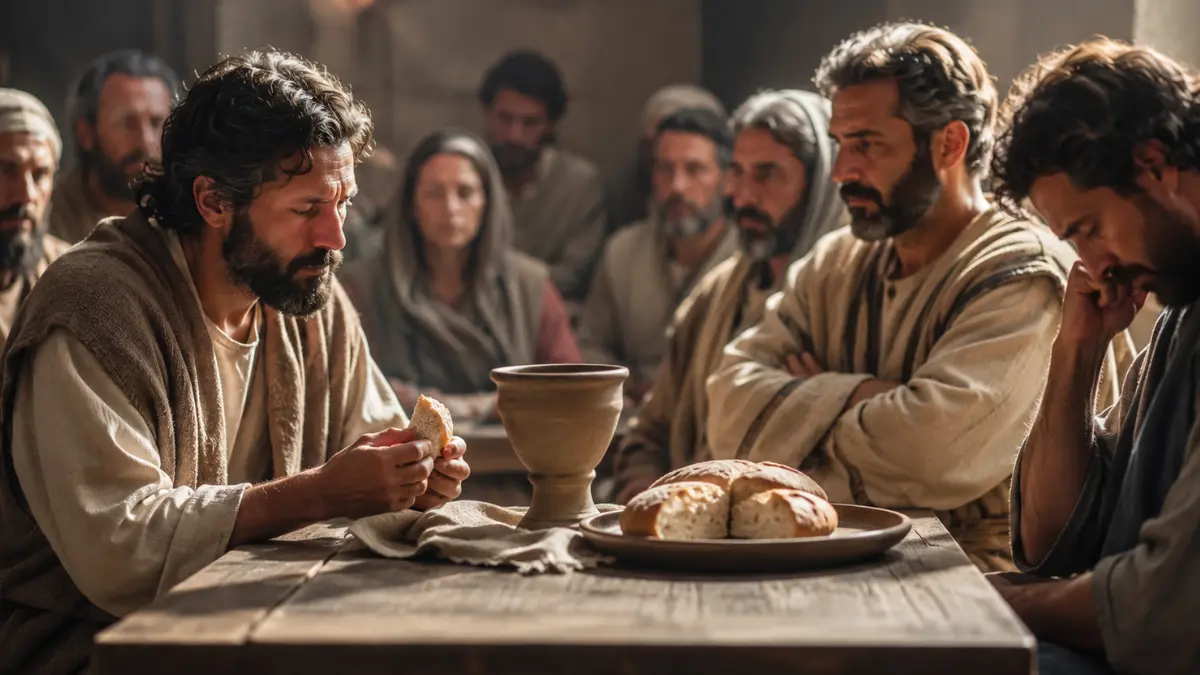

Taking Communion in an unworthy manner means participating in the Lord’s Supper carelessly, selfishly or disrespectfully while ignoring what Christ’s sacrifice and the unity of His people represent.
Paul was not teaching that a person must become completely worthy, perfect or free from every struggle before receiving Communion. No believer could meet that standard. He warned Christians against approaching the Lord’s Table in a manner that contradicted its meaning.
In Corinth, some believers divided themselves by social status, ate before others arrived, allowed poorer members to remain hungry and treated the sacred meal like a private feast. Some even became drunk. Their behaviour dishonoured Christ and humiliated fellow members of the church.
Paul Warned About the Manner
Paul wrote:
“Whoever eats the bread or drinks the cup of the Lord in an unworthy manner will be guilty of sinning against the body and blood of the Lord.”
The phrase “in an unworthy manner” describes how the Corinthians participated. Paul focused on their conduct, attitude and treatment of one another.
He did not say that only worthy people may receive Communion. He warned against receiving it unworthily.
That distinction matters because every Christian approaches the Lord’s Table as someone who needs grace. Communion remembers the body and blood of Jesus, given for sinners. A person does not become worthy of Christ’s sacrifice through personal goodness.
The Corinthians acted as though wealth, position and social privilege made some members more important than others. Their actions contradicted a meal that proclaimed salvation through Christ rather than human status.
The Lord’s Supper should have united them. Instead, they used it in a way that exposed their divisions.
Paul therefore condemned an unfitting and inappropriate manner of participation, not the presence of ordinary human weakness in a repentant believer.
What Was Happening at the Corinthian Lord’s Supper?
Christians in Corinth did not always observe Communion in the brief form that many churches use today. Their gathering appears to have included a larger shared meal alongside the bread and cup.
The problem began when the meal stopped expressing fellowship.
Some members went ahead with their own food without waiting for the whole church. Those with plenty ate well, while those with less received little or nothing. Paul said that one person remained hungry while another became drunk.
This behaviour created several serious problems.
They humiliated poorer believers
Wealthier members apparently had greater access to food, time and comfortable gathering arrangements. Instead of sharing, they used those advantages for themselves.
Paul asked whether they despised the church of God and humiliated those who had nothing. His words show that their treatment of poorer Christians formed a central part of the offence.
They remembered Christ’s self-giving sacrifice while refusing to share an ordinary meal with fellow believers.
They turned a shared meal into a private meal
The Lord’s Supper belongs to the gathered body of Christ. The Corinthians treated it as though each household or social group could look after itself.
Paul told hungry people to eat at home rather than transform the church gathering into an occasion for selfish consumption. He wanted the congregation to wait for one another and receive the meal as one body.
They contradicted the message of Communion
The bread and cup proclaim the Lord’s death until He comes. Jesus gave Himself for His people, yet some Corinthians gathered around that sacrifice while acting without generosity, humility or concern for others.
Their ceremony said one thing while their behaviour said another.
That contradiction explains why Paul told them that their meetings did more harm than good.
Why Paul Repeated the Words of Jesus
Jesus took bread, gave thanks, broke it and identified it with His body given for His followers. He then took the cup and connected it with the new covenant in His blood. He instructed His disciples to continue the meal in remembrance of Him.
Paul also explained that Christians proclaim the Lord’s death whenever they eat the bread and drink the cup.
This reminder directly confronted the Corinthians’ conduct.
Jesus gave His body for others, but they refused to wait for one another.
Jesus established a covenant community, but they divided themselves by social class.
Jesus humbled Himself, but they used the meal to display privilege.
Jesus welcomed undeserving people through grace, but they humiliated members who had less.
Paul did not interrupt his correction with an unrelated lesson about Communion. He repeated Jesus’ words because the Corinthians had forgotten what their actions were supposed to communicate.
What Does “Examine Yourself” Mean Before Communion?
Paul told each person to examine themselves before eating the bread and drinking from the cup.
Self-examination means honestly considering whether a person approaches Communion with faith, repentance, reverence and concern for the body of Christ.
It does not mean searching endlessly for every possible failure until fear makes participation impossible.
Paul did not say, “Examine yourself, and if you find any sin, stay away.” He said that a person should examine themselves and then eat and drink.
The examination should lead believers toward sincere participation, not automatically away from it.
A Christian preparing for Communion might consider several questions:
- Do I recognize the seriousness of Christ’s sacrifice?
- Am I treating Communion as an empty ritual?
- Am I refusing to repent of a known sin?
- Do I hold contempt, pride or bitterness toward other believers?
- Have I harmed someone while refusing to seek reconciliation?
- Am I approaching Christ with trust rather than self-righteousness?
- Do my actions reflect the unity that Communion represents?
A person may discover sin during this process. The proper response involves confession and repentance, not pretending to possess moral perfection.
Communion does not reward people who believe they have made themselves worthy. It reminds believers that they depend on Christ.
What Does “Discerning the Body” Mean?
Paul said that anyone who eats and drinks without discerning the body brings judgment upon themselves.
Christians have understood “the body” in two closely connected ways.
Recognizing Christ’s body given in sacrifice
The bread directs attention to the body of Jesus, given for His people. To discern the body can therefore mean recognizing the sacred significance of Christ’s death rather than treating the bread as ordinary food.
The Corinthians failed to appreciate what the meal proclaimed. Their careless behaviour showed contempt for the sacrifice represented at the table.
Recognizing the church as Christ’s body
Paul also described the church as one body. In the previous chapter, he connected the one loaf with the many believers who form one body because they share in the bread.
The Corinthians failed to recognize that poorer and wealthier believers belonged to the same body. They could not honour Christ while humiliating people who belonged to Him.
The immediate context strongly emphasizes division, inequality and selfishness within the congregation. For this reason, many interpreters understand “discerning the body” as recognizing the church’s unity.
The two meanings do not need to compete. Communion requires believers to recognize both Christ’s sacrificial body and the community created through His sacrifice. A person who honours Christ’s death should also honour the people Christ redeemed.
What Does Eating and Drinking Judgment Mean?
Paul’s language sounds severe because he wanted the Corinthians to understand the seriousness of their conduct.
He said that those who participated without discerning the body ate and drank judgment upon themselves. He then connected their behaviour with weakness, illness and death among members of the church.
Paul presented these consequences as divine discipline. However, he distinguished this discipline from final condemnation. He explained that the Lord disciplines His people so that they will not face condemnation with the world.
This passage does not teach that every illness or death results from taking Communion improperly. Scripture does not allow Christians to make that accusation whenever someone becomes sick.
Paul addressed a specific situation in Corinth and revealed that God had judged some members because of their serious abuse of the Lord’s Supper.
Christians should therefore take the warning seriously without using it to explain every sickness, tragedy or death.
The passage teaches that God cares about worship, the treatment of vulnerable people and the integrity of the church. Religious actions do not become acceptable merely because believers perform them in a church setting.
Should You Avoid Communion When You Have Sinned?
The presence of sin does not automatically mean a believer should avoid Communion. Every participant needs forgiveness.
The more important question concerns the person’s response to sin.
Someone who recognizes sin, confesses it and desires to turn back toward God approaches the table differently from someone who proudly refuses correction.
Communion points repentant believers toward Christ’s sacrifice. It reminds them that forgiveness rests in Him rather than in their ability to achieve perfection.
A person should not think, “I failed this week, so Christ’s grace cannot welcome me.” That response can misunderstand the purpose of the meal.
At the same time, a person should not think, “My conduct does not matter because Communion guarantees forgiveness.” Paul rejected that careless attitude.
A believer who knowingly harms others, refuses repentance and treats the Lord’s Table with contempt should take the warning seriously. Self-examination may reveal the need for confession, reconciliation or pastoral guidance before participating.
Church traditions also differ regarding who should receive Communion. Catholic, Orthodox, Anglican, Lutheran, Reformed, Baptist and independent churches may apply different requirements concerning baptism, church membership, confession, doctrine or serious sin.
Christians should respect the teaching and pastoral oversight of the congregation where they receive Communion.
Does Unresolved Conflict Make Communion Unworthy?
Not every disagreement prevents a person from participating. Christians can experience tension, hurt and unresolved questions even while sincerely seeking peace.
The deeper problem arises when someone holds contempt for another believer, refuses every attempt at reconciliation or uses Communion while continuing deliberate injustice.
The Corinthians did not merely experience personality differences. Wealthier members actively humiliated poorer members during the meal itself.
A believer should therefore examine both actions and intentions.
A person may not have the power to repair every broken relationship immediately. Another person may refuse contact, deny wrongdoing or remain unsafe to approach. Biblical reconciliation does not require someone to ignore danger or accept continuing abuse.
However, Christians should reject pride, revenge and deliberate hatred. Communion calls believers to remember that Christ formed one people through His sacrifice.
How to Prepare for Communion Without Fear
Paul’s warning should create reverence, but it should not trap sincere Christians in constant terror.
A simple preparation may include:
- Remember what the bread and cup represent.
- Thank Christ for His sacrifice.
- Confess known sin honestly.
- Release pride and self-righteousness.
- Consider how you treat other believers.
- Seek reconciliation where possible and appropriate.
- Receive Communion with faith, humility and gratitude.
The goal does not involve producing a perfect emotional state. Some believers may feel peaceful, while others may feel sorrow, conviction or spiritual dryness.
The important issue concerns whether they recognize Christ, respond sincerely to His grace and refuse to treat His people with contempt.
Taking Communion Worthily Does Not Mean Making Yourself Worthy
No Christian makes themselves worthy of the body and blood of Christ.
To take Communion in a worthy manner means approaching it in a way that fits what the meal proclaims.
Believers should remember Christ rather than treat the bread and cup casually. They should come with repentance rather than stubborn rebellion. They should recognize the church as one body rather than use status, wealth or pride to divide it.
Paul’s warning does not drive repentant sinners away from Christ. It confronts the careless attitude that wants the symbols of grace without the humility, unity and self-examination those symbols require.
Frequently Asked Questions
What should Christians examine before Communion?
They should examine their faith, motives, attitude toward Christ’s sacrifice, willingness to repent and treatment of fellow believers.
What does “discerning the body” mean?
It can refer to recognizing Christ’s body given in sacrifice, recognizing the church as Christ’s united body, or both meanings together.
Does taking Communion wrongly cause sickness?
Paul connected sickness and death in Corinth with God’s judgment on that congregation’s abuse of the Lord’s Supper. The passage does not teach that every illness results from improper Communion.
Is Communion only for people who feel spiritually strong?
No. Communion points weak and repentant believers toward Christ. Spiritual confidence does not make someone worthy; Christ’s grace remains the foundation.
Can I take Communion while I have conflict with someone?
A disagreement does not automatically prevent participation. However, deliberate hatred, contempt, injustice or refusal to pursue peace conflicts with the unity Communion represents.
