
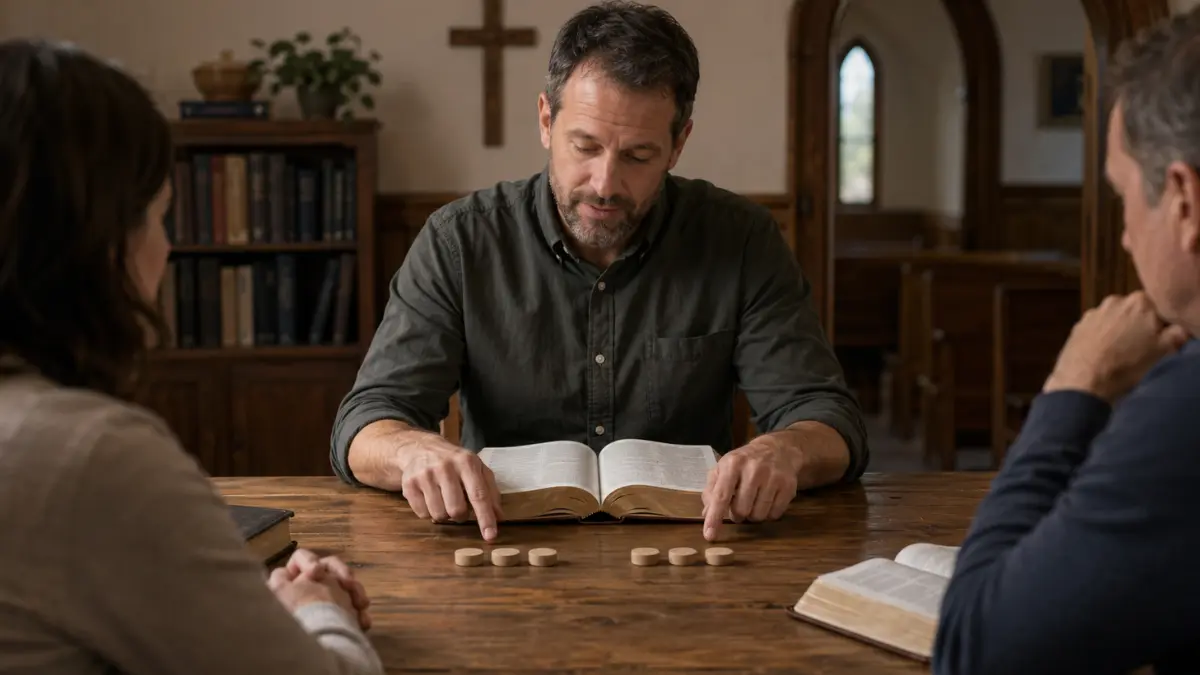

What are the 3 C’s of Christianity? There is no single, universally accepted answer. One widely used model names Creed, Code and Cult, while another documented Christian teaching outline names Christ, Cross and Church. The Bible does not identify either combination as an official three-part doctrine.
Teachers use these memorable combinations for different purposes. Creed, Code and Cult describe what Christians believe, how they live and how they worship. Christ, Cross and Church focus on Jesus, His saving work and the community of believers.
Why Do Different Sources Name Different 3 C’s?
Christians did not receive “the 3 C’s” as a named biblical doctrine. Teachers developed the expression as a simple way to organize particular Christian ideas, so the selected words depend on what a lesson intends to explain.
| Use of the three C’s | Terms | What the outline summarizes |
|---|---|---|
| Belief, conduct and worship | Creed, Code and Cult | What Christians believe, how they live and how they worship |
| A Christ-centred teaching outline | Christ, Cross and Church | Jesus, His saving death and the community formed around Him |
Sermons and teaching materials have also used combinations such as conviction, commitment and courage or Christ, community and commission. These variations explain why readers may receive different answers to the same question.
What Do Creed, Code and Cult Mean in Christianity?
Creed, Code and Cult describe three connected parts of Christian faith. Christianity includes teachings about God and salvation, moral guidance for human conduct and practices through which believers worship.
Creed Refers to Christian Belief
Creed represents what Christians confess as true. It includes beliefs about God, Jesus Christ, the Holy Spirit, creation, sin, redemption, resurrection and eternal life.
The word can refer to the content of Christian belief generally or to a formal statement shared by a Christian community. The Apostles’ Creed and Nicene Creed are well-known examples that gather central Christian teachings into a common confession.
A creed does not replace Scripture. It summarizes what a Christian community understands Scripture to teach. A fuller explanation of what “creed” means in Christianity shows how a shared confession differs from personal opinion and more detailed doctrine.
Code Refers to Christian Conduct
Code describes how Christians are called to live in light of what they believe. Jesus connected love for God with love for one’s neighbour in Matthew 22:37–40. His teachings address honesty, mercy, forgiveness, humility, justice, faithfulness and care for others.
The New Testament repeatedly connects faith with conduct. Christian belief should influence choices, relationships and the treatment of other people.
Calling this part a code does not mean that Christianity reduces salvation to rule-following. The code describes conduct that grows from faith rather than behaviour intended to earn salvation.
Cult Refers to Worship
Cult is the most easily misunderstood word in this model. In modern English, people commonly use “cult” for a coercive or high-control group. That is not its intended meaning in Creed, Code and Cult.
Here, the word carries an older religious meaning connected with worship and observance. It includes prayer, gathered worship, Scripture reading, preaching, baptism, Communion and other practices recognized within a Christian tradition.
Professor Carl Trueman uses the word in this older sense in his discussion of where Creed, Code and Cult connect. He describes creed as Christian belief, code as Christian ethics and cult as the way Christians worship the God identified by their beliefs.
Because the modern meaning can cause confusion, readers should understand the word according to its place in this particular model. It refers to worship, not manipulation or control.
What Do Christ, Cross and Church Mean?
Christ, Cross and Church organize the subject differently. Instead of describing belief, conduct and worship, these words highlight three central subjects within the Christian message.
A documented example appears in BibleTalk’s lesson on the Three C’s of Christianity, which presents Christ, Cross and Church as the three basic elements of its teaching outline.
Christ Is the Centre of Christian Faith
Christianity begins with Jesus Christ rather than an abstract system of ideas. Christians confess Him as the Son of God, Messiah and Lord. The Gospels record His life, teachings, death and resurrection, while the rest of the New Testament explains His identity and saving work.
Colossians 1:15–20 presents Christ as central to creation, reconciliation and the Church. Christian belief, salvation and discipleship all depend on who Jesus is.
The Cross Represents Christ’s Saving Work
The Cross points to the death of Jesus and its meaning for salvation. Paul describes the message of the cross as central to Christian proclamation in 1 Corinthians 1:18. He also tells the Corinthians that his preaching focused on “Jesus Christ and him crucified” in 1 Corinthians 2:2.
The word represents more than the physical object on which Jesus died. It directs attention to His sacrifice, the forgiveness of sins and reconciliation with God. Christians understand the Cross together with the resurrection because the New Testament proclaims both Jesus’ death and His victory over death.
The Church Is the Community of Believers
The Church refers to the people joined to Christ, not only a building or institution. Paul describes believers collectively as the body of Christ in 1 Corinthians 12:27. This image emphasizes their connection with Christ and their responsibilities toward one another.
Within this outline, the Church gathers around Christ and proclaims the message of His death and resurrection. Believers worship together, receive teaching, serve one another and bear witness to the gospel.
Is One Version More Biblical Than the Other?
Both versions contain biblical themes, but neither exact three-word combination appears in Scripture as “the 3 C’s of Christianity.”
Christ, Cross and Church identify major subjects in the New Testament. Creed, Code and Cult describe how Christian faith is believed, lived and expressed through worship. One outline emphasizes the central Christian message, while the other organizes different parts of Christian life.
Christian instruction has also used structures containing more than three parts. For example, the official structure of the Catholic Catechism identifies four pillars: the profession of faith, the sacraments, the life of faith and prayer. Other traditions arrange Christian teaching through their own catechisms, confessions and study outlines.
These structures can help people understand Christianity, but they remain teaching tools rather than official lists given in Scripture.

2 thoughts on “What Are Christianity’s 3 C’s? Why Answers Differ”