
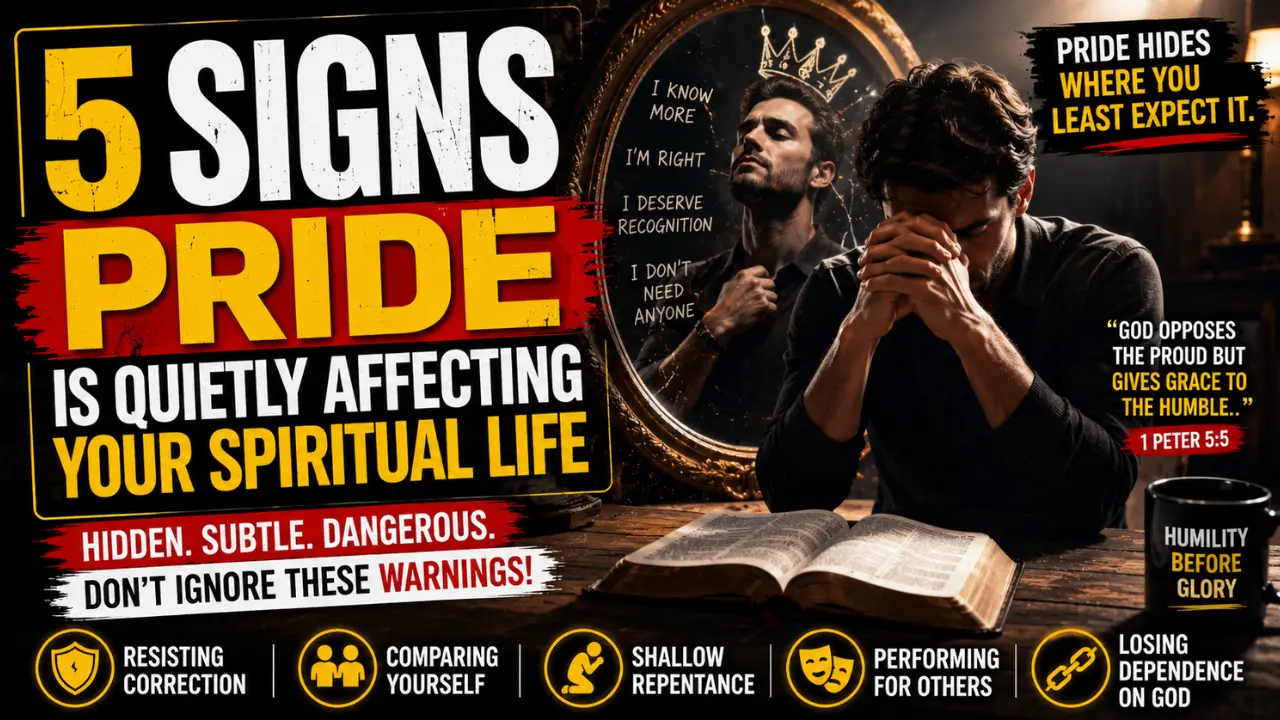

The Bible does not treat pride merely as visible arrogance, loud boasting or open self-exaltation. Scripture often presents pride as a deeper disorder of the heart that can remain hidden beneath religious activity, moral discipline, theological knowledge, public humility and outward obedience. Pride is dangerous because it does not always announce itself as rebellion. Sometimes it appears as confidence, discernment, strength, seriousness or even spiritual maturity.
Biblically, pride is the movement of the heart away from dependence upon God and toward confidence in self. It resists correction, minimizes sin, compares itself with others, seeks recognition and slowly replaces humble trust with self-rule. This is why pride is so spiritually destructive. It does not merely affect attitude. It affects worship, repentance, prayer, relationships, obedience and the way a person receives truth.
Scripture repeatedly warns that God opposes the proud but gives grace to the humble. That warning reveals why pride cannot be treated lightly. Pride places the human heart in a posture of resistance before God. Even when outward religion remains active, pride can quietly reshape the inner life until a person becomes more concerned with appearing faithful than actually submitting to the Lord, closely connected to [how Scripture contrasts humility before God with self-exalting religion and self-dependence — The Biblical Difference Between Pride and Humility].
1. Defending Yourself Too Quickly
One of the clearest signs that pride is quietly affecting your spiritual life is the instinct to defend yourself before you examine yourself. Scripture consistently connects wisdom with receiving correction and folly with despising rebuke. A humble person may feel the pain of correction but does not automatically treat correction as an enemy. Pride, however, interprets correction as a threat to self-image.
This does not mean every criticism is accurate or every rebuke is delivered rightly. The Bible does not command believers to accept false accusations as truth. The deeper issue is whether the heart remains willing to be searched before God. Pride asks, “How can I protect myself?” before it asks, “Lord, is there truth here I need to receive?”
Pride Focuses on Appearance First
Pride is often more disturbed by exposure than by sin itself. It fears being seen as wrong, immature, weak or needy. Because of that, it quickly produces excuses, blame-shifting, selective listening, inward resentment and quiet resistance to accountability.
This is spiritually dangerous because sanctification requires teachability. A person who cannot be corrected cannot be deeply formed. The proud heart may still hear sermons, read Scripture and discuss theology but it filters truth through self-protection rather than submission, revealing [how spiritual pride can resist conviction while still maintaining outward religious activity — The Danger of Spiritual Pride in the Christian Life].
Biblical Wisdom Receives Rebuke
Proverbs repeatedly contrasts the wise person who receives instruction with the fool who rejects correction. This is not merely practical advice. It is spiritual diagnosis. A person’s response to correction reveals whether humility or pride is governing the heart.
Humility does not enjoy humiliation, but it values truth more than reputation. Pride values reputation more than truth and this is why it becomes resistant to the very means God often uses for growth.
2. Pride Spots Others’ Sin Faster
Another sign of quiet pride is heightened awareness of other people’s failures while personal sin becomes less visible. Pride redirects spiritual attention outward. It becomes skilled at identifying immaturity, inconsistency, weakness, wrong motives, doctrinal error or moral failure in others while becoming less willing to examine itself honestly before God.
This kind of pride can sound spiritually serious. It may use biblical language, moral concern or theological precision. Yet beneath that concern, the heart may be using truth as a tool for self-elevation rather than humility.
Pharisee and the Tax Collector
Jesus exposed this pattern in the parable of the Pharisee and the tax collector. The Pharisee’s prayer was religious in form but comparative in spirit. He thanked God that he was not like other people. His spiritual attention was focused on difference, superiority and self-approval.
The tax collector, by contrast, stood before God in need of mercy. Jesus’ point was not that holiness does not matter. His point was that self-righteous comparison can hide inside religious language, much like [how Jesus warned against outward righteousness that lacks humility and repentance — The Meaning of the Pharisee and the Tax Collector Parable].
Pride Uses Standards Without Mercy
A proud heart may speak often about truth while losing mercy toward people. It can become harsh, suspicious, easily offended and impatient with weakness. This is not biblical discernment in its mature form. True discernment remains humble because it remembers personal dependence upon grace.
When you become more grieved by another person’s weakness than by your own lack of mercy, pride may already be shaping your spiritual life.
3. Repentance Starts Losing Depth
Pride quietly weakens repentance. It does not always remove confession completely. Instead, it makes confession less specific, less honest, and less costly. A person may still admit, “I am not perfect,” while avoiding direct confession of pride, envy, anger, resentment, lust, selfish ambition, prayerlessness, hypocrisy or unbelief.
Biblical repentance is not a vague admission that humans generally fail. It is agreement with God about actual sin. Pride resists that kind of honesty because repentance requires surrendering self-justification.
Pride Blinds the Heart
Scripture repeatedly warns that the human heart can be self-deceived. Pride strengthens that blindness. It allows a person to explain away patterns that should be confessed. Sin becomes “stress.” Harshness becomes “honesty.” Envy becomes “discernment.” Prayerlessness becomes “busyness.” Spiritual coldness becomes “a season.”
This is how pride preserves itself. It renames sin in less threatening terms so the heart does not have to bow in repentance, reflecting [how spiritual self-deception can hide sin beneath acceptable or religious language — The Danger of Self-Deception in the Christian Life].
True Repentance Requires Humility
Repentance requires humility because it brings the self under God’s judgment rather than personal defence. It says, “God is right about me.” That is why pride resists repentance so deeply. Pride wants to manage guilt, reduce responsibility, and preserve dignity on its own terms.
A spiritually healthy believer does not become less repentant with maturity. Growth in grace often makes repentance more honest, not less necessary. The closer a person walks with God, the less interested that person becomes in protecting false innocence.
4. Spiritual Image Begins to Matter More
Pride often shifts spiritual focus from faithfulness before God to appearance before people. Jesus repeatedly warned against practicing righteousness “to be seen by others.” His warning did not condemn public obedience itself. It exposed the motive that turns religious activity into self-display.
Spiritual pride is especially subtle because it can use good things for self-exaltation. Prayer, fasting, generosity, ministry, theology, moral discipline and service can all become ways of building a spiritual image.
Spiritual Activity Can Protect Pride
A person may become more concerned with appearing prayerful than actually depending on God in prayer. Someone may become more concerned with being known as biblically sound than being humbled by Scripture. Ministry can become a way to maintain identity. Public usefulness can become a substitute for private communion with God.
This is not always obvious to others. That is why pride is so dangerous in religious life. It can live inside respectable habits. It can survive inside service. It can hide beneath language about calling, truth, excellence or conviction.
Hidden Obedience Tests the Heart
Hidden obedience often exposes whether the heart is seeking God or recognition. Faithfulness that receives no applause, no platform, no praise and no visible reward reveals much about the condition of the soul.
Humility remains faithful before God even when unseen. Pride becomes restless when its obedience is unnoticed. If spiritual zeal fades when no one is watching, pride may be feeding more of your devotion than you realize.
5. Dependence Quietly Fades
At its root, pride is self-sufficiency before God. This is why pride does not always look like arrogance. Sometimes it looks like competence without prayer, knowledge without dependence, ministry without communion, planning without submission and confidence without trembling before God.
A person may continue the outer structure of spiritual life while inward reliance on God weakens. Church attendance, service, Bible discussion and public faith may remain, but the heart becomes less needy, less prayerful, less dependent and less aware of grace.
Hidden Pride Weakens Prayer
Prayer is one of the clearest expressions of dependence. A weakening prayer life often reveals more than busyness. It may reveal functional self-sufficiency. The heart may still believe correct doctrine about God while operating as though personal strength, planning, knowledge or ability is enough.
Pride does not always deny God verbally. Often, it simply stops depending on Him practically, closely related to [how prayerlessness can reveal growing self-reliance instead of trust in God — What a Weak Prayer Life May Reveal Spiritually].
Humility Relies on God
Biblical humility is not self-hatred. It is proper dependence upon God. It recognizes that wisdom, strength, holiness, endurance, repentance and fruitfulness come from Him. Pride forgets this and begins to treat spiritual life as something maintained by personal discipline alone.
Discipline is important but discipline without dependence becomes spiritually dangerous. It can produce confidence in the self rather than communion with God.
Why Pride Grows Quietly in Christians
Pride is not only a danger for careless people. It is also a danger for serious Christians. In fact, spiritual seriousness can become one of pride’s hiding places when knowledge, discipline, conviction or visible obedience becomes a basis for comparison or self-confidence.
The Bible gives repeated warnings to religious people because religious people can mistake familiarity with truth for submission to truth. They can mistake moral structure for humility. They can mistake public usefulness for private health.
This is why pride must be examined not only in obvious arrogance, but in subtle spiritual movements: defensiveness, comparison, shallow repentance, performative devotion and weakened dependence.
How Scripture Confronts Pride
Scripture confronts pride by bringing the heart back under God’s authority. Pride grows where the self becomes large and God becomes functionally secondary. Humility grows where God’s holiness, grace, authority and mercy become central again.
The gospel leaves no room for boasting because salvation is by grace. The cross exposes human inability and reveals divine mercy. A person who truly understands grace cannot build spiritual confidence on superiority, performance, knowledge or reputation, closely connected to [how the gospel destroys boasting by revealing salvation as entirely dependent on God’s grace — Why Salvation by Grace Leaves No Room for Pride].
Humility is not produced by pretending to be worthless. It is produced by seeing God rightly and seeing oneself truthfully before Him. Pride cannot survive long where the heart remains honest before the holiness of God and dependent upon the mercy of Christ, much like [how true humility grows through a right understanding of God’s holiness and human dependence — What Biblical Humility Really Means].
Why Pride Is Spiritually Dangerous
Pride is spiritually dangerous because it opposes the posture required for repentance, worship, prayer and obedience. It resists being corrected, compares itself with others, weakens confession, turns devotion into performance and gradually shifts trust from God to self.
The danger is that pride often grows quietly. It does not always destroy spiritual life suddenly. It can slowly change the inner direction of the heart while outward religion remains intact.
The biblical answer to pride is not self-condemnation but humility before God. That humility receives correction, confesses sin specifically, rejoices in grace, serves without needing recognition and depends upon God not only in public language but in the hidden life of the soul.

1 thought on “Signs Pride Is Quietly Affecting Your Spiritual Life”