
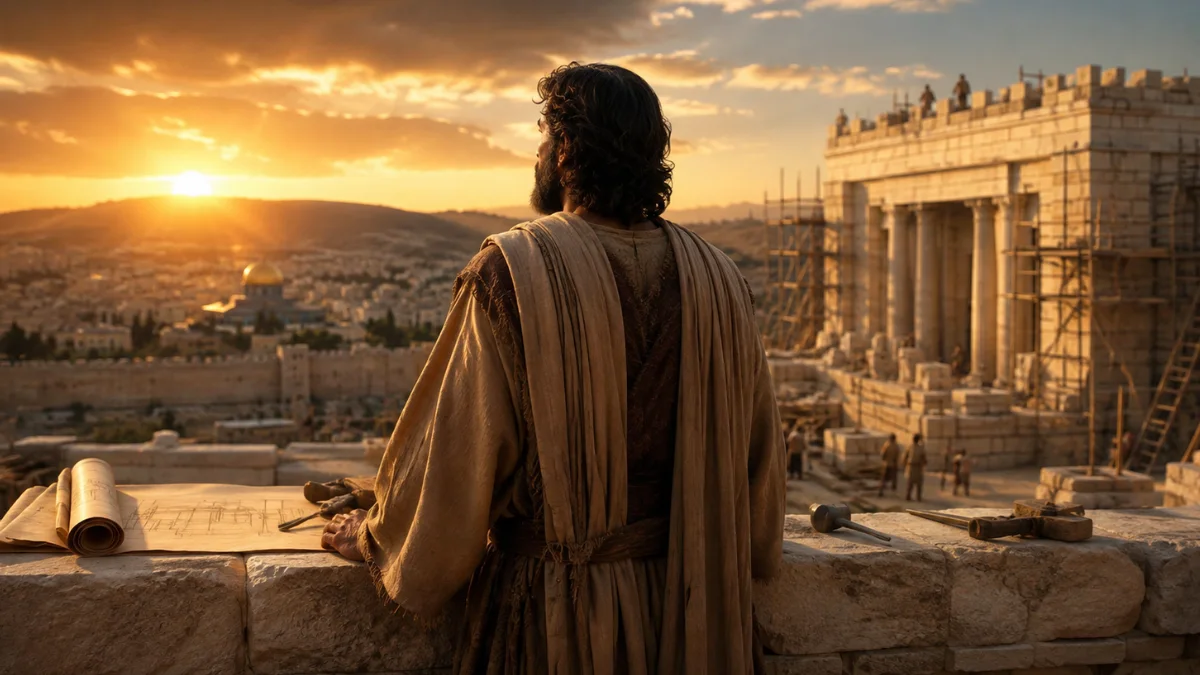

“Not by might nor by power, but by my Spirit” means that the work God gave Zerubbabel would not ultimately succeed because of human strength, resources or ability. Zechariah 4:6 points to God’s Spirit as the decisive source behind the completion of God’s purpose.
The words were spoken during the rebuilding of the temple in Jerusalem. Zerubbabel had a real responsibility and faced real obstacles but God wanted him to understand that the outcome did not depend on human capability alone.
Why God Said This to Zerubbabel
Zechariah 4:6 gives a message specifically to Zerubbabel:
“Not by might, nor by power, but by my spirit, saith the LORD of hosts.”
Zerubbabel was leading the work of rebuilding the temple after the exile. The project had already begun, yet completing it remained difficult.
The verses immediately after Zechariah 4:6 make the setting important. God describes a “great mountain” becoming level before Zerubbabel, then says that the same hands that laid the temple foundation would also finish it.
The statement therefore addressed a situation in which the task appeared greater than the human strength available to accomplish it.
Zerubbabel’s historical connection with the rebuilding of the temple is also discussed in Bible Odyssey’s overview of Zerubbabel.
God was not denying the difficulty of the work. He was telling Zerubbabel that visible limitations would not determine whether God’s purpose could be completed.
The Contrast Between “Might,” “Power,” and God’s Spirit
The force of Zechariah 4:6 comes from its contrast.
The Hebrew word translated “might” can carry ideas of strength, force, wealth, resources or military capability. The word translated “power” refers to strength or capacity. Their meanings overlap, so the verse should not be treated as though it establishes a rigid technical difference between two completely separate kinds of strength.
Together, however, the words cover the human capability Zerubbabel might naturally have looked toward when considering such a difficult project.
The temple would not be completed merely because there were enough people, resources, influence or personal ability.
Then comes the central phrase:
“But by my Spirit.”
God redirects Zerubbabel’s confidence away from human sufficiency and toward God Himself. The decisive factor would not be whether Zerubbabel could become powerful enough to guarantee the result. God’s Spirit would make the fulfillment of God’s purpose possible.
This does not mean that every human resource involved in the rebuilding was worthless. People, materials, leadership and effort still had practical roles. Zechariah 4:6 is concerned with where ultimate confidence rests, not with pretending that ordinary means have no place in God’s work.
Zerubbabel Still Had to Finish the Work
Zechariah 4:6 is sometimes understood as though dependence on God means avoiding human effort. The surrounding passage does not support that reading.
Zechariah 4:9 says that Zerubbabel’s hands had laid the foundation of the temple and that his hands would also finish it.
He still had to continue the work God had given him.
That detail keeps the verse from becoming a message of passivity. God did not tell Zerubbabel to stop building because human effort did not matter. He told him not to treat human strength as the ultimate reason the work would succeed.
Zerubbabel could therefore act faithfully without carrying the burden of believing that everything depended on his own ability.
That distinction between faithful action and self-sufficiency appears elsewhere in Scripture as well. PsalmWisdom’s explanation of what strength through Christ means when a person feels weak explores that broader issue separately.
In Zechariah 4:6, however, the message remains specific to Zerubbabel and the unfinished temple. The work before him looked formidable, but its completion would not be determined by the amount of human strength he could gather.
“Not by might nor by power, but by my Spirit” therefore means that Zerubbabel was to continue the work while recognizing that its ultimate success depended on God’s Spirit rather than human sufficiency. The verse does not reject effort or ability; it rejects confidence in those things as though they alone could accomplish what God had purposed.
