
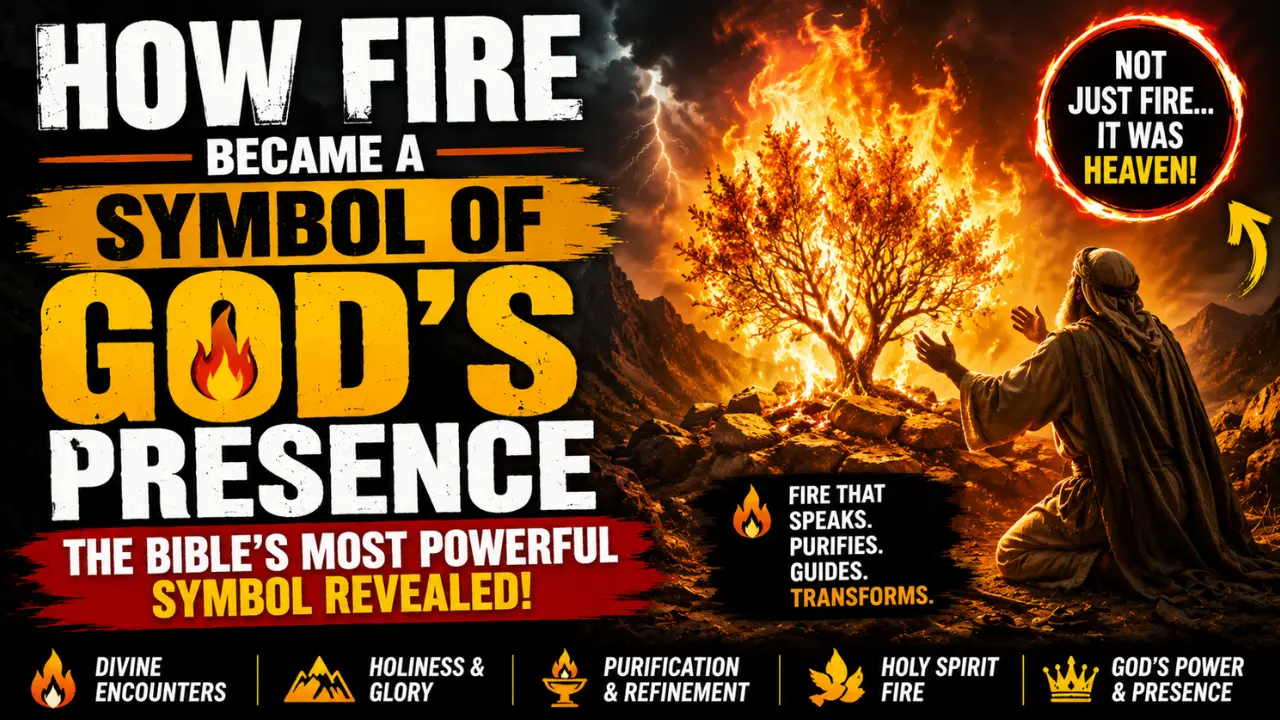

Throughout the Bible, fire appears during some of Scripture’s most powerful moments of divine revelation, covenant, judgment, worship, purification, spiritual awakening and transformation. Again and again, when God visibly revealed His presence, fire was often involved. Mountains burned with heavenly fire. Altars were consumed by fire. Prophets encountered divine fire. Israel was guided through the wilderness by fire. The Holy Spirit descended like fire. Even visions of heaven were filled with fiery glory surrounding the throne of God.
The repeated appearance of fire throughout Scripture was never random symbolism or dramatic imagery added for effect. Fire became one of the Bible’s deepest spiritual symbols because it reflected essential truths about the nature of God Himself. Fire revealed holiness, purity, power, glory, authority, judgment, purification, light and divine presence all at once.
Ancient people understood both the beauty and danger of fire. Fire gave warmth during cold nights, illuminated darkness, purified metals, protected against threats and allowed survival in harsh environments. Yet uncontrolled fire could also consume, destroy and overwhelm instantly. Because of this dual nature, fire became a fitting symbol for the presence of a holy God who comforts yet purifies, protects yet judges, sustains yet transforms.
The symbolism of fire stretches across the entire biblical narrative from Genesis to Revelation. Each appearance adds deeper layers to its meaning, revealing how God used fire not only to demonstrate power but to communicate spiritual truth regarding His relationship with humanity. This broader pattern also helps explain [how God reveals His presence in Scripture — Signs of God’s Presence in the Bible], especially when fire appears as a visible expression of divine glory, guidance and judgment.
Fire Revealed the Holiness and Glory of God
One of the earliest and most foundational meanings behind biblical fire symbolism is holiness. Throughout Scripture, God’s holiness is never portrayed casually or lightly. His presence carried overwhelming purity, authority, majesty and glory beyond human comprehension.
Fire visually expressed this reality because fire transforms whatever it touches.
When fire encounters impurity, corruption or weakness, something changes. Fire consumes, purifies, exposes and refines. This made it one of the clearest natural symbols for the holiness of God and explains why [God’s holiness is often connected with fire — Why Is God Described as a Consuming Fire?] throughout both the Old and New Testaments.
Fire Represented the Intensity of Divine Presence
The Bible repeatedly portrays God’s presence as overwhelming rather than ordinary. Human beings encountering divine glory often fell in fear, awe, humility or worship because they recognized they stood before absolute holiness.
Fire communicated this intensity visually. It revealed that God was not merely powerful among many powers. He was entirely set apart.
Ancient Israel understood that approaching divine holiness was serious. God’s presence was beautiful and life-giving, yet it could not be treated carelessly or casually. Fire reflected this tension perfectly because it attracted and terrified simultaneously.
Divine Holiness Could Not Be Approached Lightly
Throughout Scripture, moments involving divine fire frequently carried warnings regarding reverence, obedience and humility. Fire reminded people that God was not merely an abstract spiritual force. His presence was living, active, holy and overwhelming.
At Mount Sinai, the mountain trembled with smoke and fire as God descended. The people stood at a distance in fear because the visible manifestation of fire revealed divine majesty beyond human control. This event remains one of the clearest examples of [God revealing Himself through fire on Mount Sinai — The Meaning of Mount Sinai in the Bible], where holiness and covenant were displayed together.
The fire was not merely visual spectacle. It communicated theological truth regarding the holiness of God and reinforced [why reverence before God mattered throughout Israel’s history — What Does the Fear of the Lord Mean?].
Fire Revealed Both Beauty and Fear
One of the deepest aspects of biblical fire symbolism is its balance between attraction and fear. Human beings are naturally drawn toward fire because of its warmth, beauty and light. Yet people also instinctively recognize its power and danger.
Similarly, God’s presence throughout Scripture inspired worship, longing, reverence, humility and holy fear simultaneously. Fire visually captured this sacred tension better than perhaps any other natural element.
The Burning Bush Became a Symbol of Divine Encounter
One of the most important fire encounters in the Bible occurs in Exodus when Moses encounters God through the burning bush. This moment permanently shaped biblical understanding regarding fire as a manifestation of divine presence.
Moses saw a bush engulfed in flames, yet the bush was not consumed. The supernatural nature of this fire immediately distinguished it from ordinary earthly fire. God was revealing Himself through it.
The Fire Revealed God’s Presence Without Destruction
The burning bush introduced an important dimension of biblical fire symbolism. Divine fire did not exist merely to destroy. It also revealed, commissioned, transformed and sanctified.
The bush burned continuously without being consumed because the fire represented God’s sustaining presence rather than uncontrolled destruction. This moment became foundational for understanding [the spiritual meaning of the burning bush — Why Did the Burning Bush Not Burn Up?], where God’s holiness was displayed alongside mercy and divine calling.
This distinction became spiritually significant throughout Scripture because many later appearances of divine fire also carried transformative purposes rather than judgment alone.
God Often Used Fire to Capture Attention Spiritually
Before God spoke to Moses, the fire first captured his attention. Moses turned aside because the sight was unlike anything natural.
Spiritually, this reveals how divine encounters often interrupt ordinary routines unexpectedly. Moses was simply tending sheep in the wilderness when heaven suddenly intersected with ordinary life. This pattern also reflects [how God calls people during ordinary moments — Biblical Examples of God’s Calling].
The desert location itself had nothing inherently sacred about it until God revealed His presence there, reinforcing [how places became holy through God’s presence — Holy Ground Meaning in the Bible].
Ordinary Places Become Sacred Through God’s Presence
One of the most powerful truths within the burning bush narrative is that divine presence transforms ordinary places into holy ground.
God instructed Moses to remove his sandals because the place had become sacred. The holiness did not originate from geography alone but from God’s presence manifesting there.
This principle continues throughout Scripture. God repeatedly revealed Himself in deserts, caves, mountains, prisons, wildernesses, upper rooms and ordinary locations. Divine presence transformed common places into sacred encounters.
Fire Guided Israel Through the Wilderness
After Israel left Egypt, God visibly guided His people through the wilderness using a pillar of cloud during the day and a pillar of fire during the night. This became one of the clearest visual symbols of God’s continuing presence among His people.
The wilderness represented uncertainty, danger, vulnerability, transition and dependence. Israel faced barren conditions, unknown territory, enemies, fear, and instability. Yet the pillar of fire continually reminded them that God remained with them even in difficult seasons.
Fire Symbolized Divine Guidance
The fire illuminated darkness and revealed direction when no visible path existed. Israel did not rely merely upon human strategy or geographical knowledge. They followed the movement of God’s presence.
When the fire moved, the people moved. When the fire remained still, they stayed.
This symbolism carried profound spiritual meaning because many wilderness seasons in Scripture represented spiritual testing, waiting, dependence and preparation.
God’s Presence Provided Direction During Uncertainty
The wilderness was not merely a geographical journey. It was a spiritual classroom where Israel learned dependence upon God.
The pillar of fire revealed that divine presence was not distant or passive. God actively guided His people through confusion, instability and unfamiliar territory.
Many believers later connected this imagery spiritually to seasons where God provides direction gradually rather than revealing the entire journey at once.
Fire Brought Comfort and Protection Simultaneously
The pillar of fire did more than illuminate darkness. It also represented protection. The same divine presence that guided Israel also separated them from enemies and revealed God’s authority over their journey.
This dual symbolism became important throughout Scripture because God’s presence consistently brought both security and reverence.
Fire Descended Upon Altars During Worship
Throughout the Old Testament, heavenly fire repeatedly descended upon sacrifices and altars during moments of worship, covenant, and divine confirmation. These moments reinforced the connection between fire and God’s active participation in worship.
One of the clearest examples appears during Elijah’s confrontation with the prophets of Baal on Mount Carmel.
Heavenly Fire Revealed Divine Authority
After false prophets cried out unsuccessfully for hours, Elijah prayed briefly, and fire descended from heaven consuming the sacrifice, altar, stones, and even water surrounding it.
This moment publicly demonstrated God’s supremacy and exposed false worship.
The fire revealed that true worship involved genuine divine presence rather than empty religious ritual.
Fire Distinguished Living Faith From Empty Religion
Throughout Scripture, divine fire frequently exposed the difference between authentic worship and outward religious performance. Fire symbolized God’s active response rather than human effort alone.
Biblical worship was never intended to remain cold ceremony disconnected from God’s presence.
The descent of fire upon altars symbolized heaven responding to sincere covenant relationship and worship.
God Desired More Than External Ritual
The prophets repeatedly warned Israel against maintaining outward religious forms while hearts remained distant from God.
Fire therefore became symbolic not only of divine power but also of authentic spiritual reality. God sought transformed hearts rather than empty performance.
Fire Became a Symbol of Purification and Refinement
As biblical symbolism developed further, fire increasingly represented spiritual purification and refinement. This imagery became especially common within prophetic writings and wisdom literature.
Ancient refining processes used intense fire to purify precious metals such as gold and silver. Impurities rose to the surface and were removed through sustained heat.
Scripture repeatedly applied this process spiritually.
Trials Were Compared to Refining Fire
Difficult seasons were often described as refining fire because suffering exposed hidden motives, purified character, strengthened faith, and removed spiritual impurities.
This symbolism shifted the meaning of fire beyond destruction toward transformation.
God’s purpose in refinement was not annihilation but purification.
Fire Revealed What Was Genuine
Refining fire separated authentic material from impurities. Spiritually, testing often revealed what was genuine within human hearts.
Comfort can sometimes conceal spiritual weakness, pride, fear, compromise, or misplaced dependence. Trials expose these hidden realities.
The imagery of refining fire therefore became deeply connected to spiritual maturity.
God’s Fire Purified Rather Than Abandoned
One of the deepest truths in biblical fire symbolism is that God often allowed refining fire because He intended transformation rather than destruction.
The process could feel painful, but the goal was purification, endurance, humility, and spiritual depth.
Fire Appeared Again at Pentecost
One of the New Testament’s most powerful fire moments occurs in Acts chapter 2 during Pentecost. Tongues of fire appeared upon believers as the Holy Spirit descended.
This event connected Old Testament fire symbolism directly to the new covenant.
Fire Symbolized the Presence of the Holy Spirit
The fire at Pentecost represented divine empowerment, spiritual awakening, purification, boldness, and God dwelling within believers.
This marked a major shift within biblical history.
In the Old Testament, divine fire often appeared upon mountains, altars, temples, or sacred spaces externally. At Pentecost, fire rested upon people themselves.
God’s Presence Moved From Buildings to Believers
The symbolism revealed the reality of the new covenant. Through the Holy Spirit, God would now dwell personally within His people.
The fire represented living spiritual presence rather than distant religious structure.
Fearful disciples were transformed into bold witnesses because divine fire empowered them internally, demonstrating [how the Holy Spirit gives spiritual boldness — How the Early Church Received Power at Pentecost].
Spiritual Fire Produced Transformation
After Pentecost, believers spoke boldly, worshiped passionately, endured persecution courageously and carried spiritual authority previously absent.
The fire symbolized active spiritual life flowing from God’s presence within them rather than mere external religion.
Fire Also Became a Symbol of Spiritual Passion
As Scripture continued developing fire imagery, fire increasingly symbolized zeal, passion, spiritual hunger and wholehearted devotion toward God.
Jeremiah described God’s word as “fire shut up” within his bones because he could not remain silent spiritually.
This imagery reflected inward spiritual intensity impossible to suppress.
Divine Fire Was Meant to Remain Active
Fire throughout Scripture was rarely intended to remain dormant or lifeless. It spread, illuminated, transformed, purified, and generated movement.
Spiritually, this symbolism reflected active living faith rather than passive religion.
Cold Religion Contrasted With Spiritual Fire
The Bible repeatedly warned against spiritual complacency, lukewarmness and hardened hearts. Fire became symbolic of spiritual vitality, hunger, conviction, worship and devotion.
A burning heart reflected living spiritual relationship rather than empty routine.
God’s Presence Ignites Spiritual Life
Throughout Scripture, genuine encounters with God frequently produced renewed passion, worship, surrender, obedience and transformation.
Divine fire therefore became symbolic not only of God’s holiness but also of awakened spiritual life within His people.

1 thought on “How Fire Became a Symbol of God’s Presence”