
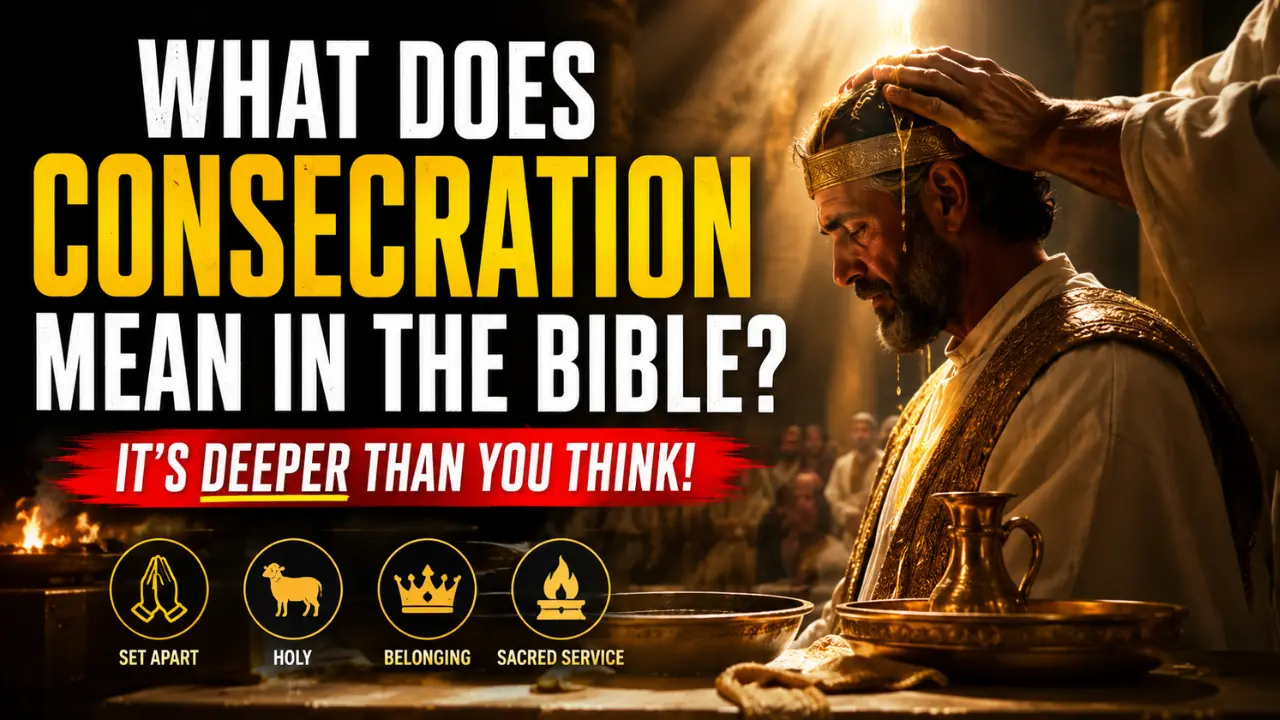

In the Bible, consecration means being set apart for God’s ownership, worship and service. It refers to the dedication of a person, place, object or community to sacred use under God’s authority. Consecration marks a transition from ordinary use to holy purpose, where something is no longer treated as common because it has been assigned to God’s covenant service.
Consecration is closely related to holiness but the terms are not identical. Holiness describes what is set apart, pure, and distinct before God. Consecration describes the act or process of setting apart for that holy purpose. This is why biblical consecration often includes washing, anointing, sacrifice, blood application, sacred garments and covenant commands. These acts were not religious decoration. They showed that approaching and serving a holy God required purification, dedication and obedience to His revealed order, especially [how holiness and consecration function together throughout the Old Testament worship system — The Difference Between Holiness and Consecration in the Bible].
Consecration in the Old Testament
The Old Testament uses consecration most clearly in Israel’s worship life. Priests were consecrated before serving in the tabernacle because they represented the people before God and handled holy things. Their consecration involved ritual washing, priestly garments, anointing oil, sacrifices and blood, showing that sacred service required appointment by God rather than personal assumption.
The tabernacle, altar, vessels and sacred furnishings were also consecrated. Once dedicated to God, they were not treated as common objects. Their purpose was defined by worship and covenant service. This distinction between holy and common was central to Israel’s understanding of God’s presence among His people.
Consecration also appeared before major divine encounters. Before Sinai, Israel prepared to meet the Lord through consecration because the coming revelation of God’s holiness required reverence and readiness. Joshua later told the people to consecrate themselves before the Lord acted among them. In these moments, consecration functioned as preparation for God’s presence, not as empty ceremony.
Israel as a Consecrated People
Consecration was not limited to priests and sacred objects. Israel itself was called to be a consecrated nation. The people were set apart from surrounding nations through covenant loyalty, worship of the Lord, rejection of idolatry and obedience to God’s commandments.
This national consecration shaped Israel’s identity, ethics, worship, and calling. Israel belonged to the Lord in a covenantal way, which meant the nation could not define itself by the practices, gods and moral patterns of the surrounding cultures. Consecration therefore carried both worship meaning and moral meaning. A people set apart for God were expected to reflect His holiness in the way they lived.
Consecration and Sacrifice
Consecration was often connected to sacrifice because approaching God required purification and dedication. Sacrificial blood in the Old Testament symbolized life, atonement, covenant relationship and cleansing. In priestly consecration, blood was applied in specific ways to mark the priest as devoted to God’s service.
This connection shows that consecration was not casual dedication. It belonged within a theology of holiness, sin, purification, and worship. The rituals taught that sin and impurity could not be ignored when approaching God. They also taught that God Himself determined how His people were to be prepared for holy service, much like [why blood and sacrifice were central to purification and covenant worship in the Old Testament — The Meaning of Sacrificial Blood in Biblical Worship].
Consecration of the Heart
The prophets made clear that outward consecration without inward faithfulness was insufficient. Israel could maintain sacrifices, festivals, priestly structures, and religious identity while still practicing idolatry, injustice, oppression and rebellion. In that condition, outward ritual became hypocrisy rather than true consecration.
Biblical consecration therefore includes covenant loyalty, repentance, obedience, reverence and a heart turned toward God. The outward act was meant to correspond to inward faithfulness. When ceremony remained but obedience disappeared, the form of consecration remained visible while its covenant meaning was contradicted.
This prophetic critique is important because it prevents consecration from being reduced to ritual status. God did not merely require objects, priests or ceremonies to be marked as holy. He required His people to live in faithful devotion before Him.
Consecration in the New Testament
In the New Testament, consecration is closely connected to sanctification in Christ. Jesus fullfills the holiness, sacrifice and priestly themes of the Old Testament through His obedience, death and resurrection. Through Him, believers are brought into a new covenant relationship with God.
Consecration is no longer centred on Levitical priesthood or temple objects. It applies to the whole people of God. Believers are described as holy, sanctified and set apart for God because they belong to Christ. Their identity is grounded not in temple ritual but in union with Christ and the work He accomplished.
Paul’s language about believers presenting their bodies as living sacrifices shows how consecration becomes a whole-life response to God’s mercy. Worship is not confined to sacred locations or ceremonial acts. The believer’s entire life becomes the sphere of dedication to God.
The Holy Spirit and Consecrated Living
The Holy Spirit is central to consecration in the New Testament. Believers are not merely outwardly marked as belonging to God; they are inwardly renewed, transformed and shaped toward holiness.
This means consecration has both an identity dimension and a growth dimension. Believers are set apart as God’s people and they are also continually formed into lives that reflect that belonging. Consecration therefore includes moral transformation, spiritual obedience, faithful worship and separation from sin and idolatry.
What Consecration Means for Believers
Biblical consecration does not mean withdrawing from ordinary life. It means belonging to God within every sphere of life. Work, speech, relationships, worship, conduct, desires and priorities are brought under God’s authority.
A consecrated believer is not someone who performs religious acts while remaining unchanged inwardly. In biblical terms, consecration means being claimed by God, devoted to His purposes, separated from sin and shaped for faithful obedience.
Meaning of Consecration in Biblical Theology
Across Scripture, consecration means being set apart to God for holy purpose. In the Old Testament, this appears through priests, sacrifices, sacred objects, the tabernacle, divine encounters and Israel’s covenant identity. In the New Testament, these themes are fulfilled in Christ and applied to believers through the work of the Holy Spirit.
Consecration is therefore covenant belonging expressed through holiness, worship, obedience and service before God.
