
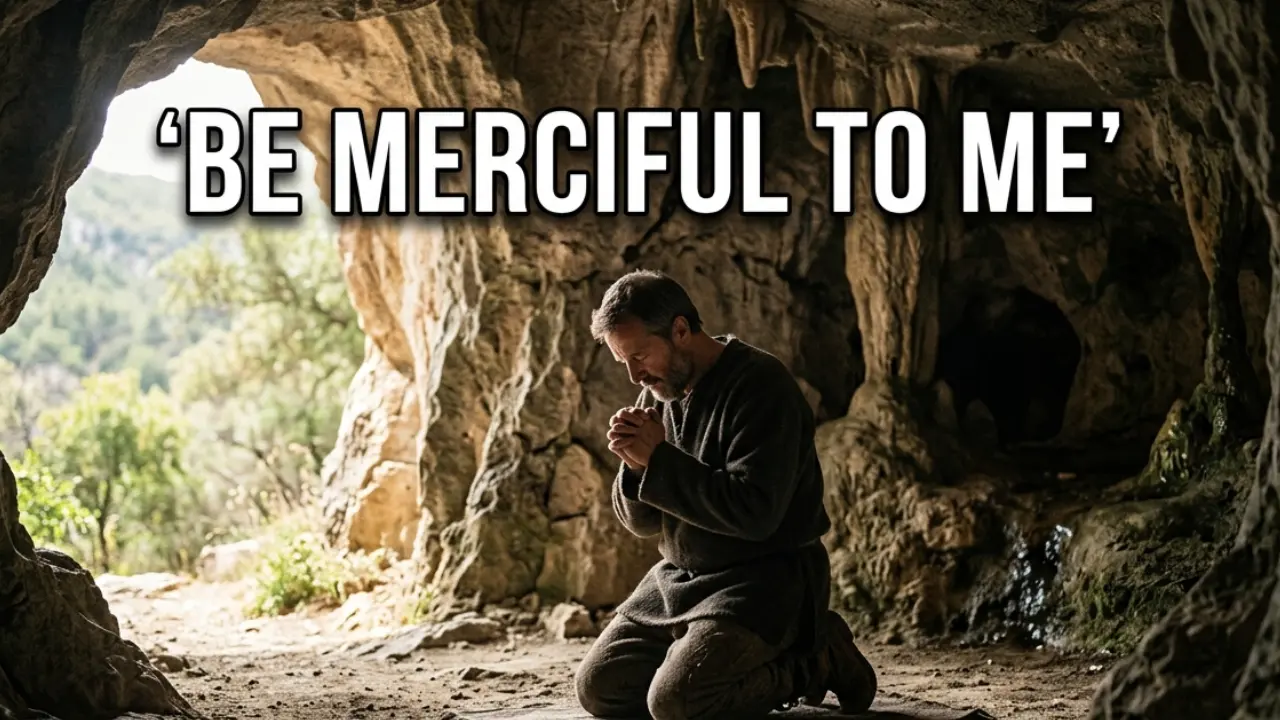

Book Of Psalms 57:1 opens with one of the most emotional prayers spoken by David:
“Be merciful to me, O God, be merciful to me! For my soul trusts in You; and in the shadow of Your wings I will make my refuge, until these calamities have passed by.”
These words were not written during peace or comfort. David spoke them while fleeing from King Saul and hiding in a cave, uncertain of what would happen next. He was under pressure, vulnerable and surrounded by danger. That setting gives the verse its emotional depth.
What makes the prayer so powerful is that David does not deny fear or desperation. He openly asks for mercy and protection. Yet at the same time, he anchors himself in trust. Even while danger remains present, he chooses to take refuge in God rather than surrender completely to fear.
This tension between vulnerability and trust is what continues to make Psalm 57:1 meaningful today. Many people understand what it feels like to carry uncertainty, emotional exhaustion, pressure or fear while still trying to hold onto faith. David’s prayer speaks directly into those moments.
Context of Psalm 57
Psalm 57 is one of David’s “Miktam” psalms, written during a time of deep distress and uncertainty. It reflects a season when David was forced to depend completely on God for safety, guidance and hope. Even in danger, the psalm carries a strong tone of confidence in God’s mercy and faithfulness. For better explanation in this article, you can also read [the meaning of David’s psalms in times of trouble — David’s Psalms of Distress Explained].
David’s Life on the Run
When David wrote this psalm, he was being pursued by Saul, who saw him as a threat to his throne. David had already been anointed as the future king, yet at this stage, he was a fugitive with enemies seeking his life. Instead of living in the palace, he spent much of his time hiding and moving from place to place to survive. These experiences shaped many of David’s psalms, where fear, trust and worship are closely woven together. For better understanding, read [why Saul pursued David — David and Saul Bible Story Explained].
Cave as a Place of Refuge and Prayer
The cave where David hid became a symbol of both vulnerability and divine protection. Though it was a place of fear, it also turned into a sacred space where David encountered God in prayer. In the middle of isolation and danger, David cried out for mercy and chose to trust in God’s protection rather than his own strength. The cave setting also highlights how moments of hardship can become places of spiritual renewal and deeper faith.
Plea for Mercy
The opening cry, “Be merciful to me, O God” reveals the depth of David’s dependence on God’s character.
Mercy as God’s Compassion
Mercy in the biblical sense goes beyond pity; it is God’s active compassion toward those who are powerless to save themselves. David knew he could not survive by his own strength and placed himself entirely in God’s hands. For a detailed explanation, check [the biblical meaning of mercy — What Does Mercy Mean in the Bible].
Repetition for Emphasis
The phrase is repeated twice — “Be merciful to me, O God, be merciful to me.” In Hebrew poetry, repetition stresses urgency and deep emotional intensity. David was not offering a casual prayer; he was crying out with his whole heart.
“My Soul Trusts in You”
After his plea for mercy, David declares, “For my soul trusts in You.” This statement reveals a deep personal confidence in God during a moment of fear and uncertainty. Rather than focusing only on his circumstances, David turns his attention toward the character and faithfulness of God.
Trust as a Deliberate Choice
Trusting God did not mean David’s fear disappeared. Rather, it was a conscious decision to place confidence in God’s faithfulness, even while danger surrounded him. Faith is often choosing to rest in God despite circumstances. David’s words remind believers that trust is not based on having all the answers, but on knowing that God remains faithful in every situation.
Inner Assurance in Turmoil
The phrase “my soul trusts” emphasizes an inward posture. Even when his physical situation was chaotic, David’s soul found stability in God. This shows us that true peace is not found in external safety but in the presence of God. David’s confidence came from an inner assurance that God was near, watching over him even in the darkest moments.
A Picture of Divine Protection
One of the most striking images in Psalm 57:1 is David’s statement: “In the shadow of Your wings I will make my refuge.”
Symbol of a Mother Bird
This imagery draws from nature. Just as a mother bird shelters her young under her wings, God covers His people with His loving care. It conveys tenderness, safety, and closeness. For better explanation, read [the meaning of under His wings in the Bible — Under His Wings Bible Meaning].
Shelter Until the Storm Passes
David adds that he will stay under God’s wings “until these calamities have passed by.” This demonstrates patience and endurance — he trusted God not only for immediate safety but also for the eventual resolution of his trials. The promise of God’s shelter was enough to sustain him until deliverance came.
Lessons for Believers Today
Psalm 57:1 is not only David’s prayer; it is a timeless reminder for all who face hardship, fear, or uncertainty. The verse encourages believers to turn toward God in moments of weakness and to remember that His care remains constant even during life’s most difficult seasons.
Seeking God’s Mercy in Hardship
Like David, we are called to cry out for mercy, not relying on our own ability but trusting in God’s compassion. Whether in times of sickness, loss or personal struggles, mercy is our greatest need. David’s example teaches us that bringing our fears honestly before God is an act of faith and that God listens to those who seek Him with sincerity and humility.
Finding Refuge in God’s Presence
The “shadow of God’s wings” speaks to the safety we find in prayer and communion with Him. In a world filled with turmoil, His presence offers true refuge. As Christians, this foreshadows the ultimate refuge we find in Christ, who offers salvation and eternal security. It also reminds believers that God’s protection is not only physical but spiritual, giving strength, comfort and peace to those who remain close to Him.
Significance of Psalm 57:1
Psalm 57:1 carries weight not only as a personal prayer but also in its broader theological meaning.
Dependence on God’s Character
This verse reflects the truth that God’s people live not by their strength but by God’s mercy. Mercy is a cornerstone of salvation — echoed in the New Testament, where believers are reminded that God’s grace and mercy are fully revealed in Christ (Ephesians 2:4–5).
A Model for Prayer in Crisis
David’s words serve as a guide for how we should pray in moments of desperation: with honesty, urgency and trust. Instead of hiding from God in fear, David hid in God through prayer.
Mercy, Trust and Refuge in God
Psalm 57:1 teaches us the power of crying out to God for mercy, placing our trust in Him and finding shelter under His wings.
In moments of personal hardship, this verse encourages us to follow David’s example: run to God, rest in His mercy and wait with faith until His deliverance comes.
For further exploration of the psalms and their meaning, resources such as Bible Gateway provide excellent study tools and translations to deepen understanding.
Frequently Asked Questions
What is Psalm 57:1 about?
It is a prayer of David asking God for mercy, protection and refuge during a dangerous time.
When did David write Psalm 57?
He wrote it while hiding from King Saul in a cave.
What does “be merciful to me” mean spiritually?
It reflects dependence on God’s compassion rather than self-reliance.
What does the “shadow of Your wings” symbolize?
It symbolizes God’s protection, care and closeness during danger.
How does Psalm 57:1 apply today?
It encourages believers to seek refuge in God during fear, anxiety and uncertainty.

2 thoughts on “Be Merciful to Me, O God — Psalm 57:1 Meaning”