
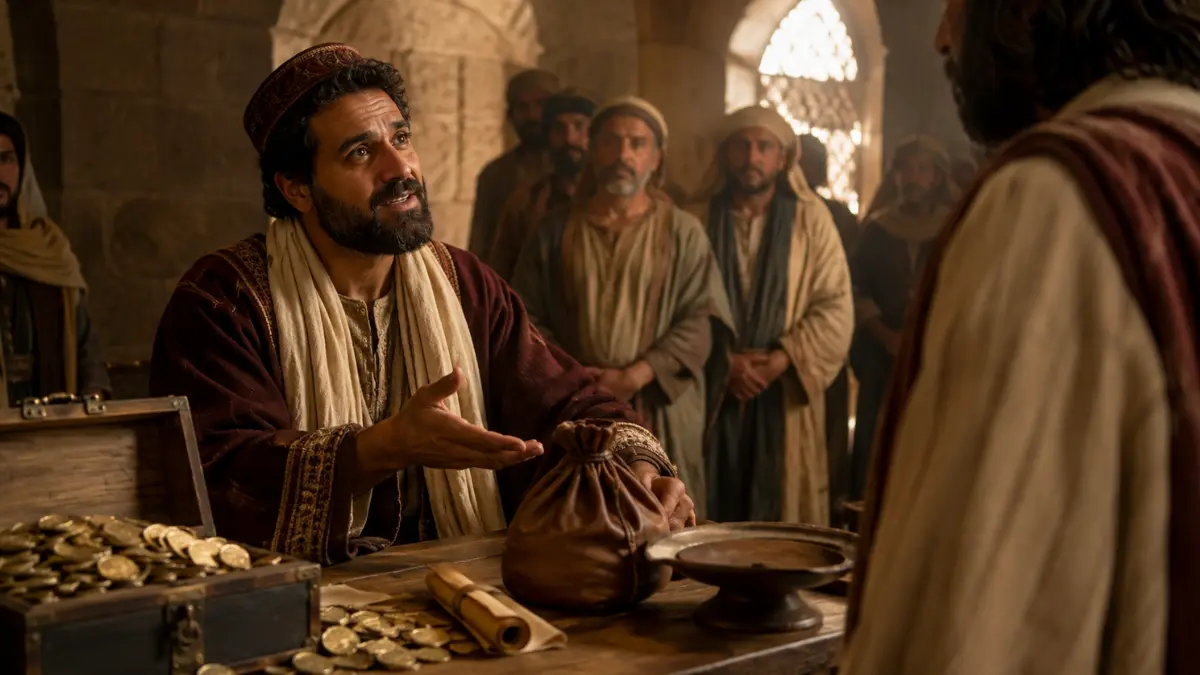

Zacchaeus promised to repay four times what he had taken because he wanted to make full restitution for any money he had collected dishonestly. Biblical law did not require fourfold repayment in every case of fraud, so his decision appears to reflect an unusually serious response to his wrongdoing. His promise showed that meeting Jesus had changed how he viewed wealth, justice and the people he may have harmed.
Luke 19:8 records two commitments from Zacchaeus. He would give half of his possessions to the poor and he would repay four times the amount if he had cheated anyone. These promises addressed two different concerns. Giving to the poor expressed generosity, while fourfold repayment addressed injustice.
Understanding why he chose four times the amount requires examining the restitution laws in the Old Testament, the reputation of tax collectors and the connection between repentance and restoration.
Also Read: Meet Zacchaeus: Short, Dishonest Tax Collector Who Found Christ
What Did Zacchaeus Promise in Luke 19:8?
Zacchaeus stood before Jesus and declared that he would give half of his possessions to the poor. He then added that if he had taken anything from anyone through false accusation or dishonest collection, he would restore four times the amount.
His statement matters because Jesus had not publicly demanded this response. Luke does not record Jesus giving Zacchaeus a financial penalty or instructing him to surrender a specific percentage of his wealth. Zacchaeus made the commitment voluntarily after welcoming Jesus into his home.
The promise also involved a substantial personal cost. Zacchaeus had accumulated wealth as a chief tax collector. Giving away half of his possessions would already reduce his fortune significantly. Fourfold repayment could reduce it even further, especially if he had mistreated many people.
His words therefore carried more weight than a general apology. He offered to identify the people he had wronged and compensate them beyond the amount he had taken.
Why Was Fourfold Repayment Significant?
Zacchaeus did not choose the number four without biblical precedent. The law of Moses included several restitution standards, and the required amount depended on the nature of the offense.
Exodus 22:1 required a thief who stole and then slaughtered or sold an ox to repay four oxen for one. The thief could not simply return the original animal because it no longer remained available. The law required greater compensation because the crime involved deliberate theft followed by an attempt to profit from or conceal it.
Other situations carried different penalties. Exodus 22:4 required double repayment when authorities found the stolen animal alive in the thief’s possession. Leviticus 6 and Numbers 5 describe cases involving fraud, deception, or dishonest possession in which the offender had to return the full amount and add one-fifth.
These differences help explain the force of Zacchaeus’ promise. The law did not impose fourfold repayment as the standard penalty for every form of financial wrongdoing. A person guilty of fraud might owe the original amount plus an additional fifth. Zacchaeus, however, chose a much stricter level of compensation.
He did not look for the smallest payment that might satisfy a legal requirement. He offered one of the strongest restitution measures found in Israel’s law.
Also Read: 7 Important Facts About the Amalekites in the Bible
Did Biblical Law Require Zacchaeus to Repay Four Times?
The text does not say that the law specifically required Zacchaeus to repay every victim fourfold.
His occupation involved tax collection rather than the theft and sale of livestock described in Exodus 22:1. If he had taken money through deception or extortion, other restitution laws may have provided a closer legal comparison. Those laws generally required full repayment plus an additional amount rather than four times the loss.
For that reason, many readers understand Zacchaeus’ promise as voluntary overcompensation. He appears to have applied a severe standard to himself because he wanted to remove doubt about the sincerity of his repentance.
His decision communicated several things:
- He accepted responsibility for the financial damage he had caused.
- He did not intend to keep the profits of dishonest conduct.
- He wanted victims to receive more than the original amount.
- He placed restoration above the preservation of his wealth.
The precise legal category matters less than the direction of his response. Zacchaeus moved away from self-protection and toward accountability.
Why Did Tax Collectors Have Such a Bad Reputation?
The historical setting makes Zacchaeus’ promise even more significant.
Rome collected taxes throughout the territories under its control. Local tax collectors often worked within a system that allowed them to collect required payments while also creating opportunities for personal profit. People frequently accused tax collectors of demanding more than Rome required and keeping the difference.
Jewish communities also viewed many tax collectors as collaborators with Roman power. They collected money from their own people on behalf of a foreign government. Their occupation therefore carried both financial and social resentment.
Luke identifies Zacchaeus as a chief tax collector and a wealthy man. His title suggests that he may have held authority over other collectors or managed a wider collection area. His position likely gave him access to substantial income and influence.
The Gospel does not list specific acts of fraud that Zacchaeus committed. However, his own promise acknowledges the possibility that he had taken money unjustly. The wording translated as “if I have cheated anyone” refers to obtaining something through false accusation, intimidation, or dishonest pressure.
Zacchaeus did not defend the tax system or argue that his wealth came entirely from legitimate work. He offered restitution to anyone who could show that he had treated them unfairly.
Did Zacchaeus Admit That He Had Cheated People?
Some readers interpret the word “if” as uncertainty, as though Zacchaeus did not know whether he had wronged anyone. However, ordinary speech often uses conditional wording while addressing actual conduct.
A person might say, “If I owe anyone money, I will repay it,” while still expecting that claims will arise. The statement can function as an open commitment to investigate and correct wrongdoing.
Zacchaeus’ promise would have made little sense if he felt completely certain that he had never taken anything unfairly. Fourfold repayment carried significance because he recognized the possibility, and perhaps the likelihood, that people had legitimate complaints against him.
The verse does not allow readers to calculate how many people he had cheated or how much money he owed. It does show that he stopped avoiding the issue. He opened his wealth to examination and made himself financially accountable.
Why Did Zacchaeus Also Give Half of His Possessions to the Poor?
Zacchaeus made two commitments because restitution and generosity serve different purposes.
Restitution returns what belongs to someone else or compensates a person for harm. Charity gives help to people who may not have suffered direct harm from the giver.
When Zacchaeus promised to repay those he had cheated, he addressed justice. When he promised to give half of his possessions to the poor, he expressed mercy and generosity.
He could not treat charitable giving as a substitute for restitution. Giving money to poor strangers would not cancel a debt owed to a particular person. Likewise, repaying victims would not necessarily demonstrate concern for the wider needs of the poor.
His two promises therefore revealed a broad change in his relationship with money. He wanted to repair the past and use his remaining wealth differently in the future.
Did Zacchaeus Try to Earn Salvation Through Repayment?
Zacchaeus did not purchase salvation by giving away money.
After Zacchaeus made his declaration, Jesus announced that salvation had come to his house and identified him as a son of Abraham. Jesus then explained that the Son of Man came to seek and save the lost.
The passage connects salvation with Jesus’ mission, not with a financial transaction. Zacchaeus did not pay Jesus for forgiveness. He responded to Jesus’ presence with actions that showed repentance.
His restitution served as evidence of transformation rather than the price of acceptance.
This distinction matters because a person can return stolen money without trusting God, just as a person can claim repentance while refusing to correct obvious wrongdoing. Luke presents Zacchaeus’ actions as the practical fruit of a changed response to Jesus.
He did not merely feel regret about his reputation. He accepted a costly form of responsibility.
What Did Fourfold Restitution Reveal About His Repentance?
Repentance involves a change of mind and direction. In Zacchaeus’ case, that change became visible in how he handled wealth.
Before his encounter with Jesus, Zacchaeus had gained social status and financial security through tax collection. After the encounter, he treated wealth as something he could surrender in order to pursue justice.
His fourfold promise revealed several marks of genuine repentance.
He Named the Area of His Wrongdoing
Zacchaeus did not offer a vague statement about becoming a better person. He addressed the area where his life had caused the most concern: money collected from others.
A specific wrong requires a specific response. General sorrow cannot replace practical correction.
He Accepted Financial Consequences
Repentance often costs something. Zacchaeus could not make restitution while keeping every benefit that came from his former conduct.
His willingness to lose wealth showed that he valued restoration more than personal comfort.
He Considered the People He Had Harmed
Wrongdoing affects victims, not only the conscience of the offender. Zacchaeus’ promise acknowledged that other people had experienced loss and deserved compensation.
He did not make the entire matter about his own feelings, reputation, or spiritual relief.
He Went Beyond a Minimal Response
Zacchaeus did not ask how little he could repay. He chose a standard that removed suspicion that he wanted to protect dishonest gains.
His generosity did not erase the wrong, but it demonstrated a serious desire to repair its consequences.
Does Zacchaeus Establish a Rule That Christians Must Always Repay Four Times?
The story does not establish a universal Christian rule requiring fourfold repayment in every case.
Different wrongs create different obligations. A person who accidentally damages property may need to replace it. Someone who steals money should return it. A business owner who underpays workers may owe unpaid wages and additional compensation. A person who spreads a false accusation may need to correct the claim publicly, even though money alone cannot repair the harm.
Zacchaeus provides a principle rather than one fixed formula: genuine repentance should seek restoration wherever restoration remains possible.
Christians should not use his example to create a rigid mathematical rule that Scripture does not command. They should use it to examine whether their response to wrongdoing protects themselves or serves the people they harmed.
What Does Restitution Look Like Today?
Restitution begins with identifying the damage clearly.
A person may need to return stolen property, repay money obtained dishonestly, correct false records, compensate someone for financial loss, or admit misconduct to the people involved. In some cases, legal or professional guidance may help determine the appropriate response.
Restitution does not always remain fully possible. The victim may have died, contact may no longer exist, or the harm may involve consequences that money cannot reverse. In such situations, a person can still confess honestly, stop the wrongful behavior, seek wise counsel, and make the closest responsible form of repair available.
Charitable giving should not replace repayment when the rightful owner remains identifiable. A person should not donate stolen money elsewhere while refusing to return it to the victim.
Zacchaeus’ example keeps repentance connected to justice. He did not separate his new spiritual direction from the financial consequences of his former actions.
Why Fourfold Repayment Matters in the Zacchaeus Story
Zacchaeus chose fourfold repayment because he wanted his response to match the seriousness of the harm he may have caused. The law offered several restitution standards, but he selected an unusually demanding one rather than settling for the minimum.
His promise showed that his encounter with Jesus had changed his priorities. Wealth no longer served only his security and status. It became a means of restoring victims and helping the poor.
The fourfold amount therefore matters because it made his repentance measurable. Zacchaeus did not rely on words alone. He offered to surrender dishonest profit, compensate those he had harmed, and accept the personal cost of making things right.

1 thought on “Zacchaeus’ Fourfold Repayment in Luke 19 Explained”