
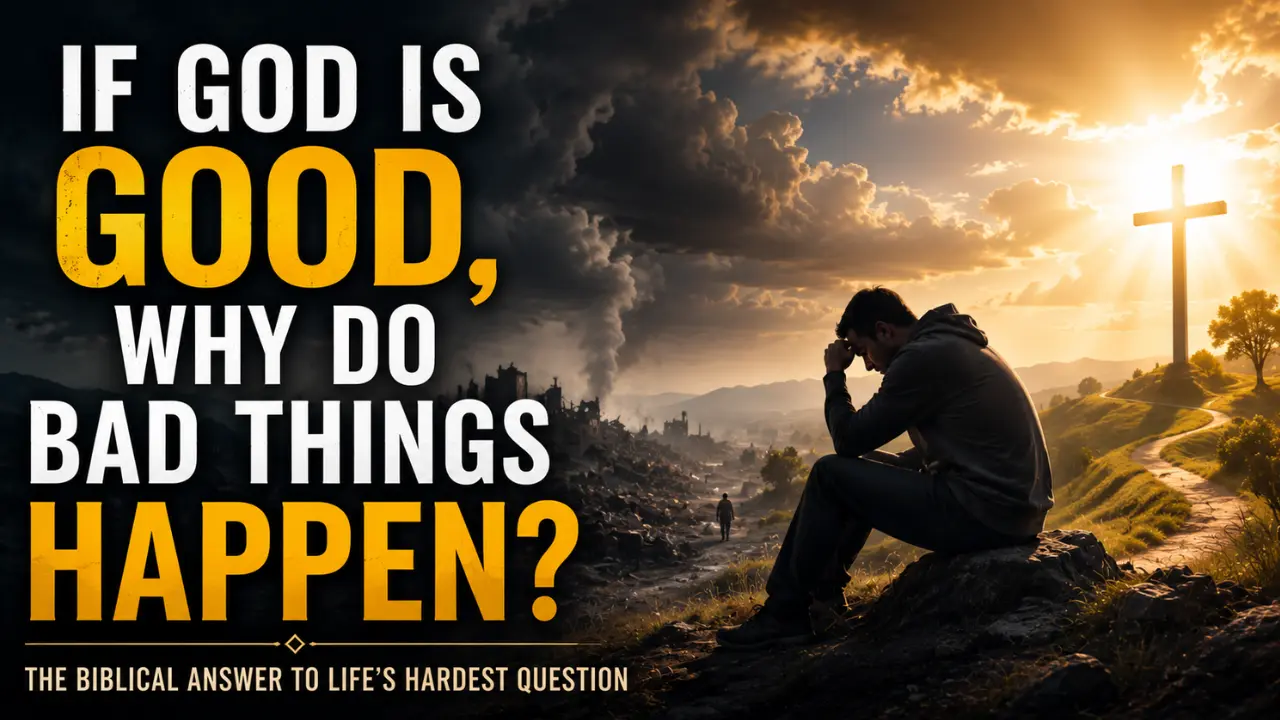

Bad things happen not because God lacks goodness, but because the world now carries the damage of sin, human freedom, spiritual rebellion, natural brokenness, and delayed judgment. The Bible does not present suffering as proof that God is absent. It presents suffering as evidence that creation needs redemption, justice, healing, and final restoration.
This question matters because people do not usually ask it only as a theory. They ask it after sickness, death, betrayal, disaster, injustice, unanswered prayer, or deep personal pain.
God Created a Good World
The Bible begins with goodness, not suffering.
In Genesis 1, God creates the world and repeatedly calls it good. He does not create death, cruelty, disease, violence, or corruption as the original design of human life. He creates order, life, relationship, beauty, purpose, and fellowship with Him.
That means suffering does not define God’s original intention for creation.
Bad things happen in a world that has moved away from God’s original order. The Bible calls this condition the fall. Sin entered human life, and its effects spread through creation.
This does not mean every suffering person caused their own pain. It means the world itself no longer works as God first designed it.
Also Read: Why God Rejected Saul as King in 1 Samuel
Human Freedom Allows Real Love, but It Also Allows Real Evil
God did not create humans as machines. He gave people the ability to choose, love, obey, reject, build, destroy, protect, or harm.
Real love requires real freedom.
But freedom also allows people to do terrible things. Much of the suffering in the world comes from human choices:
- Abuse
- Murder
- Betrayal
- Greed
- War
- Corruption
- Neglect
- Oppression
- Lies
- Selfish decisions
God could stop every evil choice instantly, but that would also mean removing meaningful human freedom. The Bible shows that God holds people responsible for their actions because their choices truly matter.
So when someone asks, “Why did God allow this evil?” the answer often includes another question: “Why did humans choose evil when God commanded what is good?”
God’s goodness does not make human rebellion harmless.
Some Bad Things Happen Because We Live in a Fallen Creation
Not all suffering comes directly from someone’s personal sin. Some pain comes from living in a world where creation itself groans under brokenness.
Romans 8 describes creation as groaning and waiting for redemption. That includes the pain of disease, natural disasters, physical decay, weakness, and death.
A child may get sick without committing any sin. A family may suffer a tragedy without deserving it. A faithful person may face loss even while walking with God.
The Bible refuses the false idea that every sufferer must have done something wrong.
Jesus corrected this thinking in John 9 when His disciples saw a man born blind and asked whether the man or his parents had sinned. Jesus did not accept their assumption. He showed that suffering can exist without personal guilt being the direct cause.
That matters because many people add guilt to grief. The Bible gives a more careful answer.
God Allows Some Things He Does Not Approve
This distinction helps the question.
God can allow something without approving it.
For example, God allowed Joseph’s brothers to sell him into slavery, but God did not approve of their betrayal. Later Joseph said:
“You meant evil against me, but God meant it for good.”
— Genesis 50:20
That verse does not call evil good. It says God can rule over evil without becoming evil.
God can permit human sin, expose it, limit it, judge it, and still bring a greater purpose out of it. This does not make the pain easy. It means evil never becomes stronger than God’s sovereignty.
God May Delay Judgment, but He Does Not Ignore Evil
Many people ask why God does not immediately punish evil. The Bible answers that God’s delay does not mean indifference.
God often delays judgment because He gives people space to repent. But delayed judgment does not mean canceled judgment.
This matters because we often want God to stop evil immediately when it hurts us, but we also want mercy when we fail. God’s patience creates room for repentance, but His justice still stands.
The Bible teaches that God will judge evil fully. Some justice appears in this life. Final justice comes when God sets all things right.
So the Christian answer does not say, “Bad things do not matter.” It says, “Bad things matter so much that God will judge them completely.”
The Cross Shows That God Does Not Stay Distant From Suffering
Christianity does not answer suffering with a distant God.
It points to Jesus.
Jesus entered the world’s pain. He experienced rejection, betrayal, false accusation, injustice, physical suffering, public shame, and death. The cross shows that God does not merely observe human suffering from far away. In Christ, God steps into it.
This is one reason the Christian answer differs from a simple philosophical answer.
God does not only explain suffering. He carries it.
The cross also shows that evil can appear victorious for a moment while God works redemption through it. The crucifixion looked like defeat, but God used it for salvation.
That does not mean every tragedy becomes understandable immediately. It means the cross gives Christians a reason to trust God even when pain does not yet make sense.
God Can Use Suffering Without Being the Author of Evil
The Bible often shows God using suffering to shape people, deepen faith, expose idols, develop endurance, and draw people closer to Him.
But we must say this carefully.
God does not enjoy human pain. He does not act cruelly. He does not need evil in order to be good. Yet He can work through suffering in ways humans may not see at first.
Romans 8:28 says God works all things together for good for those who love Him. It does not say all things are good. It says God can work through all things.
That difference matters.
Cancer is not good. Abuse is not good. Death is not good. Betrayal is not good. But God can still bring grace, endurance, wisdom, repentance, courage, compassion, and eternal hope out of pain.
Some Suffering Remains a Mystery
The Bible gives real answers, but it does not explain every individual tragedy in full detail.
Job suffered deeply, and he never received a full explanation for every part of his pain. God did not give Job a chart of causes. God revealed His greatness, wisdom, and authority.
That teaches an important truth: sometimes God does not answer by explaining everything. Sometimes He answers by revealing that He remains trustworthy even when human understanding reaches its limit.
A faithful answer must leave room for mystery.
We should never pretend to know exactly why every bad thing happened. Sometimes the most biblical answer is humble: “I do not know why this happened, but I know God sees, God cares, God judges evil, and God will restore what sin has damaged.”
Bad Things Happen Now
The Bible’s final answer to suffering is not only explanation. It is restoration.
Revelation 21 says God will wipe away every tear. Death, mourning, crying, and pain will pass away.
That means evil does not get the final word.
The Christian hope does not deny present suffering. It says present suffering belongs to a temporary broken age, not God’s eternal kingdom.
God’s goodness will not remain hidden forever. One day, His justice, mercy, and restoration will become fully visible.

5 thoughts on “If God Is Good Why Do Bad Things Happen?”