
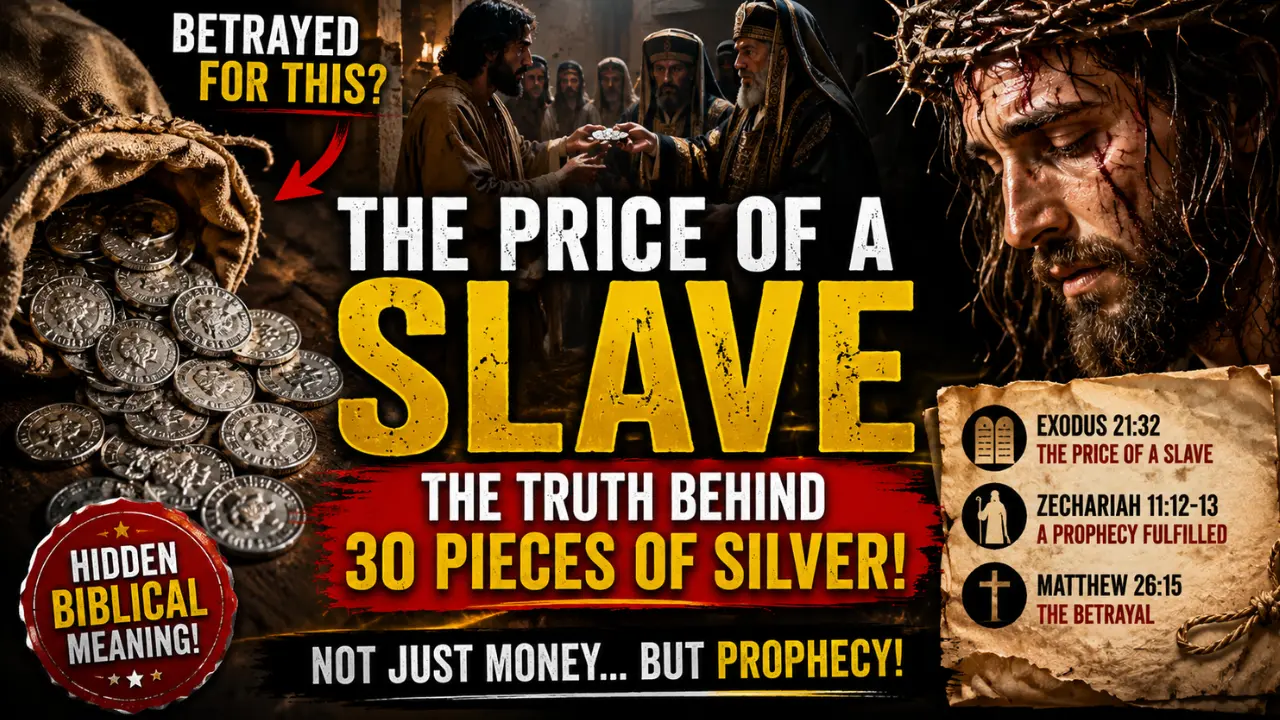

The thirty pieces of silver paid to Judas Iscariot are among the most remembered amounts of money in the Bible. The phrase has become closely associated with betrayal but its meaning goes deeper than Judas’ decision alone.
The amount was not random. In the Old Testament, thirty shekels of silver were connected to the legal compensation paid when a slave was killed. Later, Zechariah used the same amount in a prophetic scene involving rejection, a shepherd, the house of the Lord and a potter. Matthew then records Judas receiving thirty pieces of silver for betraying Jesus.
Understanding this background shows why the price is so significant. It reveals how Jesus was publicly valued by those who rejected Him, while Scripture presents Him as the Messiah whose true worth could never be measured by silver.
Also Read: The Real Reason Judas Betrayed Jesus for 30 Pieces of Silver
Judas Agreed to Betray Jesus for Thirty Pieces of Silver
In Matthew 26:14–15, Judas went to the chief priests and asked:
“What will you give me if I deliver him over to you?”
They agreed to give him thirty pieces of silver.
Matthew does not pause to explain the amount but the number carries biblical weight. Judas did not receive a great royal payment. The price attached to the betrayal of Jesus was small, humiliating and already connected to earlier Scripture.
In the Old Testament, thirty shekels of silver was the compensation paid for a slave who had been killed, according to Exodus 21:32. The amount therefore represented a relatively modest valuation rather than a significant reward. Matthew’s readers would likely have recognized the irony that the Messiah was valued at such a price.
The amount also echoes the prophecy of Zechariah 11:12–13, where thirty pieces of silver are described as the “handsome price” at which the shepherd was valued by the people. Matthew later connects Judas’ payment and its aftermath with this prophetic background, presenting the betrayal as part of a larger biblical pattern.
The tragedy is not only that Jesus was betrayed. It is that He was handed over for a price associated with low valuation and rejection. The religious leaders considered the payment sufficient, Judas accepted it and together they placed a monetary value on the One Christians believe to be the Son of God. The small sum underscores the depth of the rejection and highlights the contrast between Christ’s true worth and the price for which He was sold.
Why the Amount Was Exactly Thirty
The Old Testament background appears in Exodus 21:32. In that law, if an ox fatally injured a slave, the owner was to receive thirty shekels of silver as compensation.
This does not mean Exodus is placing the full dignity of a human being into a financial category. The passage belongs to Israel’s legal framework for compensation. Still, the association is clear: thirty shekels of silver were connected to the legal value assigned in the death of a slave.
Matthew says Judas received thirty pieces of silver. Exodus 21:32 specifically speaks of thirty shekels of silver. The wording is not identical but the numerical and thematic connection is important because both passages associate thirty silver units with a strikingly low and humiliating valuation.
The Price of a Slave in the Old Testament
Calling the thirty pieces of silver “the price of a slave” comes from this Exodus background. The amount was tied to compensation for a slave’s death, not to honour, royalty or greatness.
That makes the Gospel account painfully ironic. Jesus healed the sick, taught with divine authority, forgave sins, received worship and was confessed as the Christ. Yet when His enemies negotiated His betrayal, the agreed amount echoed the price associated with a slave.
The thirty pieces do not reveal Jesus’ true worth. They reveal how deeply He was rejected and undervalued by those who wanted Him removed.
The Prophecy in Zechariah
The number appears again in Zechariah 11:12–13. In that passage, the rejected shepherd receives thirty pieces of silver as wages. The amount is treated with irony, even contempt, as “the lordly price” at which he was valued. Rather than reflecting honour, the payment highlights how little value the people placed on the shepherd who had cared for them.
Then the silver is thrown into the house of the Lord and connected with the potter. The unusual combination of silver, the temple and the potter creates a striking prophetic image that stands out in the passage and becomes significant later in the Gospel account.
This passage becomes important because Matthew later records several matching details in the betrayal story:
- thirty pieces of silver paid as the price of betrayal
- rejection of the shepherd by those he served
- money later thrown into the temple after remorse and regret
- connection with a potter in both the prophecy and its fullfillment
- the purchase of a field using the returned silver
- a pattern that links rejection, judgment and the fullfillment of Scripture
Matthew sees the events surrounding Judas’ silver as fulfilling Scripture’s pattern of rejection and divine purpose. The parallels are not limited to the amount of money itself; they extend to what happened to the silver after the betrayal and the way the rejected shepherd motif reappears in the treatment of Jesus. By drawing attention to these connections, Matthew presents the betrayal as an event that unfolded within the framework of God’s revealed plan rather than as an isolated act of treachery.
What Happened to the Silver?
After Jesus was condemned, Judas was filled with remorse and returned the thirty pieces of silver to the chief priests and elders. He confessed that he had betrayed innocent blood.
The leaders refused to take responsibility. Judas then threw the silver into the temple and left.
Because the money was considered blood money, the priests did not place it into the temple treasury. Instead, they used it to buy the potter’s field as a burial place for strangers.
The money that had been used to betray Jesus became permanently associated with guilt, innocent blood and fullfillment of Scripture.
Why the 30 Pieces of Silver Are So Significant
The thirty pieces of silver matter because they bring together law, prophecy and Gospel history.
From Exodus, the amount carries the association of slave compensation. From Zechariah, it carries the theme of a rejected shepherd valued insultingly. In Matthew, it becomes the betrayal price of Jesus.
The meaning is not that Jesus was truly worth thirty pieces of silver. The meaning is that the world’s valuation of Him was tragically low. Those who rejected Him placed a slave-like price on the One Christians confess as Lord.
Price of a Slave
The thirty pieces of silver paid to Judas were not an ordinary detail. Exodus 21 connected thirty shekels of silver with compensation for a slave. Zechariah 11 used thirty pieces of silver in a prophetic scene of rejection, the temple and the potter. Matthew then records Judas receiving thirty pieces of silver for betraying Jesus.
The amount became a symbol of betrayal because it exposed the contrast between Christ’s true worth and the price placed on Him by those who rejected Him. Jesus was valued cheaply by His enemies, yet Scripture presents that rejected One as the Messiah through whom God’s redemptive purpose moved forward.

2 thoughts on “Price of a Slave: Understand the 30 Pieces of Silver”