
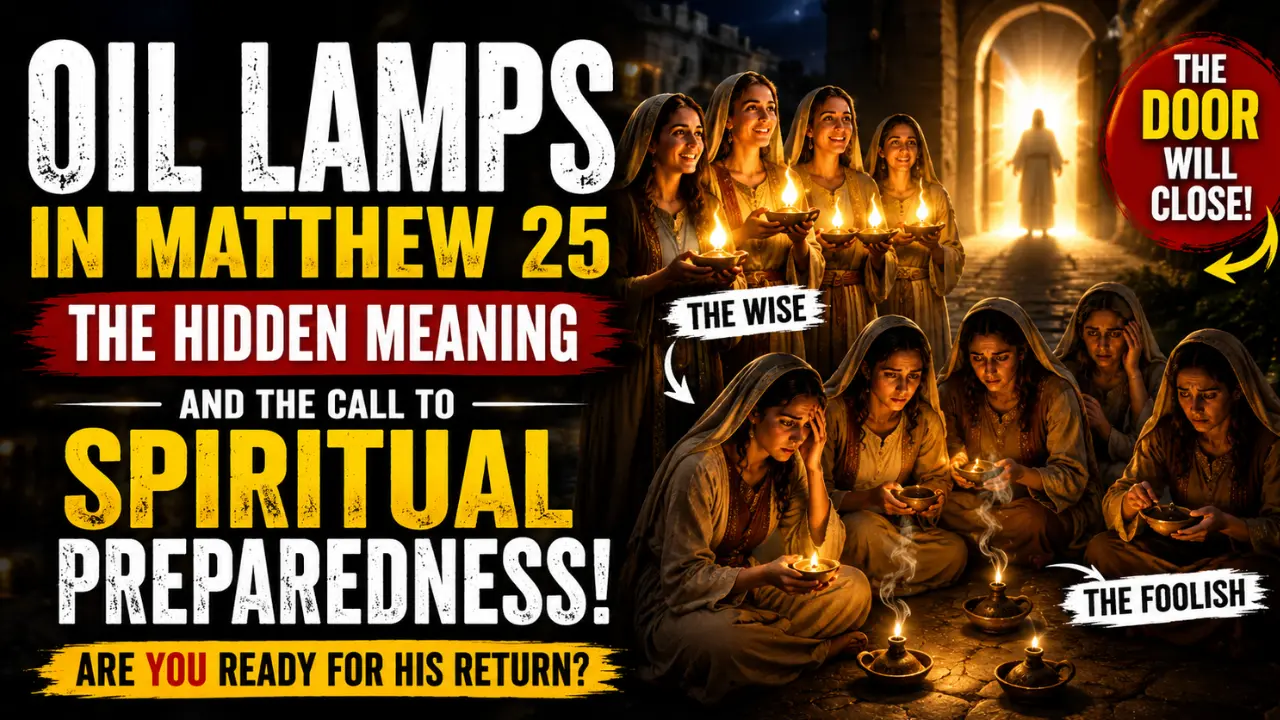

One of the most haunting parables Jesus told appears in Matthew 25 when ten virgins wait through the night for the arrival of the bridegroom. Each carries a lamp. At first, the group appears almost identical. All are waiting. All possess lamps. All expect the bridegroom to come. Yet as the night deepens and the delay stretches longer than expected, a hidden difference slowly emerges.
- Some have oil.
- Some do not.
When the midnight cry suddenly announces the bridegroom’s arrival, the lamps of the foolish virgins begin going out while the wise virgins are prepared to enter the wedding feast. The door closes behind them and the parable ends with one of the most sobering warnings in Matthew’s Gospel: “Watch therefore, for you know neither the day nor the hour.”
The oil lamps in Matthew 25 symbolize more than outward religion or religious expectation. They reveal the difference between visible association with the kingdom and genuine spiritual preparedness for the coming of Christ, much like [how Scripture distinguishes outward religious appearance from enduring inward faithfulness — What Jesus Taught About Genuine Spiritual Readiness].
Why Jesus Used Wedding Imagery
The setting of the parable matters deeply. Jesus frames the story around a wedding procession because weddings in Scripture often symbolize covenant relationship, joy, celebration and the union between God and His people.
The Bridegroom as Messianic Imagery
Throughout the New Testament, Christ is repeatedly associated with bridegroom imagery. The coming bridegroom in Matthew 25 therefore points toward Christ Himself. The waiting virgins symbolize those expecting His arrival and entrance into the fullness of the kingdom.
This transforms the parable from a simple moral lesson into an eschatological warning about readiness for the return of Christ.
Delay Before Arrival
One of the most important details in the parable is the delay. The bridegroom does not arrive immediately. Time passes. Weariness settles in. Sleep overtakes the waiting group.
This detail reflects one of the great tensions within Christian expectation. Believers live in anticipation of Christ’s return, yet the waiting period can tempt people toward spiritual carelessness, complacency, or empty religious appearance without enduring faithfulness.
The lamps become most important precisely because the night lasts longer than expected.
Why the Lamps Matter
In the ancient world, lamps provided light during darkness and were necessary for participation in nighttime processions and celebrations. In the parable, every virgin carries a lamp, which means every person outwardly appears connected to the coming wedding feast.
The difference is not visible immediately.
The distinction emerges only when darkness deepens and the bridegroom delays.
Lamps as Outward Profession
The lamps symbolize visible profession, expectation, and association with the kingdom. All ten virgins appear outwardly prepared at first glance. This is one of the parable’s most sobering dimensions because the foolish virgins are not openly hostile or unbelieving outsiders. They are part of the waiting group.
The warning therefore targets spiritual appearances lacking enduring spiritual substance.
Light in Biblical Symbolism
Throughout Scripture, light often symbolizes truth, holiness, faithfulness, divine presence, and spiritual life. Lamps therefore represent more than objects held in the hand. They symbolize visible readiness connected to participation in the bridegroom’s arrival.
Yet the lamp alone is not enough.
Without oil, the lamp eventually fails.
The Meaning of the Oil
The oil is the central symbolic tension of the parable because it separates the wise from the foolish.
Oil as Inner Spiritual Reality
The oil symbolizes the inward spiritual reality sustaining genuine faithfulness. Throughout Scripture, oil is frequently associated with consecration, anointing, divine presence, and the work of God’s Spirit. While the parable should not be reduced to a single narrow symbolic equation, the oil clearly represents something inward and essential that cannot be borrowed at the final moment.
The wise virgins possess lasting readiness.
The foolish virgins possess appearance without endurance.
The tragedy of the parable is that the lack remains hidden until the critical moment arrives.
Why the Oil Could Not Be Shared
The wise virgins refuse to divide their oil because spiritual preparedness cannot be transferred instantly from one person to another. Genuine faithfulness, relationship with God, perseverance, and inward spiritual life cannot be borrowed during the final hour of crisis.
This is one of the parable’s sharpest warnings. There are realities that must already exist before the bridegroom arrives.
The foolish virgins waited too long to confront what was missing internally.
The Midnight Cry
The bridegroom arrives at midnight, the darkest point of the night.
Sudden Arrival
The timing emphasizes surprise and interruption. The kingdom does not arrive according to human scheduling or convenience. The cry breaks into the darkness suddenly, exposing the true condition of every lamp.
Moments of testing often reveal realities hidden beneath outward appearances.
Darkness and Spiritual Testing
Midnight also symbolizes spiritual darkness, uncertainty, delay, and crisis. The wise virgins remain prepared through the darkness because their lamps continue burning. The foolish discover too late that outward appearance cannot sustain them when the decisive moment comes.
The parable therefore warns against forms of religion that appear sufficient during comfort but collapse under spiritual testing.
The Closed Door
One of the most severe parts of the parable is the closed door.
Opportunity Does Not Last Forever
After the wise virgins enter with the bridegroom, the door shuts. Later, the foolish virgins arrive asking to be admitted, but they are refused.
This imagery carries strong eschatological force. The parable teaches that the opportunity for readiness is not endless. There comes a point when preparation can no longer be postponed.
Knowing About the Bridegroom Is Not Enough
The foolish virgins clearly knew about the coming wedding. They expected the bridegroom and participated outwardly in the waiting process. Yet expectation alone did not equal preparedness.
The distinction between outward association and inward readiness becomes the heart of the warning.
Spiritual Preparedness in Matthew 25
The oil lamps ultimately symbolize spiritual preparedness for the coming kingdom.
Preparedness Requires Endurance
The wise virgins prepare not only for immediate arrival but also for delay. This is deeply important spiritually because many forms of shallow faith survive only short-term enthusiasm.
The parable emphasizes endurance through waiting, darkness, uncertainty, and the apparent slowness of fulfillment.
Preparedness Is Personal
Each virgin is responsible for her own oil. The parable places responsibility directly upon the individual rather than the group alone.
Spiritual preparedness cannot rest merely on:
- family tradition
- religious culture
- external appearance
- borrowed faith
- temporary emotion
The inward reality symbolized by the oil must personally exist.
Watchfulness in Matthew’s Gospel
The final command to “watch” connects this parable to broader themes throughout Matthew’s Gospel concerning vigilance, faithfulness, and readiness for Christ’s return.
Watchfulness does not mean panic or date-setting speculation. It means living with enduring spiritual attentiveness and genuine faithfulness while awaiting the coming kingdom.
The Difference Between Wisdom and Foolishness
The wise and foolish virgins outwardly resemble one another for much of the story. The difference lies beneath the surface.
Wisdom Plans for Delay
The wise virgins carry extra oil because they prepare for the possibility that waiting may become difficult. Biblical wisdom consistently involves living in light of future reality rather than immediate convenience.
The foolish virgins prepare only for short-term expectation.
Foolishness Ignores Spiritual Urgency
The foolishness in the parable is not open rebellion but neglect. The foolish virgins assume outward readiness will remain sufficient indefinitely.
The warning becomes especially serious because the foolish group likely appeared spiritually normal until the decisive moment arrived.
Oil Lamps and the Return of Christ
Matthew 25 places the parable within teachings concerning the coming kingdom and final accountability.
Readiness for the Bridegroom
The lamps and oil therefore point directly toward readiness for Christ’s return. The parable challenges superficial spirituality that depends entirely upon appearances without inward perseverance and faithfulness.
Genuine Faith Endures the Night
The wise virgins endure because their lamps continue burning through delay and darkness. Genuine spiritual life survives waiting because it is rooted in something deeper than temporary excitement or external participation alone.
The oil symbolizes sustaining spiritual reality rather than momentary religious enthusiasm.
Why the Oil Lamps Still Matter
The oil lamps still matter because the parable speaks powerfully to every generation tempted toward outward religion without inward spiritual depth. Many people may appear spiritually prepared during seasons of comfort, community, visibility, or religious activity.
The deeper condition of the heart often becomes visible only during delay, testing, disappointment, darkness, or crisis.
Matthew 25 warns that spiritual preparedness involves more than appearance. It involves enduring faithfulness sustained by genuine inward reality before God.
The lamps remind believers that anticipation of Christ’s return must be matched by perseverance, vigilance and spiritual substance capable of enduring the long night of waiting.
When the Bridegroom Finally Arrived
The oil lamps in Matthew 25 symbolize spiritual preparedness, enduring faithfulness, inward readiness, and the difference between outward appearance and genuine spiritual life.
As the midnight cry echoed through the darkness and the lamps of the foolish began to fail, the parable revealed that the true condition of faith is often exposed not during moments of public visibility, but during seasons of waiting and delay.
The wise entered the wedding feast because their readiness endured through the night, while the closed door stood as a warning that outward association with the kingdom can never replace the inward spiritual reality required to meet the bridegroom when He comes.
