
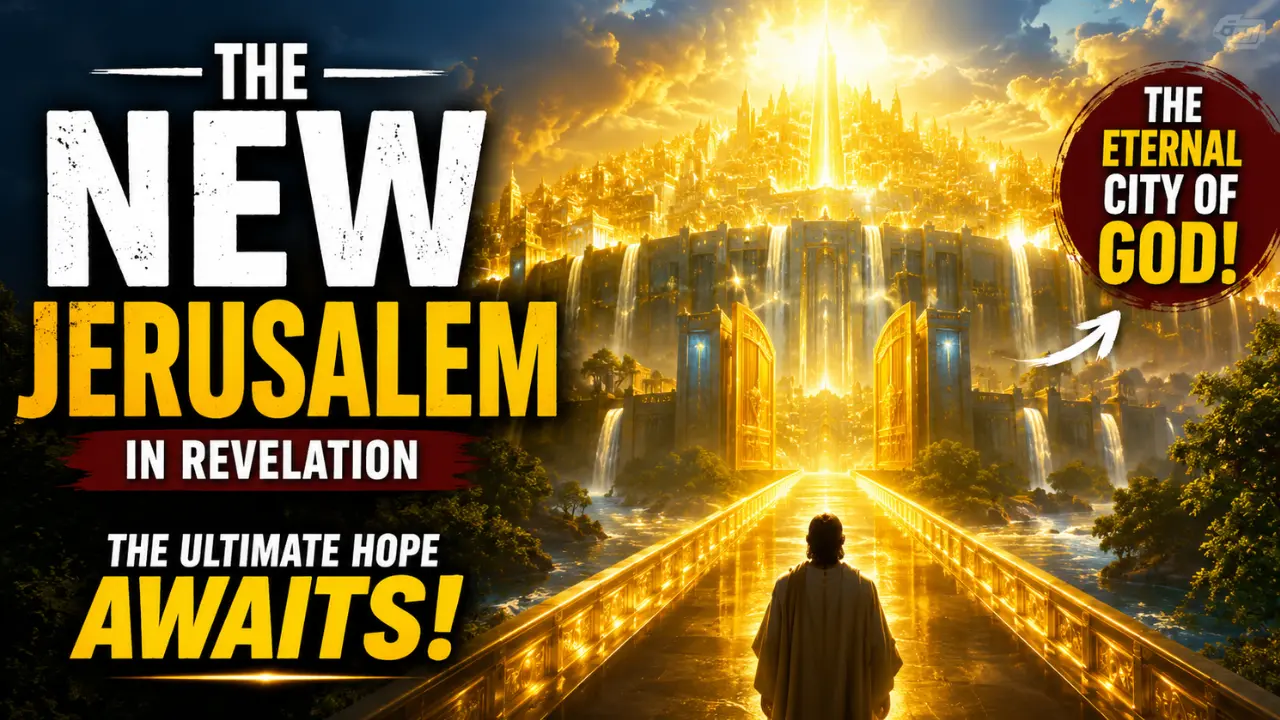

The New Jerusalem in Revelation is the final vision of God’s redeemed world. It is not simply a picture of heaven, nor merely a symbolic city of beauty and peace. It is the completed dwelling place of God with His people, the fullfillment of covenant hope, the restoration of creation and the eternal answer to sin, exile, death, and separation. John sees the city coming down out of heaven from God, prepared as a bride adorned for her husband, and that downward movement is essential to its meaning. Humanity does not climb into eternity by its own achievement. God brings the holy city down by His own redemptive power.
The New Jerusalem appears after judgment, after Babylon falls, after evil is defeated, and after the former order passes away. This means the city is not an escape from God’s purposes for creation, but the fullfillment of them. Revelation ends with God dwelling openly among His redeemed people in a world where death, curse, impurity, and separation no longer remain, fulfilling [the biblical promise that God would one day dwell permanently among His people in a restored creation — What Revelation Says About God Dwelling With Humanity].
The City Descending Means Restoration Comes From God
John does not see the New Jerusalem rising from earth. He sees it descending from heaven. This detail reveals that final restoration is God’s gift, not humanity’s construction. The holy city is not produced by empire, progress, politics, philosophy, wealth, or human moral improvement. It comes from God because only God can heal creation completely.
This also contrasts the New Jerusalem with Babylon in Revelation. Babylon represents human civilization organized in rebellion against God, full of pride, corruption, luxury, violence, and spiritual adultery. Babylon rises and falls. The New Jerusalem descends and remains. One city shows the failure of humanity apart from God; the other shows redeemed humanity gathered into God’s presence forever.
Why Revelation Ends With a City
The Bible begins in a garden, but it ends with a city. Eden was the first place of fellowship with God, life, beauty, vocation, and communion. Sin brought exile, death, shame, and separation. The New Jerusalem restores what was lost in Eden, but it also surpasses Eden because redeemed humanity is now gathered into a perfected holy city.
The city imagery shows that eternal hope is not lonely, vague, or disembodied. It is communal, ordered, worshipful, embodied, and filled with God’s glory. The tree of life returns, the river of life flows, and the curse is removed. Eden is not discarded; it is fulfilled within the holy city where God’s people live together under His eternal reign.
The Bride Imagery Means Covenant Union
The New Jerusalem is described as a bride prepared for her husband. This means the city is not only a place but also a people. Revelation joins architecture and relationship because the holy city represents the redeemed community in perfect covenant union with God through Christ.
The bride imagery reveals that eternal hope is not merely endless life. It is everlasting belonging. The deepest joy of the New Jerusalem is not gold, jewels, or gates, but unbroken communion with God. No betrayal, impurity, fear, distance, or spiritual unfaithfulness remains. The bride is ready because redemption is complete.
God Dwelling With His People Is the Center
The central announcement of the New Jerusalem is: “Behold, the tabernacle of God is with men.” This sentence explains the whole vision. The New Jerusalem means that God’s dwelling is finally and fully with His people.
This fullfills the entire biblical pattern of divine presence. Eden was lost through sin. The tabernacle placed God’s presence among Israel in a veiled way. The temple localized sacred presence in Jerusalem. Christ came as the Word made flesh and dwelt among humanity. Revelation shows the final fullfillment: God dwells openly with His redeemed people forever, fulfilling [the prophetic hope that separation between God and His people would one day be permanently removed — The End of Separation Between God and Humanity in Revelation].
The greatest hope of the New Jerusalem is not location but communion. God is no longer approached through distance, shadow, veil, or temporary symbol. His presence becomes the atmosphere of eternal life.
No Temple Because the Whole City Is Holy
John says there is no temple in the New Jerusalem because the Lord God Almighty and the Lamb are its temple. This is one of the most important meanings of the vision. In the Old Testament, the temple was holy because God’s presence was localized there. In the New Jerusalem, no separate temple is needed because the whole city is filled with God’s presence.
There is no outer court, inner room, veil, restricted access, or hidden sanctuary. Sacred geography gives way to total communion. The whole city becomes what the Holy of Holies once symbolized: the dwelling place of God’s glory. Eternal hope means living permanently in the presence that earlier generations could only approach through priesthood, sacrifice, and sacred boundaries.
The Cube Shape Shows the Final Holy of Holies
Revelation describes the city with equal length, width, and height. This cube-like form connects the New Jerusalem to the Holy of Holies, which was also cube-shaped in the Old Testament temple. The Holy of Holies was the most sacred space, associated with God’s throne-presence above the mercy seat.
By presenting the entire city as a cube, Revelation shows that the whole New Jerusalem is the final Holy of Holies. The redeemed do not merely visit sacred space. They live inside the fulfilled sanctuary of God. What was once hidden behind the veil is expanded into an eternal city.
The immense measurements also communicate fullness, perfection, permanence, and divine grandeur. The city is far beyond ordinary human scale because God’s completed kingdom cannot be measured by earthly limitations.
The Glory of God Is the City’s Light
The New Jerusalem has no need of sun or moon because the glory of God gives it light, and the Lamb is its lamp. This means the city’s life, truth, safety, and beauty come directly from God through Christ.
The Lamb as the lamp is crucial. The city shines because of the crucified and risen Christ. Eternal hope is not a general idea of brightness or peace. It is Lamb-centered glory. The One who was slain becomes the light of the redeemed world. In the New Jerusalem, darkness is gone because sin, death, deception, and rebellion have been removed.
The Foundations Show Fulfilled Covenant History
The city has twelve foundations bearing the names of the twelve apostles of the Lamb, and twelve gates associated with the twelve tribes of Israel. This imagery shows that the New Jerusalem gathers the whole people of God into one fulfilled city.
The twelve tribes connect the city to Israel’s covenant story. The twelve apostles connect it to the witness of Christ and the Gospel. Revelation is not presenting a disconnected future but the completed fulfillment of God’s redemptive plan across Scripture. The city stands on the faithfulness of God revealed through covenant promise and apostolic testimony.
The precious stones in the foundations also echo priestly and sanctuary imagery. They suggest holiness, covenant remembrance, sacred beauty, and redeemed worship. The city itself shines with the glory once associated with the sanctuary.
The Gates of Pearl Mean Open Access
The gates of the New Jerusalem are made of pearl, and they are never shut. Ancient city gates represented access, security, authority, and belonging. Open gates meant peace because no enemy remained to threaten the city.
The open gates show that exile is over. The redeemed are no longer kept away from God’s presence. Yet the city remains holy because nothing unclean enters it. Revelation does not picture careless access for evil, but purified access for the redeemed. The gates are open because redemption is complete and danger is gone.
The River and Tree of Life Mean Eden Restored
The river of life flows from the throne of God and of the Lamb, and the tree of life stands in the city with healing for the nations. This directly recalls Eden, where humanity lost access to the tree of life after sin.
In the New Jerusalem, the tree of life returns because the curse has been removed. The river flowing from the throne shows that eternal life comes from God’s reign. Life in the city is not merely endless existence. It is life nourished by God’s presence, authority, and goodness.
The healing of the nations shows that God’s restoration reaches the wounds of human history. Division, violence, exile, and corruption are answered by life flowing from the throne of God and the Lamb.
No More Curse Means the Fallen Order Is Gone
Revelation says there will be no more curse. This phrase carries the weight of the entire biblical story. The curse entered through sin and brought death, pain, toil, alienation, decay, and sorrow into human life.
The New Jerusalem means the curse is not merely reduced or managed. It is removed. Death is not softened; it is abolished. Mourning is not minimized; it is ended. Pain is not explained away; it is taken away by the God who makes all things new. Eternal hope is not temporary comfort inside a broken world. It is the end of the broken order itself.
The Nations Walking in the Light Show Global Redemption
The nations walk by the light of the New Jerusalem and bring their glory into it. This fulfills God’s promise that blessing would reach all nations. The holy city is not a narrow tribal vision but the final gathering of redeemed humanity under the reign of God.
The nations are not erased; they are healed and purified. Human glory is no longer twisted by pride, violence, and idolatry. What is good, beautiful, truthful, and honorable is brought into God’s kingdom. The kings of the earth no longer rebel against the Lord. They bring their glory into the city of the Lamb.
Christ Is the Center of the New Jerusalem
The New Jerusalem cannot be understood apart from Christ. It is the city of God and the Lamb. The Lamb’s throne is there. The Lamb’s light fills it. The Lamb’s book determines citizenship. The Lamb’s victory makes the city possible.
This means eternal hope is inseparable from the cross and resurrection. The city descends because the Lamb has conquered. Access is open because the Lamb was slain. Death is ended because the Lamb lives. The New Jerusalem is not heaven without the cross; it is the eternal result of Christ’s redemption filling creation with glory.
Eternal Hope in Revelation
The New Jerusalem gives hope because it reveals where history is going. The final word is not Babylon, empire, death, persecution, suffering, or darkness. The final word is God dwelling with His people in a redeemed creation.
This hope does not deny grief. Revelation specifically says God will wipe away every tear. That image is deeply personal. Eternal hope is not merely the removal of suffering as an abstract idea. It is God Himself answering the sorrow of His people.
The City Where God Is the Future
The New Jerusalem in Revelation means redeemed creation filled with God’s presence forever. It is Eden restored and surpassed, the temple fulfilled, the bride made ready, the nations healed, the curse removed, and the Lamb enthroned at the center of eternal life.
John’s final vision is not a lonely soul escaping the world, but a radiant city descending from God. There the river of life flows, the tree of life heals, the gates remain open, the Lamb gives light, and death has no place to stand.
