
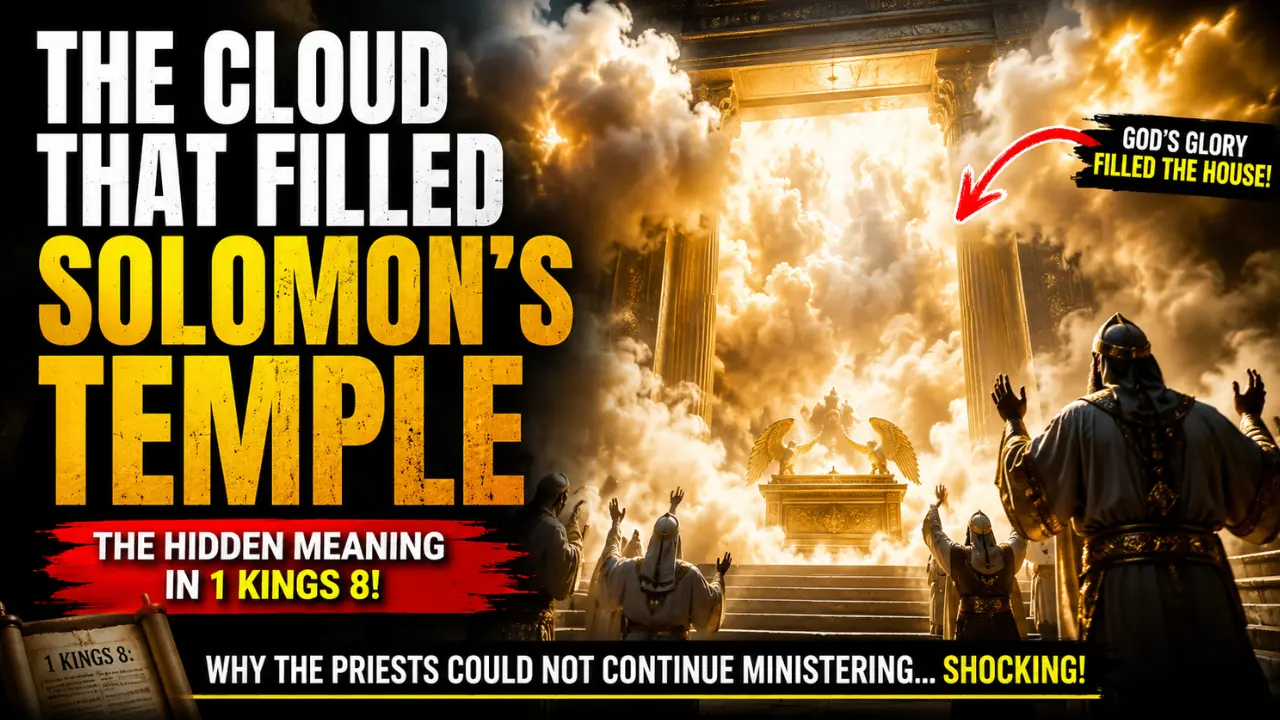

One of the most awe-inspiring moments in the Old Testament occurs in 1 Kings 8 when Solomon finished dedicating the temple and the presence of God filled the house like a cloud. The priests carried the ark of the covenant into the inner sanctuary, sacrifices were offered, worship unfolded before the Lord and then suddenly the temple itself became overshadowed by holy glory.
Scripture says the cloud filled the house of the Lord so powerfully that the priests could not continue ministering because of the cloud, “for the glory of the Lord had filled the house of the Lord.” This was not ordinary weather drifting through sacred architecture. The cloud symbolized the manifest presence of God dwelling among His covenant people.
The moment carried overwhelming spiritual significance because the temple was no longer merely a magnificent structure of cedar, gold, bronze and stone. Once the cloud filled it, the building became overshadowed by something greater than architecture. Human craftsmanship disappeared behind divine glory, echoing [how the tabernacle and temple both became places where God visibly revealed His covenant presence among Israel — Why God’s Presence Filled Both the Tabernacle and the Temple].
The cloud filling the temple therefore became a symbol of God’s holiness, covenant faithfulness, sacred mystery, overwhelming majesty and the reality of divine presence too great for human control.
Why the Cloud Appears Throughout Scripture
The cloud in 1 Kings 8 did not appear suddenly without biblical background. Throughout Scripture, clouds often accompany moments where God reveals Himself in visible and overwhelming ways.
Cloud in the Wilderness
During Israel’s wilderness journey, God led His people through the pillar of cloud by day and the pillar of fire by night. The cloud represented guidance, protection, holy nearness and divine leadership. Israel did not wander alone through the wilderness. The visible cloud testified that God Himself was with them.
This background matters because the cloud over the tabernacle already established an important biblical pattern: when God’s covenant presence dwells among His people, cloud imagery often surrounds the moment, much like [how the pillar of cloud and fire revealed God’s guidance and presence during Israel’s wilderness journey — The Spiritual Meaning of the Pillar of Cloud and Fire].
Cloud on Mount Sinai
When God descended upon Mount Sinai, the mountain became covered with cloud, thunder, fire and overwhelming holiness. The cloud concealed and revealed simultaneously. It signalled God’s nearness while also reminding Israel that His glory could not be approached casually.
This tension remains important in 1 Kings 8. The cloud filling the temple did not merely create comfort. It created awe. God was near but He remained holy, sovereign and overwhelming.
Temple Dedication in 1 Kings 8
The cloud appeared during one of the most important moments in Israel’s history: the dedication of Solomon’s Temple.
From Tent to Temple
For generations, Israel worshiped around the tabernacle, the movable sanctuary carried through the wilderness. Now, under Solomon, a permanent temple stood in Jerusalem. The transition from tabernacle to temple represented stability, kingship, covenant continuity and the visible establishment of Israel’s worship life.
Yet the temple’s beauty alone did not guarantee the presence of God. The building could be architecturally breath-taking and still spiritually empty if God did not dwell there.
Then the cloud filled the sanctuary, answering in overwhelming fashion whether the temple would merely stand as sacred architecture or truly become the dwelling place associated with God’s covenant presence.
When the Priests Brought in the Ark
The ark of the covenant was brought into the Most Holy Place beneath the wings of the cherubim. This moment mattered deeply because the ark symbolized God’s covenant throne among His people. Then the cloud filled the temple.
The sequence is important:
- covenant
- worship
- sacred presence
- overwhelming glory
The cloud became divine confirmation that God had chosen to place His name and presence there among Israel.
Priests Could Not Continue Ministering
One of the most powerful details in the account is that the priests could not continue ministering because of the cloud.
Human Activity Stopped Before Divine Glory
This detail transforms the moment from ceremonial celebration into overwhelming encounter. The priests had responsibilities, rituals, garments and sacred duties, yet the glory filling the temple interrupted human activity entirely.
The symbolism is profound. There are moments when the glory of God overshadows human ability, human control and religious performance. Ministry itself stopped because divine glory became the central reality in the temple.
This prevented worship from becoming merely mechanical. The temple was not ultimately about priestly efficiency, architectural beauty or national prestige. It was about the presence of God, reflecting [how true worship in Scripture centres on God’s presence rather than outward religious performance alone — The Difference Between Ritual Worship and Genuine Reverence Before God].
Glory Too Great to Manage
The priests could serve around sacred things but they could not manage the glory itself. The cloud reminded Israel that God’s holiness could not be reduced to ritual control.
Human beings often prefer a form of religion that feels organized, predictable and manageable, yet the cloud filling the temple shattered that illusion completely. God was near enough to dwell among His people, yet His glory still overwhelmed the sanctuary and silenced human activity beneath its weight.
Cloud as a Sign of Divine Presence
The cloud primarily symbolized the manifest presence of God dwelling among His covenant people.
God Dwelling Among His People
The greatest wonder in 1 Kings 8 is not the temple itself but the reality that the Creator chose to dwell among His people. Solomon himself acknowledged the mystery by asking whether God would truly dwell on earth since even heaven could not contain Him.
The cloud answered with visible symbolism. God’s glory had filled the temple, yet His majesty still exceeded the structure itself. The temple became a meeting place of holy nearness without limiting divine greatness.
Presence Rather Than Empty Religion
The cloud distinguished the temple from ordinary religious systems. Israel’s worship was not intended to revolve around empty ceremony detached from God Himself. The temple’s beauty meant nothing if the glory did not fill it, because worship loses its centre when God’s presence becomes an idea rather than the living reality before which everything bows.
This becomes one of the deepest spiritual lessons of the passage. Religious structure alone can never replace genuine awareness of God’s covenant presence.
Cloud and Divine Mystery
The cloud also carried symbolism connected to mystery and hiddenness.
God Revealed Yet Concealed
Throughout Scripture, clouds often conceal God even while revealing Him. The cloud in the temple made God’s glory known, yet it also covered the fullness of His holiness from direct human exposure.
This balance matters deeply. God is not fully grasped, mastered or explained by human understanding. The cloud preserved divine transcendence even in moments of nearness, much like [how Scripture repeatedly presents God as both revealed and beyond complete human comprehension — Why God’s Holiness Remains Beyond Full Human Understanding].
Darkness Where God Dwells
Solomon even declared that the Lord said He would dwell in thick darkness. This language sounds unusual because darkness is often associated with judgment or evil elsewhere in Scripture. Yet here it reflects mystery, unsearchable glory and the overwhelming nature of divine holiness.
The cloud reminded Israel that God could be known truly without being reduced completely to human comprehension.
Cloud and Covenant Faithfulness
The filling of the temple also symbolized God’s covenant faithfulness to Israel.
Fullfillment of Earlier Promises
God had promised David that his son would build the temple. Now Solomon stood in the completed sanctuary as the cloud filled the house. The moment connected directly to covenant continuity and fulfilled promise.
The cloud therefore became more than emotional atmosphere. It represented divine confirmation that God remained faithful to His covenant purposes.
Glory Connected to Obedience
Yet the later history of Israel also reveals an important tension. The glory filling the temple did not mean the nation could live in rebellion without consequence. Eventually judgment would come because covenant faithfulness required more than outward worship.
The same glory that filled the sanctuary was meant to shape the hearts of the people standing beneath it. Divine nearness was never intended to produce spiritual complacency. It was meant to awaken reverence, obedience, humility and holy fear before the Lord.
Cloud and the Fear of God
The temple cloud also restored the fear of the Lord to the centre of worship.
Awe Beyond Familiarity
The danger of organized religion is familiarity without reverence. Israel could easily become accustomed to rituals, priests, sacrifices and temple routines. The cloud interrupted ordinary familiarity with overwhelming awe.
God was not merely Israel’s national symbol. He was the holy Lord whose glory exceeded human comfort and understanding.
Worship That Humbles Human Pride
The priests could not continue ministering because the cloud overshadowed human activity. This image humbles religious pride because it reminds worshipers that no ministry, system or human ability can replace dependence upon God.
True worship begins where self-importance diminishes before divine glory.
Cloud and Christ
The symbolism of the cloud ultimately points beyond Solomon’s Temple toward Jesus Christ.
God’s Presence Dwelling Among Humanity
The temple represented God dwelling among His people, but Christ fullfills this reality in a deeper and living way. The Gospel of John declares that the Word became flesh and dwelt among humanity. The language intentionally echoes tabernacle and temple imagery.
What the temple symbolized geographically, Christ embodied personally.
Glory Revealed Through Christ
The cloud concealed and revealed divine glory simultaneously. In Christ, the glory of God appears through human flesh. Yet even then, many failed to recognize Him fully because divine glory was veiled within humility.
The temple cloud therefore points forward to the greater reality of God’s presence revealed through the Son.
Cloud and the Coming Glory of God
The cloud imagery also stretches forward prophetically.
Glory Beyond Earthly Structures
Solomon’s Temple would eventually face destruction but God’s presence was never permanently confined to one building. The cloud itself already hinted at this truth because the glory exceeded the structure it filled.
The biblical story moves toward the promise of God dwelling fully with His people in restored creation, where divine glory no longer remains partially veiled behind temple walls, clouds or earthly limitations, pointing toward [the biblical hope of God dwelling openly with His people in the new creation — What Revelation Reveals About the Dwelling Place of God].
Presence That Made the Temple Holy
The cloud filling the temple still matters because modern spirituality often reduces God to something manageable, explainable and convenient. The cloud confronts that mindset directly.
God’s presence is comforting but it is also holy. It brings nearness but also reverence. It invites worship while humbling pride.
Churches, traditions, ministries and sacred systems can all continue outwardly while quietly losing awareness of the living presence that once gave worship its weight. The cloud filling the temple warns against confusing religious activity with genuine encounter before God.
The cloud reminds believers that the centre of worship is not human performance but the overwhelming reality of divine glory.
When Glory Filled the House
The cloud filling the temple in 1 Kings 8 symbolized the overwhelming holiness, mystery, covenant faithfulness and glory of God dwelling among His people. The priests stopped ministering, the sanctuary disappeared behind glory and the temple itself became overshadowed by the reality of God’s majesty.
The cloud revealed a God who was near yet uncontainable, visible yet mysterious, dwelling among humanity while remaining infinitely greater than the house built for His name.
As the smoke-like glory filled the sanctuary and human activity fell silent beneath its weight, Israel witnessed a truth that echoes throughout Scripture: the greatest wonder of worship is not the beauty of the house itself but the presence of the God who fills it.
Frequently Asked Questions
Why could the priests not continue ministering?
The glory of God filled the temple so powerfully that human activity stopped before divine majesty. The moment emphasized that God’s presence was greater than ritual performance or priestly control.
What does the cloud represent in the Bible?
Cloud imagery in Scripture often represents God’s presence, holiness, guidance, mystery and glory. It appears throughout the wilderness journey, Mount Sinai, the tabernacle and Solomon’s Temple.
What is the connection between the cloud and God’s holiness?
The cloud both revealed and concealed God’s glory. It showed that God was near His people while also remaining holy, sovereign and beyond complete human comprehension.
Why is 1 Kings 8 important in biblical theology?
1 Kings 8 marks one of the clearest moments where God visibly fills the temple with His glory, confirming His covenant relationship with Israel.
What does the cloud teach about worship?
The cloud teaches that true worship centres on God’s presence rather than merely outward ritual, religious performance or human achievement.
