
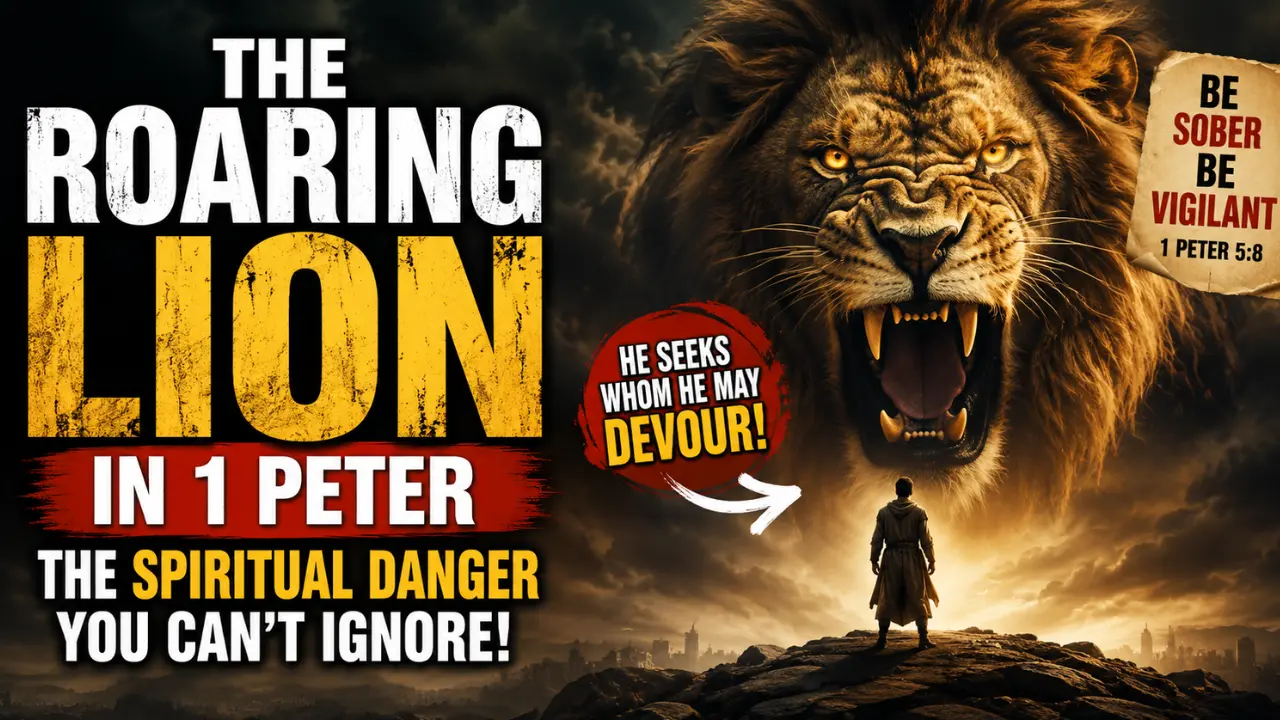

One of the most sobering warnings in the New Testament appears in the words of Peter: “Your adversary the devil walks about like a roaring lion, seeking whom he may devour.” This imagery in 1 Peter is not poetic exaggeration meant merely to frighten readers emotionally. It is a spiritual warning filled with urgency, realism and theological depth. Peter chose the image of a roaring lion because lions were terrifying predators known for power, stealth, intimidation and destruction. A lion’s roar could freeze prey with fear before the attack ever came near.
By using this image, Peter revealed something serious about unseen opposition: evil is not passive, harmless or imaginary. Believers live in a world where temptation stalks quietly, deception operates strategically, suffering exposes weakness and the enemy seeks destruction rather than simple distraction. The roaring lion therefore becomes a symbol of intimidation, temptation, accusation, moral vulnerability, persecution and the constant need for vigilance before God, especially in light of [what the Bible teaches about resisting the devil and standing firm in faith — How Christians Are Called to Resist Satan in Scripture].
Why Peter Used the Image of a Lion
Peter could have used many images to describe the devil, yet he chose one of the most feared predators in the ancient world. That choice matters because biblical imagery is rarely random. A lion was not merely strong; it was terrifying because its strength was joined with hunger, patience and the ability to strike at vulnerable prey.
A Creature Associated With Fear and Power
In the ancient world, lions symbolized terror, dominance and deadly force. Their roar alone communicated danger. Before prey even saw the lion, the sound announced that a threat was nearby. Peter’s warning works the same way spiritually. The enemy does not always begin with open destruction. Fear itself can weaken discernment, disrupt faith and destabilize the mind long before visible collapse occurs.
The roaring lion image therefore speaks not only about attack but also about intimidation. Spiritual warfare often begins with pressure in the inner life: fear, confusion, accusation, anxiety, despair or the sense that obedience is too costly. The roar seeks to dominate the atmosphere before the teeth ever touch the prey, much like [how fear and spiritual intimidation can weaken discernment and faith before outward failure occurs — What the Bible Says About Fear and Spiritual Attack].
A Predator Searching for Vulnerability
Peter says the lion is “seeking whom he may devour.” That phrase suggests active searching rather than random movement. Predators look for weakness, isolation, exhaustion, distraction, injury or separation from the herd. Spiritually, this reveals that temptation often intensifies when the soul becomes proud, bitter, discouraged, isolated, morally careless, spiritually lazy or exhausted by suffering.
This does not mean every hardship is caused directly by the devil but Peter wants believers to understand that vulnerability matters. A careless heart becomes easier to pressure. An isolated believer becomes easier to confuse. A proud believer becomes easier to deceive. The enemy is portrayed as watchful and strategic rather than careless.
The Roar Before the Attack
A lion’s roar creates fear before physical contact occurs. That detail gives Peter’s image powerful emotional realism because many believers experience intimidation before they experience open collapse. The roar is the atmosphere of threat, the pressure before surrender, the lie before compromise and the fear before disobedience.
Fear as a Weapon Against Faith
Fear can distort judgment and make danger appear larger than God’s faithfulness. Peter’s original readers knew suffering, rejection, and uncertainty, so the roaring lion imagery carried immediate force. The enemy seeks not only sinful action but weakened trust. Panic, despair, hopelessness and spiritual paralysis can become openings for deeper compromise when fear is allowed to rule the heart.
This is why Scripture repeatedly calls believers to sobriety and watchfulness rather than panic. Fear shouts, but faith listens for the voice of God above the roar. The believer is not called to deny danger but to refuse giving danger the throne of the soul.
When the Roar Sounds Like Accusation
The roar can also take the form of accusation. Throughout Scripture, Satan is connected with deception, accusation, temptation and opposition. Condemnation-driven thoughts, spiritual hopelessness and crushing guilt can become part of the assault against believers. The voice may not always sound like obvious rebellion. Sometimes it sounds like, “You are too weak,” “God has abandoned you,” “You will never change,” or “Your failure is final.”
This kind of accusation seeks to isolate the believer from grace. It wants shame to become louder than the Gospel and fear to become stronger than prayer. Peter’s warning helps believers recognize that not every inner pressure should be trusted simply because it feels intense.
“Seeking Whom He May Devour”
Peter’s wording becomes even more serious because the lion is not merely making noise. It seeks to devour. This raises the warning from emotional discomfort to destruction. The danger is not imaginary and the goal is not minor inconvenience.
Destruction Rather Than Distraction
Devouring implies consuming, tearing apart, overwhelming and destroying. Peter presents unseen opposition seriously because sin and deception ultimately move toward ruin rather than harmless compromise. The enemy’s goal is not neutrality. He aims at faith, moral integrity, spiritual clarity, relationships, peace, obedience, witness and communion with God.
This is why small compromises matter. The lion does not need to devour everything at once if it can weaken the prey over time. A careless decision can become a habit. A habit can become a stronghold. A stronghold can become a collapse that once seemed impossible, much like [how repeated unchecked sin gradually hardens the heart and weakens spiritual discernment — What the Bible Says About the Hardening of the Heart].
Sin as Gradual Devouring
Collapse often happens progressively. Temptation rarely introduces itself as destruction. It often begins as relief, pleasure, self-protection, entitlement, resentment or secrecy. The danger grows because the soul becomes accustomed to what once troubled it.
This is how devouring often works. Bitterness eats tenderness slowly. Pride eats humility quietly. Lust eats purity privately. Fear eats courage repeatedly. Falsehood eats discernment one compromise at a time. Peter’s lion imagery warns believers to take early movements of sin seriously before they become patterns that feel normal.
Why Vigilance Matters
Immediately before the roaring lion warning, Peter commands believers to be sober and vigilant. These commands are essential because watchfulness is the proper response to vulnerability. Peter does not call believers to terror. He calls them to clear-minded alertness under God.
Spiritual Sobriety
Sobriety here points toward spiritual clarity, self-control and disciplined awareness. A distracted, careless, emotionally intoxicated life becomes vulnerable more easily. The believer who is constantly numb, entertained, angry, prideful or overwhelmed may struggle to recognize danger until the damage has already begun.
Spiritual sobriety means seeing reality truthfully. It means recognizing both the seriousness of the enemy and the greater authority of God. It keeps the believer from two dangerous extremes: pretending there is no predator and becoming so obsessed with the predator that fear replaces faith.
Watchfulness Against Drift
Vigilance means staying awake to subtle movement. The Christian life can be weakened not only by sudden rebellion but by slow drift. Many dangers arrive disguised as comfort, resentment, moral rationalization, false teaching, cynicism, spiritual apathy or private compromise. The lion imagery teaches believers to remain spiritually awake because destruction often begins quietly.
Watchfulness is not suspicion toward everything. It is attentiveness before God. It asks what is shaping the heart, what is weakening prayer, what is feeding fear, what is normalizing sin and what is pulling the soul away from obedience.
Roaring Lion and Suffering
Peter wrote to believers experiencing suffering and pressure. This context matters because pain can become a battlefield. The roar of the lion often sounds loudest when the believer is tired, wounded or uncertain.
Suffering Can Create Vulnerability
Pain, rejection, persecution and disappointment can tempt believers toward fear or compromise. In suffering, questions rise with emotional force: Where is God? Why is obedience so costly? Is faith worth the pain? Would compromise bring relief? The enemy seeks to exploit these moments by turning pressure into accusation against God.
Peter understood this personally. He knew what fear could do to a disciple. He knew how quickly confidence could collapse under pressure. His warning is not cold theory. It is pastoral realism from a man who had once discovered his own weakness in the night of testing.
Isolation Makes the Roar Louder
Predators often target isolated prey and isolation remains one of the most dangerous conditions for the soul. A believer cut off from truth, prayer, fellowship, correction and encouragement becomes more vulnerable to distorted thinking. Alone, a lie can sound more convincing. Alone, shame can feel more final. Alone, temptation can appear easier to justify.
This is why the New Testament repeatedly emphasizes fellowship, encouragement, mutual endurance and shared faith. Spiritual community does not make believers immune from attack but it helps them stand when the roar tries to separate them from hope.
Peter’s Personal Understanding of Failure
The roaring lion warning carries added weight because Peter himself knew failure under pressure. Before Christ’s crucifixion, he spoke confidently about his loyalty, yet later denied Jesus publicly out of fear. He knew what it meant to underestimate danger and overestimate personal strength.
Overconfidence Before Collapse
Peter’s history gives the warning emotional authenticity. He understood that sincere love for Christ does not remove the need for vigilance. He knew that bold words in a safe moment may collapse under fear in a dangerous one. Believers can fail not because they never loved God but because they trusted themselves more than they watched and prayed.
This makes Peter’s warning deeply compassionate. He is not speaking as a distant moral critic. He is warning believers as someone who has felt the cost of spiritual unwatchfulness.
Restoration After Failure
Yet Peter’s story also contains restoration. His warning about unseen opposition is not written from hopelessness but from grace. Failure was real but Christ’s restoring mercy was real as well. This balance matters because vigilance must avoid both careless overconfidence and despairing fear.
The believer who has failed is not told to surrender to the lion’s accusation. The believer is called back to Christ, back to humility, back to watchfulness and back to steadfast faith.
Roaring Lion Versus the Lion of Judah
The Bible uses lion imagery in more than one way. Satan appears as a roaring lion seeking destruction, while Christ is revealed as the Lion of Judah. This contrast protects the believer from exaggerating satanic power or minimizing the seriousness of temptation.
Counterfeit Power Versus True Authority
The devil appears “like” a roaring lion, but he is not the true King. His roar is counterfeit authority, intimidation without rightful rule and violence without righteousness. Christ alone is the true Lion, the victorious King, the One whose authority is not borrowed, deceptive or temporary.
This distinction matters because believers must take the warning seriously without becoming ruled by fear. The enemy is dangerous but he is not sovereign. His roar is real but it is not final. The Lion of Judah has already conquered through the cross, resurrection and eternal reign.
Fear Does Not Belong on the Throne
The roaring lion seeks fear-driven control. Christ calls believers into steadfast trust. The enemy wants the roar to become the loudest sound in the believer’s life but faith learns to hear the voice of the Shepherd above the noise of the predator. The Christian response is not denial of danger but confidence in the greater authority of Christ.
Resisting the Roaring Lion
Peter does not leave believers helpless before temptation and deception. Immediately after warning about the roaring lion, he commands believers to resist steadfastly in the faith. Resistance is not panic, obsession or theatrical fear. It is settled opposition rooted in trust.
Resistance Through Steadfast Faith
Faith resists because it refuses to surrender to fear, deception, temptation or despair. The believer stands by clinging to what God has spoken, obeying when compromise looks easier, praying when accusation grows loud and trusting Christ when suffering makes the night feel long.
This resistance is not self-confidence. Peter has already called believers to humility under God’s mighty hand. The strength to resist comes from dependence, not pride. A humble believer is harder to devour because humility keeps the soul near God.
Truth, Prayer and Obedience as Guardrails
Resistance becomes practical through truth, prayer, obedience, confession, fellowship and discernment. These are not religious decorations. They are guardrails for the soul. Truth exposes deception. Prayer keeps the heart dependent. Obedience closes doors to compromise. Fellowship weakens isolation. Confession brings hidden danger into the light.
The lion searches for vulnerability but God provides means of endurance. Peter’s warning is serious because the danger is real, yet it is hopeful because believers are not abandoned to face it alone.
Hearing the Roar in Modern Life
The roaring lion imagery remains deeply relevant because modern culture often minimizes temptation, deception and unseen opposition. Peter presents a more serious picture. Fear can destabilize faith. Sin can devour slowly over time. Compromise can weaken the soul quietly long before collapse becomes visible.
This warning calls believers toward discernment, humility, prayer, faithfulness, spiritual alertness and dependence upon God. It does not call them to live terrified of darkness. It calls them to live awake in the light.
Watchman Who Stays Awake
The roaring lion meaning in 1 Peter centres on vigilance, temptation, fear and the reality of opposition against believers. Peter’s imagery reveals an enemy seeking compromise, deception, intimidation and destruction while warning Christians not to drift into spiritual carelessness.
Yet the final picture is not a trembling believer frozen in the dark. It is a watchman standing awake while the roar echoes beyond the camp. The sound is real but it does not rule him. His eyes remain open, his feet remain planted and his confidence rests not in his own strength but in the greater Lion who has already conquered.
Frequently Asked Questions
Why did Peter compare the devil to a roaring lion?
Peter used the image of a roaring lion because lions were feared predators associated with terror, power, stealth and destruction. The imagery emphasized spiritual vigilance.
What does “seeking whom he may devour” mean?
The phrase means the enemy actively searches for spiritual vulnerability, temptation, compromise, isolation, fear and weakness in order to destroy faith and obedience.
Is the roaring lion a symbol of fear?
Partly, yes. The roar represents intimidation and pressure before destruction. Fear can weaken discernment and create openings for temptation and spiritual drift.
What is the spiritual lesson of the roaring lion warning?
The warning teaches believers to remain spiritually alert, sober-minded, humble, prayerful and steadfast in faith against temptation and deception.
Why does Peter tell believers to be sober and vigilant?
Peter calls believers to spiritual alertness because temptation and deception often arrive subtly rather than through obvious rebellion.
