
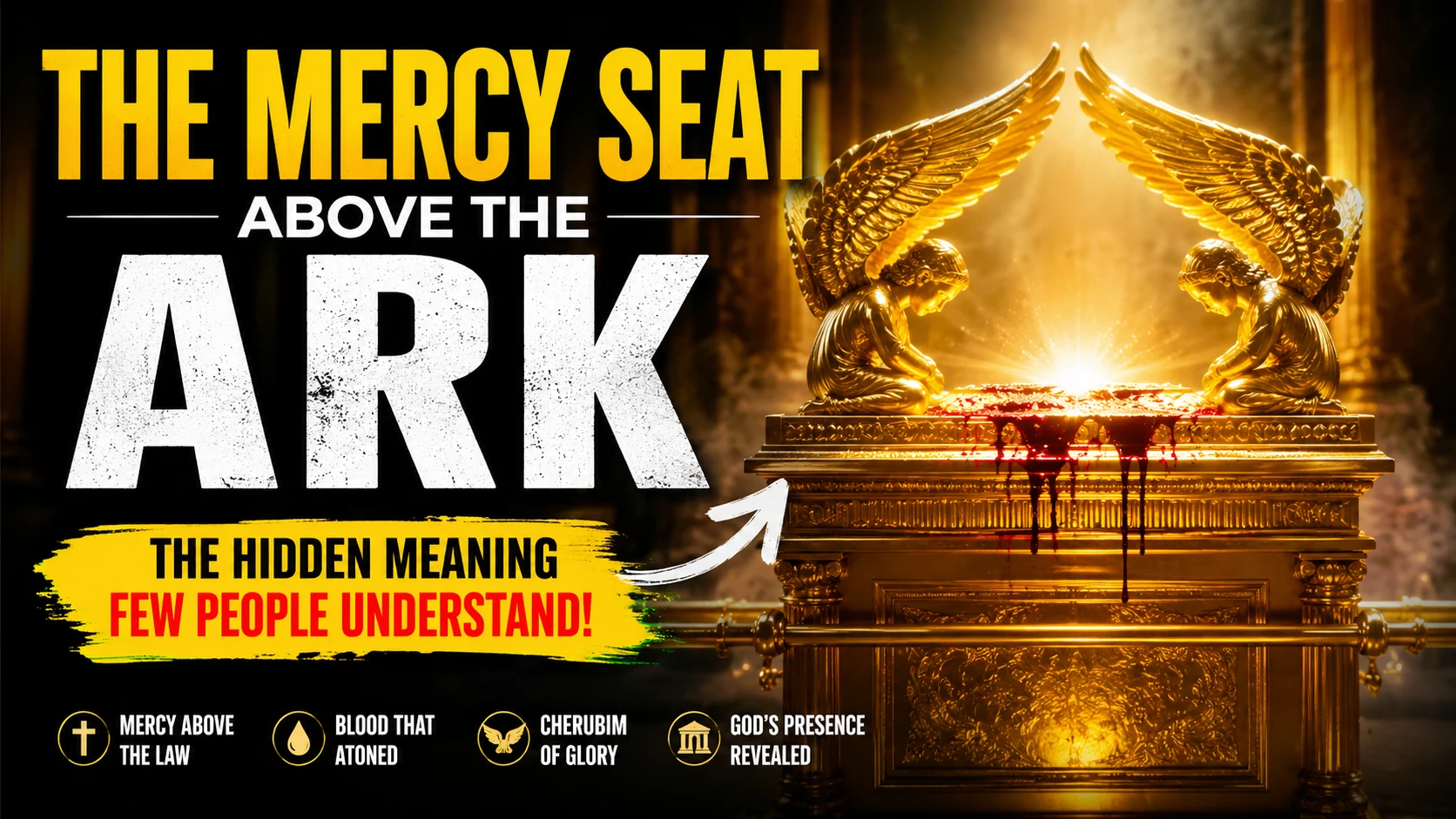

Behind the veil, inside the Holy of Holies, stood the ark of the covenant and above it rested the mercy seat. This was not merely a golden lid placed on sacred furniture. It was the holiest meeting point in Israel’s worship, the place where God promised to speak from between the cherubim, the place where atoning blood was sprinkled and the place where mercy stood directly over the testimony of the law.
The mercy seat carried its deepest meaning through its position. Inside the ark were the tablets of the covenant, the witness of God’s holy commandments and Israel’s covenant responsibility. The law testified to righteousness but it also exposed guilt. Above that testimony, God placed the mercy seat. This created one of the most powerful images in Scripture: mercy positioned above judgment, not because sin was ignored but because atonement was provided.
What the Mercy Seat Was
The mercy seat was the pure gold covering of the ark of the covenant. It was made with two cherubim of gold, hammered from the same piece, facing one another with wings stretched over the place of atonement. It was not separate from the theology of the ark. It belonged to the ark’s meaning and completed its witness.
The ark itself contained the covenant testimony, and other sacred items became associated with it in Israel’s memory, including the manna and Aaron’s rod that budded. These contents spoke of God’s law, provision, priestly authority and covenant dealings with His people. Yet the mercy seat above the ark showed that Israel’s hope did not rest on human obedience alone. The covenant people needed mercy over the testimony because the law revealed the holiness they had not perfectly kept.
Mercy Seat as the Ark’s Covering
The mercy seat did not stand beside the ark. It covered it. That detail matters deeply because the symbolism depends upon the relationship between the law inside and the mercy above.
Inside the ark rested the covenant testimony that exposed sin and covenant failure. Above it rested the place where sacrificial blood would be sprinkled. The structure itself preached theology. Israel’s relationship with God depended not only upon divine commandments but upon divine mercy answering human guilt.
Why Pure Gold Mattered
The mercy seat was made entirely of pure gold, unlike some tabernacle furnishings that combined wood and gold together. Gold throughout the sanctuary symbolized glory, holiness, kingship and heavenly splendor. The Holy of Holies was saturated with this imagery because it represented the dwelling place of God among His people.
Yet this golden throne-like covering would receive sacrificial blood. The contrast is striking. Divine glory and atoning blood met in the same sacred place. The mercy seat therefore held together beauty and sacrifice, holiness and reconciliation.
Hebrew Idea Behind “Mercy Seat”
The term often translated “mercy seat” is connected to the idea of atonement, covering or propitiation. It was not called mercy seat because God’s mercy was sentimental or casual. It was the place where sacrificial blood was brought to deal with sin before a holy God. Mercy, in this setting, was costly, covenantal and blood-marked.
This Hebrew background matters because it prevents a shallow reading of the symbol. The mercy seat was not merely a throne of kindness. It was an atonement covering. It stood over the law not to erase God’s righteousness but to show that sin could be covered only through the means God appointed.
Mercy was not mercy apart from justice; it was mercy given through satisfied atonement. Mercy did not cancel justice. Mercy answered justice through sacrifice.
Covering Rather Than Denial
The biblical idea of covering does not mean pretending sin never existed. The law remained inside the ark. The testimony was still there. God’s holiness was still real. What changed was that atonement blood stood between violated law and the sinner.
This is why the mercy seat becomes such a profound biblical image. God does not preserve covenant relationship by lowering righteousness. He preserves covenant relationship by providing atonement.
Cherubim and Guarded Holiness
The cherubim above the mercy seat add another layer of meaning. In Scripture, cherubim are connected with the guarded presence of God. After Adam and Eve were driven from Eden, cherubim guarded the way to the tree of life. In the tabernacle, cherubim imagery appeared again but now they overshadowed the place where atonement blood would be sprinkled.
This is spiritually profound. The same kind of heavenly imagery associated with guarded access now appears over the place where God provides covenant access. The cherubim did not make the mercy seat casual. Their presence intensified its holiness. They showed that no sinner could stroll into God’s presence on personal terms. Yet beneath their wings, God appointed a place where blood could speak for the guilty.
Cherubim at Eden’s Gate
The connection to Eden deepens the symbolism enormously. After humanity’s fall, cherubim stood guarding the way back into the presence associated with life and communion with God. Humanity could not simply return through desire alone. Sin had created separation.
Now, in the Holy of Holies, cherubim appear again but this time they overshadow the place of atonement. The imagery suggests that restored access to God comes through sacrifice rather than through human self-repair.
Wings Overshadowing the Blood
The cherubim faced inward toward the mercy seat itself. Their attention focused upon the place where blood would be sprinkled. Even heavenly holiness looked toward atonement.
This detail creates an atmosphere of sacred tension. The Holy of Holies was filled with symbols of divine glory but at the centre of that glory stood blood-marked mercy.
“There I Will Meet With You”
God declared that He would meet with Moses from above the mercy seat, from between the two cherubim. This statement transforms the mercy seat from a ritual object into the symbolic throne of God’s presence among His people.
The Meeting Place of Covenant Communion
Israel’s God was not distant from the camp. He chose to dwell among them, speak to them, guide them and maintain covenant relationship with them. Yet that meeting place was inseparable from atonement.
God did not meet Israel above uncovered law, exposed guilt, or human merit. He met them above the mercy seat. The place of communion was also the place of blood. This reveals a central biblical truth: fellowship with God is possible because mercy makes a way without denying holiness, much like [how God’s desire to dwell among His people shaped the entire purpose of the tabernacle in the wilderness — Why the Tabernacle Was Called the Dwelling Place of God].
Divine Presence Above the Mercy Seat
The mercy seat was therefore more than a ritual location. It symbolized the throne-presence of God among His covenant people. Scripture repeatedly describes the Lord as enthroned between the cherubim, reinforcing the royal imagery surrounding the ark and mercy seat together.
The throne of God among Israel was not separated from sacrifice. His reign over the covenant community included both holiness and mercy simultaneously.
Mercy Seat and the Day of Atonement
The Day of Atonement gave the mercy seat its most solemn function. Once a year, the high priest entered behind the veil with sacrificial blood. He did not enter casually, frequently or empty-handed. He entered with fear, obedience and blood because the Holy of Holies represented the concentrated holiness of God’s dwelling among Israel.
Blood Before the Mercy Seat
The blood was sprinkled upon and before the mercy seat to make atonement for the people. The law beneath the mercy seat testified against sin, while the blood above it testified that sacrifice had been made.
This was the dramatic centre of Israel’s yearly cleansing. The mercy seat became the place where the guilt of the covenant community was addressed before God.
Why Only the High Priest Could Enter
The restrictions surrounding the mercy seat emphasized the seriousness of divine holiness. Access remained limited under the old covenant system because the final solution to sin had not yet fully arrived.
The yearly entrance also created expectation. If sacrifice had to be repeated continually, then something greater was still needed. The mercy seat pointed beyond itself toward a fuller reconciliation still to come.
Mercy Above the Law
The placement of the mercy seat above the tablets of the law is one of the richest symbols in the tabernacle. The law was not evil. It was holy, righteous and good. Yet because of human sin, the law also became a witness against the people. It showed what God required and what Israel failed to keep.
The Law Was Not Removed
The mercy seat did not remove the law from the ark. It covered it. That distinction matters profoundly. God’s mercy does not pretend righteousness is unnecessary. Instead, mercy comes through atonement so that guilty people can remain in covenant relationship with a holy God.
The mercy seat teaches that grace is not God lowering His holiness. Grace is God providing atonement so sinners can be restored without His holiness being compromised.
Blood on Gold Between the Cherubim
The visual force of the mercy seat is almost overwhelming. Pure gold reflected the sacred beauty of God’s dwelling place. Cherubim stretched their wings over the throne-like covering. Then, on the appointed day, blood was placed there.
The most beautiful surface in Israel’s worship was marked with the cost of atonement.
This is the heart of the symbol. Mercy was glorious but it was not bloodless. The mercy seat was golden but the way of reconciliation came through sacrifice.
Mercy Seat as God’s Throne of Grace
The mercy seat functioned as the earthly throne-symbol of God among His covenant people. Scripture often speaks of the Lord as enthroned between the cherubim. This means the mercy seat was not only a covering over the ark but the place where divine kingship, holiness, mercy and covenant presence met.
A Holy Throne Opened Through Sacrifice
This royal imagery deepens the meaning. God’s throne among Israel was not established over human achievement but over atonement. The King who reigns in holiness also provides mercy for the people who cannot stand before Him in their own righteousness.
Later, when the New Testament speaks of approaching the throne of grace, the mercy seat imagery helps believers understand how confidence before God is possible. The throne is holy but grace has opened the way through sacrifice.
Mercy Seat and Christ
The mercy seat ultimately points to Jesus Christ. In the New Testament, the language of atonement and propitiation reaches its fullfillment in Him. Christ is the true meeting place between God and sinners because His blood accomplishes what the old covenant sacrifices only foreshadowed.
Christ as the True Place of Atonement
He is not only the priest who brings the offering; He is also the sacrifice and the place where mercy and justice meet. The mercy seat required blood before God’s presence. Christ offers His own blood.
The mercy seat covered the testimony of the law. Christ fullfills righteousness and bears the penalty of sin.
From Hidden Mercy Seat to Open Access
The mercy seat remained hidden behind the veil under the old covenant. Ordinary worshipers never saw it directly. Access remained restricted, guarded and mediated through priestly entrance.
When Christ died and the temple veil was torn, the symbolism entered its fullfillment. Access to God was opened through the finished work of Christ rather than through repeated sacrifices in an earthly sanctuary.
The hidden throne of mercy became the foundation of open reconciliation through the Son.
Why the Mercy Seat Still Matters
The mercy seat still matters because it teaches the shape of biblical mercy. Modern spirituality often speaks of mercy as if it means God simply overlooks sin. The mercy seat says something far deeper.
Holy Mercy Rather Than Cheap Grace
God’s mercy is holy mercy. It does not deny guilt. It provides atonement. It does not lower the seriousness of sin. It reveals the cost of reconciliation.
This is why the mercy seat remains so important for Christian faith. It keeps grace from becoming shallow and holiness from becoming hopeless.
The Presence Above the Blood
The law beneath the mercy seat shows that God’s righteousness stands. The blood on the mercy seat shows that God has made a way for the guilty. The presence above the mercy seat shows that His desire is not distance but restored communion.
The Gold Covering That Spoke of Blood
The mercy seat above the ark of the covenant means that God meets His people through atoning mercy. It was the golden covering above the law, the throne between the cherubim, the place of sprinkled blood and the sacred meeting point where holiness and mercy came together without either being diminished.
Inside the ark, the testimony declared what God required. Above the ark, the mercy seat declared what God provided. Between the cherubim, God promised to meet with His people.
On the Day of Atonement, blood touched gold and the covenant community saw in ritual form the truth that would one day be fulfilled in Christ. The holy God who could have left sinners under exposed judgment instead placed mercy above the testimony and made atonement the place where He would speak.
Frequently Asked Questions
Why was it called the mercy seat?
The mercy seat was called this because it was the place where God showed mercy through atonement. The Hebrew idea behind the term is connected to covering, propitiation and reconciliation through sacrificial blood.
What was inside the ark beneath the mercy seat?
Inside the ark were the tablets of the covenant and later references also connect the ark with manna and Aaron’s rod that budded. These items represented God’s law, provision and covenant authority.
Why was the mercy seat placed above the law?
The mercy seat stood above the law to symbolize that mercy covered the testimony against sin through atonement. The law exposed guilt, while the blood on the mercy seat pointed to reconciliation.
Why could only the high priest approach the mercy seat?
Only the high priest could enter the Holy of Holies because the mercy seat represented the concentrated holiness of God’s presence. Access required mediation, purification and sacrificial blood.
How does the mercy seat point to Jesus Christ?
Christians see the mercy seat as a prophetic picture of Jesus Christ because His blood provides true atonement and opens access to God. Jesus fullfills what the mercy seat symbolized under the old covenant.

1 thought on “The Mercy Seat Meaning Above the Ark of the Covenant”