
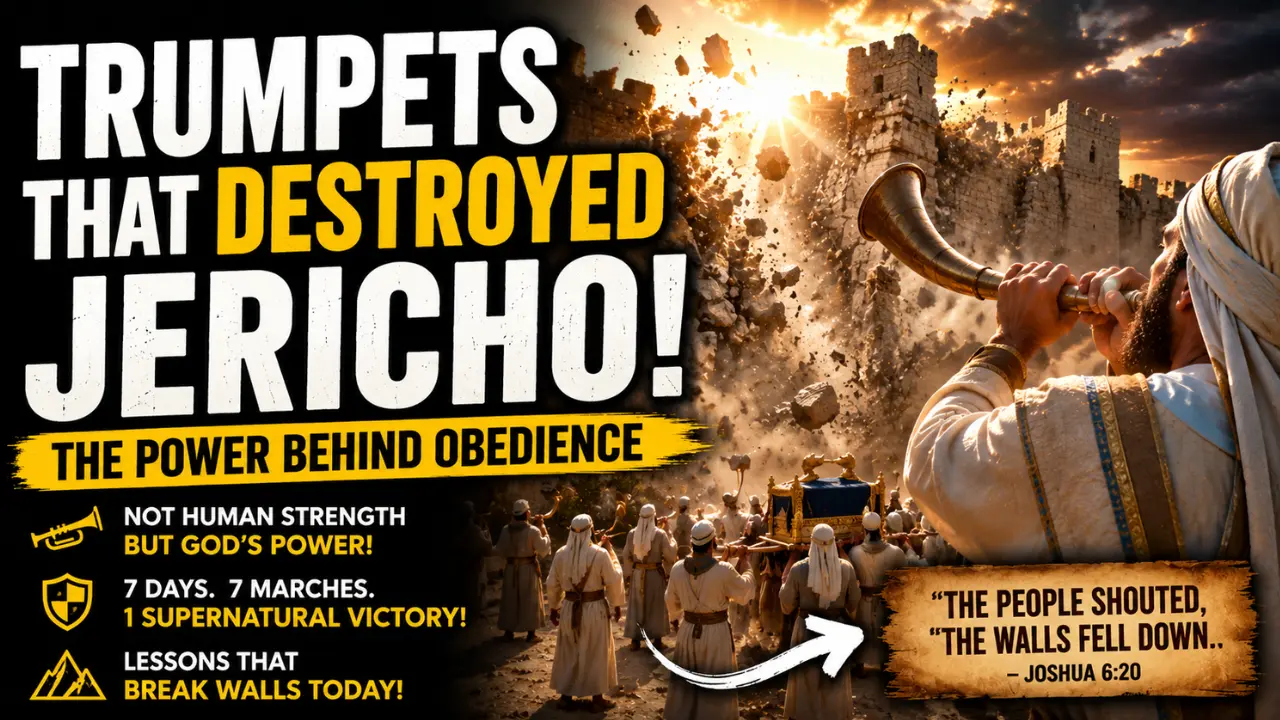

Among all the dramatic victories recorded in the Old Testament, the fall of Jericho remains one of the Bible’s most unforgettable displays of divine power, covenant faithfulness, unusual obedience and supernatural breakthrough. Massive fortified walls collapsed without conventional warfare, military siege equipment or strategic assault. No battering rams shattered the gates. No ladders climbed the walls. No swords forced the city into surrender through ordinary combat. Instead, priests carried trumpets, the people marched in silence and God gave victory through obedience to instructions that seemed completely illogical from a human perspective.
The story immediately stands apart from ordinary military narratives because everything about God’s strategy challenged natural reasoning. Human wisdom would have expected organized battle formations, aggressive tactics, visible strength and direct attack. Yet God commanded Israel to walk around the city repeatedly while priests sounded trumpets before the Ark of the Covenant. For six days the people marched once around Jericho in silence. On the seventh day they marched seven times. Then the trumpets sounded, the people shouted together and the walls collapsed suddenly before them.
The event was never merely about conquering a city. Jericho became one of Scripture’s deepest spiritual pictures of obedience, faith, divine timing, spiritual warfare, covenant trust, perseverance and dependence upon God’s authority rather than human strength. The trumpets themselves carried profound symbolic significance throughout biblical history because they announced divine movement, sacred assemblies, warfare, heavenly intervention, worship, warning, victory and moments when God acted powerfully among His people.
At Jericho, the trumpets became more than ceremonial instruments. They symbolized the authority and presence of God moving before Israel and revealed that spiritual victory ultimately depended upon trusting divine instruction even when the process appeared unreasonable, repetitive or ineffective according to ordinary understanding.
The story of Jericho therefore continues speaking powerfully because it reveals how God often works through patient obedience and faith-filled perseverance long before visible breakthrough appears.
Jericho Represented an Impossible Obstacle Standing Before God’s Promise
To understand the deeper symbolism of Jericho, it is important first to understand what the city represented both historically and spiritually. Jericho was not an insignificant village or weak settlement easily defeated through ordinary means. It was one of the strongest fortified cities in the region, surrounded by massive defensive walls designed to withstand invasion and intimidate enemies.
For Israel, Jericho stood directly between them and deeper entrance into the Promised Land. After years of wandering through the wilderness, the city became the first major barrier confronting them as they moved toward covenant fullfillment.
This immediately gave Jericho symbolic importance far beyond military conflict alone. The city represented intimidating resistance standing against God’s promises and human impossibility confronting divine purpose.
Israel Faced a Situation Beyond Human Ability
From a natural perspective, Israel faced overwhelming odds. Jericho’s walls symbolized strength, protection and military superiority. Humanly speaking, the city appeared nearly impossible to overcome through conventional means.
This pattern appears repeatedly throughout Scripture because God often allows His people to encounter situations where human ability proves insufficient. Again and again, biblical narratives place believers in circumstances where ordinary strength, wisdom, resources or strategy cannot produce victory independently.
The Red Sea crossing, Gideon’s reduced army, David standing before Goliath, Elijah confronting Baal’s prophets and Jericho’s collapse all reveal the same spiritual principle: God repeatedly demonstrates that divine power surpasses human limitation completely.
Human Strength Was Never Intended to Be the Ultimate Source of Victory
One of the deepest lessons within the Jericho narrative is that God intentionally removes opportunities for human pride and self-reliance. Had Israel conquered Jericho through overwhelming military force alone, people could easily have credited the victory entirely to human strategy and power.
Instead, God designed the process so that the outcome could only be explained through divine intervention. This theme closely reflects [how God receives glory through impossible victories — When God Wins Battles Beyond Human Strength].
This remains spiritually significant because human beings naturally prefer methods that increase feelings of control, predictability and visible strength. Yet Scripture repeatedly reveals that God sometimes works through weakness, limitation and unusual circumstances so that dependence upon Him becomes unmistakably necessary.
Jericho Became a Symbol of Spiritual Strongholds
Over time, Jericho also became symbolic of spiritual barriers, entrenched fear, intimidating opposition, impossible circumstances and obstacles standing against God’s purposes. The walls represented more than physical defence structures. They reflected every situation where visible reality appears stronger than faith itself. This symbolism connects naturally with [the meaning of spiritual strongholds in the Bible — What Are Spiritual Strongholds?].
Many believers later connected Jericho symbolically to moments where spiritual breakthrough seemed impossible according to natural reasoning. The story reminds readers that no obstacle remains greater than divine authority, even when circumstances appear immovable from a human perspective.
God’s Instructions Appeared Strange According to Human Logic
One of the most striking elements in the story is the unusual nature of God’s commands. From a military standpoint, the strategy made almost no practical sense. Instead of attacking the city directly, Israel was instructed to march around Jericho while priests carried trumpets before the Ark of the Covenant. The people themselves were told to remain silent during the process.
For six days they marched around the city once each day. On the seventh day they marched around it seven times before shouting together after the trumpet blast.
Everything about the strategy challenged ordinary expectations.
Divine Wisdom Often Contradicts Human Expectations
Human beings naturally prefer strategies that appear efficient, explainable, measurable and visibly effective. Yet throughout Scripture, God repeatedly worked through methods that seemed weak, foolish or irrational according to worldly understanding.
This pattern revealed an essential spiritual truth: victory would come through obedience and trust rather than human self-confidence.
Jericho forced Israel to decide whether they would trust God’s instructions even when they could not fully understand how the process would lead to victory.
Obedience Was Required Long Before Visible Results Appeared
For six days, nothing visibly changed. The walls remained standing. The city remained secure. No cracks appeared in the defences. No evidence suggested progress was occurring outwardly.
This aspect of the story carries deep spiritual significance because obedience often requires perseverance before visible breakthrough emerges.
Many people feel comfortable obeying God when immediate results appear quickly. Jericho revealed that genuine faith continues obeying even when circumstances seem unchanged and visible evidence remains absent, reinforcing [the spiritual importance of patient obedience — Why Obedience Matters Before Breakthrough].
Faith Continues Walking Even When Results Are Delayed
Every silent march around Jericho tested Israel’s trust. The people had to continue following God’s instructions despite seeing no visible indication that the walls were weakening.
The process exposed whether Israel truly trusted God’s word or merely trusted visible outcomes. Spiritually, this remains one of the story’s most powerful lessons because many breakthroughs require sustained obedience before results become visible, highlighting [walking by faith instead of sight — What It Means to Walk by Faith].
The Trumpets Carried Deep Spiritual Meaning Throughout Scripture
The trumpets used at Jericho were not random ceremonial details added merely for dramatic effect. Throughout biblical history, trumpets carried major symbolic importance connected to worship, divine movement, warfare, warning, sacred assemblies, covenant gatherings, coronations, prophetic announcements and heavenly intervention.
Whenever trumpets sounded in Scripture, they often signaled that something spiritually significant was unfolding.
Trumpets Announced Divine Activity and Heavenly Movement
At Mount Sinai, trumpet blasts accompanied the descent of God’s presence upon the mountain. Trumpets gathered Israel for sacred assemblies and worship. Trumpets signaled battle preparation and covenant moments. Prophetic visions later connected trumpet blasts to divine judgment and heavenly announcements in apocalyptic imagery.
The trumpet therefore became associated with God’s authority entering action visibly.
At Jericho, the priests carrying trumpets marched before the Ark of the Covenant, which symbolized God’s presence dwelling among His people. This arrangement communicated something deeply important: God Himself was leading the battle.
The victory would not ultimately come through military strength but through divine authority moving ahead of Israel.
Spiritual Warfare Requires Dependence Upon God’s Presence
Jericho’s imagery reveals that spiritual victory is not achieved merely through human effort, determination or strategy alone. God’s presence remained central to the breakthrough.
The trumpets symbolized heaven announcing divine movement before visible victory appeared.
This symbolism later influenced broader biblical understanding regarding spiritual warfare. True victory comes not through self-reliance but through alignment with God’s authority, presence and instruction.
The Sound of the Trumpets Declared Faith Before Fulfillment
The repeated trumpet blasts around Jericho announced confidence in God’s promise even before the walls collapsed visibly. The sound itself became prophetic, declaring divine authority over circumstances that still appeared unchanged outwardly.
Faith often speaks and acts before visible fullfillment arrives completely.
Silence Became Part of the Spiritual Lesson
One often overlooked detail within the Jericho narrative is the silence of the people during the marches. Israel was instructed not to shout, speak or cry out until the appointed moment arrived.
This silence carried deep spiritual significance.
Silence Required Discipline, Patience, and Trust
Human beings naturally want explanation, reaction, emotional release and visible action during difficult situations. Silence can feel uncomfortable because it forces patience and dependence rather than immediate expression.
At Jericho, silence became an act of disciplined trust.
Israel had to continue marching quietly without visible evidence that anything was changing. Their silence reflected restraint, focus and submission to God’s timing rather than emotional impulsiveness.
Silence Prevented Fear and Doubt From Dominating the Atmosphere
Had the people filled the marches with complaints, fear, speculation, criticism or human reasoning, the atmosphere of trust could easily have weakened.
The silence kept attention centred upon God’s instructions instead of human uncertainty.
Spiritually, this remains deeply relevant because many believers struggle during seasons where God’s process appears repetitive, slow or difficult to understand.
Some Breakthroughs Require Quiet Perseverance
Jericho reveals that not every spiritual battle is won through frantic activity or constant emotional reaction. Some victories require quiet endurance, patient obedience, and sustained trust before visible breakthrough emerges.
The silence itself became part of the preparation for victory.
The Number Seven Revealed Divine Timing and Completion
The repeated use of the number seven throughout the Jericho story is highly significant biblically. Seven priests carried trumpets. The people marched for seven days. On the seventh day they marched around the city seven times.
Throughout Scripture, seven consistently symbolizes completion, fullfillment, divine order and perfected timing.
Jericho Fell According to God’s Timing Rather Than Human Urgency
The repetition of seven emphasized that the breakthrough unfolded according to divine order rather than human impatience. Israel could not rush the process or force the timing independently.
The walls collapsed only after the completion of God’s instructions fully.
This revealed an important spiritual principle: obedience involves not only following God’s direction but also trusting His timing even when the process feels repetitive or delayed.
Waiting Often Becomes Part of Spiritual Formation
One of the hardest aspects of faith involves waiting while circumstances appear unchanged. Jericho forced Israel to continue obeying through repetition and delay before visible victory appeared.
Every march became another act of trust.
Spiritually, many believers experience similar seasons where obedience continues long before breakthrough becomes visible externally.
God Often Builds Faith Through Process Rather Than Instant Results
The repeated marches likely appeared unnecessary from a human perspective. Yet every step formed part of the process leading toward the miracle itself.
Scripture repeatedly reveals that God often develops perseverance, humility, patience and dependence through prolonged processes before final breakthrough arrives.
