
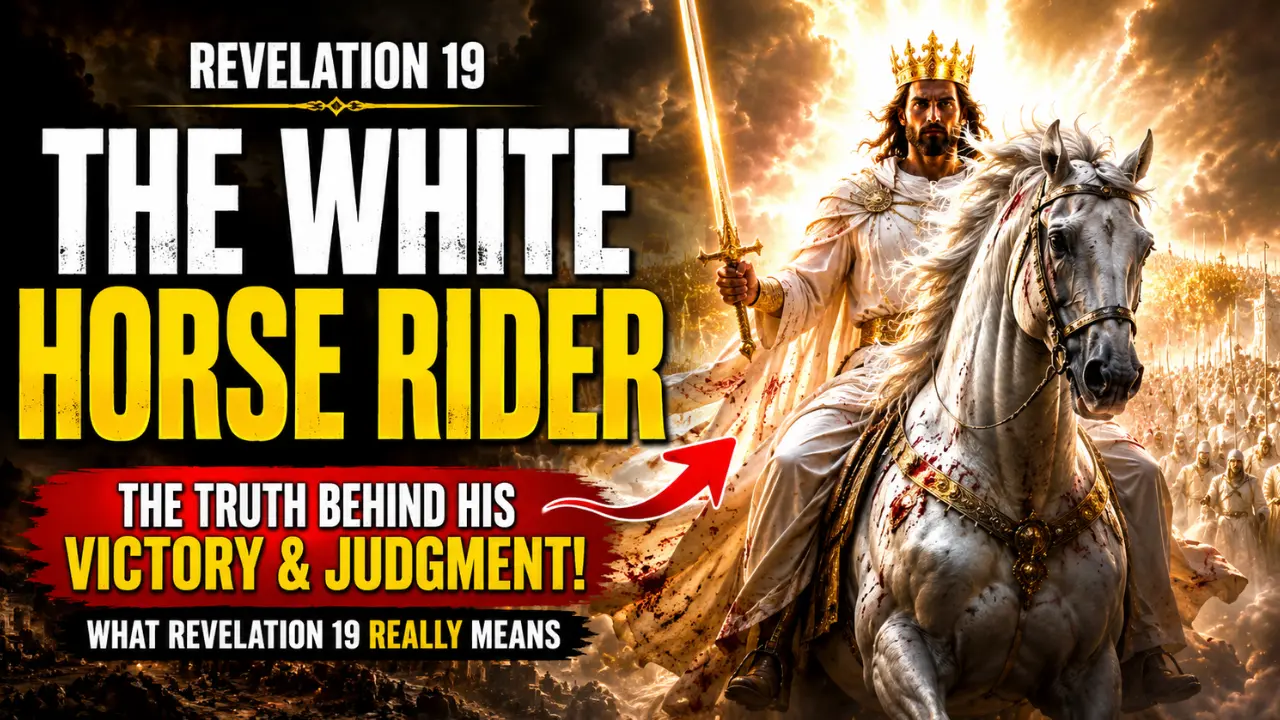

Among all the prophetic visions contained within the book of Revelation, few scenes are as majestic, intense, symbolically layered and theologically significant as the appearance of the white horse rider in Revelation chapter 19. The imagery feels overwhelming from the very beginning of the passage. Heaven suddenly opens. A rider emerges upon a white horse. His eyes blaze like fire. Countless crowns rest upon His head. A sharp sword proceeds from His mouth. Heavenly armies clothed in white linen follow behind Him. Written upon His robe and thigh is a title declaring Him to be “King of Kings and Lord of Lords.”
The scene is filled with power, authority, holiness, judgment, victory and divine glory. Yet despite its importance, Revelation 19 is often misunderstood because many readers approach it only through speculation about end-times warfare while overlooking the rich symbolic meaning woven into every detail of the vision. Revelation belongs to a form of biblical literature known as apocalyptic prophecy, which communicates spiritual realities through vivid symbolic imagery. The symbols are dramatic not because they are fictional but because they reveal realities too immense for ordinary language alone. This broader context is essential for understanding [how symbolic imagery functions in Revelation — How to Interpret the Book of Revelation Symbolically].
The white horse rider is not presented merely as a mysterious heavenly warrior entering battle. Revelation presents Him as the glorified Christ openly revealed in ultimate authority, final victory and righteous judgment. The passage represents the climactic unveiling of Christ as victorious king over every rebellious kingdom, spiritual power, corrupt empire, deceptive force and manifestation of evil opposing the kingdom of God.
Every symbol in the vision matters deeply. The white horse communicates victory and righteousness. The crowns reveal supreme authority. The sword from His mouth symbolizes the power of divine truth and judgment. The robe dipped in blood connects victory to sacrifice and redemption. The fiery eyes reveal perfect holiness and divine knowledge. The armies of heaven reveal participation in His triumph. Even the titles attached to Him unveil profound truths about His eternal identity and kingship, reinforcing [the biblical meaning of Jesus as King of Kings — Why Jesus Is Called King of Kings and Lord of Lords].
Revelation 19 Represents the Climactic Turning Point of the Book
The structure of Revelation gradually builds toward this moment. Earlier chapters reveal spiritual conflict, persecution, deception, cosmic judgment, corrupt earthly systems, beastly empires, false worship, suffering believers and escalating confrontation between the kingdom of God and forces aligned against divine authority. The book repeatedly exposes the temporary nature of worldly power while simultaneously revealing God’s sovereignty over history itself.
By the time Revelation 19 begins, Babylon has already fallen symbolically, representing the collapse of corrupt worldly systems opposed to God’s kingdom. Heaven rejoices because evil’s apparent dominance is finally ending. The appearance of the rider immediately after these events signals that the decisive moment of divine victory has arrived.
Heaven Opens Before the Rider Appears
John begins the vision by describing heaven opening before the rider emerges. This detail carries enormous symbolic weight throughout Revelation because opened heavens consistently represent divine revelation, heavenly authority and God intervening directly within human history. The rider does not arise from earthly political systems, military coalitions or human institutions. His authority originates entirely from heaven itself.
This distinction matters deeply because Revelation consistently contrasts temporary earthly authority with eternal divine authority. Throughout history, empires often appear invincible for seasons. Political powers rise, dominate nations, persecute truth and demand allegiance. Yet Revelation repeatedly reminds readers that earthly kingdoms remain temporary no matter how powerful they appear.
The opening of heaven symbolizes the moment when divine kingship fully confronts every rebellious earthly power openly and decisively, pointing toward [the final revelation of Christ’s eternal kingdom — The Second Coming of Christ in Revelation].
Earthly Power Is Ultimately Temporary
One of Revelation’s central themes is the temporary nature of human empires. Nations rise and collapse repeatedly throughout history. Political systems change. Rulers die. Kingdoms fragment. Even the most intimidating powers eventually disappear.
The rider’s appearance reveals that Christ’s authority stands entirely above the instability of earthly kingdoms. Revelation presents Him not merely as another ruler among rulers but as the eternal king whose authority transcends all human power structures completely.
This becomes especially important because Revelation was written partly to believers suffering under oppressive imperial systems. The vision reassured them that evil governments and corrupt powers would never possess ultimate authority permanently.
Divine Justice Arrives at the Appointed Time
Another important aspect of the vision is its timing. The rider appears after corruption, rebellion, deception and spiritual opposition have fully manifested themselves. Revelation repeatedly portrays evil systems becoming increasingly corrupt before final judgment arrives. This progression connects with [how Revelation describes the rise of end-times corruption — Signs of Spiritual Deception in Revelation].
This reflects a larger biblical pattern. God may allow rebellion temporarily but evil never escapes final accountability forever. Throughout Scripture, divine judgment often arrives at the appointed time rather than immediately, reinforcing [God’s patience and justice throughout biblical history — Why God Delays Judgment in the Bible].
The White Horse Symbolizes Victory, Purity and Righteous Conquest
One of the first details emphasized in the vision is the rider’s white horse. In ancient cultures, white horses carried strong associations with victory, conquest, triumph, kingship and royal celebration. Victorious rulers sometimes rode white horses during triumphal processions after military success.
Revelation deliberately uses this imagery while transforming its meaning spiritually.
White Symbolism Appears Repeatedly Throughout Revelation
Throughout the book of Revelation, white consistently symbolizes holiness, purity, righteousness, heavenly victory and spiritual cleansing. The redeemed wear white robes. White stones symbolize acceptance. Heavenly figures appear clothed in white garments. White repeatedly points toward divine righteousness rather than earthly corruption.
The rider’s white horse therefore communicates righteous victory rather than corrupt domination.
This distinction is essential because Revelation repeatedly contrasts Christ’s kingdom against oppressive earthly empires that conquered through violence, greed, deception, pride and exploitation. Christ’s conquest differs entirely from corrupt worldly power.
Christ’s Victory Is Perfectly Righteous
Human conquerors throughout history often established kingdoms through selfish ambition, oppression, fear, propaganda, cruelty and injustice. Revelation deliberately contrasts earthly conquest with Christ’s righteous authority. This contrast helps explain [the difference between earthly power and Christ’s kingdom — The Kingdom of God vs Earthly Kingdoms].
The rider upon the white horse does not symbolize corrupt imperial power. He represents holy kingship completely aligned with truth, justice, righteousness and divine authority.
Unlike sinful rulers, Christ’s victory is not driven by pride, greed or domination. His reign establishes perfect justice and eternal righteousness.
The Vision Reveals Christ as Victorious King
During His earthly ministry, Jesus frequently appeared in humility, suffering, servanthood and sacrificial love. Revelation 19 reveals another dimension of His identity. The suffering servant is now openly unveiled as victorious king.
The symbolism of the white horse announces triumph immediately. Heaven reveals Christ not as weak or defeated but as sovereign ruler whose authority ultimately overcomes every force opposing God’s kingdom, pointing toward [Christ’s final triumph in biblical prophecy — The Ultimate Victory of Jesus in Revelation].
The Rider Is Called “Faithful and True”
One of the rider’s first titles in Revelation 19 is “Faithful and True.” This description carries enormous theological depth throughout the book of Revelation and across Scripture itself.
Christ Remains Faithful Despite Human Unfaithfulness
Throughout biblical history, humanity repeatedly failed covenant faithfulness. Nations rebelled against God. Leaders pursued corruption. People embraced idolatry and injustice. Human promises repeatedly collapsed under sin and weakness.
Revelation presents Christ as the complete opposite of human instability. He remains perfectly faithful to every covenant promise, every prophetic declaration, every redemptive purpose and every aspect of God’s eternal plan.
This title reassures believers that Christ’s kingdom rests upon absolute reliability rather than human inconsistency.
Truth Defines His Nature and Authority
The title “True” means far more than simple honesty. In biblical thought, truth refers to ultimate reality fully aligned with God’s character and nature. Revelation repeatedly exposes deception throughout its visions. Beastly systems manipulate nations through lies. False prophets distort truth. Corrupt powers demand false worship. This ongoing conflict highlights [the role of deception in the book of Revelation — Spiritual Deception and False Worship in Revelation].
Christ stands in direct opposition to every form of deception.
His rule is completely grounded in perfect truth, complete righteousness and divine reality itself. Nothing false exists within His authority, reinforcing [Jesus as the embodiment of divine truth — What Did Jesus Mean by “I Am the Truth”?].
His Judgment Is Perfectly Just
Because the rider is faithful and true, His judgment is portrayed as perfectly righteous rather than corrupt or arbitrary. Human judgment often fails because human beings possess limited knowledge, hidden biases and imperfect motives. Christ judges with complete understanding and perfect holiness.
Revelation therefore presents His authority not as abusive power but as perfectly righteous kingship.
His Eyes Like Fire Reveal Holiness and Perfect Knowledge
John next describes the rider’s eyes as flames of fire. This imagery appears earlier in Revelation in descriptions of the glorified Christ and carries multiple layers of meaning simultaneously.
Fire Symbolizes Divine Holiness Throughout Scripture
Throughout the Bible, fire consistently symbolizes God’s holiness, glory, purity, authority and active presence. Mount Sinai burned with fire when God descended upon it. The burning bush revealed divine presence through fire. Heavenly visions surrounding God’s throne frequently contain fiery imagery.
The rider’s fiery eyes therefore reveal divine holiness visibly.
Nothing corrupt can remain hidden before Him.
His Vision Penetrates Beyond Appearances
Fiery eyes symbolize perfect discernment and complete knowledge. Human beings often judge based upon outward appearances while remaining unable to see motives, hidden corruption, deception or spiritual reality fully.
The rider sees everything perfectly.
His vision penetrates beyond surface appearances into the true condition of every heart, power, kingdom and spiritual reality.
Evil Cannot Hide Before Divine Holiness
Throughout Revelation, deceptive systems survive partly through illusion, propaganda, manipulation and false appearances. Yet nothing deceives the rider.
His fiery eyes symbolize the complete exposure of every hidden reality before divine holiness and truth.
The Many Crowns Reveal Supreme Authority
John describes the rider wearing many crowns upon His head. This imagery sharply contrasts earlier symbolic figures in Revelation who possessed limited crowns representing temporary authority. The contrast emphasizes [the difference between temporary worldly power and Christ’s eternal authority — Earthly Crowns vs Heavenly Authority in Revelation].
The Crowns Symbolize Universal Kingship
Ancient crowns represented authority, rulership, sovereignty and conquest. The rider wearing many crowns symbolizes supreme kingship over every nation, ruler, kingdom, authority and spiritual power.
No rival power ultimately stands equal to Him.
Revelation repeatedly reveals earthly rulers claiming absolute authority temporarily. The rider’s many crowns expose the emptiness of those claims.
Christ Possesses Eternal Sovereignty
Human empires eventually collapse under corruption, weakness, violence or time itself. Even the strongest political systems disappear eventually.
The rider’s authority differs because His kingdom is eternal, unshakable and absolute.
His many crowns symbolize authority extending beyond history itself into everlasting dominion, revealing [the eternal reign of Christ in biblical prophecy — The Everlasting Kingdom of Jesus Christ].
Heaven Reveals the True King of Creation
The imagery communicates that Christ’s authority is not symbolic exaggeration but ultimate reality. Revelation unveils Him as ruler over heaven, earth, nations, history, spiritual powers and creation itself.
The rider is not simply another participant within history. He is the sovereign Lord over history entirely.
