
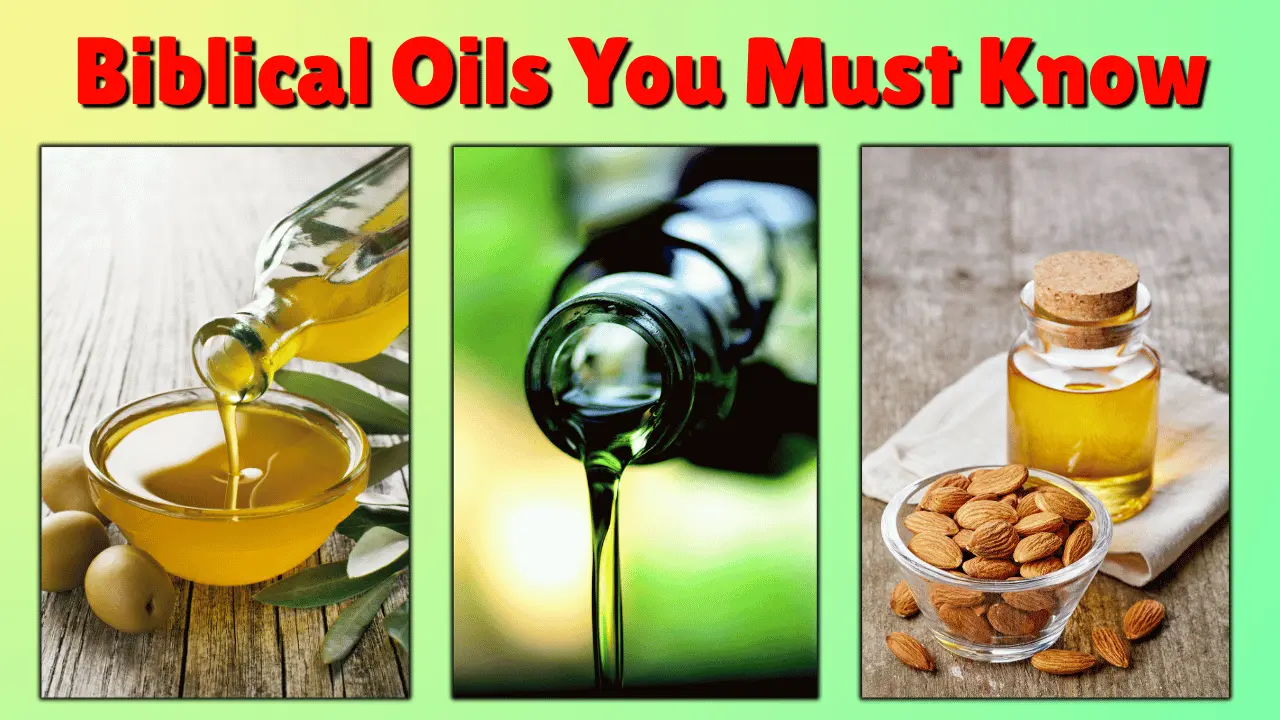

Oil appears throughout the Bible in places that can seem completely unrelated. It keeps lamps burning, accompanies offerings, marks priests and kings as set apart, refreshes guests, appears in wound care, and becomes part of some of Scripture’s most memorable acts of devotion.
But there is an important distinction modern readers can easily miss. “Biblical oils” is a useful modern umbrella term, but not everything commonly placed under that label was literally an oil. Olive oil was a true pressed oil. Frankincense and myrrh were aromatic resins. Cinnamon and cassia were spices. Cedar was wood, while hyssop was a plant used in cleansing contexts. Nard was an expensive aromatic perfume.
Together, however, these substances open a window into the physical world of the Bible: agriculture, perfume, long-distance trade, hospitality, worship, burial, cleansing and consecration.
Understanding them requires separating three things that are often blended together today: what the substance actually was, how Scripture uses it, and the spiritual meaning later Jewish or Christian interpretation has associated with it.
Biblical Oils Quick-Reference Guide
| Biblical oil or aromatic | Important biblical context | Biblical or traditional association | Historical or modern use |
|---|---|---|---|
| Olive Oil | Exodus 27:20 | Light, provision, blessing, consecration | Food, lamps, skin care, carrier oil |
| Frankincense | Matthew 2:11 | Worship, sacred offering; traditionally connected with Christ’s divinity | Incense, perfume, fragrance |
| Myrrh | John 19:39 | Burial, mortality, suffering, costly fragrance | Perfume and aromatic preparations |
| Spikenard/Nard | John 12:3 | Costly devotion and extraordinary honor | Luxury fragrance |
| Cinnamon | Exodus 30:23 | Sacred fragrance and consecration | Spice and perfume ingredient |
| Cassia | Exodus 30:24; Psalm 45:8 | Consecration, royal fragrance and joy | Spice and aromatic preparation |
| Cedarwood | Leviticus 14:4 | Cleansing, restoration; elsewhere associated with strength and durability | Wood, ritual use, fragrance |
| Hyssop | Psalm 51:7 | Cleansing, purification and repentance | Ritual and traditional herbal use |
The table gives the broad picture, but these substances make much more sense when placed back into the world in which biblical people encountered them.
How Oils Shaped the Ancient Near East
The Olive Oil Backbone
Olive oil was not a minor luxury in ancient Israel. It was one of the most versatile products a household could possess.
People used olive oil in food preparation and lamps, as well as for grooming and other practical purposes. It also entered sacred life through offerings, anointing and the maintenance of the sanctuary.
Exodus 27:20 calls for clear oil from beaten olives for the lamps associated with the Tabernacle. That small instruction reveals how closely everyday agriculture and worship were connected. Something grown from the land could provide ordinary household light and also burn in sacred space.
Olive oil was also economically important. Biblical descriptions of agricultural abundance regularly place oil alongside products such as grain and wine. A healthy supply represented more than convenience; it suggested a functioning harvest, food security and provision.
This practical importance helps explain why oil could carry such rich symbolism without needing to be mysterious. People already knew its value.
The Ancient Spice Routes
Other biblical aromatics were far less ordinary.
Frankincense and myrrh came from resin-producing trees associated especially with Arabia and northeastern Africa. These materials moved through long-distance trading systems before reaching consumers farther north.
Spikenard came from still farther east and was prized as a luxury fragrance.
That background matters when reading John 12. Mary does not merely place pleasant-smelling oil on Jesus’ feet. She uses pure nard so valuable that Judas evaluates it at 300 denarii.
A denarius could represent roughly a day’s wage for a laborer in New Testament comparisons, so the amount involved was extraordinary. The financial cost is part of the force of the scene.
Fragrance in Scripture can therefore communicate wealth, sacrifice and honor as well as scent.
Ancient Aromatic Oils Were Not Modern Essential Oils
Modern bottles labeled frankincense essential oil, myrrh essential oil or cedarwood essential oil can easily shape the way we imagine biblical references.
That picture is misleading.
Ancient perfumers had methods for crushing, soaking, heating and combining aromatic materials with oils or fats. Olive oil could serve as a carrier for fragrant substances. Perfumes and aromatic preparations therefore existed, but they were not automatically equivalent to today’s highly concentrated commercial essential oils.
This distinction becomes especially important when discussing Exodus 30. The sacred anointing preparation involved olive oil and specific aromatics blended for a particular religious purpose.
For a fuller comparison, see our guide to biblical oils versus modern essential oils.
Types and Meanings of Biblical Oils
Olive Oil: Light, Provision and Consecration
Olive oil is the foundation of any discussion about oil in Scripture because it belonged to so many areas of life.
It provided food and light. It could accompany offerings. It was used in grooming and hospitality. Most importantly for biblical symbolism, oil could be used in anointing.
Kings and priests were among those anointed for particular roles. Because anointing marked someone as chosen or set apart, Christian interpretation has often connected oil with the work of the Holy Spirit.
That connection should be handled carefully. Scripture does not establish a rule that every appearance of olive oil automatically represents the Holy Spirit.
Depending on its context, olive oil can instead suggest provision, abundance, joy, light, honor or consecration.
Frankincense and Myrrh: Worship, Mortality and the Gifts to Jesus
Frankincense and myrrh are often called biblical oils today, but both are more accurately described as aromatic resins.
Frankincense had an important place in sacred fragrance and offerings. Its association with incense naturally connected it with worship, and biblical imagery elsewhere compares prayer with incense rising before God.
Matthew 2:11 also places frankincense among the gifts presented to Jesus by the Magi. Christian tradition later interpreted the gift as especially appropriate to Christ’s divine identity, although Matthew itself does not explicitly assign a symbolic definition to each gift.
For a deeper treatment of that symbolism, see the spiritual significance of frankincense in the Bible.
Myrrh appears in a wider range of settings.
It was valued as fragrance and appears in the sacred mixture of Exodus 30. It also becomes closely associated with suffering and death in the Gospel narrative. John 19:39 describes Nicodemus bringing myrrh and aloes for Jesus’ burial.
For Christian readers, myrrh can therefore carry associations of mortality, suffering and sacrifice, but those meanings arise from its biblical contexts rather than from a fixed spiritual property supposedly contained inside the resin.
Spikenard: The Fragrance of Costly Devotion
Spikenard, or nard, gives us one of the Bible’s clearest examples of fragrance expressing extraordinary devotion.
John 12:3 describes Mary taking costly pure nard and anointing Jesus’ feet. The house fills with its fragrance.
The cost immediately becomes part of the story.
Judas objects that the perfume could have been sold for 300 denarii. Whatever his true motive, his complaint allows the reader to understand the scale of Mary’s action.
She is not giving Jesus something convenient or inexpensive.
That is why nard has become such a powerful Christian picture of costly devotion. The meaning lies in the act: something genuinely precious is poured out in honor of Christ without reducing devotion to a calculation of financial efficiency.
Cinnamon and Cassia: The Sacred Fragrance of Exodus 30
Cinnamon and cassia belong in any serious explanation of biblical aromatics because both appear in the Holy Anointing Oil described in Exodus 30.
The passage names myrrh, fragrant cinnamon, fragrant calamus, cassia and olive oil.
Within this particular context, the strongest meaning is consecration. The preparation was associated with setting apart the Tabernacle, sacred objects, Aaron and his sons for holy service.
Cassia also appears in Psalm 45:8 among the fragrances surrounding a royal scene, giving it another biblical association with beauty, celebration and royalty.
It is tempting to assign highly specific meanings to each ingredient—such as claiming cassia always means humility or cinnamon always means divine passion—but Scripture itself does not provide such a symbolic dictionary.
The sacred mixture as a whole is much clearer: it belonged to something set apart.
For the exact proportions, all five ingredients, and the restrictions surrounding the sacred mixture, see the five ingredients of the anointing oil in Exodus 30.
Cedarwood and Hyssop: Cleansing and Restoration
Cedarwood and hyssop appear together in the cleansing instructions of Leviticus 14.
Cedar carried wider cultural associations because cedar timber was valued for durability and major construction. Elsewhere in Scripture, cedar imagery can suggest greatness, strength, beauty or even pride depending on the passage.
But Leviticus 14 gives us a more specific context: cleansing.
Hyssop has an especially clear connection with purification. That background gives emotional force to David’s plea in Psalm 51:7: “Purge me with hyssop, and I shall be clean.”
Here the physical language of cleansing becomes a spiritual request for forgiveness and restoration.
The exact botanical identification of biblical “hyssop” has been debated, so it should not automatically be treated as identical to every modern product marketed as hyssop essential oil.
The biblical emphasis is clearer than the botanical question: cleansing, repentance and restoration.
Practical Uses: Ancient Wisdom to Modern Lives
Physical Healing and First Aid
Oil appears in contexts of physical care as well as worship.
In Jesus’ parable of the Good Samaritan, the Samaritan pours oil and wine onto the injured man’s wounds before bandaging him. Whatever medical assumptions existed in the ancient world, the important narrative point is practical compassion: he does not merely feel pity but treats the injured man with resources available to him.
That passage should not be turned into a claim that biblical aromatics function as modern antibiotics or that essential oils can replace medical treatment.
The safest modern lesson is simpler. Oils belonged to the ancient world of bodily care, and Scripture occasionally preserves glimpses of that ordinary practical use.
Spiritual Grounding, Prayer and Meditation
Fragrance can create powerful associations.
Someone today may find that the earthy scent of frankincense or cedar helps create a quiet environment for prayer, Scripture reading or meditation on biblical themes.
That is very different from claiming the fragrance has spiritual power.
The Bible does not teach that using a particular aroma causes God to hear a prayer more clearly, produces the Holy Spirit’s presence or guarantees a spiritual result.
Fragrance may shape an environment. Faith remains directed toward God, not toward the substance.
For the wider ceremonial context, see how oil was used in biblical worship.
Skincare and Everyday Use
The ordinary use of oils is one of the easiest connections between ancient and modern life to understand.
Oil could help soften skin and form part of personal grooming in hot, dry environments. Aromatic oils and perfumes also combined bodily care with fragrance.
Modern olive oil and properly formulated cosmetic products continue some of those broad purposes.
But similarity of use does not prove every health claim attached to a modern essential oil. Statements about curing disease, strengthening immunity, repairing cells or treating medical conditions need modern scientific evidence; they cannot be established simply because a plant or aromatic substance appears in the Bible.
Readers curious about how ancient people actually prepared aromatic oils can also see the step-by-step biblical oil-making process.
Frequently Asked Questions
What was the most important oil in Biblical times?
Olive oil was by far the most important. It was essential for cooking, lighting lamps, personal care and religious rituals. Its constant presence in daily life made it a natural symbol of provision, stability and blessing throughout Scripture.
How was oil used in religious practices?
Oil played a central role in rituals, especially in Anointing. It was poured over individuals such as kings and priests to mark them as chosen and set apart. It was also used to consecrate objects and spaces connected to worship, giving them a distinct sacred identity.
Why does oil still matter in religious traditions today?
Oil continues to be used in many traditions as a symbol of blessing, healing and dedication. Its meaning has been carried forward from Biblical times, even if the context has changed.
Why was olive oil used as the base for most Biblical oils?
Olive oil was widely available and versatile. It had a stable composition, a long shelf life and could easily absorb fragrances when mixed with other ingredients. These qualities made it ideal as a base for both practical and sacred uses.
Were oils expensive in Biblical times?
The cost of oil varied depending on the type. Olive oil was common enough to be used daily, although it still held value. In contrast oils like Spikenard oil and aromatic substances such as Frankincense oil were significantly more expensive due to their rarity and the distance they travelled.

8 thoughts on “Biblical Oils Explained: Types, Meanings, Uses and Historical Context”