
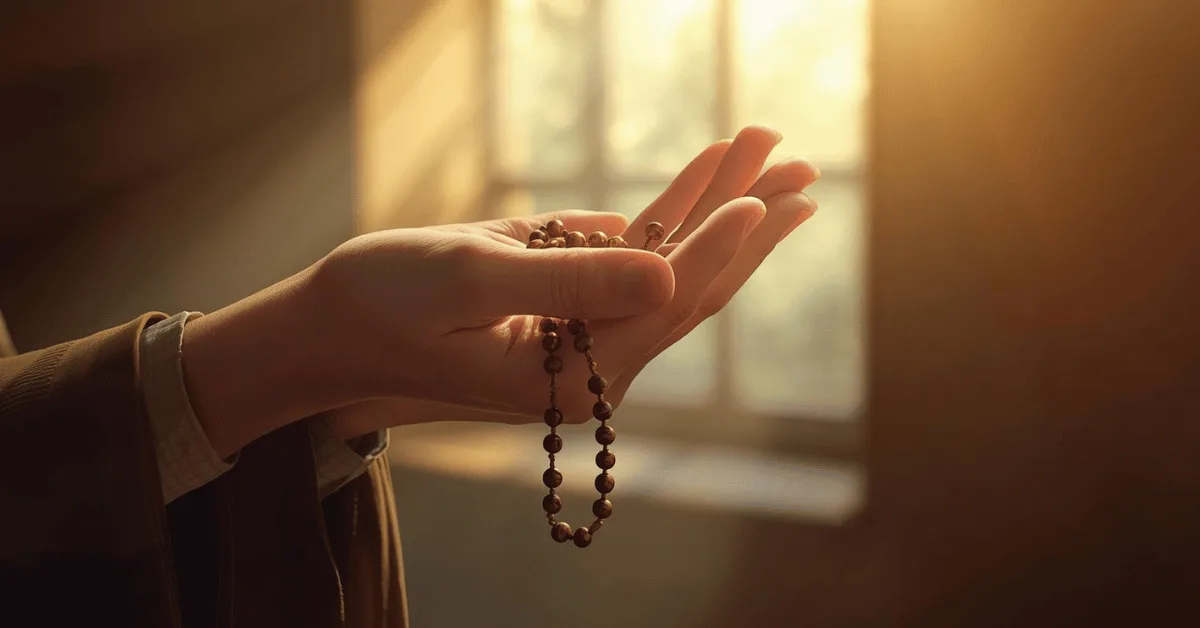

Daily Catholic habits build stronger faith by training the heart to return to God through prayer, Scripture, repentance, gratitude, charity, and sacramental awareness. Faith usually grows through repeated obedience and grace-filled formation, not through occasional emotion alone.
A stronger Catholic faith is built when small daily practices keep Christ at the centre of ordinary life. These habits do not replace grace, the sacraments, or the life of the Church. They help a believer respond to God more faithfully, notice sin more honestly, love others more sincerely, and live each day with deeper spiritual attention.
Many Catholics want stronger faith, but they often imagine that growth must come through a dramatic experience, a powerful retreat, or a sudden emotional renewal. Those moments can be meaningful, but the ordinary path of Catholic growth is often quieter. Faith becomes stronger when the same heart returns to God every morning, listens to His Word, prays with attention, examines conscience, stays close to the Eucharist, learns from Mary, and practices love in visible ways.
Catholic Faith Grows Through Daily Formation
Catholic faith is not strengthened only by powerful religious moments. A moving homily, a retreat, a holy season, or a time of deep emotion may awaken the soul, but lasting faith needs daily formation. Without repeated habits, inspiration can fade quickly when ordinary pressures return.
A Catholic may attend Mass, pray during crisis, or feel deeply moved during a special devotion, but stronger faith is built when devotion becomes part of daily life. The soul is shaped by what it returns to again and again. Prayer forms attention, Scripture forms thought, repentance forms honesty, and charity forms love.
Daily Catholic habits matter because they train the believer to remember God before the world becomes loud. They help faith move from church moments into home, work, family, decisions, temptations, and responsibilities. This is where faith becomes more than belief in the mind. It becomes a way of living before God.
This does not mean Catholic life is only about discipline. Grace comes first, and every good spiritual habit is a response to grace. The purpose of these habits is not to earn God’s love, but to live more openly before Him and allow His grace to shape the heart over time.
Also Read: 7 Truths About Salvation That Shape Christian Faith
Habit 1: Begin the Day With a Morning Offering
The morning offering is one of the simplest Catholic habits, but it can shape the whole day. Before messages, responsibilities, worries, and distractions take over, the believer places the day before God. This habit teaches the soul that life does not begin with pressure, fear, or personal control. It begins with surrender.
A morning offering turns ordinary duties into something consciously offered to the Lord. Work, study, family care, suffering, decisions, conversations, and even small inconveniences can be placed before God. This helps the Catholic remember that faith is not limited to church time. The whole day belongs to God.
This habit is especially helpful because many people begin the day in a reactive state. They wake up and immediately enter noise, news, tasks, or anxiety. A morning offering interrupts that pattern and gives the day a spiritual direction before the mind becomes scattered.
A simple morning offering can be short and sincere:
Lord, I offer You this day, my thoughts, words, work, joys, struggles, and choices. Help me live today with faith, love, and obedience. Amen.
The strength of this prayer is not in its length, but in its intention. It reminds the believer that every part of the day can become a place of faithfulness. Even when the day becomes difficult, the heart has already made an act of surrender to God.
Habit 2: Spend Time in Scripture, Even Briefly
Many Catholics struggle with Scripture because they imagine Bible reading must be long, complicated, or perfectly structured to be meaningful. This often leads to discouragement. A daily habit of Scripture does not have to begin with long chapters or intense study. It can begin with a Gospel passage, a Psalm, the daily Mass readings, or a short portion read slowly with attention.
The purpose of daily Scripture is not speed or quantity. The purpose is to allow God’s Word to correct the mind, strengthen faith, and guide the heart. A few verses read prayerfully can be more spiritually useful than many chapters rushed without attention.
For Catholics, Scripture reading should deepen love for Christ and strengthen understanding of prayer, mercy, sin, virtue, repentance, and discipleship. The Bible is not merely religious information. It forms the way the believer sees God, the soul, temptation, suffering, obedience, and eternal life.
A simple Catholic approach to Scripture can include three steps. First, read the passage slowly. Second, notice what it reveals about God, the human heart, or the life of faith. Third, ask how that truth should shape the day.
This habit also protects faith from becoming vague. A person may speak often about spirituality, but Scripture gives faith substance and direction. It brings the heart back to Christ’s words, God’s promises, the call to holiness, and the reality of grace.
Habit 3: Pray With Attention, Not Only Repetition
Catholic prayer often includes repeated prayers such as the Our Father, the Hail Mary, the Rosary, the Divine Mercy Chaplet, and other traditional devotions. Repetition itself is not the problem. In Catholic spirituality, repeated prayer can help the heart meditate, remain steady, and return to God when the mind is restless.
The danger is not repetition, but absence. A person can pray many words while the mind and heart remain far from God. A stronger faith grows when prayer becomes sincere, humble, and attentive, even when it is simple.
Attentive prayer means the believer is not merely finishing a religious task. The heart is actually turning toward God. This can happen through traditional prayers, silent prayer, spontaneous prayer, the Rosary, or a quiet moment of asking for mercy and guidance.
For example, when praying the Our Father, the believer can slow down enough to mean the words. “Thy will be done” becomes an act of surrender. “Give us this day our daily bread” becomes an act of dependence. “Forgive us our trespasses” becomes an honest request for mercy and a reminder to forgive others.
The Rosary also becomes deeper when it is prayed with attention. It is not simply a chain of repeated words. It is a meditation on the life of Christ through the eyes of faith. When the heart is attentive, repeated prayer can become a school of patience, humility, and love.
A daily habit of prayer does not need to be impressive. It needs to be real. Five minutes of sincere prayer can begin to change the tone of the heart, especially when practiced faithfully over time.
Habit 4: Make a Daily Examination of Conscience
A daily examination of conscience is one of the most spiritually mature Catholic habits because it brings honesty into the life of faith. It helps the believer review the day before God instead of living blindly from one day to the next. Without this kind of reflection, repeated sins, careless speech, pride, resentment, impurity, and selfish habits can remain unnoticed.
Examination of conscience is not meant to create constant fear or self-hatred. It is meant to increase repentance, gratitude, humility, and spiritual awareness. The believer looks at the day in the presence of God, trusting His mercy while refusing to hide from the truth.
This habit helps faith become honest rather than shallow. A person may know many prayers and attend religious services, but without self-examination, the heart can remain unchanged. Catholic faith grows stronger when the believer learns to recognize both grace received and sin that needs confession.
Helpful questions for a daily examination include:
- Where did I receive God’s grace today?
- Where did I fail in love, patience, purity, humility, or truth?
- What sin should I confess and turn from?
- Where is God inviting me to grow tomorrow?
This practice also prepares the heart for the sacrament of confession. Instead of arriving at confession with a vague sense of failure, the believer becomes more aware of patterns that need healing. Over time, examination of conscience makes repentance more specific and gratitude more sincere.
A good examination should end with trust in God’s mercy. The point is not to remain trapped in guilt, but to return to the Lord with honesty. Stronger faith is formed when the believer can say, “Lord, this is where I failed, this is where I need grace, and this is where I want to grow.”
Habit 5: Stay Close to the Eucharistic Life of the Church
The Eucharist is central to Catholic life, but not every Catholic can attend daily Mass or receive the Eucharist every day. Because of work, distance, health, family responsibilities, or parish schedules, daily Mass may not be possible for everyone. Still, Catholics can build a daily Eucharistic mindset even when they cannot attend Mass each day.
A Eucharistic mindset means remembering Christ’s sacrifice, desiring deeper communion with Him, attending Mass faithfully, and allowing the reality of the Eucharist to shape daily life. It keeps the believer aware that Catholic faith is not only private devotion. It is rooted in Christ, His sacrifice, His presence, and the worshiping life of the Church.
For Catholics who can attend daily Mass, it can become a powerful habit of spiritual formation. Daily Mass places the believer under the rhythm of prayer, Scripture, sacrifice, and communion with Christ. It can strengthen faith by drawing the soul repeatedly into the heart of the Church’s worship.
For those who cannot attend daily Mass, reverence for the Eucharist can still shape the day. A person can make a spiritual communion when appropriate, pause in gratitude for Christ’s presence, prepare more intentionally for Sunday Mass, or visit a church for prayer when possible. The key is to keep the Eucharistic life of the Church close to the heart, not distant from ordinary life.
This habit also protects Catholic faith from becoming only emotional or individualistic. The Eucharist reminds the believer that faith is received, nourished, and lived within the Body of Christ. A stronger Catholic life remains connected to the sacramental life of the Church, even in the middle of daily responsibilities.
Habit 6: Practice Devotion to Mary Without Losing Sight of Christ
Catholic devotion to Mary should always lead the believer toward deeper obedience to Christ. Mary is not the center of Catholic faith; Christ is. But Mary holds an important place in Catholic spirituality because her life shows faith, humility, surrender, purity, and closeness to Jesus.
Daily Marian devotion can include praying part of the Rosary, asking for Mary’s intercession, reflecting on her yes to God, or imitating her humility in ordinary situations. The spiritual purpose is not empty ritual. It is to learn how to trust God more fully and follow Christ more faithfully.
Mary’s faith was not passive. She listened, surrendered, endured, pondered, and remained close to Jesus. For Catholics, this makes her a powerful example of discipleship. Her life teaches that faith is not only speaking religious words, but receiving God’s will with humility and obedience.
A balanced Marian devotion does not distract from Christ. It deepens love for Him. When a Catholic prays the Rosary with attention, the mysteries lead the heart through the life, suffering, death, and glory of Jesus. Mary’s role is understood in relation to Christ, not apart from Him.
This habit can be especially helpful for Catholics who struggle with pride, impatience, or spiritual self-reliance. Mary’s example teaches quiet strength, surrender, and trust. Over time, daily Marian devotion can help the believer become more humble before God and more faithful in ordinary obedience.
Habit 7: Do One Concrete Act of Charity Each Day
A stronger Catholic faith must become visible through love. If faith remains only private devotion, it has not fully shaped the way a person lives. Daily charity helps faith move from prayer into action, from belief into service, and from devotion into love for neighbor.
A daily act of charity does not have to be dramatic. It may be forgiving someone, helping at home, speaking gently, checking on a lonely person, giving quietly, refusing gossip, encouraging someone who feels discouraged, or serving without seeking attention. Small acts matter because they train the heart away from selfishness.
This habit is deeply practical because daily life gives many chances to practice love. Family tensions, workplace pressure, online arguments, irritation, impatience, and hidden resentment all reveal whether faith is forming the heart. Charity turns ordinary moments into opportunities for grace.
Catholic faith is not only about avoiding sin. It is also about growing in love. A person may avoid obvious wrongdoing but still remain cold, proud, harsh, or indifferent. Daily charity helps the believer practice mercy, patience, generosity, and humility in real situations.
One concrete act of charity each day can slowly change the soul’s instincts. The believer begins to notice needs more quickly, speak more carefully, forgive more willingly, and serve more quietly. This is one of the clearest signs that faith is becoming stronger over time.
Also Read: God’s Covenant and God’s Promise Explained
7 Daily Catholic Habits at a Glance
These seven habits work together because each one forms a different part of the spiritual life. Morning offering gives the day to God. Scripture forms the mind. Prayer turns the heart toward God. Examination of conscience builds honesty. Eucharistic awareness keeps Christ central. Marian devotion teaches humility and surrender. Charity makes faith visible through love.
| Daily Catholic Habit | How It Builds Faith |
|---|---|
| Morning offering | Places the day under God’s purpose |
| Scripture reading | Forms the mind with God’s Word |
| Attentive prayer | Keeps the heart turned toward God |
| Examination of conscience | Builds honesty, repentance, and gratitude |
| Eucharistic mindset | Keeps Christ’s sacrifice and presence central |
| Devotion to Mary | Encourages humility, surrender, and love for Christ |
| Daily charity | Makes faith visible through love |
This table is not meant to reduce Catholic growth to a checklist. It shows how daily practices can support a life of grace. When these habits are practiced with sincerity, they help the believer live with more spiritual attention and less forgetfulness of God.
Why These Habits Work Slowly Over Time
Daily habits often feel small while they are being practiced. A short prayer, a few verses of Scripture, one act of charity, or a quiet examination of conscience may not feel dramatic in the moment. Yet repeated faithfully, these practices begin to shape the soul.
Prayer teaches dependence on God. Scripture renews the mind. Examination of conscience builds honesty. Charity weakens selfishness. Eucharistic awareness keeps Christ’s sacrifice and presence central. Marian devotion encourages humility and surrender.
A stronger faith is rarely built in one dramatic day. It is often formed through hundreds of ordinary returns to God. The believer falls, returns, prays, listens, repents, receives grace, and chooses love again. This repeated return is one of the quiet ways faith becomes more stable.
Over time, daily Catholic habits also reveal what is happening inside the heart. A person begins to notice impatience sooner, resist temptation more seriously, pray more honestly, and recognize God’s grace more often. Growth may feel slow, but slowness does not mean nothing is happening.
The soul is formed by repetition. What a person practices daily begins to shape what that person loves, notices, avoids, and desires. This is why small Catholic habits can have deep spiritual value when they are practiced with faith and humility.
What to Avoid When Practicing Catholic Habits
Daily Catholic habits are spiritually helpful, but they can be misunderstood. The habits themselves are not magic formulas. They must be practiced with humility, love, and openness to grace.
Avoid treating habits as a way to earn God’s love. God’s love is not purchased by performance. Catholic habits are responses to grace, not replacements for grace.
Avoid practicing devotion only to feel spiritually impressive. A habit that feeds pride is no longer forming the soul in the right direction. True devotion should make the believer more humble, not more self-important.
Avoid rushing prayers without attention. It is better to pray with sincerity and focus than to complete many words while the heart remains absent. Traditional prayers have deep value, but they should be prayed with reverence and attention.
Avoid replacing repentance with routine. A person can keep religious habits while refusing to confront sin. Stronger faith requires honesty before God, especially where the heart needs conversion.
Avoid comparing your spiritual life with others. Some Catholics have more time, training, energy, or opportunity than others. Daily habits should help a believer grow faithfully in their own situation, not become a reason for discouragement or pride.
Avoid giving up because growth feels slow. Spiritual formation often works quietly. The habit may feel ordinary, but God can use ordinary faithfulness to strengthen the soul over time.
Also Read: Catholic and Born Again Christian Relationship Explained
A Simple Daily Catholic Routine for Beginners
A daily Catholic routine should be realistic. Many people fail because they create a plan that is too heavy for their current life. A beginner should start with a rhythm that can be practiced consistently and then deepen it over time.
A simple routine may look like this:
- Morning: Offer the day to God.
- Midday: Pause for a short prayer or Scripture verse.
- Evening: Examine your conscience.
- Before sleep: Thank God, ask forgiveness, and entrust tomorrow to Him.
- Throughout the day: Practice one concrete act of charity.
This routine is simple, but it touches the whole day. Morning offering gives direction. Midday prayer brings the heart back to God. Evening examination builds honesty. Prayer before sleep closes the day with gratitude and repentance. Charity keeps faith active in relationships.
For someone who feels spiritually weak or inconsistent, this kind of routine is a good beginning. It does not demand perfection. It invites faithfulness. The goal is not to build an impressive spiritual schedule, but to create a daily pattern that keeps the heart close to God.
A person can later add more Scripture, the Rosary, daily Mass when possible, Eucharistic adoration, spiritual reading, or more structured prayer. But the foundation should remain clear: return to God daily, listen to His Word, repent honestly, love others, and stay close to Christ.
Start With the Habit That Fits the Need
Not every Catholic struggles in the same way. Some forget God during the busyness of the day. Some feel weak in prayer. Some feel confused, distant, distracted, proud, or trapped in repeated sin. The best starting habit may depend on where the soul needs the most formation.
| If You Struggle With | Start With This Habit |
|---|---|
| Forgetting God during the day | Morning offering |
| Weak prayer life | Short attentive prayer |
| Spiritual confusion | Daily Scripture reading |
| Repeated sin patterns | Examination of conscience |
| Feeling distant from Christ | Eucharistic awareness |
| Lack of humility | Marian reflection |
| Self-centeredness | One daily act of charity |
This approach helps the reader avoid feeling overwhelmed. The goal is not to master every habit perfectly at once. The goal is to begin faithfully and allow grace to form the heart through repeated practice.
A Catholic who struggles with sin may need to begin with examination of conscience and confession preparation. A Catholic who feels distant from Christ may need to renew Eucharistic awareness and pray with deeper attention at Mass. A Catholic who feels spiritually distracted may need a morning offering and short Scripture reading to give the day clearer direction.
Starting small is not a weak approach. It is often the most realistic way to grow. Strong faith is formed when small acts of faithfulness become part of daily life.
Why Stronger Catholic Faith Is Built Through Faithfulness
The seven daily Catholic habits build stronger faith because they help the believer return to God in ordinary life. Morning offering, Scripture, attentive prayer, examination of conscience, Eucharistic awareness, devotion to Mary, and daily charity each form a different part of the spiritual life.
These habits keep faith from becoming occasional, emotional, or disconnected from daily choices. They help the believer remember God in the morning, listen to His Word, pray with sincerity, repent honestly, stay close to Christ, learn humility, and love others in practical ways.
Over time, this kind of daily faithfulness changes the heart. The believer becomes more aware of grace, more honest about sin, more rooted in prayer, and more willing to love. Growth may not always feel dramatic, but steady spiritual formation often happens quietly through repeated returns to God.
A stronger Catholic faith is not built by habit alone. It is built by grace received and responded to faithfully each day. These daily habits matter because they help the soul remain open to God, shaped by Christ, and ready to live faith with greater consistency over time.
Frequently Asked Questions
How can Catholics build stronger faith every day?
Catholics can build stronger faith every day by returning to God through prayer, reading Scripture, examining their conscience, practicing repentance, staying close to the Eucharistic life of the Church and showing charity in ordinary relationships.
Why is a morning offering important for Catholics?
A morning offering is important because it places the whole day before God. It helps a Catholic offer work, duties, joys, struggles, decisions, and relationships to the Lord before distractions take over.
Can Catholics grow spiritually without reading Scripture daily?
A Catholic can still grow through Mass, prayer, confession, and the sacraments, but daily Scripture reading is a powerful habit because it forms the mind with God’s Word and helps the believer understand Christ, mercy, sin, virtue, and discipleship more clearly.
Is repeated prayer bad in Catholic life?
Repeated prayer is not bad when it is prayed with attention and faith. Catholic prayers such as the Rosary, Our Father, Hail Mary, and Divine Mercy Chaplet can deepen devotion when the heart remains present to God.
Why is devotion to Mary part of Catholic daily life?
Devotion to Mary is part of Catholic daily life because Mary leads believers toward deeper obedience to Christ. Her faith, humility, surrender, and closeness to Jesus make her an important example for Catholic spiritual growth.

2 thoughts on “7 Faith-Building Habits Every Catholic Should Practice”