
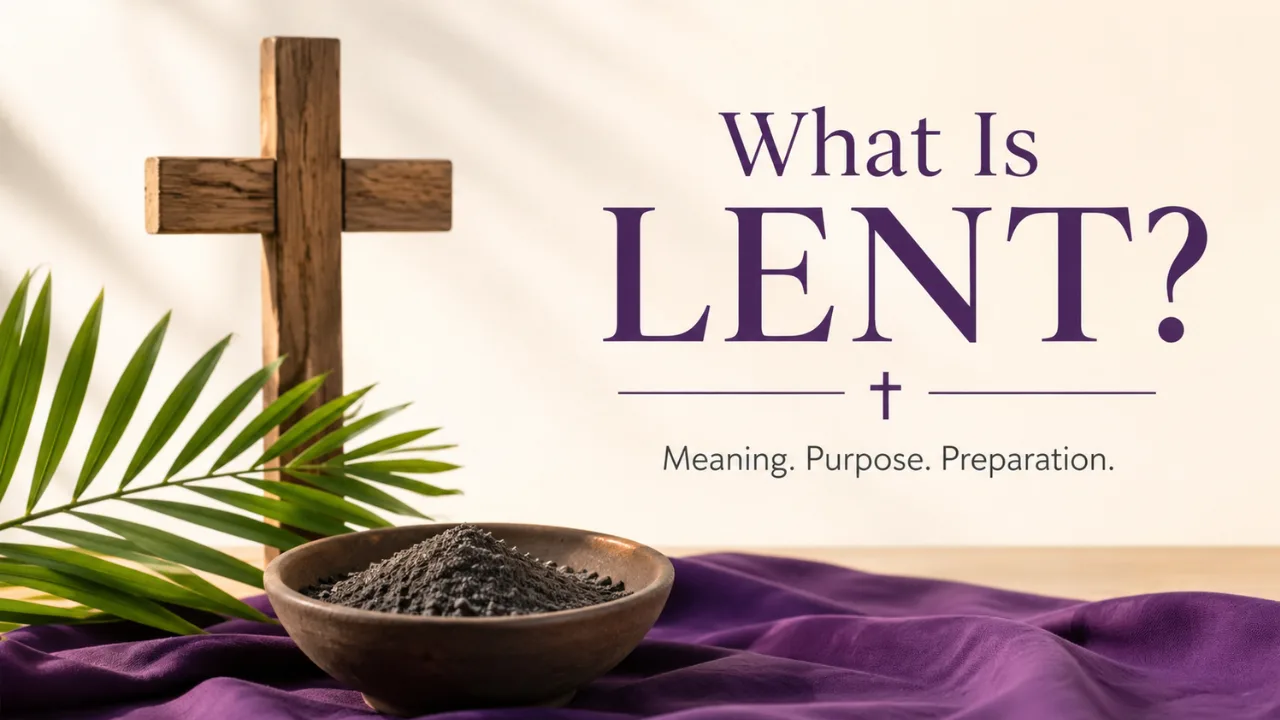

Lent is a Christian season of prayer, fasting, repentance, and spiritual preparation before Easter. Many Christians use this time to examine their hearts, turn away from sin, focus on Christ and prepare to remember His death and resurrection.
Lent does not mean the same thing in every Christian tradition. Catholic, Orthodox, Anglican, Lutheran, Methodist and many other Christians observe it in different ways. Some churches follow formal fasting rules. Some believers keep it more personally. Some Christians do not observe Lent at all because they do not see it as a required biblical command.
Still, Lent remains one of the most recognized seasons in the Christian calendar because it points toward a serious spiritual question: how should a believer prepare the heart before Easter?
Lent at a Glance
| Lent Topic | Simple Meaning |
|---|---|
| Main purpose | Spiritual preparation before Easter |
| Main practices | Prayer, fasting, repentance, giving, reflection |
| Main focus | Christ’s suffering, death and resurrection |
| Starting point | Often begins with Ash Wednesday in Western churches |
| Ending point | Leads into Holy Week and Easter |
| Biblical connection | The Bible does not command Lent by name but it teaches prayer, fasting, repentance and preparation |
This table gives the basic answer, but Lent becomes clearer when we understand why Christians connect it with the gospel.
What Is Lent in Christianity?
Lent is a season before Easter when Christians slow down spiritually and focus more carefully on God.
During Lent, many Christians pray more intentionally, fast from certain foods or habits, confess sin, read Scripture, give to the needy, and reflect on the suffering of Jesus Christ. The season helps believers remember that Easter joy does not stand alone. It comes after the cross.
Lent points Christians toward the seriousness of sin and the mercy of God. It reminds believers that Christ did not go to the cross as a religious symbol only. He suffered, died, and rose again for the salvation of sinners.
That is why Lent often carries a sober tone. It does not aim to make faith feel heavy for no reason. It invites believers to take their relationship with God seriously.
A simple way to understand Lent is this:
Lent prepares the heart for Easter by helping Christians turn from distraction, repent of sin and focus again on Christ.
Also Read: 12 Powerful Lessons from Elijah’s Life in the Bible
Why Do Christians Observe Lent Before Easter?
Christians observe Lent before Easter because Easter celebrates the resurrection of Jesus Christ. Before believers celebrate the empty tomb, they remember the road that led there.
The Christian story moves through suffering before victory. Jesus entered Jerusalem, faced betrayal, endured trial, suffered crucifixion, died, and rose again. Lent gives believers time to walk slowly through that meaning instead of rushing straight to celebration.
Many Christians use Lent to ask serious questions:
- Have I become spiritually careless?
- Do I need to repent of a specific sin?
- Have I treated Easter as a holiday more than a holy reminder?
- Do I understand what Christ suffered for me?
- Do my habits help or weaken my faith?
These questions do not make Lent a season of fear. They make it a season of honesty. Christians do not examine themselves because God lacks mercy. They examine themselves because God’s mercy calls them back.
Is Lent in the Bible?
The Bible does not mention the word “Lent” as a commanded annual season. Christians should understand this clearly.
However, the practices connected with Lent appear throughout Scripture. The Bible repeatedly speaks about prayer, fasting, repentance, humility, confession, self-control, generosity and returning to God.
For that reason, many Christians view Lent as a church tradition built around biblical themes, not as a direct command written by name in Scripture.
This distinction matters.
A believer should not say, “Every Christian must observe Lent exactly this way,” because the Bible does not command that. At the same time, a believer should not dismiss every Lenten practice as meaningless simply because the word Lent does not appear in the Bible.
The better question is not only, “Does the Bible use the word Lent?” The better question is, “Do the practices of Lent help a Christian obey biblical truths with a sincere heart?”
When Lent leads someone toward repentance, prayer, Scripture, humility, and deeper love for Christ, it can serve a helpful spiritual purpose. When someone treats Lent as empty ritual, public performance, or a way to earn God’s favour, it misses the heart of the gospel.
Also Read: 7 Powerful Examples of Sufficient Grace in the Bible
Why Does Lent Last 40 Days?
Many Christians connect Lent with the number 40 because Scripture often uses 40 as a period of testing, preparation, judgment, or spiritual formation.
Moses spent 40 days on Mount Sinai. Israel wandered in the wilderness for 40 years. Elijah traveled for 40 days before reaching Horeb. Jesus fasted for 40 days in the wilderness before beginning His public ministry.
Because Jesus fasted for 40 days and faced temptation in the wilderness, many Christians see Lent as a season that remembers spiritual discipline and dependence on God.
Church traditions count the 40 days in different ways. In many Western churches, Lent begins on Ash Wednesday and leads toward Easter, with Sundays treated differently because Sunday celebrates the resurrection. Other traditions follow different calendars and customs.
The main point does not depend only on calendar counting. The number 40 reminds Christians that preparation often requires time, discipline, and surrender.
Faith does not mature only through emotional moments. God often shapes people through seasons of waiting, testing, prayer, and obedience.
What Happens on Ash Wednesday?
Ash Wednesday marks the beginning of Lent in many Western Christian traditions.
On this day, many Christians receive ashes on the forehead as a sign of mortality, repentance, and humility before God. The ashes remind believers that human life remains fragile and that every person needs God’s mercy.
The message behind Ash Wednesday is serious but not hopeless. It tells the believer, “You are not God. You are dust. You need grace.”
That reminder fits the beginning of Lent. Before Christians celebrate resurrection life, they face the truth about sin, death, and human weakness.
Not every Christian observes Ash Wednesday. Some churches do not use ashes. Some believers prefer private prayer and repentance instead. But for Christians who observe it, Ash Wednesday sets the tone for the Lenten season.
What Do Christians Do During Lent?
Christians observe Lent in different ways, but the most common practices include prayer, fasting, repentance, Scripture reading, giving, and self-examination.
Prayer
Many believers use Lent to rebuild their prayer life. They may pray at set times, pray through Psalms, confess sins, or spend more time listening to God through Scripture.
Prayer during Lent should not become a performance. Jesus warned against religious acts that people do only to receive attention. True prayer turns the heart toward God.
Fasting
Fasting means giving up food, certain meals, or certain habits for a spiritual purpose. Some Christians fast from meat on certain days. Some fast from sweets, entertainment, social media, or unnecessary spending.
The point of fasting is not self-punishment. The point is spiritual focus. A Christian gives up something temporary to remember a deeper hunger for God.
Fasting should lead to humility, not pride. If fasting makes someone judgmental, harsh, or self-righteous, the practice has lost its spiritual meaning.
Repentance
Repentance means turning away from sin and returning to God. Lent gives believers a clear season to examine their hearts.
Repentance does not mean vague guilt. It means honest change. A Christian may need to confess bitterness, pride, lust, greed, dishonesty, prayerlessness, unforgiveness, or spiritual laziness.
True repentance does not stop at feeling bad. It moves toward obedience.
Giving and Mercy
Many Christians also connect Lent with generosity. They may give money, food, time, or help to people in need.
This matters because biblical fasting never belongs only to private discipline. God cares about how people treat the poor, the weak, the lonely, and the wounded.
If Lent only changes someone’s diet but never softens the heart toward others, the season remains incomplete.
Also Read: Why Did Elijah Lose Hope? Biblical Lessons
What Do People Give Up for Lent?
Many people know Lent through the phrase “giving something up.” Some give up chocolate, meat, coffee, social media, television, shopping, or entertainment.
Giving something up can help, but only when the choice carries spiritual purpose.
A person should not give up something only because it sounds religious. The better question is: “What has too much control over my attention, comfort, mood, or habits?”
Someone may need to give up a habit that wastes time. Another person may need to give up an attitude that damages relationships. Someone else may need to give up constant distraction so they can pray with a clear mind.
Here are some meaningful examples:
- Give up unnecessary scrolling and use that time for Scripture.
- Give up complaining and practice gratitude.
- Give up one comfort food and pray when the craving appears.
- Give up impulse spending and give to someone in need.
- Give up entertainment at night and use the time for reflection.
- Give up harsh speech and practice patience.
The strongest Lenten sacrifice is not always the most dramatic one. Sometimes the most meaningful sacrifice touches the exact place where the heart has become undisciplined.
Is Lent Only a Catholic Practice?
Lent is not only a Catholic practice.
Many Catholics observe Lent, but many Orthodox, Anglican, Lutheran, Methodist, and other Christians also observe some form of Lent. Different traditions follow different rules, calendars, and customs.
At the same time, many evangelical and non-denominational Christians do not formally observe Lent. Some avoid it because they believe the church should not require a season that Scripture does not command by name. Others may still use the weeks before Easter for personal prayer, fasting, and reflection without calling it Lent.
This difference should not create unnecessary conflict.
A Christian can observe Lent sincerely. A Christian can also choose not to observe Lent and still honor Christ faithfully. The issue is not the label alone. The issue is whether the believer walks with God in truth, humility, and obedience.
What Is the Difference Between Lent, Holy Week, Good Friday and Easter?
Many beginners confuse Lent with other Christian seasons and days. The difference becomes simple when we see the order.
Lent
Lent is the larger season of preparation before Easter. It focuses on prayer, fasting, repentance, and spiritual renewal.
Holy Week
Holy Week is the final week before Easter. It remembers the final days of Jesus’ earthly ministry before the resurrection.
Good Friday
Good Friday remembers the crucifixion of Jesus Christ. Christians call it “Good” not because the suffering was pleasant, but because God brought salvation through Christ’s sacrifice.
Easter
Easter celebrates the resurrection of Jesus Christ from the dead. It stands at the center of Christian hope because the resurrection declares Christ’s victory over sin and death.
So Lent leads toward Holy Week, Good Friday, and Easter. It prepares the heart to understand the cross and celebrate the resurrection with deeper meaning.
Does Lent Help Christians Grow Spiritually?
Lent can help Christians grow spiritually when they approach it with the right heart.
A season like Lent can reveal what normally stays hidden. When someone removes a comfort, reduces distraction, or increases prayer, they often notice what controls their heart. Hunger, boredom, impatience, anger, and restlessness can expose deeper spiritual needs.
That exposure can become a gift. It shows the believer where God needs to work.
Lent can help Christians grow in several ways:
- It teaches self-control in a distracted world.
- It creates space for prayer and Scripture.
- It reminds believers to repent instead of making excuses.
- It connects personal discipline with love for others.
- It prepares the heart to value Easter more deeply.
- It helps believers remember that faith involves the whole life, not only church attendance.
However, Lent does not automatically make someone spiritually mature. A person can follow every outward rule and still miss God. The Pharisees in the Bible show that religious discipline without humility can become dangerous.
Lent helps only when the outward practice serves inward surrender.
Can a Christian Observe Lent Without Legalism?
Yes, a Christian can observe Lent without legalism, but the motive matters.
Legalism appears when someone treats religious practice as a way to earn salvation, prove superiority, or judge other believers. The gospel teaches that salvation comes by God’s grace through faith in Christ, not through human performance.
A Christian should never think, “God will love me more because I completed Lent perfectly.” God’s love does not depend on a flawless religious record.
A healthier approach says, “Because God has shown mercy to me in Christ, I want to use this season to seek Him more honestly.”
That difference changes everything.
Lent should lead to humility, not spiritual pride. It should lead to repentance, not comparison. It should lead to deeper dependence on Christ, not confidence in personal discipline.
How Should Beginners Approach Lent?
Beginners should approach Lent simply and honestly. They do not need to copy every custom immediately or feel pressured by every rule.
A beginner can start with three clear steps.
1. Choose a clear spiritual focus
Do not begin Lent with only a random sacrifice. Begin with a spiritual need.
Ask yourself:
- Do I need to pray more faithfully?
- Do I need to repent of a specific sin?
- Do I need to forgive someone?
- Do I need to reduce distraction?
- Do I need to understand the cross more deeply?
A clear focus gives meaning to the practice.
2. Choose one discipline that supports that focus
After you identify the need, choose one discipline. You may fast from one habit, read one Gospel, pray at one time daily, give to someone in need, or attend church more consistently.
Do not choose something only because it sounds impressive. Choose something that helps you obey God.
3. Keep Christ at the center
Lent does not exist to make people admire personal discipline. It points to Jesus Christ.
If your practice makes you more aware of your need for Christ, it serves you well. If your practice makes you proud, irritated, or judgmental, you need to return to the heart of the season.
FAQs About Lent
Is Lent required in the Bible?
The Bible does not command Lent by name as an annual season. However, the Bible does teach prayer, fasting, repentance, humility, generosity, and spiritual preparation. Many Christians observe Lent as a tradition built around these biblical themes.
Why do Christians fast during Lent?
Christians fast during Lent to focus more deeply on God, practice self-control, repent of sin, and remember the sacrifice of Jesus Christ. Fasting should point the heart toward God, not toward personal pride.
What should someone give up for Lent?
A person may give up food, entertainment, social media, unnecessary spending, or another habit that distracts the heart from God. The best choice supports prayer, repentance, and spiritual growth.
