
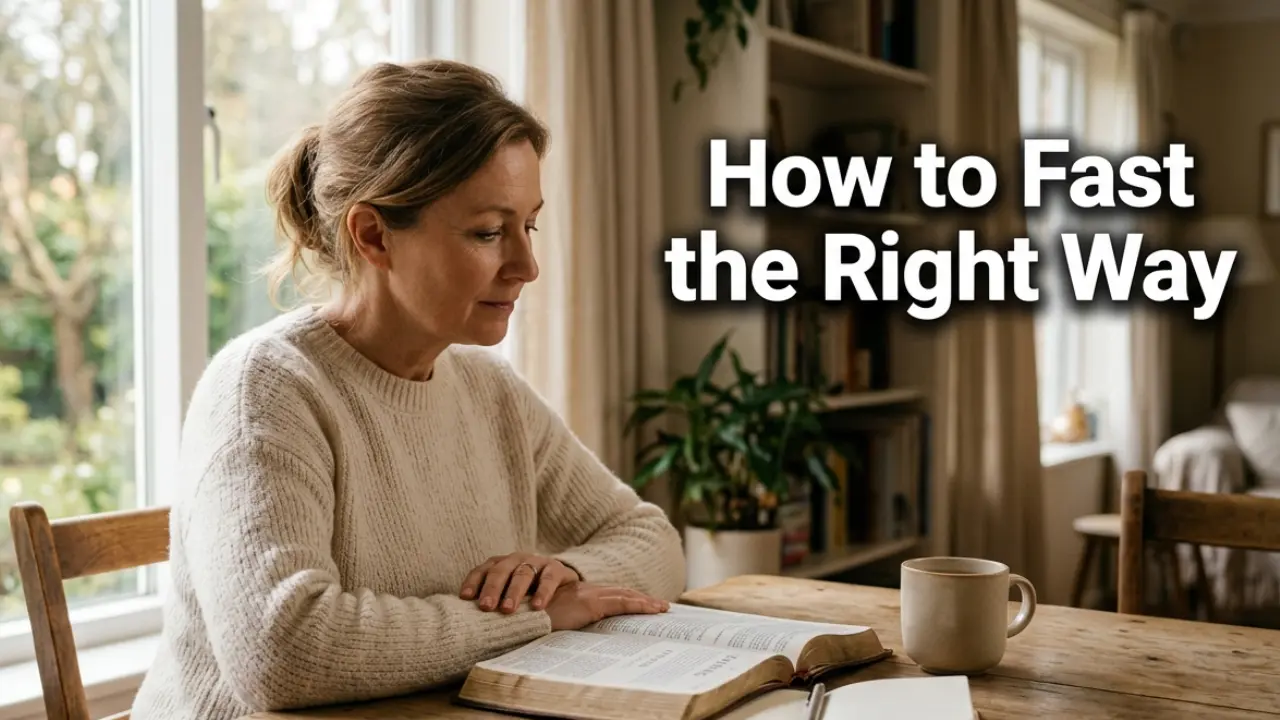

Many people fast but not everyone enters a fast with the right heart. Some treat it like a personal challenge. Others see it as a religious duty. But biblical fasting is much deeper than simply going without food.
In Scripture, fasting is tied to seeking God, humbling the heart, praying with focus and returning to Him with sincerity. The outward act matters but the heart behind it matters even more.
A fast can become empty when it is done carelessly. But when it is joined with prayer, Scripture, humility and obedience it becomes a meaningful way to draw closer to God.
Before You Begin
Before you begin a fast, take time to prepare your heart. A rushed start often leads to a distracted fast.
- Be clear about your spiritual purpose
- Plan time for prayer and Scripture
- Use wisdom if you have health concerns
- Do not fast to impress others
- Keep your heart humble before God
Fasting is not something to do just because others are doing it. Come before God honestly. Ask Him to guide your motives, your focus and your attitude.
A wise beginning helps the whole fast stay centred on Him.
Step 1: Check Your Heart
Fasting starts with the heart. Before you decide what to give up, ask why you are fasting in the first place.
In Matthew 6:16–18, Jesus warns against fasting to be seen by others. His words remind us that God is not impressed by outward appearance. He cares about sincerity.
To check your heart, ask yourself a few honest questions. Am I seeking God or am I hoping someone notices my sacrifice? Am I fasting out of love for God or out of pressure, pride or guilt?
The right fast begins quietly. It does not need applause. It simply says, “Lord, I want to seek You with a sincere heart.”
Step 2: Know Your Purpose
A fast without purpose can feel empty very quickly. You may skip food, but still miss the spiritual reason behind it.
To know your purpose, decide what you are bringing before God. Maybe you are seeking guidance. Maybe you are repenting. Maybe you want to grow in prayer, humility or surrender.
Joel 2:12–13 connects fasting with returning to God with the whole heart. That means fasting is not only about abstaining. It is about coming back to Him fully.
Your purpose does not need to sound impressive. It only needs to be honest.
- Are you asking God for direction?
- Are you turning away from spiritual drift?
- Are you seeking a softer heart?
- Are you surrendering something you have held too tightly?
A clear purpose gives your fast direction and keeps your heart focused.
Step 3: Choose Your Fast Wisely
Not every fast needs to look the same. The right fast is not always the most difficult one. It is the one you can offer to God with sincerity and wisdom.
To choose your fast wisely, think about your spiritual purpose, your health, your responsibilities and your current season of life. The goal is not extreme effort. The goal is faithful devotion.
Types of Fasts to Consider
| Type of Fast | What It Means | Best For |
|---|---|---|
| Partial fast | Giving up certain foods | Beginners or longer fasting |
| Meal fast | Skipping one meal for prayer | Busy schedules |
| Day fast | Fasting for a set day | Focused prayer |
| Non-food fast | Giving up distractions | Those with health limits |
Use wisdom, especially if you have medical needs, pregnancy concerns, demanding work or a history of health issues. Fasting should not damage your body.
A wise fast helps you seek God more clearly, not suffer needlessly.
Step 4: Prepare Before You Start
A fast usually goes better when the heart is prepared. Without preparation, it is easy to become distracted, frustrated or careless.
To prepare before you start, pray before the fast begins. Ask God to search your heart and show you what needs attention.
You can also prepare your schedule. Decide when you will pray, what Scripture you will read and how you will use the time you normally spend eating or scrolling.
Remove distractions where you can. Silence unnecessary noise. Make space for God before the fast begins.
Preparation does not have to be complicated. It simply shows that you are taking the fast seriously.
Step 5: Pray and Read Scripture
Fasting is not meant to create empty space only. It is meant to make room for God.
To pray and read Scripture, use the time you would normally spend eating, browsing or filling yourself with distractions. Turn that time toward prayer, Bible reading, worship and quiet reflection.
Matthew 4:4 reminds believers that people do not live by bread alone, but by every word from God. During fasting, this truth becomes personal.
When hunger comes, let it become a gentle reminder. Instead of only thinking about food, turn your heart toward God. Pray honestly. Read slowly. Listen carefully.
Simple Ways to Stay Focused
- Pray during the time you would normally eat
- Read a short Bible passage and reflect on it
- Write down what stands out to you
- Confess what God reveals in your heart
- Spend a few quiet minutes listening
Without prayer and Scripture, fasting can become only physical discipline. With prayer and Scripture, it becomes spiritual devotion.
Step 6: Keep It Personal and Sincere
Fasting loses its purity when it becomes a performance. The moment the heart starts craving attention the purpose begins to shift.
To keep it personal and sincere, resist the need to announce or explain everything. Let your fast remain mainly between you and God.
This does not mean you can never tell anyone. Sometimes you may need to communicate with family, church leaders or people affected by your schedule. Wisdom and honesty still matter.
The difference is motive. Share only when it is necessary or helpful not because you want to be admired.
A sincere fast does not need an audience. God sees the quiet sacrifice.
Step 7: Guard Your Attitude
Fasting can reveal what is already in the heart. Hunger may bring impatience to the surface. Weakness may expose pride, irritation, self-pity or frustration.
To guard your attitude, pay attention to how you treat people while you fast. A biblical fast should make you more humble, not more difficult.
Isaiah 58 shows that God cares about the life surrounding the fast. He is not pleased with outward fasting while harshness, selfishness or injustice remain untouched.
Ask yourself honestly:
- Am I becoming more patient?
- Am I speaking with gentleness?
- Am I using hunger as an excuse for irritation?
- Am I allowing God to correct my heart?
The right fast does not only change your eating. It also shapes your character.
Step 8: End with Gratitude
The end of a fast should not feel like running away from discomfort. It should become a moment of thankfulness and reflection.
To end with gratitude, pause before returning to your normal routine. Thank God for His help, His patience and anything He revealed during the fast.
Think about what changed, even if it was small. Maybe you noticed a distraction that had too much control. Maybe you sensed a need to repent. Maybe you simply realized how deeply you need God.
Write down what stood out. Then ask what obedience should continue after the fast ends.
A fast is not finished only when you eat again. Its fruit is seen in how you walk afterward.
Keep Growing in Your Understanding of Fasting
If you want to go deeper, these guides will help you build a stronger and more complete understanding of fasting:
- Why Christians Should Fast: 10 Biblical Reasons That Still Matter Today
- Fasting in the Bible Explained: Purpose, Power and Practice
- 7 Things to Avoid During Christian Fasting & Prayer
Each one looks at fasting from a different angle helping you not only understand it better but practice it in a way that is real, balanced and rooted in Scripture.
Common Mistakes to Avoid
| Mistake | Better Way |
|---|---|
| Fasting without prayer | Use meal time for prayer |
| Fasting for attention | Keep it sincere and quiet |
| Becoming irritable | Practice patience and humility |
| Ignoring Scripture | Read and reflect slowly |
These mistakes are common, but they can be avoided with awareness. The purpose of fasting is not to complete a religious task. It is to seek God with a heart that is willing to be changed.
Fasting That Honours God
Fasting the right way is simple, but it is not casual. It begins with the heart and continues through prayer, Scripture, humility and obedience.
You do not need to prove your strength. You do not need to impress anyone. You only need to come before God honestly.
Start with wisdom. Stay sincere. Let your hunger lead you to prayer. Let your weakness teach you dependence. Let the Word of God steady your heart.
Fasting the right way is not about what you give up. It is about making room for God to shape your heart.
