
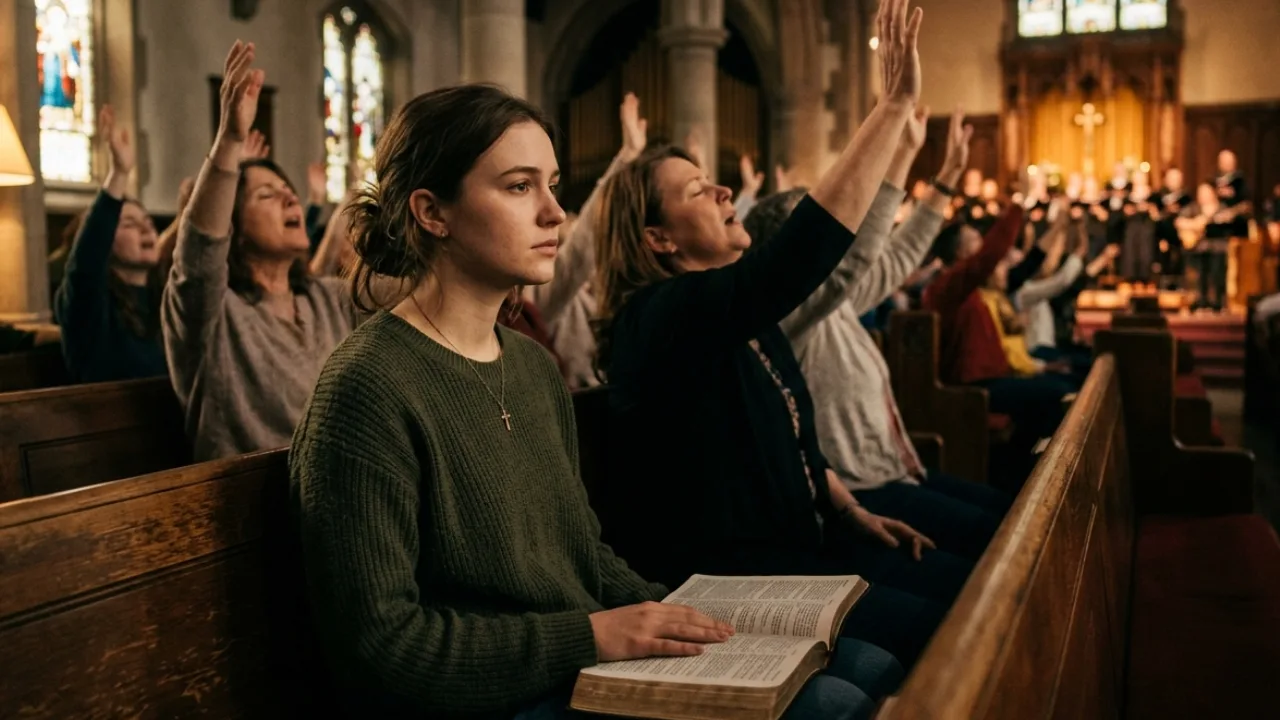

It does not always happen suddenly. Most people do not wake up one day and decide to walk away from faith. More often, it happens quietly. The habits stay. The language stays. The outward life looks almost the same but something inside begins to change.
What once felt real starts to feel routine. Prayer becomes something you say, not something you enter. Scripture becomes something you read, not something that reads you. Worship becomes something you attend, not something that moves you. Nothing is obviously broken, yet something is no longer alive in the same way.
That is why this question matters: Is your faith still real or has it become routine? This is not about how long you have believed or how consistent you have been. It is about what is happening in your heart right now, because faith is not only seen in what you keep doing but in whether your heart is still responding to God with attention, honesty and desire.
Sign 1: Empty Habits
There are times when spiritual practices remain, but their meaning begins to fade. The habit stays, yet the sense of meeting God in it feels thin.
- Prayer begins, but focus quickly fades
Words are spoken, but attention drifts almost immediately. The moment passes without much real nearness and prayer becomes something said rather than something lived. - Scripture is read without reflection
The passage is finished, but little is received. There is reading, but not much pausing, wrestling or response. The mind moves on before the heart has taken anything in. - Worship feels routine, not engaging
Participation continues on the outside, while the heart stays mostly untouched on the inside. You sing, listen and stand with others, but there is little inward movement toward God.
Sign 2: Public Over Private
What looks strong in public does not always match what is true in private. A person can seem engaged around others while neglecting God in secret.
Public settings can create energy. Private life reveals depth. When the hidden life grows weak, it often says more than public consistency does.
- Time with God is easy to postpone
When you are alone, other things quickly take priority and that loss does not feel urgent. The delay becomes normal and the absence of private devotion no longer troubles you much. - Speaking about faith feels easier than practicing it
It is easier to discuss spiritual things than to sit quietly before God. Words can stay strong while the inner life grows thin. - Spiritual energy rises in group settings
Without that setting, the sense of connection fades quickly. What felt strong in a crowd feels weak when you are left alone with God and your own heart.
Sign 3: Word Without Impact
The Bible may still be familiar, but it no longer lands with the same weight. Truth is heard, yet it does not press inward as it once did.
This is a serious sign because a person can stay close to Scripture in habit while growing distant from it in response.
- Reading becomes quick and surface-level
The goal becomes finishing rather than receiving. You move through the chapter, but there is little slowing down, little meditation and little personal response. - Familiar passages feel unchanged
What once convicted or comforted now feels easy to pass over. - Understanding does not lead to response
Truth stays in the mind without shaping the heart, the will or the life.
Sign 4: Comfortable With Sin
A quiet change begins when sin no longer feels as serious. The awareness may still be there, but the urgency is gone.
What once led to grief, confession and resistance now gets excused, delayed or carried too lightly. That loss of tenderness matters.
- Wrong attitudes are quickly justified
Pride, bitterness, jealousy or compromise are explained away instead of honestly faced. What should be confessed is often softened with excuses. - Conviction fades without action
You feel the warning, but it passes before anything changes. - Confession becomes shallow or rare
Sin may still be mentioned, but not brought into the light with real honesty.
Sign 5: Distant Prayer
Prayer may still be present, but dependence has weakened. The form remains, while honesty, need and surrender grow thin.
Distant prayer is easy to miss because it still sounds like prayer. Yet something is missing beneath the words.
- The same words are repeated often
Familiar language replaces fresh honesty. Prayer begins to sound predictable because little of the real heart is being brought forward. - Deeper struggles are kept back
The real burdens are not fully opened before God. Pain, fear, disappointment and weakness stay guarded instead of surrendered. - Pressure is carried alone for too long
Prayer happens, but surrender does not really follow. You speak to God and then keep holding everything in your own hands.
Sign 6: Selective Obedience
Obedience does not disappear, but it becomes limited. Some areas are yielded, while others are quietly protected.
This is where routine faith often shows itself most clearly. It obeys where the cost is low and hesitates where surrender becomes painful.
- Hard steps are delayed
What is known is not acted on, even when the path is clear. Delay becomes a way of resisting without saying no out loud. - Sacrifice feels negotiable
Costly obedience is weighed instead of embraced. The heart starts bargaining where surrender should be simple. - Comfort shapes decisions
What feels manageable begins to matter more than what God wants. Ease becomes the filter through which obedience is measured.
Also Read: Spiritual Focus vs Distraction: A Biblical View
Sign 7: Activity Over Growth
A full Christian schedule can create the impression that everything is healthy. A person may stay busy in good things while remaining unchanged within.
That is why activity over growth can be so misleading. Involvement is not the same as transformation.
- Involvement replaces reflection
There is little honest space to examine the heart. - Growth is assumed, not examined
Time passing is treated as proof of maturity. - Patterns remain unchanged
The same struggles continue without deeper attention or progress. Long-standing habits remain in place because little is being faced seriously.
Sign 8: Fading Desire
At the deepest level, the change appears in what is no longer longed for. The structure may remain but hunger for God grows weak.
This may be the clearest sign of all. A person can maintain many outward patterns and still lose inward desire for God Himself.
- Seeking God feels optional
Time with Him is easy to set aside. - Worship feels flat
What once stirred love and gratitude now feels distant. The songs may be the same, but the heart does not rise with them. - His presence is not deeply missed
Communion weakens, yet the loss does not feel serious.
What This Reveals
Routine can carry the outer shape of faith for a long time. Things may still look steady while the inward life grows dull. That is why these signs matter.
What this reveals is simple but weighty. Real faith is not only seen in repeated habits, but in a heart that is still responsive to God, honest in prayer, serious about sin, willing to obey and hungry for His presence. These signs are meant to help you see clearly what may be true beneath the surface.

1 thought on “Is Your Faith Real or Just Routine? 8 Signs You Should Not Ignore”