
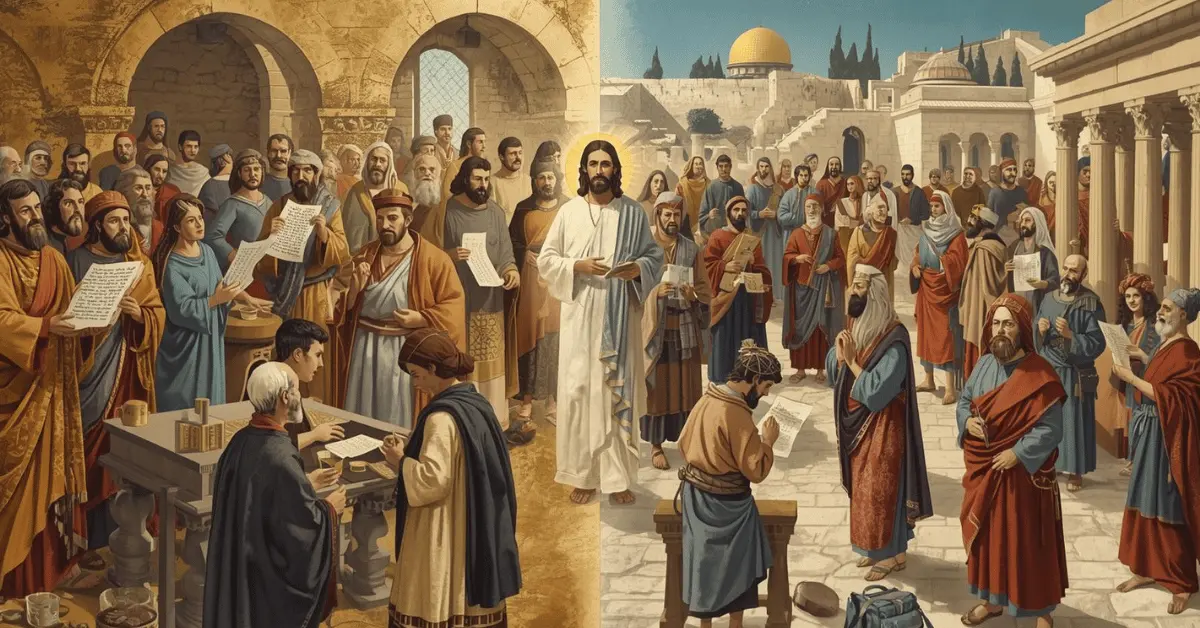

When reading the Gospels, the Pharisees and Sadducees often appear side by side, usually opposing Jesus and questioning His authority. Because of this, many Bible readers assume they were essentially the same group with the same beliefs. Scripture, however, presents a very different picture.
The Pharisees and Sadducees were two distinct Jewish groups with sharply different views on Scripture, authority, theology, and daily religious life. Although they sometimes worked together against Jesus, they did not represent a single movement. In many areas, they disagreed with one another as much as they disagreed with others.
Understanding these differences not only brings clarity to the New Testament but also helps believers better understand why Jesus confronted each group in different ways. It also explains many conversations recorded in the Gospels and the book of Acts, where their contrasting beliefs play an important role in the unfolding of the biblical narrative.
Why the Pharisees and Sadducees Are Often Confused
Both groups were influential during the time of Jesus. Both were considered religious leaders. Both challenged Christ publicly. Because of these surface similarities, they are frequently grouped together in teaching and casual reading.
Shared Public Role
The Gospels often mention the Pharisees and Sadducees in similar settings, especially when they questioned Jesus, tested His authority, or opposed His ministry. This repeated association can make them appear as though they belonged to one united religious movement.
Different Beliefs Beneath the Surface
Yet beneath the surface, their beliefs, motivations, and spiritual priorities were very different. In many ways, they represented opposite approaches to faith.
The Pharisees emphasized strict obedience to the Law and the traditions of the elders. The Sadducees were more closely tied to the priesthood, the temple, and the ruling elite.
Different Views of Spiritual Reality
The Pharisees believed in the resurrection, angels, and spirits. The Sadducees rejected these beliefs, accepting a more limited view of Scripture and doctrine.
Why the Distinction Matters
Recognizing these differences helps readers understand why the New Testament sometimes shows them opposing Jesus together, while at other times revealing deep disagreement between the two groups themselves.
The Pharisees and Sadducees show how easily people can miss God’s truth when pride, power, or outward religion takes over. Their story reminds believers that faith must be grounded in humility, Scripture and the kind of biblical hope that holds the heart steady when life feels uncertain.
Who Were the Pharisees in the Bible?
The Pharisees were a lay movement deeply committed to the study and application of the Law of Moses. They believed that obedience to God extended beyond temple rituals and into everyday life.
They emphasized moral discipline, careful interpretation of Scripture, and traditions that guided daily behaviour. Many Pharisees were respected teachers who sought to preserve Jewish identity during Roman occupation.
However, over time, their devotion to tradition often led to spiritual pride and legalism. Jesus rebuked them not for loving the Law, but for elevating human traditions above the heart of God.
“This people honours me with their lips, but their heart is far from me.” (Matthew 15:8)
Who Were the Sadducees in the Bible?
The Sadducees were a smaller but more powerful group, closely connected to the temple priesthood and political leadership. Unlike the Pharisees, they focused primarily on temple worship and authority rather than daily religious practice.
They accepted only the written Law of Moses and rejected later traditions. Because of this, they denied several key doctrines, including the resurrection of the dead, angels, and spirits.
The Sadducees were pragmatic and politically motivated, often working with Roman authorities to maintain control and stability. Their influence was rooted in power rather than popular support.
Pharisees vs Sadducees Comparison
| Aspect | Pharisees | Sadducees |
|---|---|---|
| Social Role | Teachers and interpreters of the Law | Priestly and political elite |
| Scripture Accepted | Law, Prophets, Writings and oral tradition | Law of Moses only |
| Resurrection | Believed in resurrection | Denied resurrection |
| Angels and Spirits | Believed | Denied |
| Focus | Daily obedience and tradition | Temple authority and power |
| Relationship to Rome | Often resisted | Often cooperated |
This contrast explains why the two groups rarely agreed with each other, even though they sometimes united against Jesus.
Why Jesus Confronted Both Groups
Jesus challenged the Pharisees for hypocrisy and spiritual pride. They knew Scripture well, but often failed to live out its deeper meaning of mercy, justice, and humility.
He confronted the Sadducees for their unbelief and spiritual emptiness. Their denial of the resurrection revealed a faith rooted in control rather than hope.
When questioned about the resurrection, Jesus corrected the Sadducees directly:
“You are mistaken, not knowing the Scriptures nor the power of God.” (Matthew 22:29)
Jesus exposed the weaknesses of both groups, showing that true faith requires both truth and humility.
To understand the heart of Christianity, it helps to begin with the foundational truths that shape our understanding of salvation.
What This Difference Teaches Believers Today
The differences between the Pharisees and Sadducees are more than historical details. They reveal spiritual dangers that believers can still face today. Although the setting has changed, the heart issues remain relevant.
The Warning from the Pharisees
The Pharisees remind believers of the danger of knowing Scripture without allowing it to transform the heart. They were devoted to religious knowledge and careful observance, yet Jesus often rebuked them for hypocrisy, pride, and neglecting the weightier matters of the Law.
Knowledge without humility and love can lead to self-righteousness, judgment, and an outward religion that lacks inward transformation.
The Warning from the Sadducees
The Sadducees warn against reducing faith to tradition, position, or convenience. Their rejection of the resurrection and other spiritual realities showed how easily faith can become limited to what seems reasonable or beneficial in the present.
Faith without spiritual hope or confidence in God’s power becomes empty and lifeless. It may preserve religious structures while losing sight of God’s living work.
A Balanced Biblical Faith
Together, these groups illustrate two extremes that believers must avoid:
- Rigid legalism, which emphasizes rules while neglecting the heart.
- Hollow religion, which retains outward forms while losing spiritual conviction.
True biblical faith avoids both extremes. It is rooted in God’s truth, shaped by His grace, expressed through joyful obedience, and sustained by trust in His power beyond what is seen. Jesus calls His followers not merely to religious activity, but to a genuine relationship with God that transforms both the heart and the life.
Difference in View of Scripture
One of the clearest differences between the Pharisees and the Sadducees was their view of Scripture and religious authority. Although both accepted the books of Moses, they differed on how God’s Word should be understood and applied.
The Pharisees’ View
The Pharisees accepted the written Law but also gave great authority to the oral traditions passed down by the elders. These traditions explained how the Law should be practiced in everyday life and eventually became an important part of Jewish religious teaching.
Because of this, the Pharisees often developed detailed rules governing subjects such as the Sabbath, ritual purity, fasting, and tithing. Jesus sometimes challenged these traditions when they elevated human regulations above God’s commands.
The Sadducees’ View
The Sadducees accepted the written Law of Moses as their primary authority and rejected the oral traditions embraced by the Pharisees. They were generally more conservative in what they recognized as binding religious teaching.
This narrower view of authority also influenced their theology. Since they did not find certain doctrines clearly stated in the books of Moses, they rejected beliefs such as the resurrection of the dead and the existence of angels.
Why This Difference Matters
Their different views of Scripture shaped many of the debates recorded in the New Testament. The Pharisees and Sadducees often reached different conclusions because they did not begin with the same understanding of religious authority.
For Christians today, this difference highlights the importance of handling Scripture faithfully. God’s Word must remain the foundation of faith, and every tradition, teaching, or interpretation should ultimately be tested by what God has revealed.
How Pride Took Different Forms in Each Group
Although the Pharisees and Sadducees differed in many beliefs, both groups struggled with pride. Their pride did not always look the same, but it produced a similar result—it kept them from recognizing Jesus as the promised Messiah.
The Pharisees’ Pride
The Pharisees often took pride in their knowledge of the Law, careful religious observance, and reputation for holiness. Their commitment to Scripture was admirable in many ways, but it could also become a source of self-righteousness.
Jesus repeatedly warned that outward obedience was not enough if the heart remained proud. Their confidence in their own righteousness sometimes made it difficult for them to receive correction or recognize their need for God’s grace.
The Sadducees’ Pride
The Sadducees expressed pride differently. As many were connected to the priesthood and temple leadership, their influence was closely tied to social position, political authority, and religious status.
Rather than emphasizing strict religious tradition like the Pharisees, they often relied on their position and influence. This attachment to power made them resistant to any movement that threatened the existing order, including the ministry of Jesus.
A Shared Spiritual Danger
Although their pride took different forms, both groups ultimately placed confidence in something other than God. One trusted religious achievement, while the other trusted position and authority.
Their example reminds believers that pride is not limited to one personality or one form of religion. It can appear through knowledge, success, influence, reputation, or spiritual accomplishments. Genuine faith requires humility—a willingness to submit to God’s truth, receive His grace, and recognize that true righteousness comes from Him alone.
The Pharisees and Sadducees remind us that religious knowledge, position or influence cannot replace a heart strengthened by God. In difficult seasons, believers need more than outward religion; they need the joy of the Lord as their strength when facing tough times.
How Jesus Exposed the Blind Spots of Both Groups
Jesus did not treat the Pharisees and Sadducees as though they had the same problem. He confronted each group according to its particular blind spot. His responses reveal that spiritual error can take different forms, even among deeply religious people.
The Pharisees’ Blind Spot
The Pharisees knew the Scriptures well and were devoted to religious observance, yet they often elevated human traditions above God’s intent. Jesus challenged their tendency to focus on external obedience while neglecting the deeper matters of justice, mercy, faithfulness, and love.
Their knowledge was extensive, but knowledge alone did not guarantee spiritual understanding. Jesus repeatedly called them to examine the condition of their hearts, not merely their outward conduct.
The Sadducees’ Blind Spot
The Sadducees approached faith from a different direction. They rejected beliefs such as the resurrection and limited their acceptance of Scripture in ways that shaped their theology.
When they questioned Jesus about the resurrection, He responded that they were mistaken because they did not fully understand either the Scriptures or the power of God. Their reasoning left little room for God’s supernatural work, causing them to misunderstand truths that Scripture revealed.
A Lesson for Every Believer
Although their errors were different, both groups failed to recognize Jesus for who He truly was. One trusted religious tradition and outward righteousness. The other trusted human reasoning, religious position, and political influence.
Their story reminds believers that spiritual blind spots are not always obvious. A person may know Scripture well or hold an important position and still miss what God is doing. True spiritual discernment requires humility, a teachable heart, and a willingness to let God’s Word continually correct and transform us.
Lasting Legacy of the Pharisees and Sadducees
The Pharisees and Sadducees disappeared as organized groups long ago, but the lessons they leave behind remain relevant. Their presence in the Gospels is not merely historical. It continues to challenge believers to examine the kind of faith they practice.
The Legacy of the Pharisees
The Pharisees remind us that a person can know Scripture, participate in religious activities, and appear outwardly faithful while still struggling with pride, hypocrisy, or self-righteousness. Their example warns against allowing religious knowledge or tradition to replace genuine love for God and others.
The Legacy of the Sadducees
The Sadducees remind us that faith can become shaped by power, status, or human reasoning rather than wholehearted trust in God. Their rejection of key biblical truths shows the danger of accepting only the parts of God’s revelation that seem reasonable or convenient.
Why Their Story Still Matters
Although these groups belonged to first-century Judaism, the attitudes they represent continue to appear in every generation. Some people are tempted toward outward religion without inward transformation. Others reduce faith to what is socially acceptable or intellectually comfortable.
The Gospels preserve the stories of the Pharisees and Sadducees not simply to describe the past but to help believers avoid repeating the same mistakes. Their legacy reminds us that true faith requires both sound doctrine and a humble heart, both biblical truth and wholehearted devotion to Christ.
People Also Ask
Were the Pharisees and Sadducees enemies?
Yes, the Pharisees and Sadducees often opposed each other. They disagreed on core beliefs such as the resurrection, angels, and the authority of Scripture.
Did Jesus prefer the Pharisees or the Sadducees?
Jesus did not favor either group. He rebuked the Pharisees for hypocrisy and legalism, and He corrected the Sadducees for unbelief and denial of God’s power.
Which group believed in the resurrection?
The Pharisees believed in the resurrection of the dead, angels, and spirits. The Sadducees denied all three, accepting only the Law of Moses and rejecting doctrines not explicitly stated there.
Are Pharisees and Sadducees mentioned in the Old Testament?
No, neither group is mentioned by name in the Old Testament. They developed during the period between the Old and New Testaments, known as the Second Temple period.
Why did the Sadducees disappear after the New Testament?
The Sadducees were closely tied to the temple system. When the temple was destroyed in AD 70, their power and identity collapsed. The Pharisees, whose faith focused on daily practice and teaching, continued and shaped later Judaism.

1 thought on “Pharisees vs Sadducees in the Bible—Why They Could Not Agree on Anything”