
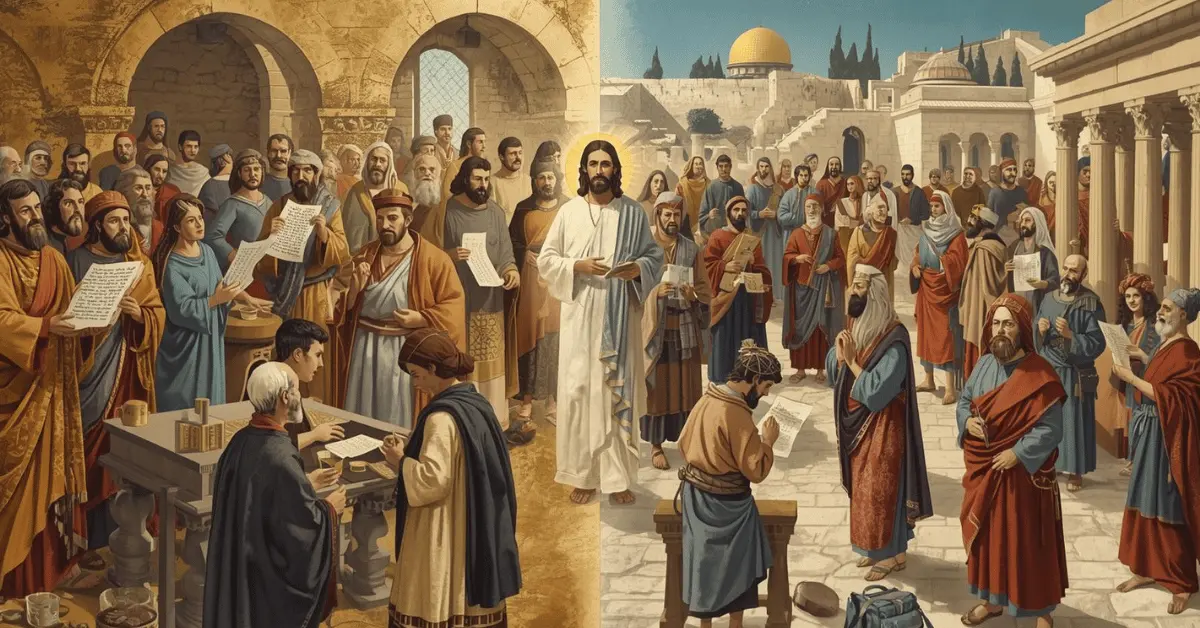

When reading the Gospels, the Pharisees and Sadducees often appear side by side, usually opposing Jesus and questioning His authority. Because of this, many Bible readers assume they were essentially the same group with the same beliefs. Scripture, however, presents a very different picture.
The Pharisees and Sadducees were two distinct Jewish groups with sharply different views on Scripture, authority, theology, and daily religious life. Understanding these differences not only brings clarity to the New Testament but also helps believers better understand why Jesus confronted each group in different ways.
Also Read: When Hope Feels Far Away: The 3 Biblical Hopes That Hold You Together
Why the Pharisees and Sadducees Are Often Confused
Both groups were influential during the time of Jesus. Both were considered religious leaders. Both challenged Christ publicly. Because of these surface similarities, they are frequently grouped together in teaching and casual reading.
Yet beneath the surface, their beliefs, motivations, and spiritual priorities were very different. In many ways, they represented opposite approaches to faith.
Who Were the Pharisees in the Bible?
The Pharisees were a lay movement deeply committed to the study and application of the Law of Moses. They believed that obedience to God extended beyond temple rituals and into everyday life.
They emphasized moral discipline, careful interpretation of Scripture, and traditions that guided daily behaviour. Many Pharisees were respected teachers who sought to preserve Jewish identity during Roman occupation.
However, over time, their devotion to tradition often led to spiritual pride and legalism. Jesus rebuked them not for loving the Law, but for elevating human traditions above the heart of God.
“This people honours me with their lips, but their heart is far from me.” (Matthew 15:8)
Who Were the Sadducees in the Bible?
The Sadducees were a smaller but more powerful group, closely connected to the temple priesthood and political leadership. Unlike the Pharisees, they focused primarily on temple worship and authority rather than daily religious practice.
They accepted only the written Law of Moses and rejected later traditions. Because of this, they denied several key doctrines, including the resurrection of the dead, angels, and spirits.
The Sadducees were pragmatic and politically motivated, often working with Roman authorities to maintain control and stability. Their influence was rooted in power rather than popular support.
Pharisees vs Sadducees Comparison
| Aspect | Pharisees | Sadducees |
|---|---|---|
| Social Role | Teachers and interpreters of the Law | Priestly and political elite |
| Scripture Accepted | Law, Prophets, Writings, and oral tradition | Law of Moses only |
| Resurrection | Believed in resurrection | Denied resurrection |
| Angels and Spirits | Believed | Denied |
| Focus | Daily obedience and tradition | Temple authority and power |
| Relationship to Rome | Often resisted | Often cooperated |
This contrast explains why the two groups rarely agreed with each other, even though they sometimes united against Jesus.
Why Jesus Confronted Both Groups
Jesus challenged the Pharisees for hypocrisy and spiritual pride. They knew Scripture well, but often failed to live out its deeper meaning of mercy, justice, and humility.
He confronted the Sadducees for their unbelief and spiritual emptiness. Their denial of the resurrection revealed a faith rooted in control rather than hope.
When questioned about the resurrection, Jesus corrected the Sadducees directly:
“You are mistaken, not knowing the Scriptures nor the power of God.” (Matthew 22:29)
Jesus exposed the weaknesses of both groups, showing that true faith requires both truth and humility.
Also Read: The Christmas Story In The Bible: What Really Happened and Why It Matters
What This Difference Teaches Believers Today
The Pharisees remind believers of the danger of knowing Scripture without allowing it to transform the heart. Knowledge without love leads to pride and judgment.
The Sadducees warn against reducing faith to tradition, position, or convenience. Faith without spiritual hope becomes empty and lifeless.
Together, these groups illustrate two extremes that believers must avoid: rigid legalism on one side and hollow religion on the other.
True biblical faith is rooted in truth, grace, obedience, and trust in God’s power beyond what is seen.
Why This Distinction Still Matters
Understanding the difference between Pharisees and Sadducees helps readers interpret the Gospels more accurately. It explains why Jesus spoke differently to different leaders and why His message challenged every form of religious corruption.
More importantly, it invites believers to examine their own faith. Are beliefs shaped by humility and obedience, or by pride and comfort?
Scripture does not call believers to resemble either group, but to follow Christ with both truth and grace.
Final Reflection
The Pharisees and Sadducees were not merely historical figures. They represent real spiritual attitudes that still appear today. Jesus did not come to support religious systems, but to transform hearts.
By understanding their differences, believers gain deeper insight into Scripture and a clearer call to authentic faith.
👉 For further study on the Second Temple period and Jewish sects, you can explore historical overviews from trusted sources like Jewish Virtual Library.
People Also Ask
Were the Pharisees and Sadducees enemies?
Yes, the Pharisees and Sadducees often opposed each other. They disagreed on core beliefs such as the resurrection, angels, and the authority of Scripture.
Did Jesus prefer the Pharisees or the Sadducees?
Jesus did not favor either group. He rebuked the Pharisees for hypocrisy and legalism, and He corrected the Sadducees for unbelief and denial of God’s power.
Which group believed in the resurrection?
The Pharisees believed in the resurrection of the dead, angels, and spirits. The Sadducees denied all three, accepting only the Law of Moses and rejecting doctrines not explicitly stated there.
Are Pharisees and Sadducees mentioned in the Old Testament?
No, neither group is mentioned by name in the Old Testament. They developed during the period between the Old and New Testaments, known as the Second Temple period.
Why did the Sadducees disappear after the New Testament?
The Sadducees were closely tied to the temple system. When the temple was destroyed in AD 70, their power and identity collapsed. The Pharisees, whose faith focused on daily practice and teaching, continued and shaped later Judaism.

1 thought on “Pharisees vs Sadducees in the Bible—Why They Could Not Agree on Anything”