
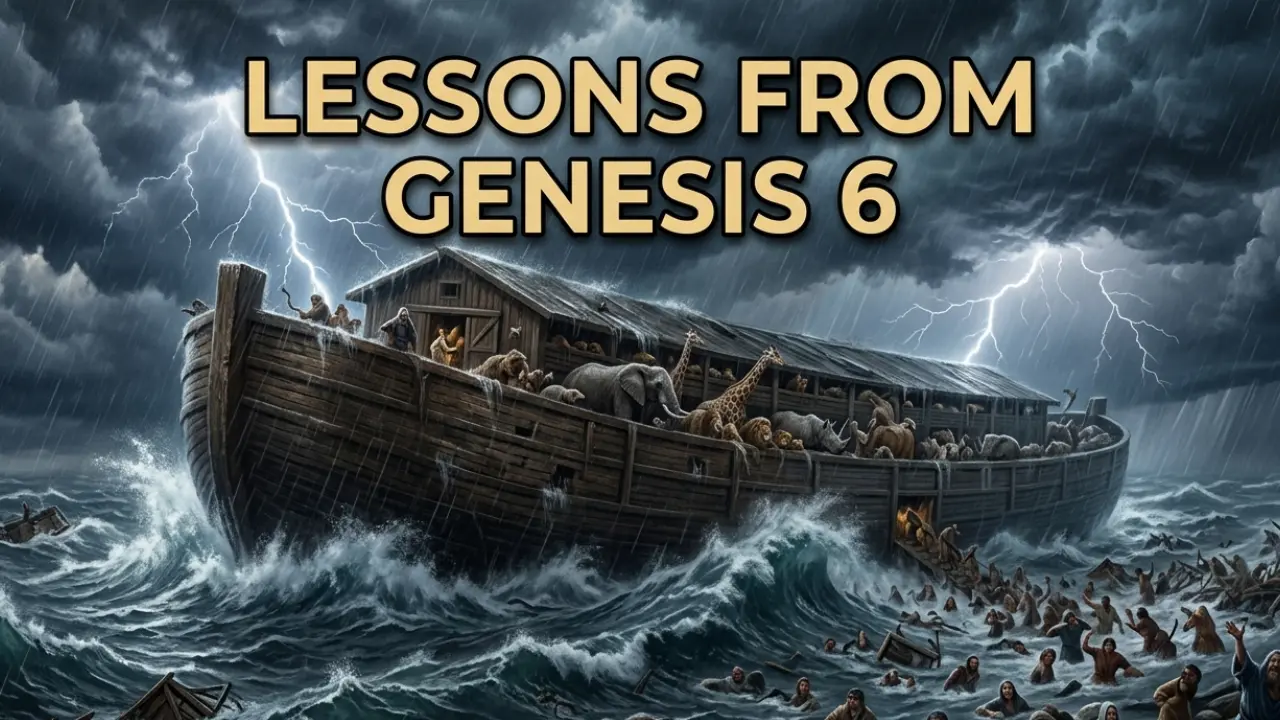

The main lessons from Genesis 6 are that sin spreads from the human heart, evil grieves God, faithful living remains possible in a corrupt culture and genuine faith responds through obedience. The chapter also shows that God judges violence while preserving life and continuing His covenant purpose.
Genesis 6 is often remembered as the chapter in which God tells Noah to build the ark. However, the chapter reveals much more than the beginning of the Flood story.
It describes a world shaped by corrupt thoughts, violent conduct, and widespread rebellion. In the middle of that darkness, Noah finds favour with God, walks faithfully with Him and obeys the instructions he receives.
These seven lessons from Genesis 6 show how Christians can respond to corruption without losing confidence in God’s grace, justice and continuing purpose.
What Happens in Genesis 6?
Genesis 6 begins with a difficult passage involving the “sons of God,” the “daughters of men,” the Nephilim, and God’s declaration concerning 120 years.
Christians interpret these verses in different ways. Some understand the sons of God as heavenly beings, while others identify them with powerful rulers or the line of Seth.
The meaning of the 120 years is also debated. It may describe the remaining period before the Flood or a limitation connected with human life. The chapter does not provide enough detail to settle every question with certainty.
Its main direction soon becomes clear. Human wickedness has become great, the intentions of the heart continually turn toward evil, and the earth is filled with violence.
God announces judgment, but Noah finds favour in His eyes. Noah is described as righteous, blameless among the people of his generation, and someone who walks with God.
God commands him to build an ark that will preserve his household and representatives of living creatures. The chapter ends by saying that Noah did everything God commanded.
Lesson 1: Sin Begins in the Heart and Spreads Outward
Genesis 6 traces human corruption to the thoughts and intentions of the heart.
Violence did not appear without a cause. The inner direction of humanity had become corrupt and that inward corruption eventually shaped conduct throughout society.
This order matters because sin often grows privately before it becomes publicly visible.
Pride, resentment, greed, envy, lust, and the desire for control may remain hidden for a time. However, thoughts and desires that people repeatedly entertain begin to influence their words, habits and decisions.
Genesis 6 also shows that private corruption rarely remains private. What begins in individual hearts can damage families, communities and entire cultures.
The chapter connects inward wickedness with an earth filled with violence.
Christians should therefore examine more than their outward reputation. They should consider what they repeatedly desire, imagine, excuse and allow to grow within them.
Learning what the Bible says about wickedness helps explain why lasting spiritual change must reach deeper than public behaviour.
Lesson 2: Human Evil Truly Grieves God
Genesis 6 says that human wickedness grieved God to His heart.
This language does not mean that God lost control of creation or discovered an unexpected mistake. It communicates His real moral opposition to evil and the sorrow connected with humanity’s rebellion.
God is not indifferent to violence, cruelty, exploitation or corruption.
People may become desensitized when wrongdoing becomes common. Repeated exposure can make serious evil appear normal, acceptable or unavoidable.
Genesis 6 shows that widespread acceptance does not turn evil into good.
God sees what society excuses. He knows the suffering of people who are ignored, mistreated or harmed by those with greater power.
His grief also shows that sin is more than the violation of an impersonal rule. It damages people who bear His image and distorts the creation He made.
Christians should therefore respond to evil with truth and seriousness but not with pride or enjoyment of another person’s failure.
A faithful response includes repentance, protection of the vulnerable, honest accountability and a desire for restoration where restoration remains possible.
Lesson 3: Noah Found Favour With God and Responded With Obedience
Genesis 6 says that Noah found favour in the eyes of the Lord.
The chapter does not present the building of the ark as a payment that forced God to favor Noah. Noah found favor with God, walked faithfully with Him, and responded obediently when God gave His instructions.
God’s favor and Noah’s faithful response stand together in the middle of judgment.
This protects readers from two opposite errors.
The first error treats good behaviour as a way to purchase God’s attention. The second speaks about grace while showing no interest in following God.
Genesis 6 supports neither view.
Noah did not earn God’s favor by presenting a completed ark. At the same time, the favor he received did not leave him passive. He trusted God enough to act.
Christians should obey from trust and gratitude rather than from an attempt to make God indebted to them.
Grace does not make obedience unnecessary. It places obedience on the right foundation.
Lesson 4: Walking With God Is Possible in a Corrupt Generation
Genesis 6 describes Noah as someone who walked with God while the surrounding earth was corrupt and filled with violence.
Noah did not wait for his culture to become faithful before choosing to live faithfully.
The description of Noah as “blameless in his generation” does not require readers to believe he was sinlessly perfect. It points to integrity and a life that stood apart from the corruption around him.
People often use their environment to excuse their choices. They may argue that dishonesty, greed or compromise is unavoidable because everyone around them behaves in the same way.
Genesis 6 shows that cultural darkness does not remove personal responsibility.
Noah could not control the direction of his entire generation, but he could walk with God within it.
Walking with God involves an ongoing relationship rather than one isolated religious experience. It includes listening, trusting, obeying, repenting and continuing in His direction.
Christians cannot control every cultural trend or public decision. They can still choose truth, mercy, humility, courage and faithfulness.
A corrupt environment may make obedience harder, but it does not make obedience impossible or meaningless.
Lesson 5: Genuine Faith Obeys God’s Instructions
Genesis 6 ends by saying that Noah did everything God commanded him.
The text does not describe how other people reacted to the ark. It does not say that they mocked Noah or provide a detailed account of his emotions during the work.
The central fact is that God spoke and Noah obeyed.
Building the ark required practical action. Noah had to follow instructions concerning its materials, dimensions, rooms, covering, animals, and food.
His faith did not remain a private opinion. It shaped what he did.
Obedience may require patience because the fulfillment of God’s warning or promise is not always immediate. Noah received an explanation for the ark, but he still had to act before the announced judgment arrived.
Christians also demonstrate trust by responding to what God has revealed.
This includes speaking truthfully, showing mercy, resisting temptation, forgiving others, caring for people in need, and remaining faithful when obedience becomes costly.
Noah’s example shows that trust takes God’s wisdom seriously. Genuine faith does not merely agree that God is right. It follows His direction.
Lesson 6: God Judges Evil but Also Preserves Life
Genesis 6 contains a severe announcement of judgment.
The earth has become corrupt and violent, and God declares that the Flood will bring that corrupted order to an end.
However, the chapter also contains detailed instructions for preservation.
God tells Noah to build an ark for his family, representatives of living creatures and the food they will need.
The same chapter therefore holds two truths together:
- God does not ignore evil forever.
- God preserves life according to His purpose.
Readers should not soften the judgment until it loses its seriousness. Genesis 6 presents human violence as destructive and God’s response as deliberate.
At the same time, judgment does not mean God has abandoned His creation. He distinguishes Noah, commands the ark, preserves living creatures and prepares for life beyond the Flood.
Grace does not mean evil has no consequences. Judgment does not mean God’s purposes have failed.
Genesis 6 calls Christians to take both God’s holiness and His mercy seriously.
Lesson 7: God’s Covenant Purpose Continues Through Judgment
God tells Noah that He will establish His covenant with him.
Genesis 6 introduces this covenant intention, although the fuller declaration and the sign of the rainbow appear later after the Flood.
A biblical covenant is a binding commitment through which God establishes promises and defines a relationship with particular people. Understanding what a covenant means in the Bible helps explain why this promise matters.
God’s covenant intention shows that the Flood will not end the biblical story.
Judgment comes, but God preserves a family through whom human life will continue. He remains committed to His purposes for creation while confronting its corruption.
The world of Genesis 6 has become deeply violent, yet God has not lost control of history. Human rebellion cannot force Him to abandon His plan.
Christians may experience seasons when evil appears dominant and God’s purpose seems hidden. Genesis 6 reminds them that visible corruption does not mean God has surrendered His authority.
The chapter ends before the covenant is fully developed, but its promise is already present. God is preparing a future beyond judgment.
How Can Christians Apply Genesis 6 Today?
Christians should apply Genesis 6 carefully rather than treating every modern event as a direct repetition of the world before the Flood.
The chapter does not invite believers to predict dates, identify every cultural problem with the Nephilim, or build confident doctrines from disputed details.
Its clearest applications concern the heart, holiness, grace, obedience and trust in God’s continuing purpose.
Genesis 6 encourages Christians to:
- Examine the thoughts and desires shaping their conduct.
- Refuse to normalize cruelty, corruption, and violence.
- Walk with God even when the surrounding culture moves elsewhere.
- Respond practically to what God has revealed.
- Trust that God’s purposes continue through dark circumstances.
The chapter also warns against measuring truth by popularity.
Noah’s generation was broadly corrupt, but widespread agreement did not make corruption righteous. Faithfulness may sometimes place a believer in a minority.
However, standing apart does not automatically make someone correct. Noah’s distinction came from walking with God and obeying His instructions, not merely from opposing everyone around him.
What Is the Main Message of Genesis 6?
The main message of Genesis 6 is that human corruption brings real judgment, but God’s favor, preservation, and covenant purpose remain active in the middle of it.
The earth is filled with violence, yet Noah finds favor with God. Judgment is announced, yet an ark is provided. The corrupt world faces destruction, yet God introduces a covenant future.
Genesis 6 does not present Noah as someone who earned divine favor through flawless behavior. It presents him as a man who walked with God and responded faithfully when God spoke.
The chapter leaves Christians with both a warning and a source of hope.
Corruption and violence matter to God. Faithfulness remains possible in a dark culture, and human rebellion cannot prevent His purposes from continuing.
Frequently Asked Questions
Why did Noah find favour with God?
Genesis 6 says Noah found favour with God and describes him as righteous, blameless in his generation, and walking with God. The chapter does not present the ark as a payment that earned divine favour.
What does it mean that Noah walked with God?
It means Noah lived in an ongoing relationship of trust, faithfulness, and obedience toward God. His conduct followed a different direction from the violent culture around him.
What does Genesis 6 teach about the human heart?
Genesis 6 shows that corrupt conduct begins with corrupt thoughts and intentions. What grows within the heart eventually affects decisions, relationships, and society.
Who were the sons of God in Genesis 6?
Christians interpret the sons of God in different ways. Some understand them as heavenly beings, while others identify them with powerful rulers or the line of Seth.
Who were the Nephilim?
Genesis 6 mentions the Nephilim but provides limited information about them. Interpretations differ, so readers should avoid building confident conclusions beyond what the passage clearly states.
