
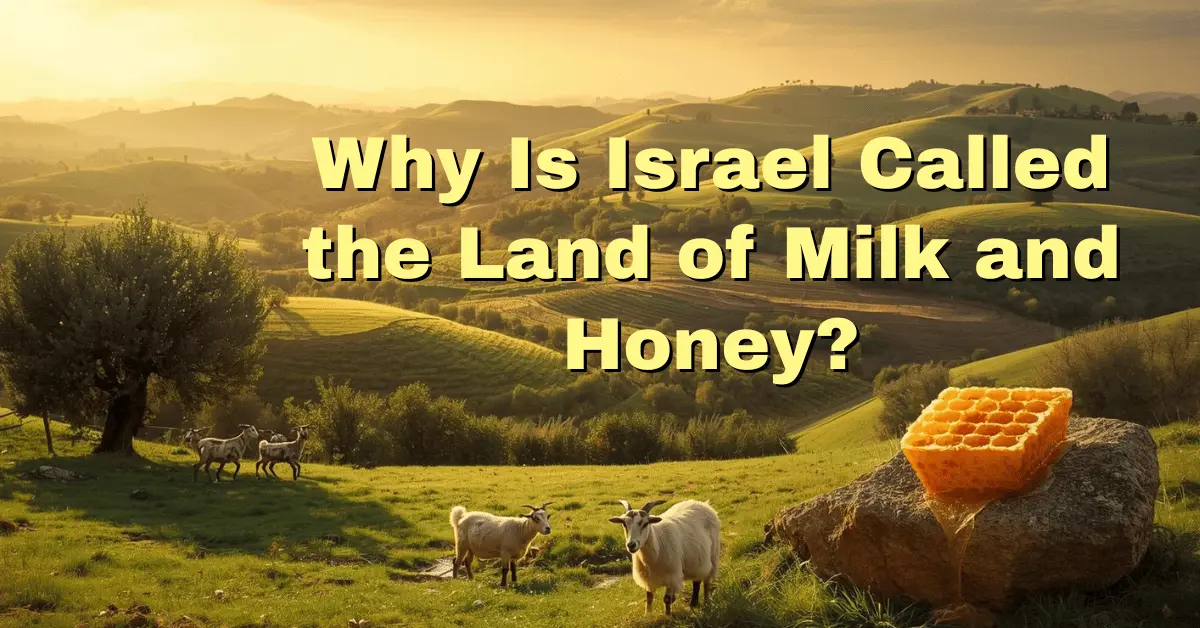

Few biblical phrases are as well-known and as richly symbolic as the “land of milk and honey.” Found throughout the Old Testament, this expression paints a vivid picture of abundance, blessing, and divine promise. To the Israelites wandering in the desert, it represented hope for a new life; to believers today, it continues to symbolize God’s provision, faithfulness, and generosity.
But what does this phrase actually mean? Why is Israel called the land of milk and honey? And what deeper spiritual truths can we uncover about milk and honey in Scripture?
Where Is the Land of Milk and Honey in the Bible?
The phrase “land flowing with milk and honey” appears more than 20 times in the Old Testament, often connected to God’s promise to deliver His people from slavery in Egypt and into the land of Canaan.
📖 Key references include:
- Exodus 3:8 — “So I have come down to rescue them from the hand of the Egyptians and to bring them up out of that land into a good and spacious land, a land flowing with milk and honey.”
- Leviticus 20:24 — “You will inherit their land, a land flowing with milk and honey. I am the Lord your God, who has set you apart from the nations.”
- Numbers 13:27 — When the spies explored Canaan, they returned saying, “We went into the land to which you sent us, and it does flow with milk and honey! Here is its fruit.”
- Deuteronomy 31:20 — “When I have brought them into the land flowing with milk and honey, the land I promised on oath to their ancestors…”
Each reference underscores that this land was not chosen randomly—it was divinely appointed and promised. The repeated use of the phrase emphasized its importance: this land was the fulfillment of God’s covenant with Abraham, Isaac, and Jacob.
Why Is Israel Called the Land of Milk and Honey?
To ancient peoples, calling a place “flowing with milk and honey” was a striking metaphor. In a world where food scarcity and drought were constant threats, the image of a land overflowing with nourishment and sweetness conveyed unparalleled prosperity.
Milk: A Symbol of Daily Sustenance
In biblical times, milk was not only from cows but often from goats and sheep. It represented:
- Nutrition and vitality — a staple food for families.
- Simplicity and provision — milk was accessible, common, and essential for survival.
- Agricultural richness — an abundance of milk implied fertile pastures and thriving livestock.
Honey: A Symbol of Delight and Luxury
The “honey” mentioned in Scripture was usually date honey or fruit syrups rather than bee honey. It symbolized:
- Sweetness and pleasure — a treat beyond daily sustenance.
- Cultural prosperity — abundant fruit trees suggested a stable, fertile land.
- Divine blessing — honey was rare and valuable, representing God’s generosity.
✨ Put together, milk and honey represented a land with both essentials and luxuries—a land where survival and joy went hand in hand.
What Is Meant by the Land of Milk and Honey?
The meaning of this phrase goes far beyond a fertile geography. It embodies freedom, blessing, and divine faithfulness.
A Place of Rest and Fulfillment
After centuries of slavery in Egypt and years of wandering in the wilderness, the Israelites longed for stability. The Promised Land was more than territory—it was a home of rest, abundance, and peace.
A Covenant Symbol
God’s promise of a land flowing with milk and honey reaffirmed His covenant with His people. It symbolized that He would not only deliver them from oppression but also establish them in prosperity. The land itself became a living testimony of God’s faithfulness.
Historical and Geographical Context of the Promised Land
To understand why Israel was described this way, it helps to look at the geography of ancient Canaan.
Fertile Valleys and Abundant Resources
The land of Canaan had:
- The Jordan River Valley, providing water and fertile soil.
- Hillsides ideal for vineyards, olive groves, and fig trees.
- Plains perfect for raising livestock, ensuring a supply of milk.
Compared to the arid deserts surrounding it, Canaan stood out as a land of abundance—truly fitting the description of milk and honey.
Archaeological Insights
Historical records and archaeological findings suggest that ancient Canaan was indeed agriculturally rich, with evidence of vineyards, grain fields, and thriving trade routes. For a people coming from slavery and wilderness wandering, this was nothing short of miraculous.
Spiritual Symbolism of Milk in the Bible
Milk carries multiple layers of symbolism beyond nourishment.
Milk as Spiritual Growth
- 1 Peter 2:2 — “Like newborn babies, crave pure spiritual milk, so that by it you may grow up in your salvation.”
Here, milk is a metaphor for God’s Word, essential for early spiritual development.
Milk as God’s Provision
- Isaiah 55:1 — “Come, buy wine and milk without money and without cost.”
Milk symbolizes God’s free provision of life and blessing, showing that He gives what His people need abundantly.
The Symbolism of Honey in the Bible
Honey, too, holds deep spiritual meaning.
Honey as Sweetness of God’s Word
- Psalm 19:10 — God’s laws are “sweeter than honey, than honey from the honeycomb.”
- Ezekiel 3:3 — The prophet describes God’s Word as tasting “sweet as honey.”
Honey represents the delight and joy found in God’s truth.
Honey as a Sign of Promise
When the Israelites spied out the land and described it as flowing with milk and honey, honey stood for luxury and fulfillment beyond necessity.
The Contrast Between Egypt and the Land of Milk and Honey
One of the most striking aspects of the phrase is how it contrasts Egypt with Canaan.
Egypt: A Place of Bondage and Scarcity
Though Egypt was known for the Nile River and agricultural wealth, for the Israelites it was primarily a place of slavery and oppression. Their labor sustained Egypt’s prosperity, yet they themselves lived in hardship. The land symbolized bondage, struggle, and lack of freedom.
Canaan: A Place of Freedom and Abundance
In contrast, the land of milk and honey represented freedom, ownership, and inheritance. No longer forced to build for others, the Israelites would now cultivate and enjoy the fruits of their own labour. This dramatic contrast highlights the spiritual journey from bondage under sin to freedom in God’s promises.
The Land of Milk and Honey in Christian Theology
For Christians, the concept of the land of milk and honey holds profound spiritual lessons.
A Foreshadow of Heaven
The Promised Land is often seen as a foreshadow of eternal rest in God’s presence—a place where abundance and peace are everlasting.
A Call to Trust God’s Provision
Just as Israel was called to trust God to bring them into the land, believers today are called to trust Him to provide, guide, and fulfill His promises.
How the Land of Milk and Honey Inspires Believers Today
While modern Christians are not literally entering Canaan, the imagery still resonates deeply in daily life.
A Vision of God’s Fullness
The land reminds believers that God is not a God of scarcity. He provides not only what sustains life but also what brings joy, beauty, and fulfillment. Just as honey brought sweetness beyond necessity, God blesses His people with goodness beyond survival.
A Call to Hope in Times of Trial
For those experiencing “wilderness seasons” in life—times of uncertainty, hardship, or waiting—the promise of a land flowing with milk and honey serves as a reminder that God leads His people toward hope and restoration. It keeps faith alive even when circumstances feel dry or barren.
Lessons for Modern Readers
The phrase still carries relevance today.
- Abundance Is Spiritual, Not Just Material — God’s blessings often extend beyond possessions into peace, joy, and purpose.
- God’s Promises Require Faith — The Israelites had to trust God to enter the land, reminding us that faith unlocks blessing.
- God Provides Both Necessities and Delights — Milk symbolizes daily needs; honey symbolizes joy. Together, they remind us that God gives in fullness, not scarcity.
Conclusion
The land of milk and honey stands as a timeless symbol of God’s abundance, freedom, and faithfulness.
- It contrasts Egypt and Canaan, showing the shift from slavery to freedom.
- It offers hope for modern believers, reminding us that God’s blessings are both sustaining and joyful.
- It points forward to eternal rest, foreshadowing the ultimate fulfillment of God’s promises in His kingdom.
This phrase, woven throughout Scripture, continues to encourage readers today: God is faithful, His provision is abundant, and His promises never fail.
👉 If you’d like to explore more about biblical phrases and their meanings, you can visit Bible Gateway to read different translations and commentaries.
