
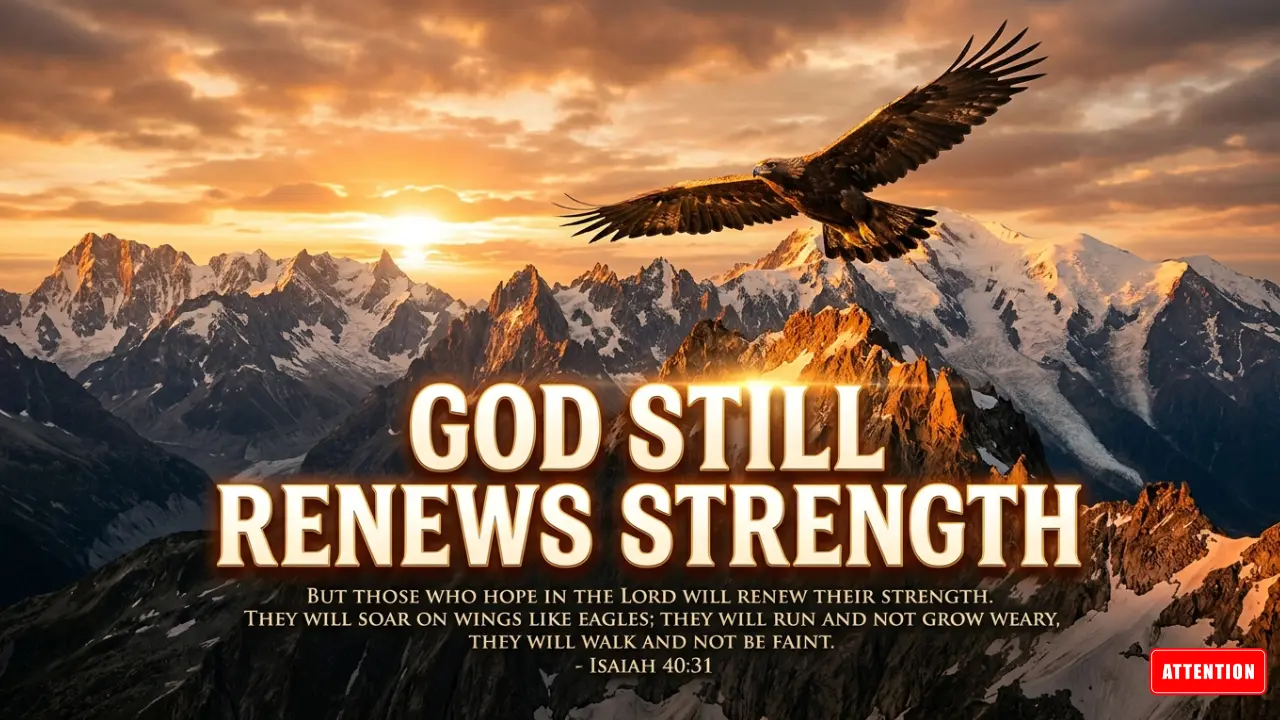

There are forms of weariness that are difficult to explain. They are not always visible and they do not always come from a single event. Instead, they build slowly over time through pressure, responsibility, disappointment or simply the effort of continuing when energy feels low.
In those moments, strength does not disappear all at once. It fades quietly. You keep moving but it feels heavier than it should. What once felt manageable begins to require more effort and even rest does not always bring relief.
This is the condition that Book of Isaiah 40:31 speaks into. It does not dismiss weariness or pretend that strong faith removes exhaustion. Instead, it acknowledges human limits and places them beside something that does not weaken.
Behind the Promise
Isaiah 40 begins a major turn in the book. After many chapters marked by warning and judgment, this chapter opens with words of comfort: “Comfort ye, comfort ye my people.” The tone is full of reassurance, majesty and hope. God speaks to a people who need to remember who He is. They are not left with themselves. They belong to the everlasting God.
This matters because Isaiah 40:31 is not an isolated motivational statement. It comes near the end of a chapter filled with the greatness of God. The chapter speaks of His glory, His power over the nations, His wisdom beyond measure and His unsearchable understanding. That larger context is essential. The promise of renewed strength rests on the character of the God who gives it.
For a Weary People
Isaiah 40 addresses people who are tempted toward discouragement. They feel the weight of waiting. They know what it means to feel small. They are tempted to think their way is hidden from the Lord and that their cause has been ignored. Into that mindset, God speaks not with irritation but with revelation. He reminds them that He never faints and never grows weary.
This is one of the great strengths of the chapter. God does not begin by praising human endurance. He begins by revealing Himself. That is always where real hope begins. Weary people do not need flattery. They need a true vision of God.
God’s Greatness
The famous words of Isaiah 40:31 make full sense only after reading the verses before them. God is the Creator of the ends of the earth. He does not faint. He does not grow tired. His understanding cannot be searched out. He gives power to the faint and increases strength for the weak.
That order matters. The promise is not, “Look at your strength and be encouraged.” It is, “Look at your God and be strengthened.” The renewed life of verse 31 grows out of the unwearied power of God Himself.
Wait Upon the Lord
The heart of the verse is found in its opening phrase: “But they that wait upon the Lord.” This is the condition tied to the promise. Waiting on the Lord is not passive hopelessness. It is not empty delay. It is not spiritual laziness. In Scripture, waiting on the Lord is active trust, expectant dependence and patient confidence in God.
This kind of waiting is difficult because human instinct wants immediate resolution. People want answers quickly, strength instantly and clarity without delay. But God often works in ways that require waiting. He teaches His people to rest their hope in Him rather than in speed, control or visible outcomes.
Waiting Is an Expression of Trust
To wait on the Lord is to say that His timing is wiser than human urgency. It is to resist the impulse to run ahead in unbelief or collapse in despair. Waiting does not mean doing nothing in every sense. It means remaining dependent on God, trusting His character and refusing to treat delay as abandonment.
This is one reason waiting can be so spiritually refining. It exposes what the heart is really leaning on. If faith rests only on immediate results, it will weaken quickly. But when faith rests on God Himself, waiting becomes possible.
Waiting Is More Than Enduring Time
Some people assume waiting on the Lord simply means surviving until something changes. But biblical waiting is more personal than that. It is directed toward God. The focus is not merely on time passing. The focus is on the Lord being trusted while time passes.
That makes all the difference. There is a kind of waiting that is bitter, restless and unbelieving. Isaiah 40:31 speaks of another kind. This waiting leans on God, hopes in Him and remains open to His strength.
“Shall Renew Their Strength”
This promise is one of the sweetest in all of Scripture. Those who wait upon the Lord “shall renew their strength.” The verse does not say they already feel strong. It does not say they were never weak. It says their strength will be renewed.
That word matters. Renewal means fresh supply. It means God meets exhausted people with new strength from Himself. The image is not of human energy being endlessly self-generated, but of divine strength being given again and again to those who need it.
God And Weakness
This promise is deeply comforting because it assumes weakness without condemning it. The Lord does not mock the faint. He gives power to them. He does not shame the weary. He renews them. That reveals something beautiful about His heart. He knows the frame of His people. He remembers that they are dust. He responds to weakness with help.
This should change how weary believers think about themselves before God. Exhaustion does not mean He has no use for them. Need does not disqualify them from His care. In fact, weakness is often the very place where His strength becomes most evident.
Not Always Dramatic
The language of the verse is vivid, but the way God renews strength is not always dramatic in appearance. Sometimes He gives strength through a clear answer. Sometimes through quiet endurance. Sometimes through a word from Scripture that steadies the soul. Sometimes through daily grace that allows a person simply to keep going.
That is important because people often imagine divine strength must always feel sudden or overwhelming. But God often renews strength in ways that are quiet and real. The believer looks back and realizes that God carried them through what they could not have endured alone.
“They Shall Mount Up With Wings as Eagles”
This image is memorable and beautiful. Eagles suggest height, lift, freedom and strength above what weighs others down. Isaiah uses this language to show that God’s renewal can raise His people above the crushing heaviness that once seemed impossible to escape.
The image does not mean believers become untouched by earthly realities. It means God enables them to rise in a way human weakness alone could never produce. He lifts the soul with His own sustaining power.
This Is a Picture of Divine Elevation
There are seasons when a person feels pinned down by life. Thoughts are heavy. burdens are thick. hope feels low. The image of mounting up with wings as eagles speaks into that experience. God is able to lift His people above the paralysis of despair.
This does not necessarily mean outward circumstances change immediately. Often the first lifting is inward. The soul sees God again. Hope rises again. Perspective clears again. That is no small gift. It is often the beginning of renewed strength.
The Image Points Beyond Human Effort
No one teaches an eagle to rise by human effort. The image itself suggests something beyond ordinary striving. In the same way, the strength of Isaiah 40:31 is not self-manufactured. It comes from God. He gives what human weakness could never create.
That should humble and comfort the believer at the same time. Humble, because the strength is not earned. Comforting, because it means the promise does not rest on natural ability.
“They Shall Run, and Not Be Weary”
The verse now shifts from soaring imagery to the language of sustained movement. Running suggests active life, effort, calling and forward motion. The promise is not only that God gives moments of uplift, but that He also sustains His people in the demands of life.
This is important because many people need more than one dramatic rescue moment. They need strength for the ongoing race. They need grace for responsibilities, obedience, service, trials and perseverance over time. Isaiah 40:31 speaks to that need.
Strength for Active Obedience
Running implies movement with purpose. God’s strength is not given so His people can admire it from a distance. It is given so they may continue in faithfulness. There are callings to fullfill, temptations to resist, burdens to carry and duties to perform. The Lord strengthens His people for that life.
This corrects the idea that waiting on God leads to passivity. True waiting produces renewed strength and renewed strength leads to faithful movement. Those who wait rightly are not left idle. They are prepared to move under God’s power.
Weariness in Service Is Real
The promise that they shall run and not be weary is precious because service itself can be exhausting. Even good and God-honouring responsibilities can drain a person. Ministry can tire the heart. Family burdens can wear on the soul. Long obedience can test endurance.
Isaiah 40:31 does not deny that such weariness is possible. It declares that God is able to sustain His people through it. The work may be real and demanding, but divine strength is greater.
“They Shall Walk and Not Faint”
The final line of the verse is often the most quietly profound. Walking is less dramatic than soaring or running. It suggests ordinary life. Daily faithfulness. Step-by-step endurance. Much of the Christian life feels more like walking than flying.
That is why this last promise may be the most needed of all. Many believers are not in dramatic seasons. They are simply trying to keep walking. They need strength not only for rare spiritual highs or moments of crisis, but for the repeated duties and hidden challenges of daily life.
God Cares About Ordinary Endurance
The structure of the verse is beautiful. It includes heights, exertion and ordinary steps. God is not only the God of extraordinary moments. He is also the God of daily perseverance. He gives grace for regular life.
This matters deeply because ordinary faithfulness can feel unimpressive. Yet Scripture honours it. To walk and not faint is no small thing. It means God preserves the believer through the long road, not only through isolated moments of visible triumph.
Quiet Strength
The world celebrates dramatic displays of power. Scripture often honours quiet endurance. To keep walking with God through unanswered questions, slow grief, recurring weakness and long seasons of waiting is a profound work of grace.
Isaiah 40:31 recognizes that. The verse ends not with a spectacle, but with sustained faithfulness. That should encourage every believer whose life feels more like steady walking than soaring flight. God is in that too.
Not Instant Escape
Isaiah 40:31 is full of hope, but it can be misunderstood if read carelessly. It does not promise instant escape from every hardship. It does not teach that waiting on the Lord will always remove pain immediately. Nor does it mean believers will never feel weak again.
The promise is deeper than that. God renews strength. He sustains. He preserves. He lifts. He enables. But He often does so in the middle of real struggle, not always by removing it at once.
Renewal Is Often Given in the Process
Many believers can testify that God did not remove the burden right away, but He did give strength to bear it. That too is fullfillment of this verse. Divine help does not always appear in the form human wisdom expects. Yet it is no less real.
This matters because some hearts become discouraged when life remains difficult. They assume God has not answered because the outward pressure is still present. But Isaiah 40:31 teaches that God’s answer often comes as renewed inward strength.
Weakness Is Not Failure
A believer may still know moments of exhaustion, fear or heaviness. That does not mean Isaiah 40:31 is false. The promise does not turn God’s people into naturally tireless creatures. It means that their ultimate sustaining power comes from the Lord and He will not fail to supply what they need for His purposes.
That truth should protect against despair. The presence of weakness is not proof of divine absence. Often it is the place where God teaches His people to wait more deeply.
How This Verse Points to Christ
Isaiah 40:31 becomes even richer in the light of Jesus Christ. He is the One through whom the weary are invited to find rest. He is the Shepherd who gives life to His sheep. He is the Savior in whom the grace of God comes near in full.
Christ does not merely tell the weary to endure. He bears the burden of sin, reconciles His people to God, and gives the Holy Spirit to strengthen them. The renewed strength of Isaiah 40:31 finds its deepest foundation in the saving work of Christ.
Christ Meets the Weary With Mercy
The Gospels show again and again that Jesus does not turn away the tired, burdened, or weak. He receives them. He restores them. He speaks peace to them. This fits beautifully with Isaiah 40:31. The God who renews strength is not distant from human weakness. In Christ, He has come near.
This gives the promise personal warmth. Strength is not an abstract force flowing through the universe. It is the help of the living God given through the Savior who knows human weakness from within the realities of earthly life.
Strength Flows From Union With Him
The Christian does not merely admire Christ and then attempt life alone. Life in Him is life supplied by Him. He is the vine and His people are the branches. Apart from Him they can do nothing. In Him they bear fruit and continue on.
That means Isaiah 40:31 fits naturally into the New Testament vision of dependence on Christ. Waiting on the Lord reaches its fullest beauty in resting upon the One who has already secured peace with God through His death and resurrection.
How Isaiah 40:31 Speaks to Daily Life
This verse continues to matter because weariness continues to mark life in a fallen world. People grow tired in many ways. Some are emotionally drained. Some are spiritually weary. Some are carrying long-term burdens that others do not fully see. Isaiah 40:31 speaks to all of that.
For the Person Tired of Waiting
Waiting is hard when answers seem delayed. This verse reminds the heart that waiting on the Lord is not wasted time. It is often the place where strength is renewed most deeply.
For Responsibility
Some burdens come from simply trying to carry what life demands. Work, family, ministry, grief and daily concerns can all weigh heavily. Isaiah 40:31 says that God is able to strengthen His people for both running and walking.
For the Person Afraid of Burning Out
There are believers who fear they do not have enough strength for what lies ahead. This verse answers that fear by turning attention away from human supply and back to divine sufficiency. God knows how to sustain His people better than they know how to sustain themselves.
Why This Verse Endures
Isaiah 40:31 endures because it tells the truth about both God and human beings. Human beings grow tired. Even the young grow weary. Natural strength, however impressive, has limits. But God does not faint. He does not weaken. He does not run out of power, patience, wisdom or mercy.
The verse also endures because it offers hope without pretending life is easy. It does not shame weakness or worship strength. It redirects the weary soul to the Lord. That is why it remains so beloved. It gives tired people somewhere real to go.
Most of all, it endures because the God it reveals has not changed. He still gives power to the faint. He still increases strength to those who have none. He still renews those who wait for Him. And He still proves, again and again, that the deepest strength in the Christian life is not found in the self, but in the Lord who never grows weary.
Related Posts You May Want to Read Next
- Kept by Perfect Peace: The Meaning of Isaiah 26:3
- The Peace of God That Guards the Heart: Philippians 4:6–7
Frequently Asked Questions
What does “wait upon the Lord” mean in Isaiah 40:31?
It means trusting God with patient dependence and expectant faith. Waiting on the Lord is not passive hopelessness. It is active trust in God’s timing, power and care.
Does Isaiah 40:31 mean God will remove every problem immediately?
No. The verse does not promise instant escape from every hardship. It promises renewed strength from God in the middle of weakness, delay and pressure.
What does “renew their strength” mean?
It means God gives fresh strength to weary people. This renewed strength may come through endurance, inner peace, spiritual courage or the grace to keep going.
What does “mount up with wings as eagles” mean?
It is a picture of God lifting His people above crushing heaviness. The image shows strength, uplift and renewed perspective that come from the Lord.
What does “walk, and not faint” mean?
It refers to daily endurance. Much of life feels more like walking than soaring and this part of the verse promises God’s help in ordinary, steady faithfulness.
