
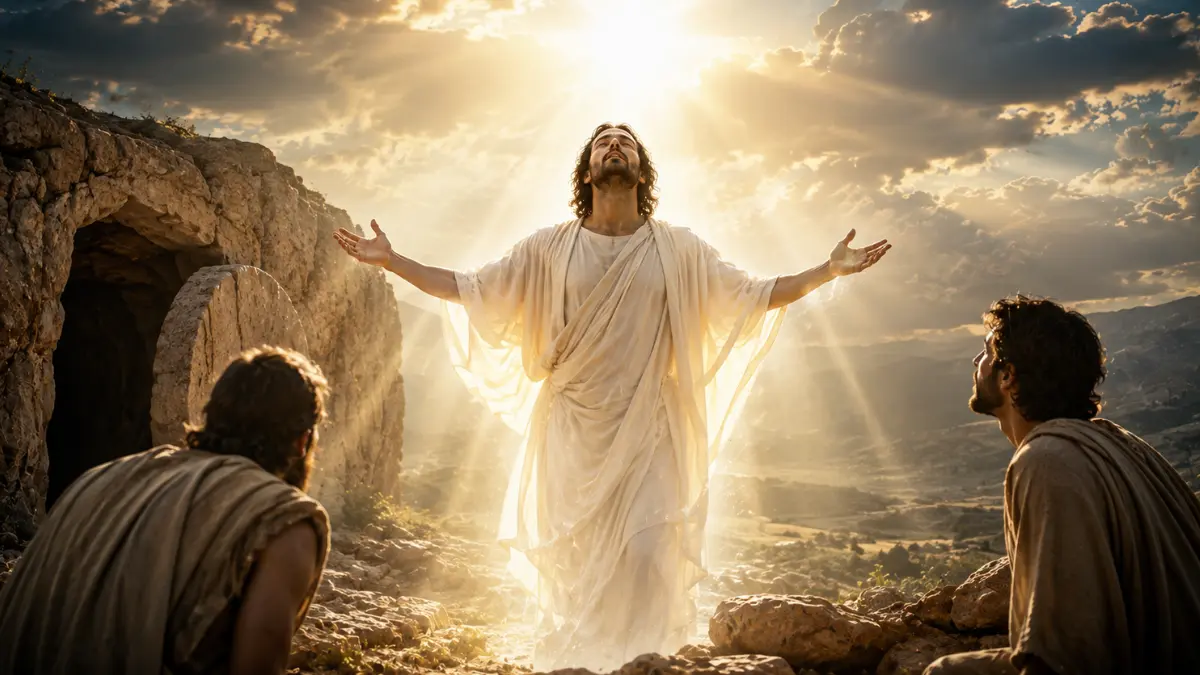

“Flesh and blood cannot inherit the kingdom of God” means that human beings cannot possess God’s completed kingdom while remaining in their present mortal and corruptible condition. Paul does not reject bodily existence. He teaches that God must transform the mortal body so that corruption puts on incorruption and mortality puts on immortality.
Paul writes:
“Now this I say, brethren, that flesh and blood cannot inherit the kingdom of God; neither doth corruption inherit incorruption.” — 1 Corinthians 15:50 KJV
The second half of the verse explains the first. “Flesh and blood” describes ordinary human life in its present perishable condition. The body experiences weakness, ageing, disease, and death. It cannot remain unchanged in a kingdom where corruption and death no longer rule.
This is why Paul immediately explains that dead believers will be raised and living believers will be changed.
What Does 1 Corinthians 15:50 Mean?
First Corinthians 15:50 teaches that humanity’s present mortal condition cannot inherit God’s eternal kingdom without transformation. The body must not be permanently abandoned, but it must be raised or changed into an incorruptible condition.
Paul has spent much of 1 Corinthians 15 defending bodily resurrection. He explains that Christ rose from the dead and that those who belong to Him will also rise.
He then answers how the dead are raised and what kind of body they receive. The body is sown in corruption but raised in incorruption. It is sown in weakness but raised in power. It is sown as a natural body but raised as a spiritual body.
Verse 50 explains why this transformation is necessary.
A corruptible body belongs to the present age, where human beings suffer physical decline and eventually die. God’s completed kingdom belongs to an incorruptible order in which death cannot continue to rule.
Paul does not say that a human being has no hope because the body is mortal. He says that the mortal condition must change.
The verse therefore contains both a limitation and a promise. Humanity cannot inherit the kingdom in its present condition, but God can give His people the condition they need.
What Does “Flesh and Blood” Mean?
“Flesh and blood” is an expression for ordinary human beings in their present earthly condition.
Human beings in this flesh-and-blood condition experience exhaustion, injury, illness, ageing, and death. They depend on created conditions for life and cannot overcome mortality through their own power.
Paul uses the expression to emphasize human limitation.
Elsewhere in Scripture, “flesh and blood” can distinguish human beings from God or from spiritual powers. In 1 Corinthians 15:50, the parallel phrase makes Paul’s meaning especially clear:
“Neither doth corruption inherit incorruption.”
“Flesh and blood” therefore describes mortal and corruptible humanity.
The expression does not mean that human blood is morally unclean. Paul is not providing an anatomical explanation of the resurrection body or teaching that one physical substance is evil.
He is describing the complete human condition as it now exists under mortality.
In some passages, Paul uses “flesh” for desires and conduct opposed to God. That is not the primary meaning here. The surrounding discussion focuses on bodies, resurrection, corruption, mortality, and immortality.
Other biblical passages address sinful conduct and kingdom inheritance. First Corinthians 15:50 explains why bodily transformation remains necessary even for people who already belong to Christ.
Does This Mean Physical Bodies Cannot Inherit God’s Kingdom?
No. Paul does not teach that believers must become bodiless spirits before they can inherit God’s kingdom.
The entire chapter argues for bodily resurrection. Paul repeatedly speaks of a body being sown, raised, and transformed.
He describes the future body as:
- Incorruptible
- Glorious
- Powerful
- Spiritual
A spiritual body is still a body. The word “spiritual” describes its transformed condition and its complete suitability for life under God’s Spirit. It does not mean unreal, invisible, or nonphysical.
Paul is not contrasting a body with no body. He is contrasting two bodily conditions:
- The present mortal and corruptible body
- The future immortal and incorruptible body
God does not permanently discard embodied human life. He transforms it.
Christ’s resurrection proves that Paul is not describing an escape from bodily existence. Jesus is the firstfruits of the resurrection harvest, and His risen life guarantees the future resurrection of those who belong to Him.
“Flesh and blood cannot inherit” therefore does not mean that bodies have no place in God’s future. It means that bodies cannot remain under the present condition of corruption and death.
What Does It Mean to Inherit the Kingdom of God?
To inherit the kingdom of God means to receive the completed kingdom God has promised His people.
Believers already belong to Christ and live under God’s rule. The kingdom is present wherever God’s saving authority is received and obeyed.
However, 1 Corinthians 15 looks toward the future completion of that kingdom. Paul describes:
- The resurrection of the dead
- The transformation of living believers
- The defeat of mortality
- The final destruction of death
The word “inherit” emphasizes receiving what God has promised.
Human beings do not earn immortality or transform themselves into an incorruptible condition. God gives this inheritance through His saving work in Christ.
A person can belong to Christ now while still living in a mortal body. Christians continue to experience weakness, illness, ageing, and death because the final bodily transformation has not yet occurred.
Present salvation is real, but believers still await its completed bodily expression.
They already receive forgiveness, reconciliation, and the presence of God’s Spirit. They still await the moment when God raises or transforms their bodies.
The completed kingdom cannot remain free from death while its people remain permanently subject to death. God therefore prepares them for their inheritance by changing their bodily condition.
Why Can Corruption Not Inherit Incorruption?
Corruption refers to the present body’s vulnerability to deterioration, decay, and death. Incorruption describes a condition that can no longer decay or perish.
These conditions cannot remain together permanently.
A corruptible body belongs to an age in which human life ends in death. An incorruptible body belongs to the completed kingdom in which death no longer rules.
Paul does not say that a corruptible person has no hope. He says that the corruptible condition must be changed.
He writes:
“For this corruptible must put on incorruption and this mortal must put on immortality.” — 1 Corinthians 15:53 KJV
The phrase “must put on” expresses necessity. God’s promised future requires a real transformation.
Paul uses the picture of putting on clothing. The mortal puts on immortality, and the corruptible puts on incorruption.
This language also preserves personal continuity. God does not replace the believer with an unrelated being. The person who lived in a mortal condition receives an immortal condition through God’s power.
Immortality does not mean merely continuing forever with the same weakness, pain, and physical decline. God transforms the body so that death can no longer control it.
This resurrection life comes through Christ. Paul previously contrasted Adam, who became a living soul, with Christ, the life-giving last Adam.
Adam represents humanity’s present earthly condition. Christ gives the resurrection life required for the kingdom’s incorruptible future.
Why Must Both the Dead and the Living Be Changed?
Paul reveals that not every believer will die before Christ’s return, but every believer will undergo transformation.
He writes:
“Behold, I shew you a mystery; We shall not all sleep, but we shall all be changed.” — 1 Corinthians 15:51 KJV
“Sleep” is a biblical picture of physical death.
Some believers will have died when the appointed moment comes. God will raise them incorruptible.
Other believers will still be alive. They will not need to die before God can transform them.
Dead believers will be raised, while living believers will be changed.
This is the mystery Paul reveals. The final resurrection transformation includes the entire people of Christ, not only those who have already entered the grave.
Verse 50 applies to both groups. A dead body cannot remain in corruption, and a living mortal body cannot enter the completed kingdom unchanged.
Every believer needs the condition God alone can provide.
Belonging to Christ now does not mean that the final bodily transformation has already happened. Christians still live in bodies subject to the limitations of the present age.
Their relationship with God is real, but they still await bodily redemption.
Paul therefore teaches that death itself is not the necessary transformation. God can change living believers without requiring them to die first.
The essential requirement is that mortality gives way to immortality.
What Do the Last Trump and the Twinkling of an Eye Mean?
Paul explains that the transformation will happen:
“In a moment, in the twinkling of an eye, at the last trump.” — 1 Corinthians 15:52 KJV
“In the twinkling of an eye” emphasizes the suddenness of the change. Paul is not giving a scientific measurement of time. He is saying that God will accomplish the transformation decisively rather than through a slow human process.
“The last trump” announces the appointed moment when God raises the dead and changes living believers.
Trumpets in Scripture can announce royal arrival, divine action, gathering, warning, or victory. In this passage, the trumpet marks the resurrection and transformation of God’s people.
Paul writes:
“For the trumpet shall sound, and the dead shall be raised incorruptible and we shall be changed.” — 1 Corinthians 15:52 KJV
Paul does not use this passage to provide a complete end-times timetable. Christians hold different views about how particular prophetic events relate to one another.
His immediate message is clear. God has appointed a moment when the present mortal condition will end for His people.
The dead will not remain under corruption. Living believers will not enter the completed kingdom in unchanged mortal bodies.
God will act, and the transformation will include them all.
What Hope Does 1 Corinthians 15:50 Give Believers?
First Corinthians 15:50 gives hope because present human weakness is not the believer’s final condition.
The body may experience illness, disability, injury, ageing, exhaustion, and pain. None of these conditions can define the eternal future God has promised.
The verse does not tell believers to overcome mortality through greater discipline, medical progress, or personal strength.
It tells them that God will transform what they cannot make immortal themselves.
Dead believers will be raised. Living believers will be changed. The corruptible will put on incorruption, and the mortal will put on immortality.
This promise also shows that the body matters to God. His answer to mortality is not the permanent abandonment of embodied human life. His answer is resurrection and transformation.
“Flesh and blood cannot inherit the kingdom of God” does not mean that human beings have no place in God’s future. It means that humanity’s present mortal condition cannot remain unchanged in an incorruptible kingdom.
Christian hope therefore does not rest on the present body defeating death through its own strength. It rests on God, who raised Christ and promises to transform His people for life in His completed kingdom.

1 thought on ““Flesh and Blood Cannot Inherit the Kingdom of God” Meaning”