
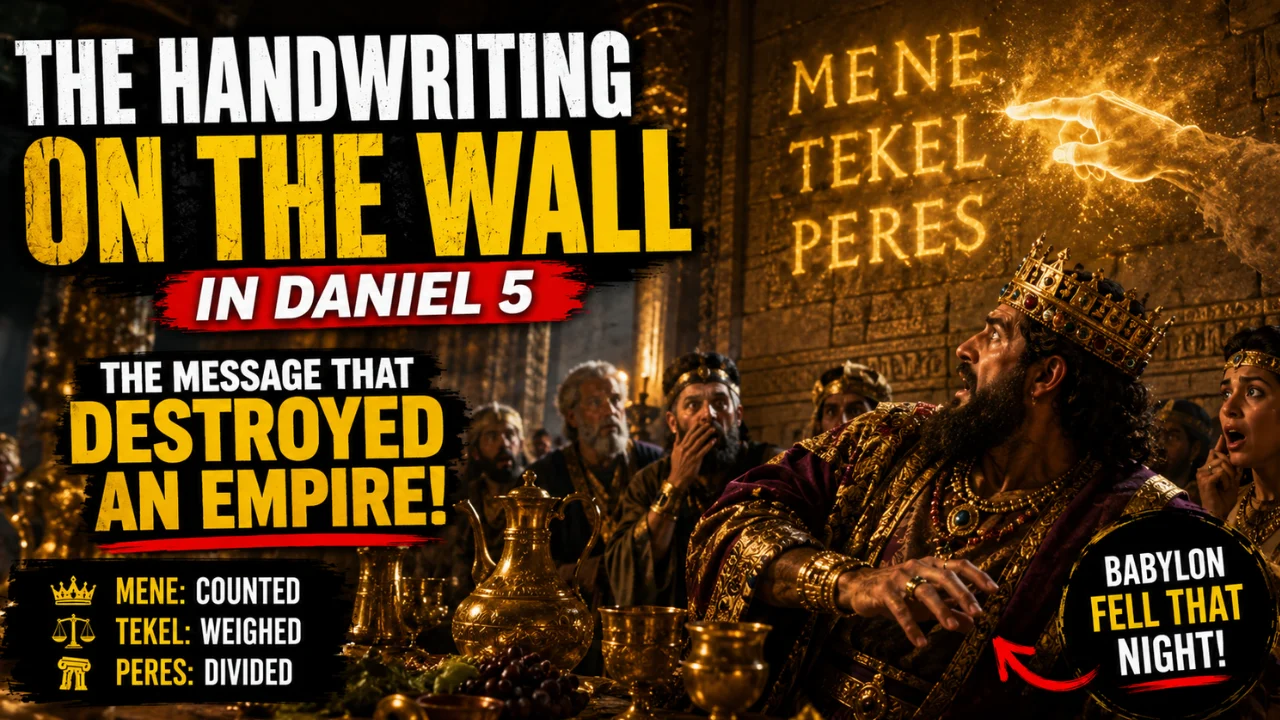

Daniel 5 presents the handwriting on the wall as a divine judicial verdict against Babylonian kingship. During Belshazzar’s royal banquet, a mysterious hand writes words upon the palace wall, announcing that Babylon has come under irreversible judgment before the God of Israel. Daniel interprets the writing as a declaration that the kingdom has been numbered, weighed and divided.
The scene is not merely a warning about pride in a general moral sense. It is a theological confrontation between imperial Babylon and the sovereignty of the Lord of heaven. The chapter presents Babylon as an empire that exalted itself against God, profaned holy things, ignored revealed knowledge and now stands under divine sentence.
Daniel 5 Within the Theology of Daniel
The meaning of Daniel 5 becomes clearer within the broader structure of the Book of Daniel. Throughout the book, earthly kingdoms appear powerful, secure and permanent, yet they repeatedly prove temporary before divine sovereignty. Kings rule for a season, empires rise with confidence and political authority seems absolute, but each kingdom ultimately stands under the authority of God rather than above it.
Daniel consistently emphasizes that:
- God removes kings and establishes kings, showing that all political authority ultimately remains under divine control
- earthly dominion is temporary, since even the greatest empires eventually decline and pass away
- human pride leads to humiliation when rulers exalt themselves above God and trust in their own power
- wisdom belongs to God alone, which is why human systems repeatedly fail without divine insight
- kingdoms remain accountable before divine authority and are judged according to God’s standards
Daniel 5 continues these themes, but now the focus shifts from prophetic dreams and warnings to direct historical judgment. Earlier chapters showed kings being warned, humbled or confronted. In this chapter, however, the moment of reckoning arrives in full. Babylon is no longer merely warned. It is condemned, continuing [the recurring theme in Daniel that human kingdoms remain temporary beneath the eternal sovereignty of God — The Sovereignty of God Over Earthly Kingdoms in Daniel].
Belshazzar’s Feast as a Royal Assertion of Power
The chapter opens with a royal banquet attended by nobles, wives and concubines. The feast is deliberately excessive. It reflects imperial confidence, wealth, security and self-exaltation. Babylon appears politically stable and culturally triumphant.
Yet the narrative immediately exposes the banquet as spiritually corrupt. Belshazzar commands that vessels taken from the Jerusalem temple be brought into the feast so that the company may drink from them while praising Babylonian gods.
This action transforms the banquet into an act of covenant desecration.
The Temple Vessels and Sacred Defilement
The temple vessels are central to the theological meaning of the chapter. These objects had belonged to the worship of the God of Israel and had been consecrated for sacred use within the temple.
Belshazzar does not merely display them as trophies of conquest. He uses them in a pagan feast while glorifying idols made of gold, silver, bronze, iron, wood and stone. The act symbolically asserts Babylonian supremacy over the God whose temple had been plundered.
Daniel later identifies this directly when he tells the king:
“You have lifted yourself up against the Lord of heaven.”
The issue is therefore not drunken excess alone. It is sacrilegious rebellion against divine holiness.
Holy Things Profaned Before Idols
Daniel intentionally contrasts the holy vessels with lifeless idols. The vessels belonged to the worship of the living God, yet Belshazzar uses them in praise of gods “which do not see or hear or know.”
This contrast exposes the theological blindness of Babylonian kingship. The empire treats sacred things as instruments of self-exaltation while worshiping powerless idols incapable of rule, revelation or judgment.
The Handwriting as Divine Intervention
At the height of the feast, fingers of a human hand appear and write on the palace wall near the lampstand. The timing matters. Divine judgment interrupts imperial celebration directly in the centre of Babylonian power. The message appears publicly, in full view of the king and his guests, turning a moment of pride into a moment of terror.
The palace suddenly becomes a courtroom.
Belshazzar’s reaction reveals the collapse of royal confidence:
- his thoughts alarm him, as the king immediately senses that the message carries judgment
- his face changes, reflecting fear and the sudden loss of composure before his nobles
- his strength fails, showing that political power offers no protection before divine authority
- his knees knock together, exposing the complete collapse of his confidence and control
The king who publicly profaned holy things cannot stand before divine revelation, reinforcing [the biblical theme that human pride collapses when confronted by the holiness and authority of God — How Pride Leads to Humiliation in the Bible].
The Failure of Babylonian Wisdom
Belshazzar summons Babylon’s wise men, enchanters, and astrologers, yet none can interpret the writing. This continues one of Daniel’s major theological patterns: Babylonian wisdom repeatedly fails before the mysteries of God.
Imperial knowledge, political authority, and pagan religious systems cannot penetrate divine revelation on their own. The inability of the wise men exposes the limitations of Babylon’s intellectual and religious claims.
Daniel alone can interpret the writing because wisdom belongs to the God who reveals mysteries and governs kingdoms.
Daniel’s Rebuke Before the Interpretation
Daniel does not begin by translating the words. He first brings a covenant accusation against Belshazzar.
This order is significant. The writing is not an isolated riddle detached from moral context. It is a judicial verdict rooted in the king’s guilt.
Daniel reminds Belshazzar of Nebuchadnezzar’s earlier humiliation. God had already demonstrated His sovereignty over Babylonian kingship by humbling Nebuchadnezzar when pride overtook him. Belshazzar inherited knowledge of those events but refused humility.
Knowledge and Accountability
Daniel specifically says:
“Though you knew all this, you have not humbled your heart.”
This statement intensifies Belshazzar’s guilt. He is not condemned merely as a pagan ruler ignorant of God’s authority. He possessed historical knowledge of divine judgment and still exalted himself against the Lord.
Daniel 5 therefore emphasizes accountable revelation. Knowledge without humility increases judgment rather than removing it.
“You Have Lifted Yourself Up Against the Lord of Heaven”
Daniel identifies the true nature of Belshazzar’s sin by accusing him of exalting himself against the Lord of heaven. The king profaned holy vessels, praised idols, and failed to honor the God who held his life and ways in His hand.
This accusation frames the entire chapter theologically:
- Babylonian kingship has become self-exalting
- imperial power has rejected divine sovereignty
- holy things have been desecrated
- idolatry has replaced humility before God
The feast therefore becomes an act of rebellion against heaven itself.
Mene: The Kingdom Numbered
“Mene” means that God has numbered the days of the kingdom and brought it to an end.
The word presents history under divine administration. Babylon’s empire is not self-sustaining or permanent. Its duration has been measured by God Himself, and its appointed time has now expired.
This directly challenges imperial ideology. Babylon believed its power secured its future, but Daniel reveals that kingdoms exist only within limits established by divine sovereignty. Even the greatest empire cannot extend its life beyond the boundaries God has determined, echoing [the recurring biblical theme that nations and rulers remain subject to God’s appointed times and authority — God’s Control Over the Rise and Fall of Kingdoms].
Tekel: Weighed in the Balances
“Tekel” means that Belshazzar has been weighed in the balances and found lacking.
This is courtroom language. The king has undergone divine evaluation. His rule, actions, pride, and response to revelation have been measured against God’s standard and judged deficient.
The imagery reverses Babylon’s apparent greatness. In the banquet hall, Belshazzar appears glorious before nobles and rulers. In the divine court, he is exposed as morally deficient and unable to stand under judgment.
Kingship Under Divine Evaluation
Daniel 5 presents kingship itself as accountable before God. Royal authority does not exempt rulers from judgment. Empires may dominate nations, but they remain subject to divine examination.
Belshazzar is weighed not by military success or political influence, but by humility before the Lord of heaven.
Peres: The Kingdom Divided
“Peres” announces that Babylon’s kingdom will be divided and given to the Medes and Persians.
This final verdict transfers dominion from one empire to another. Babylon’s fall is therefore not random political change or military accident. It is judicial removal under divine decree.
Daniel portrays imperial transition as governed by God rather than by human power alone. Kingdoms rise and fall within the sovereignty of the Lord who rules history, appointing their beginning and determining their end.
Immediate Fulfillment and the Fall of Babylon
The judgment is fulfilled the same night. Belshazzar is killed, and Babylon passes into Medo-Persian control.
The immediacy of the fulfillment reinforces the authority of the verdict. Once divine judgment has been issued, Babylon’s outward splendor cannot preserve it.
The empire that conquered Jerusalem and profaned holy things is itself overthrown under the judgment of the God whose sovereignty it ignored.
The Handwriting on the Wall as Imperial Judgment
The handwriting on the wall symbolizes divine judgment against Babylonian kingship, sacrilegious pride, and imperial self-exaltation before God. The message declares that Babylon has been numbered by divine authority, weighed according to divine standards, and stripped of dominion through divine decree.
Daniel 5 presents history itself under the sovereignty of the Lord of heaven. Empires may appear permanent, kings may exalt themselves, and holy things may be profaned for a time, but every kingdom remains accountable before the God who judges rulers, exposes false glory and determines the rise and fall of nations.
Frequently Asked Questions
What do Mene, Tekel and Peres mean?
“Mene” means numbered, “Tekel” means weighed, and “Peres” means divided, referring to Babylon’s coming judgment and fall.
Why did the writing appear during Belshazzar’s feast?
The writing appeared during the feast because Belshazzar profaned sacred temple vessels while praising false gods in arrogance before God.
Why were the temple vessels important in Daniel 5?
The vessels had been consecrated for worship in Jerusalem’s temple, so their misuse represented sacrilegious rebellion against God’s holiness.
Why could Babylon’s wise men not interpret the writing?
Their failure emphasized that divine mysteries and judgments cannot be understood apart from revelation from God.

2 thoughts on “Handwriting on the Wall”