
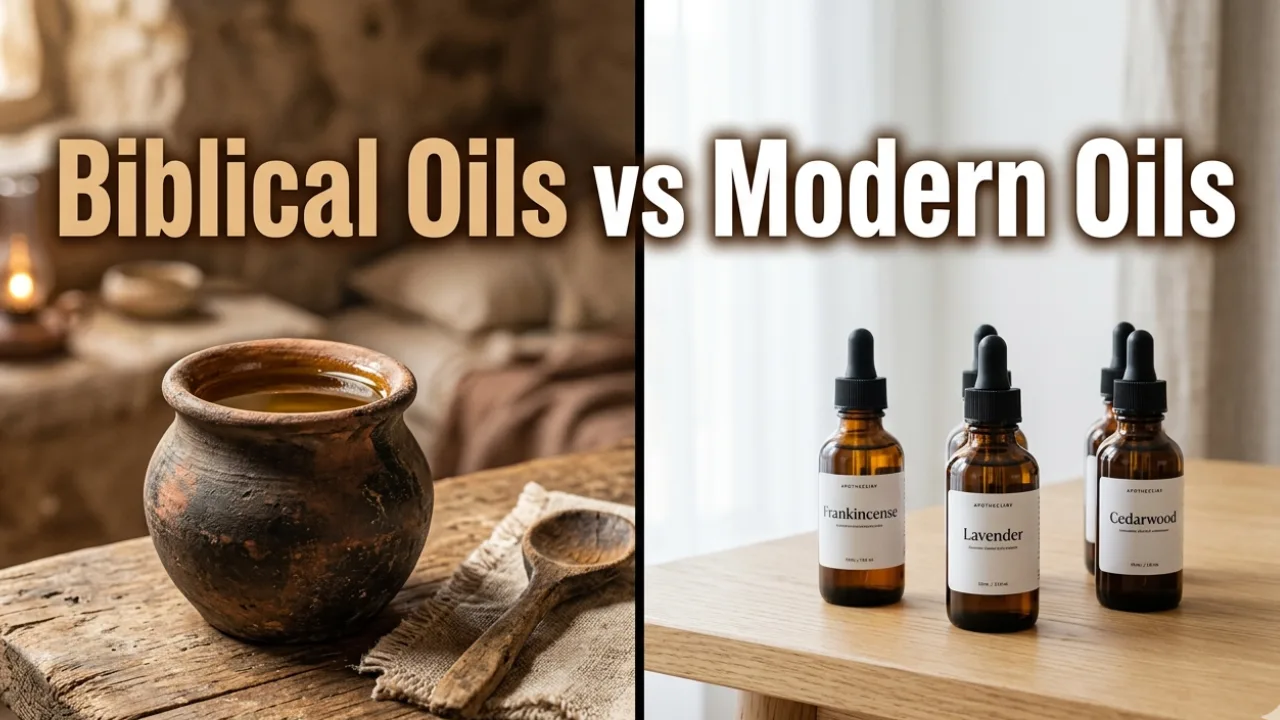

Oil is something most people are familiar with today, especially with the rise of essential oils for health and daily use. Because of this many begin to wonder if the oils mentioned in the Bible are the same as the ones used now.
At first glance, they may seem similar. Both involve natural oils and both are sometimes connected with ideas of healing or care. But when you look more closely the purpose and meaning behind them are very different.
In the Bible, oil was used in worship and sacred practices under God’s direction. Today, essential oils are used in everyday life for personal benefit. This article will walk through those differences in a simple and clear way.
Quick Comparison
| Aspect | Biblical Oils | Modern Essential Oils |
|---|---|---|
| Purpose | Worship and consecration | Personal use and wellness |
| Meaning | Spiritual and symbolic | Practical and physical |
| Authority | Given by God | Chosen by people |
| Setting | Sacred (tabernacle/temple) | Everyday life |
| Users | Priests or set roles | Anyone |
| Focus | God-centred | Self-care centred |
This table gives a quick overview before we look at each difference more closely.
1. Sacred Use vs Everyday Use
Biblical oils were used for:
- consecrating priests
- anointing sacred items
- worship practices
Modern essential oils are used for:
- relaxation
- health and wellness
- daily routines
These uses already show a clear difference. In the Bible oil was part of worship and was used because God instructed it. It was not something people used based on personal preference. Today, essential oils are chosen freely and used for everyday needs.
2. Spiritual Significance vs Practical Benefit
Biblical oils carried deep spiritual meaning. They were connected with holiness, blessing and being set apart for God. When oil was used, it pointed to something God was doing, not just the action itself.
Modern essential oils are different. They are valued for their practical benefits, such as helping with relaxation or supporting physical well-being. Their meaning comes from what they do, not from any spiritual role they are given.
This is an important difference. In the Bible, oil pointed beyond itself. Today, essential oils are mainly used for their direct effects.
3. God’s Instruction vs Personal Choice
In Scripture, the use of oil was not left to human decision. God gave clear instructions about when and how it was to be used. This made its use part of obedience, not experimentation.
Modern essential oils are used very differently. People choose how and when to use them based on personal preference, research or popular trends. There is no single authority guiding their use.
This highlights a key contrast. Biblical use was guided by God, while modern use is shaped by individual choice.
4. Worship Setting vs Daily Life
Biblical context:
- tabernacle and temple
- sacred ceremonies
Modern context:
- homes
- wellness routines
Biblical oils belonged to sacred settings. They were used in places and moments set apart for worship. That gave them a clear and defined purpose.
Modern essential oils belong to daily life. They are part of routines, habits and personal care. They are not limited to any sacred setting.
5. Set-Apart Roles vs Open Use
In the Bible, oil was often used by priests or in specific roles. Not everyone handled or used it in the same way. Certain uses were reserved for those who had been set apart for that purpose.
Today, essential oils are available to anyone. There are no special roles or restrictions. Anyone can buy them, use them and decide how they want to apply them.
This shows another difference. Biblical use involved appointed roles, while modern use is open and unrestricted.
6. Holy Oil vs Commercial Blends
Biblical oil:
- made with specific ingredients
- not to be used for common purposes
Modern oils:
- come in many types and blends
- are widely produced and sold
The oil used in biblical worship was set apart. It was not to be copied or treated like an everyday product. It had a unique place in worship.
Modern essential oils are produced in many forms and are easily available. They are designed for general use, not for a sacred purpose.
You May Also Like
If you want to go deeper into this topic, these articles will help you understand the biblical meaning of oil more clearly:
- How Oil Was Used in Biblical Worship and What It Meant
A simple and clear look at how oil was used in worship, from priests to offerings and what it revealed about God’s holiness. - Biblical Oils Explained: Types, Meanings, Uses and Historical Context
- You Anoint My Head With Oil Meaning in Psalm 23
- How Was Oil Made in Biblical Times Step by Step
7. Sign of God’s Work vs Tool for Daily Use
Biblical oil functioned as a sign. It showed that God was setting something apart or working in a person’s life. The oil itself was not the focus. It pointed to what God was doing.
Modern essential oils function as tools. They are used to support relaxation, comfort or other personal needs. Their value is in how they can be used in daily life.
This difference is simple but important. One points to meaning beyond itself, while the other is used for its direct benefits.
8. God-Centred Worship vs Personal Well-Being
Biblical focus:
- honouring God
- obedience
Modern focus:
- self-care
- personal benefit
This is the deepest difference between the two. In the Bible, the use of oil was centred on God. It was part of worship and devotion.
Today, essential oils are centred on the individual. They are used to support personal well-being and daily life.
Why People Often Confuse the Two Today
It is easy to see why people mix these ideas together. The same word “oil” is used in both cases and both come from natural sources. That alone can make them seem similar.
There is also a growing interest in natural products and a desire to connect everyday life with something deeper or spiritual. Because of that, some people begin to link modern essential oils with biblical practices.
Online content can also add to the confusion. It sometimes blends ideas without clearly explaining the differences.
But when you look at Scripture carefully, the distinction becomes clear. Biblical oils had a specific role in worship and were used under God’s direction. Modern essential oils belong to a completely different setting and purpose. Understanding that helps keep both in their proper place.
Same Substance, Very Different Meaning
Biblical oils and modern essential oils may look similar at first, but they belong to completely different worlds. In the Bible, oil was set apart for worship, carrying meaning tied to holiness, obedience and God’s presence. Today, essential oils are part of daily life used for personal comfort and practical needs.
The real difference is not in the oil itself, but in what stands behind it. One was used because God gave it purpose. The other is used based on human choice and everyday benefit.
Understanding this keeps things clear. It helps us respect what Scripture teaches without mixing it with modern practices and it allows both to be seen for what they truly are.

2 thoughts on “Biblical Oils vs Modern Essential Oils: What Is the Difference?”