
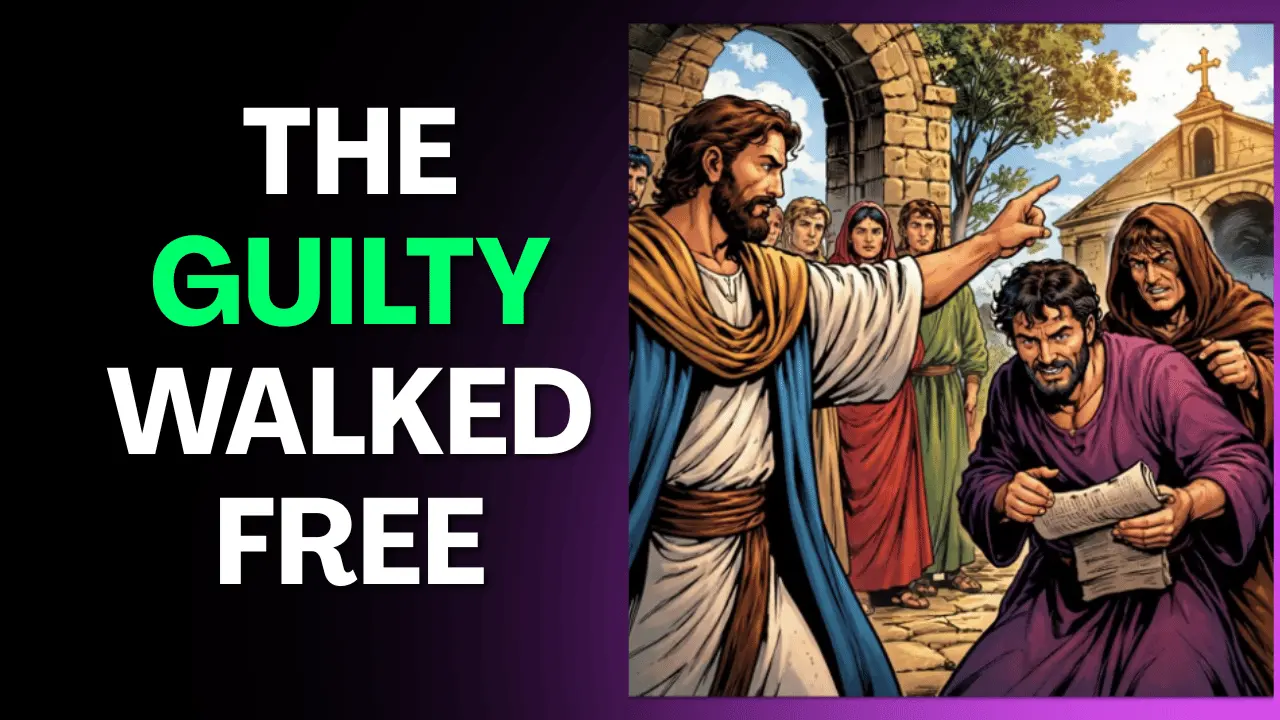

Among the many striking moments in the crucifixion narrative, the release of Barabbas stands out as deeply unsettling.
A man described as a rebel, involved in insurrection and violence, was set free. Meanwhile, Jesus, who had healed, taught, and gathered followers through compassion, was sentenced to death.
The contrast is stark.
Why was Barabbas released instead of Jesus? What does this decision reveal about the crowd, the authorities, and the deeper meaning of the cross? This moment is not a minor detail in the story. It is a profound exchange that invites reflection.
The Custom of Release
The Gospel accounts explain that during Passover, the Roman governor had a custom of releasing one prisoner chosen by the crowd. This tradition functioned as a gesture of goodwill during a significant Jewish festival.
Pontius Pilate, the Roman governor, found himself navigating political pressure. He had questioned Jesus and did not find grounds for execution under Roman law. Yet tension was rising among the religious leaders and the gathered crowd.
Faced with a choice between Jesus and Barabbas, Pilate offered the decision to the people.
The moment shifted from private trial to public demand.
Who Was Barabbas?
Barabbas is described as a prisoner involved in rebellion and murder. He was not a minor offender. He had participated in violent uprising.
His name, interestingly, means “son of the father.” This detail adds a subtle layer of contrast, as Jesus is also referred to as the Son of the Father.
The crowd was presented with two figures: one associated with violence and rebellion, and one associated with healing and teaching. Yet the choice was not made on the basis of moral clarity. It was shaped by influence and emotion.
The Crowd’s Decision
The religious leaders stirred the crowd to ask for Barabbas and demand Jesus’ crucifixion. Public opinion can shift quickly under strong persuasion.
Crowds are complex. They amplify emotion. They respond to fear and momentum.
Pilate asked what he should do with Jesus. The response was a call for crucifixion. The release of Barabbas was not accidental. It was intentional. It was chosen.
The exchange reflects the volatility of collective judgment.
Political Pressure and Moral Hesitation
Pilate’s role in the decision reveals tension. He recognized that envy and religious rivalry fuelled the accusations against Jesus. Yet he feared unrest. Leadership under pressure often reveals compromise.
Pilate attempted to distance himself symbolically by washing his hands, declaring himself innocent of the blood being shed. Yet authority still rested with him. Barabbas was released because political stability seemed safer than justice.
This dynamic adds complexity to the narrative. It was not a simple legal process. It was a collision of fear, influence, and self-preservation.
The Exchange at the Centre
The release of Barabbas creates a powerful image of substitution.
One guilty man walks free. One innocent man takes his place. Barabbas likely expected death. Instead, he experienced unexpected freedom. Jesus, who was declared innocent by the governor, was handed over for execution.
The contrast sharpens the theological meaning of the cross.
In Christian understanding, the crucifixion represents substitution on a much larger scale. The exchange between Barabbas and Jesus mirrors the broader message of grace.
The guilty released. The innocent condemned.
A Reflection of Human Preference
The choice between Barabbas and Jesus also reveals something about human preference.
Barabbas represented political rebellion. He embodied a kind of forceful resistance. Jesus, on the other hand, spoke of humility, forgiveness, and sacrificial love. When expectations clash with reality, disappointment can shape decisions.
Some in the crowd may have hoped for a Messiah who would overthrow Roman power through visible force. Jesus’ path did not align with that expectation. Barabbas may have seemed closer to the kind of change some desired.
The choice reveals how expectations influence perception.
The Silence of Barabbas
The Gospel accounts say little about Barabbas’ reaction. He disappears from the narrative after his release.
This silence invites imagination.
Did he understand the exchange? Did he feel relief, confusion, gratitude?
The story does not answer these questions. Instead, it focuses on the symbolic power of the moment. Barabbas becomes a representative figure.
His freedom at another’s expense becomes an illustration of grace.
The Crowd’s Responsibility
The cry of the crowd carries weight in the narrative. Yet it is important to remember that crowds are composed of individuals. Influence spreads quickly. Responsibility can feel diluted in collective action.
The release of Barabbas reminds readers that public opinion does not always align with justice.
It also warns of the ease with which voices can be swayed.
The moment is both historical and cautionary.
Theological Meaning of the Exchange
In Christian theology, the Barabbas episode illustrates substitution vividly.
The innocent suffers in place of the guilty. The guilty walks free.
This pattern reflects the broader understanding of atonement. Humanity, marked by imperfection, receives freedom because Christ bears the consequence. The exchange is personal as well as communal.
Barabbas becomes a mirror.
His story invites readers to consider what freedom means and at what cost it comes.
Why This Moment Still Matters
The release of Barabbas continues to provoke reflection because it feels unjust on the surface. An innocent man condemned. A guilty man released. Yet within Christian belief, that injustice becomes the pathway to redemption.
The moment invites humility. It challenges pride. It reframes the cross not as accidental tragedy, but as intentional exchange.
Barabbas walked away alive because Jesus did not.
That image lingers.
The Choice and the Cross
Why was Barabbas released instead of Jesus?
Because a crowd chose it. Because a governor hesitated. Because political pressure overruled justice. But within the larger narrative, the exchange also reveals something deeper.
The cross stands as substitution. The innocent for the guilty. The righteous for the rebellious. Barabbas’ freedom foreshadows a wider freedom offered through the crucifixion. In that courtyard, a decision was made.
One man walked free.
Another carried a cross.
And history turned on that exchange.
You may also want to explore:
- Why Did Peter Deny Jesus?
- Why Did the Sky Go Dark at the Crucifixion?
- Why Is Easter on a Different Date Every Year?
- Psalm 23 Explained In 2026
Frequently Asked Questions
Why was Barabbas released instead of Jesus?
Pilate offered the crowd a choice between releasing Jesus or Barabbas. Influenced by religious leaders, the crowd chose Barabbas.
Who was Barabbas in the Bible?
Barabbas was described as a rebel involved in insurrection and violence, likely a political prisoner.
What does the name Barabbas mean?
Barabbas means “son of the father,” which creates a striking contrast with Jesus, often called the Son of the Father.
Did Pilate think Jesus was guilty?
According to the Gospels, Pilate stated he found no basis for a charge against Jesus but yielded to public pressure.
What is the spiritual meaning of Barabbas being released?
Many Christians see the exchange as symbolic of substitution—the guilty set free while the innocent takes the punishment.

2 thoughts on “Why Was Barabbas Released Instead of Jesus?”